
Measuring a basketball hoop correctly is crucial for everything from ensuring fair play to getting the most enjoyment out of your backyard court. The standard basketball hoop height for professional and collegiate play is 10 feet from the surface of the court to the rim. For those wondering what is the regulation basketball hoop size, it refers to both the height and the rim diameter. This post will guide you through the precise steps to measure your basketball hoop, covering different types and scenarios.
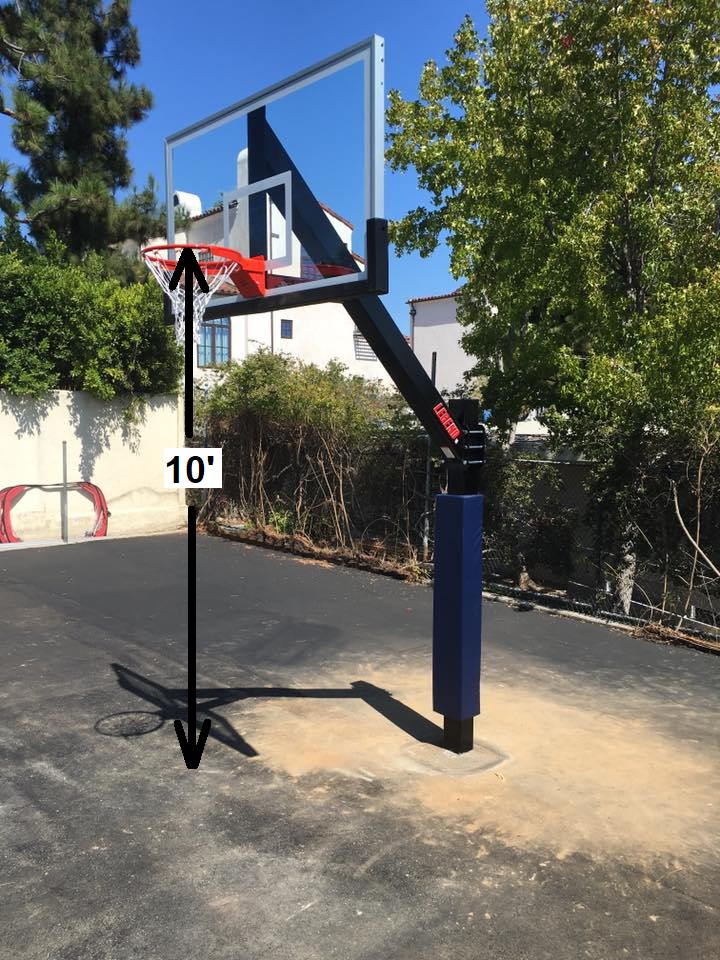
Image Source: www.firstteaminc.com
The Essentials of Hoop Measurement
Before we dive into the specifics, let’s establish the key measurements you’ll need. The most critical measurement is the height of the rim. This is measured from the playing surface directly below the rim to the top edge of the rim.
Determining the Rim Height
NBA hoop height is a universally recognized standard. The rim must be exactly 10 feet (3.05 meters) above the playing surface. This height is consistent across professional leagues and most sanctioned amateur games.
Youth basketball hoop height varies significantly depending on the age and skill level of the players. Younger children might play with hoops set as low as 6 feet, while older youth leagues often use 9 or 9.5 feet. It’s essential to know the age group you’re measuring for to ensure proper development and safety.
Adjustable basketball hoop height systems offer flexibility. When measuring these, you must use a tape measure to confirm the actual height of the rim. Do not rely solely on the markings on the pole, as these can sometimes be inaccurate.
Portable basketball hoop height can also be adjusted. Similar to adjustable systems, a direct measurement is key to confirm the rim’s height. These are often used for convenience and can be moved, so regular checking of the height is a good practice.
DIY basketball hoop height projects require careful attention to detail. You will need to precisely measure and set the height according to your desired specifications, whether it’s for a child learning to play or a dedicated training setup.
Hoop Rim Diameter
Beyond height, the diameter of the basketball rim is another standard measurement. A basketball rim diameter is 18 inches (45.7 cm) on the inside. This ensures that a regulation basketball (which has a diameter of approximately 9.4 inches) fits through the hoop with a small margin.
Measuring the Basketball Backboard
While the rim height is paramount, the size of the measuring basketball backboard is also a factor, especially for official play. Regulation backboards are typically 72 inches wide by 42 inches high for professional and collegiate games. However, for recreational use, backboard sizes can vary considerably, from smaller 44-inch or 48-inch backboards for residential use to larger ones for more serious play. The measurement of the backboard is straightforward: width from side to side and height from top to bottom.
Tools You’ll Need for Accurate Measurement
To ensure you get accurate measurements, having the right tools is important.
- Tape Measure: A sturdy, retractable tape measure is essential. A 25-foot or 50-foot tape measure is usually sufficient for most situations.
- Level: A spirit level can help ensure your measurements are taken from a perfectly flat surface.
- Pen and Paper or Digital Device: To record your measurements.
Measuring Different Types of Basketball Hoops
The method of measuring might slightly differ based on how the hoop is mounted.
Wall-Mounted Hoops
For hoops mounted directly to a wall, such as on a garage or building:
- Locate the Playing Surface: Identify the exact point on the ground directly beneath where the rim hangs.
- Position the Tape Measure: Place the zero end of your tape measure at this point on the ground.
- Extend Upwards: Pull the tape measure straight up to the top edge of the rim. Ensure the tape is vertical.
- Read the Measurement: Note the measurement where the tape meets the top of the rim. This is your rim height.
Mounting basketball hoop height for wall-mounted systems is critical to get right during installation. If you’re installing a new one, set the height before securely fastening it.
Pole-Mounted Hoops (In-Ground)
These are common for backyard courts. The pole typically extends from the ground.
- Find the Base: Locate where the pole meets the ground. Ensure the ground is level around the base.
- Place the Tape Measure: Position the zero end of your tape measure at ground level, directly adjacent to the pole.
- Ascend the Pole: Extend the tape measure vertically up the pole until you reach the center of the rim.
- Read the Height: Note the measurement at the center of the rim. This is the rim height.
Portable basketball hoop height systems, which also use poles, follow the same measurement principle from the ground.
Adjustable and Portable Hoops
These systems often have a mechanism to raise or lower the rim.
- Set the Desired Height: If you are adjusting the hoop, use the adjustment mechanism to set it to your target height.
- Measure from the Ground: As with in-ground poles, place the zero end of your tape measure at ground level directly below the rim.
- Measure to the Rim: Extend the tape measure straight up to the top edge of the rim.
- Verify and Record: Confirm the measurement. If it’s an adjustable hoop, you might want to check at a few different heights to ensure the mechanism is accurate.
Step-by-Step Measurement Guide
Let’s break down the process into simple, actionable steps:
Step 1: Prepare Your Measurement Area
- Ensure the playing surface beneath the hoop is clean and free of debris.
- If the ground is uneven, try to find the most level spot directly under the rim for your measurement.
Step 2: Get Your Tools Ready
- Unfurl your tape measure, ensuring it’s not tangled.
Step 3: Measure Rim Height
- For ground-based systems (in-ground or portable): Place the end of the tape measure on the ground directly under the rim.
- For wall-mounted systems: Identify the point on the wall directly behind the rim at ground level, or use a plumb bob if you need to find a vertical line from the rim to the ground. Place the tape measure’s zero point at that ground-level spot.
- Hold the tape measure perfectly straight and vertical.
- Extend the tape upwards until it reaches the top edge of the rim.
- Read the measurement at the top edge of the rim. This is the rim height.
Step 4: Measure Rim Diameter
- Place the tape measure across the inside of the rim, from one side to the other, passing through the center.
- Ensure the tape measure is lying flat against the rim.
- Read the measurement at the widest internal point. This should be 18 inches for a regulation hoop.
Step 5: Measure Backboard Dimensions (Optional but Recommended)
- Measure the width of the backboard from its left edge to its right edge.
- Measure the height of the backboard from its bottom edge to its top edge.
Step 6: Record Your Findings
- Write down all your measurements: rim height, rim diameter, and backboard dimensions.
- Note whether the hoop is adjustable and if you are measuring at a standard height.
Common Pitfalls and How to Avoid Them
Even with the right tools, mistakes can happen. Here are common errors and how to prevent them:
Incorrectly Identifying the “Playing Surface”
- Problem: Measuring from a raised driveway edge or an uneven patch of grass.
- Solution: Always measure from the intended playing surface. If it’s a court, measure from the court surface. If it’s grass, find the most level spot. For portable hoops, ensure the wheels are on a level surface when measuring.
Not Holding the Tape Measure Vertically
- Problem: An angled tape measure will result in an inaccurate height, likely making the hoop seem lower than it is.
- Solution: Have someone help hold the tape measure taut and perfectly straight up and down, or use a plumb bob to ensure verticality.
Measuring to the Wrong Part of the Rim
- Problem: Measuring to the bottom of the rim or the net hooks instead of the top edge.
- Solution: Always aim for the very top surface of the metal rim.
Ignoring Net Sag
- Problem: Nets can sag, making the perceived height different from the actual rim height.
- Solution: Measure the metal rim itself, not the lowest point of the net.
Inconsistent Measurements on Adjustable Hoops
- Problem: The adjustment mechanism might be faulty, leading to different heights when set to the same marked position.
- Solution: Measure each time you adjust. If you notice significant discrepancies, the adjustment mechanism may need repair or replacement.
Why Accurate Measurement Matters
Getting the measurements right impacts various aspects of basketball:
Skill Development
- Youth Players: Correct youth basketball hoop height is crucial for developing proper shooting form and technique. Too high a hoop for young children can lead to bad habits.
- Serious Training: For aspiring players aiming for college or professional levels, practicing on a regulation 10-foot hoop is essential to prepare for those environments.
Game Fairness
- In organized games, consistent and correct hoop height ensures fair competition for all players.
Enjoyment and Safety
- For recreational play, setting the hoop at an appropriate height for the players ensures everyone can participate and enjoy the game without undue frustration or risk of injury.
Equipment Verification
- When purchasing a new hoop, verifying its measurements against advertised specifications can save you from receiving an incorrect product.
Specific Scenarios and Considerations
Let’s explore some specific situations where precise measurement is key.
Setting Up a New Hoop
When installing a new in-ground or wall-mounted hoop, you’ll be setting the height for the first time.
- Mark Your Spot: Determine the desired location for the hoop.
- Consider Pole Length: If it’s an in-ground hoop, the pole length will dictate the maximum adjustable height.
- Measure and Secure: Use your tape measure to set the desired rim height before you permanently fix the pole in the ground or mount the backboard to the wall. For in-ground systems, you might dig the hole, place the pole, and then measure to ensure it’s correctly positioned before cementing it.
Adjusting an Existing Hoop
For adjustable systems:
- Locate Adjustment Mechanism: Familiarize yourself with how your specific hoop’s height is adjusted.
- Follow Manufacturer Instructions: Always refer to the user manual for your hoop model.
- Measure After Adjusting: After making an adjustment, always re-measure from the ground to the rim to confirm the new height.
Measuring for a Replacement Rim
If you are replacing a worn-out rim, measuring your existing one can help you select the correct size.
- Rim Diameter: As mentioned, a standard rim diameter is 18 inches. Make sure any replacement rim matches this.
- Mounting Hole Spacing: Rims also have standard bolt patterns for mounting to the backboard. While not a height measurement, it’s an important dimension for compatibility.
The Psychology of Hoop Height
The perceived difficulty of making shots is heavily influenced by hoop height. A hoop that’s too high can be demoralizing for beginners, while a hoop that’s too low can lead to players not developing the strength and arc needed for shooting at regulation heights. Choosing the correct basketball hoop height is an investment in good playing habits.
Common Questions About Measuring Basketball Hoops
Q: What is the official NBA hoop height?
A: The official NBA hoop height is 10 feet from the playing surface to the top of the rim.
Q: Can I use any basketball rim size?
A: For official play, a regulation basketball rim diameter of 18 inches is required. For casual backyard play, variations exist, but sticking to the standard is generally recommended for a more authentic experience.
Q: Who determines the standard basketball hoop height?
A: Governing bodies like FIBA (International Basketball Federation) and national organizations like USA Basketball set the standards for competitive play.
Q: What is the correct basketball hoop height for a 10-year-old?
A: A common recommendation for 10-year-olds is around 8 to 9 feet. However, it’s best to adjust based on the child’s individual skill level and physical development.
Q: How do I measure the height of a portable basketball hoop?
A: Measure from the ground directly beneath the rim to the top edge of the rim, ensuring the base of the portable unit is on a level surface.
Q: Is it important to measure the backboard?
A: While not as critical as rim height for playing, the backboard size is part of the overall regulation basketball hoop size and can affect the game, especially for bank shots. For official play, specific backboard dimensions are mandated.
Q: What if my basketball hoop pole is sunk in concrete?
A: You still measure from the surface of the ground where the ball is played directly to the top of the rim. The concrete is the playing surface in this case.
Q: How often should I check my basketball hoop height?
A: It’s a good idea to check periodically, especially if you have an adjustable or portable hoop that might be moved or adjusted frequently. At least once a season, or if you notice a change in how shots are going in.
Q: What are the dimensions of a standard basketball backboard?
A: For professional and collegiate play, a standard backboard is 72 inches wide by 42 inches high. Recreational hoops come in various sizes, often ranging from 44 to 60 inches wide.
Q: My hoop is on a slope. How do I measure it accurately?
A: Find the most level spot directly under the rim on the playing surface. If the slope is significant, consider leveling the area around the hoop for more consistent measurements and play.
By following these detailed steps and considerations, you can confidently measure your basketball hoop, ensuring it meets your needs for practice, recreation, or official play. Whether you’re setting up a new hoop, checking an old one, or teaching the next generation of players, precision in measurement is key to the game.