
Is soccer better than basketball? While personal preference plays a significant role, soccer’s unparalleled global appeal, immense tactical depth, and inherent accessibility provide strong arguments for its superiority as a sport.
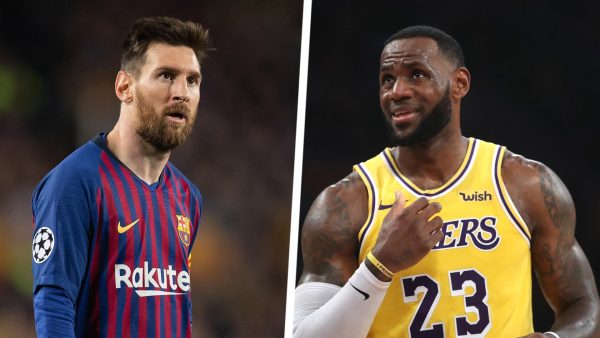
Image Source: ncsclaw.org
The Enduring Dominance of Soccer: A Worldwide Phenomenon
Soccer, or football as it is known to the vast majority of the planet, is undeniably the world’s most popular sport. This isn’t an opinion; it’s a statistical fact supported by viewership numbers, participation rates, and cultural penetration. While basketball boasts significant popularity, particularly in North America and pockets of Europe and Asia, it simply doesn’t touch the universal reach of soccer. The question of “football vs basketball” is often framed in terms of global impact, and in this arena, soccer stands alone.
Soccer advantages are numerous when comparing it to other sports. Its simplicity of rules means anyone, anywhere, can understand and play the game with minimal equipment. A ball, a flat surface, and a couple of markers for goals are all that’s needed to start a game of soccer. This inherent accessibility is a massive driver of its worldwide adoption.
Global Appeal of Soccer: Bridging Borders and Cultures
The global appeal of soccer is a multifaceted phenomenon. It transcends language barriers, economic disparities, and political divides. When a World Cup match is on, billions of people across continents are united by a common passion. This is a level of cultural integration that few other activities, let alone sports, can achieve.
- Universal Language: The actions on a soccer field – a pass, a dribble, a shot – are universally understood. You don’t need to know English to appreciate a perfectly placed through ball or a spectacular save.
- Accessibility and Affordability: As mentioned, soccer requires very little. This makes it the sport of choice for children in developing nations and urban sprawls alike. A worn-out ball and some stones can create a pitch. This is a stark contrast to the specialized equipment and court requirements of basketball.
- Cultural Integration: Soccer is deeply woven into the fabric of many nations. National teams are sources of immense pride, and club loyalties can span generations. From the favelas of Brazil to the bustling streets of London, soccer is more than just a game; it’s a way of life.
- Media Reach: Major soccer leagues and tournaments consistently draw larger global television audiences than their basketball counterparts. The FIFA World Cup is the most-watched sporting event on the planet.
Soccer’s Tactical Depth: A Chess Match on Grass
Beyond its widespread popularity, soccer’s claim to superiority lies heavily in its soccer’s tactical depth. Unlike sports that can sometimes devolve into displays of individual athleticism, soccer is a complex interplay of strategy, positioning, and team cohesion.
Formations and Strategies: The Art of the Game
Soccer coaches are akin to chess grandmasters, constantly evaluating their players, their opponents, and the game situation to devise winning strategies. The selection and execution of formations are critical.
- 4-4-2: A classic, balanced formation offering defensive solidity and attacking width.
- 4-3-3: An offensive formation that emphasizes possession and wing play.
- 3-5-2: A more attacking setup that uses wing-backs to provide width and overlap.
- 4-2-3-1: A modern, versatile formation that allows for flexibility in midfield and attack.
The choice of formation dictates player roles, passing patterns, defensive structures, and attacking movements. Adapting these formations during a game based on substitutions, injuries, or the opponent’s tactics adds another layer of strategic complexity.
Positional Play and Movement Off the Ball
A key element of soccer’s tactical brilliance is positional play and movement off the ball. Players aren’t just static figures; they are constantly repositioning themselves to create space, offer passing options, or overload areas of the pitch.
- Creating Space: A striker dropping deep can pull defenders out of position, creating space for midfielders to exploit.
- Overlapping Runs: Full-backs or wing-backs surging forward to join the attack can create numerical advantages in wide areas.
- Third-Man Runs: A player making a run into space, not for a direct pass, but to draw a defender and open up a passing lane for a teammate.
These subtle movements, often unnoticed by the casual observer, are crucial to breaking down organized defenses and are a testament to the strategic depth of the game.
Defensive Organization and Pressing Schemes
Defending in soccer is as intricate as attacking. Teams employ various defensive strategies, from rigid zonal marking to aggressive high pressing.
- Zonal Marking: Players are responsible for defending specific areas of the pitch, rather than individual opponents.
- Man-to-Man Marking: Each player is assigned to mark a specific opposition player.
- Pressing: Applying pressure on the opposition to force errors or regain possession high up the pitch. This can be a “high press” (close to the opponent’s goal) or a “midfield press.”
The effectiveness of these defensive schemes depends on soccer’s team coordination and a shared understanding of responsibilities among all eleven players.
Soccer’s Team Coordination vs. Basketball’s Individual Stars
This brings us to another significant differentiator: soccer’s team coordination versus the greater emphasis on individual brilliance in basketball. While both sports require teamwork, soccer’s structure inherently fosters a more collective approach.
- Soccer: With eleven players on the field, and the ball often in motion across a larger space, the success of an attack or defense relies heavily on the synchronized efforts of the entire team. A single moment of brilliance can win a game, but sustained success is built on intricate passing sequences, defensive shape, and collective pressing. The interconnectedness of players is paramount.
- Basketball: While teamwork is essential, basketball is often characterized by its “stars.” A few exceptionally talented players can dominate a game through individual scoring, playmaking, and defensive prowess. The game is played on a smaller court with fewer players, allowing individual talent to have a more pronounced impact. While exciting, this can sometimes overshadow the collective effort.
This is not to say basketball doesn’t have incredible teamwork, but the structure of soccer amplifies the need for and visibility of soccer’s team coordination.
Basketball’s Physical Demands vs. Soccer’s Endurance
While both sports are physically demanding, they require different types of athleticism.
- Basketball’s Physical Demands: Basketball requires explosive bursts of energy, incredible jumping ability, agility, and the capacity for repeated high-intensity movements in short bursts. Players need to be strong, fast, and have excellent hand-eye coordination for dribbling and shooting. The constant changes in direction and the physical battles under the basket are intense.
- Soccer’s Endurance: Soccer, on the other hand, is an endurance sport. Players cover vast distances over 90 minutes, often sprinting, jogging, and walking repeatedly. The game demands sustained cardiovascular fitness, agility for quick changes of direction, and the ability to make split-second decisions while fatigued. The constant movement across a large field requires a different, arguably more holistic, level of physical conditioning.
While one might argue for the “explosiveness” of basketball, the sheer sustained output and diverse physical requirements of soccer make a compelling case for its comprehensive physical challenge.
Soccer’s Accessibility: The Beautiful Game for Everyone
The soccer’s accessibility is a cornerstone of its global dominance. It’s a sport that can be played by anyone, anywhere, with minimal resources.
- Minimal Equipment: As highlighted earlier, a ball is the primary requirement. Shoes are optional, goals can be improvised.
- No Specialised Courts: Unlike basketball, which needs a specific court with hoops, soccer can be played on grass, dirt, sand, or asphalt.
- Low Barrier to Entry: This simplicity means children in the poorest communities can play and fall in love with the sport just as easily as children in affluent neighborhoods. This widespread participation fuels the development of talent from all corners of the globe.
This contrasts with basketball disadvantages such as the need for dedicated courts and specialized equipment like basketballs and proper footwear, which can be prohibitive in many parts of the world.
Why Football is Superior: A Holistic Perspective
When we ask “Why is soccer better than basketball?”, we are looking at a sport that excels in multiple dimensions.
- Global Reach: Its unparalleled global appeal of soccer connects people across the world.
- Tactical Sophistication: The soccer’s tactical depth offers a constant strategic battle.
- Teamwork Emphasis: Soccer’s team coordination fosters a collective spirit.
- Inclusivity: Soccer’s accessibility makes it the sport of the people.
- Endurance Challenge: The basketball’s physical demands are different, but soccer’s sustained endurance test is unique.
While basketball provides thrilling moments and showcases incredible individual talent, soccer’s combination of universal appeal, deep strategic complexity, and inherent inclusivity makes it, for many, the superior sport. It’s a game that tells stories of nations, communities, and the relentless pursuit of perfection through collective effort. The beauty lies not just in the spectacular goals but in the intricate passing patterns, the defensive solidity, and the unyielding spirit of a team working as one.
Frequently Asked Questions (FAQ)
Q1: Is soccer really more popular than basketball worldwide?
A1: Yes, by a significant margin. Soccer consistently has higher viewership for major tournaments like the FIFA World Cup, and more registered players globally than basketball.
Q2: What makes soccer’s tactics so deep?
A2: The depth comes from the variety of formations, player roles, positional play, off-ball movement, and complex defensive and offensive strategies that can be employed. The large field and 11 players create a dynamic, fluid environment for tactical execution.
Q3: Do basketball players not need teamwork?
A3: Basketball players absolutely need teamwork, but the game’s structure, with fewer players on a smaller court, allows individual stars to have a more dominant impact on the game’s outcome compared to soccer.
Q4: Which sport is more physically demanding?
A4: Both are demanding, but in different ways. Basketball requires explosive power, jumping, and agility. Soccer requires exceptional cardiovascular endurance, agility, and the ability to perform at a high level for an extended period.
Q5: Can I play soccer without expensive gear?
A5: Yes, soccer is incredibly accessible. You can play with minimal equipment, even just a ball, and on various surfaces. This makes it a truly global sport for all.