
Can you roll a basketball on your finger? Yes, you absolutely can, and with practice, you can master it! This impressive feat, often seen in basketball finger balancing routines and as a fundamental basketball ball handling trick, is achievable for anyone willing to put in the time. It’s not just about looking cool; mastering the finger roll basketball is a fantastic way to improve your overall feel for the ball and enhance your dribbling skills basketball. It’s a cornerstone of many basketball tricks for beginners and a satisfying challenge for even experienced players.
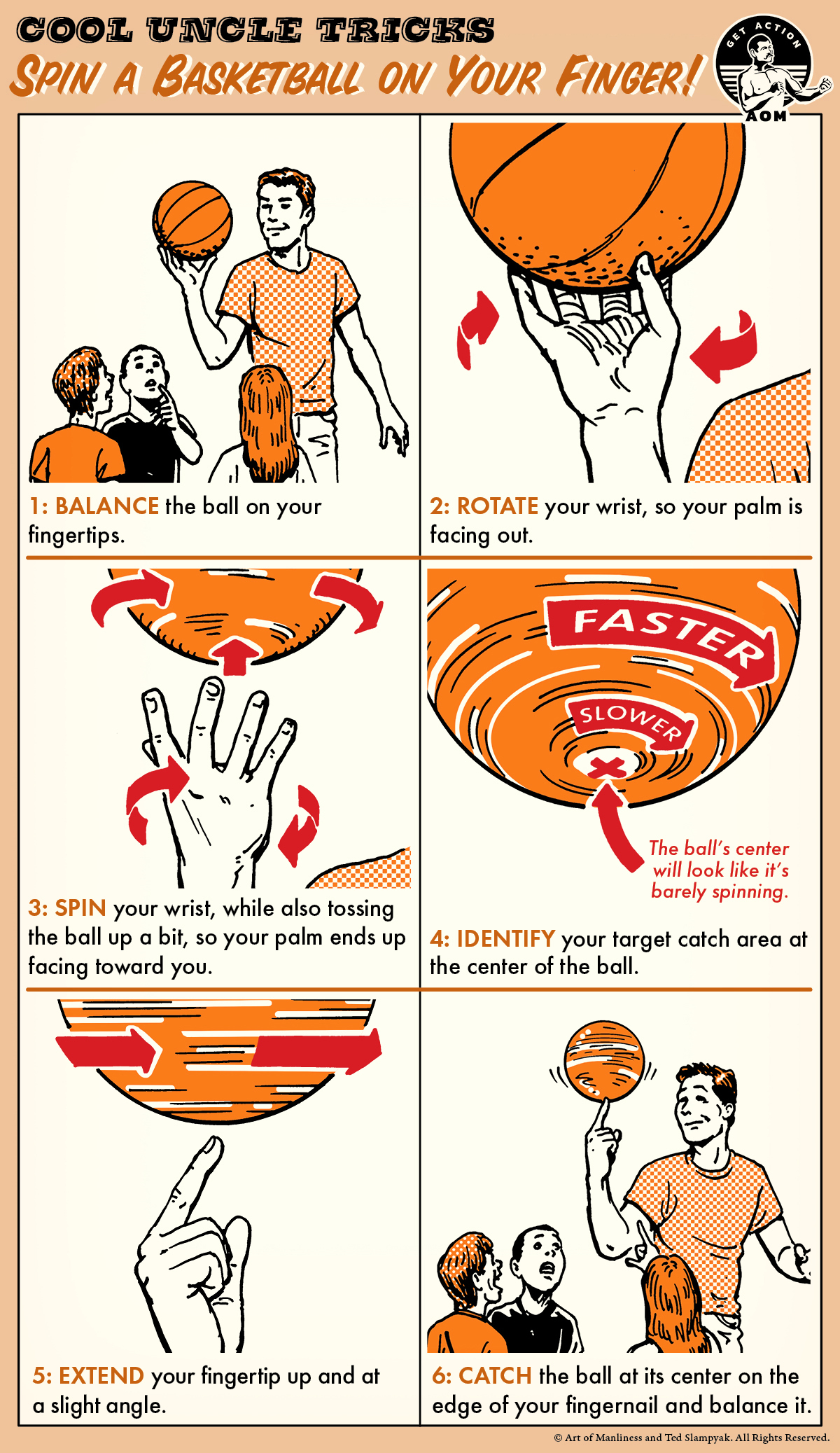
Image Source: content.artofmanliness.com
The Art of the Basketball Finger Roll
Rolling a basketball on your finger is a skill that combines focus, finesse, and a deep connection with the ball. It’s a form of sports ball manipulation that, once learned, can significantly boost your confidence and add a new dimension to your game. Think of it as advanced basketball ball handling, a step beyond basic dribbling skills basketball, and a gateway to more elaborate basketball tricks.
What You Need to Get Started
Before you even think about spinning the ball, ensure you have the right equipment.
- A Regulation Basketball: While smaller or lighter balls might seem easier, learning with a standard-sized, properly inflated basketball is crucial for developing the correct technique and feel. A worn-out ball with a slippery surface will make the process much harder.
- A Flat Surface: Initially, you’ll want a smooth, flat surface to practice on. This could be a polished gym floor, a smooth concrete court, or even a clean living room.
- Patience and Persistence: This isn’t a skill you’ll master in five minutes. Be prepared for a lot of drops, bobbles, and near misses. Every drop is a learning opportunity.
Choosing Your Primary Finger
The finger you choose to balance the ball on is a personal preference, but some are more common and generally easier for beginners.
- Index Finger: This is the most popular choice. It offers good control and a wide surface area relative to its width. It’s often the most intuitive finger for this type of balancing.
- Middle Finger: Some players find the extra length of the middle finger provides a longer contact point, potentially offering more stability once mastered.
- Thumb: While less common for a full roll, the thumb is essential for starting and stopping the roll.
Most players find their best success starting with their index finger and then experimenting with others as they become more proficient.
Step-by-Step Guide to Rolling a Basketball
Mastering the finger roll basketball involves a series of precise movements. It’s a delicate dance between gravity, spin, and your own body’s stability.
Step 1: The Initial Setup and Grip
- Position the Ball: Place the basketball on a flat surface.
- Find the Sweet Spot: Locate the slightly raised seams or valve of the basketball. These can offer a subtle grip and point of reference.
- Finger Placement: Gently place the tip of your chosen finger (usually the index finger) on the ball, just off-center. You want to feel the ball’s weight resting on your fingertip. Don’t grip it tightly; it’s a gentle contact.
Step 2: Generating Spin
This is where the magic begins. You need to impart a consistent spin on the ball.
- The Push and Roll: With your finger in place, use a slight, controlled push downwards and sideways. Imagine you are gently nudging the ball to start it rolling.
- The Wrist Flick: The key to a good spin is a sharp, controlled flick of your wrist. As you push, your wrist should snap, transferring momentum into the ball and creating a stable spin. This is crucial for how to spin a basketball effectively for balancing.
- Direction of Spin: The spin should be around the equator of the ball, perpendicular to your finger.
Step 3: Balancing the Ball
Once the ball is spinning, the real challenge begins: keeping it on your finger.
- Counteracting Wobble: As the ball spins, it will naturally want to wobble or fall off. Your job is to subtly adjust your finger to keep the point of contact directly beneath the ball’s center of gravity.
- Finger Movement: Your finger shouldn’t be rigid. It needs to make tiny, almost imperceptible movements to follow the ball’s slight shifts. Think of it as a gentle cradle.
- Arm and Body Stability: Your arm and entire body play a role. Keep your arm relatively straight and your body balanced. A stable base makes balancing the ball much easier. Avoid jerky movements.
Step 4: Maintaining the Roll
The goal is to keep the ball spinning and balanced for as long as possible.
- Sustaining the Spin: Periodically, you might need to give the ball another gentle nudge with your finger to maintain its momentum and spin. This is a key part of basketball finger balancing.
- Controlled Adjustments: Continue making small, fluid adjustments with your finger to keep the ball centered. It’s about feeling the ball’s momentum and responding to it.
Step 5: Stopping the Roll
Knowing how to stop the roll is just as important as starting it.
- Gentle Cupping: As you prepare to stop the roll, slightly cup your hand around the ball.
- Dampening the Spin: Gently apply pressure to the sides of the ball to slow its rotation.
- Finger Control: Use your thumb to help stop the rotation and bring the ball to a halt on your fingertip.
Progression and Practice Strategies
To truly master the finger roll basketball, consistent practice and a structured approach are essential.
Practice Drills for Improvement
Here are some drills to help you refine your skills:
- Static Balancing: Start by just placing the spinning ball on your finger without trying to move. Focus on keeping it balanced for a few seconds. Gradually increase the time.
- Finger Wandering: Once you can balance it statically, try moving your finger in small circles while keeping the ball on top. This improves responsiveness.
- Arm Extensions: Slowly extend your arm while balancing the ball. This teaches you to maintain control with more distance.
- Ball Switching: Practice switching the ball from one finger to another (e.g., from index to middle finger) while it’s spinning.
- Walking and Rolling: Once you’re comfortable standing still, try walking slowly with the ball rolling on your finger. This is a significant step in basketball ball handling tricks.
- Incorporating Dribbling: Try rolling the ball on your finger between dribbles. This adds a dynamic element to your dribbling skills basketball.
Tips for Faster Learning
- Start Slow: Don’t rush the process. Focus on getting each micro-movement correct.
- Watch the Ball: Keep your eyes focused on the point of contact between your finger and the ball.
- Relax Your Grip: A tense hand will make it harder to make subtle adjustments. Keep your wrist and fingers relaxed but ready.
- Use Different Balls: While starting with a regulation ball is key, try different textures and weights as you progress to broaden your skill set in sports ball manipulation.
- Practice Regularly: Short, frequent practice sessions are more effective than long, infrequent ones.
- Video Analysis: Record yourself. You might spot subtle errors or habits you weren’t aware of.
Common Challenges and How to Overcome Them
Every beginner faces hurdles when learning basketball finger balancing. Here’s how to tackle them.
The Ball Keeps Falling Off
- Cause: Insufficient spin, off-center contact, or jerky finger movements.
- Solution: Focus on a strong, clean wrist flick to generate consistent spin. Ensure your finger is directly under the ball’s center. Practice making smaller, smoother adjustments.
The Ball Wobbles Excessively
- Cause: Uneven spin or inconsistent contact.
- Solution: Concentrate on a perfectly circular spin. Try to keep your finger as still as possible, letting the ball “settle” on it. Imagine your finger is a small, stable platform.
I Can’t Generate Enough Spin
- Cause: Not enough wrist snap or a weak push.
- Solution: Practice the wrist flick motion separately. It’s a quick, sharp movement. Combine it with a gentle downward pressure on the ball.
My Finger Gets Tired
- Cause: Holding tension in your hand or finger.
- Solution: Consciously relax your hand and wrist. The goal is to use minimal force. Think of supporting, not gripping.
I Can’t Transition to Other Fingers
- Cause: Not mastering the initial balance and spin.
- Solution: Solidify your index finger technique first. Once you have a good feel, gently try placing another finger underneath as the ball is rolling, then transfer the contact.
The Benefits of Mastering the Finger Roll
Beyond the sheer coolness factor, learning to roll a basketball on your finger offers tangible benefits.
Enhanced Ball Control and Feel
This skill directly translates to improved basketball ball handling. The constant subtle adjustments needed for the finger roll sharpen your proprioception – your body’s awareness of its position in space. This heightened sense of where the ball is, even without looking, is invaluable.
Improved Focus and Concentration
Mastering the finger roll demands intense focus. You have to concentrate on the ball’s spin, its wobble, and the precise movements of your finger. This can help improve your overall concentration on the court, benefiting your decision-making and execution in games.
Increased Dexterity and Fine Motor Skills
The delicate, precise movements required for basketball balancing enhance your dexterity and fine motor skills. These are transferable to many other aspects of sports and daily life.
Confidence Booster
Successfully executing a difficult trick like the finger roll can significantly boost your confidence. This newfound confidence can then spill over into your overall game, making you more willing to try new dribbling skills and take on challenges.
Foundation for Advanced Tricks
Once you can confidently roll a basketball on your finger, you’ve laid the groundwork for even more impressive basketball tricks. Many elaborate ball-handling routines incorporate the finger roll as a central element. It’s a stepping stone to becoming a true master of fancy dribbling basketball.
Variations and Next Steps
Once you’ve got the basic finger roll down, you can explore variations to further challenge yourself and expand your repertoire of basketball ball handling tricks.
Rolling on Different Fingers
As mentioned earlier, try transitioning the roll from your index finger to your middle finger, or even attempting to balance it on your thumb. This requires adjusting your finger’s angle and grip.
Rolling While Moving
The ultimate goal is to incorporate the finger roll into your movement.
- Walking: Start by walking slowly.
- Jogging: Gradually increase to a light jog.
- Turning: Practice turning your body while maintaining the roll.
- Dribbling Integration: The most advanced stage is to seamlessly integrate the finger roll with your dribbling skills basketball. For example, you might do a finger roll as you cross over or between dribbles.
Combining with Other Skills
- Head Rolls: Once you master finger rolls, you can explore head rolls, where you balance the ball on your head.
- Elbow Rolls: Similarly, you can practice balancing the ball on your elbow.
- Two-Ball Finger Rolls: For the truly dedicated, try performing finger rolls with two basketballs simultaneously! This requires exceptional coordination and focus.
Frequently Asked Questions (FAQ)
Q1: How long does it typically take to learn to roll a basketball on your finger?
A1: The time it takes varies greatly depending on individual coordination, practice consistency, and dedication. Some people might get the hang of the basic roll within a few hours of practice, while for others, it might take several days or even weeks of consistent effort to achieve a stable roll. Mastering it to the point of performing it fluidly while moving can take significantly longer.
Q2: What is the best finger to start with for a basketball finger roll?
A2: Most beginners find the index finger to be the easiest and most natural finger to start with. It offers a good balance of surface area and control. Once you are comfortable with the index finger, you can experiment with other fingers like the middle finger.
Q3: Is it okay if the ball falls off a lot when I’m practicing?
A3: Absolutely! Dropping the ball is a normal and essential part of the learning process. Every time the ball falls, it’s an opportunity to analyze what went wrong – was the spin weak? Was your finger not positioned correctly? Don’t get discouraged; persistent practice is key.
Q4: How important is the spin of the basketball for a finger roll?
A4: The spin is absolutely critical. A good, consistent spin creates gyroscopic stability, which is what allows the ball to balance on your finger. Without enough spin, the ball will quickly wobble and fall off. Generating a strong, controlled spin with your wrist is one of the most important elements of the finger roll.
Q5: Can I learn to roll a basketball on my finger without bouncing it?
A5: Yes, you can learn the finger roll directly from a stationary position. Many beginners find it easier to start by placing the ball on a flat surface and initiating the spin and balance from there. Once you’ve mastered the stationary roll, you can then progress to incorporating it into your dribbling skills basketball or performing it while moving.
Q6: What are some common mistakes beginners make when trying to roll a basketball on their finger?
A6: Common mistakes include gripping the ball too tightly, not generating enough spin, making jerky movements with the finger or arm, not keeping the finger directly under the ball’s center of gravity, and not maintaining a stable body posture.
Q7: How do I improve my basketball finger balancing?
A7: To improve your basketball finger balancing, focus on consistent practice, ensuring a strong spin, making subtle and fluid finger adjustments, keeping your arm and body stable, and gradually increasing the duration and complexity of your balancing attempts. Drills like static balancing and gradually extending your arm can be very helpful.
Q8: What is the difference between a finger roll basketball and a standard dribble?
A8: A standard dribble involves repeatedly bouncing the ball off the floor. A finger roll basketball, on the other hand, involves balancing and spinning the ball on your fingertip without it touching the floor. It’s a form of sports ball manipulation that showcases finer motor control.
Q9: How can the finger roll basketball help my overall basketball skills?
A9: Mastering the finger roll can significantly improve your ball-handling ability, coordination, focus, and feel for the ball. This enhanced control and awareness can translate to better dribbling skills basketball, more confident passing, and an overall improvement in your offensive game, making it a great addition to your basketball ball handling tricks.
By dedicating time and effort to practicing these techniques, you’ll not only be able to perform an impressive basketball finger roll but also develop a deeper connection with the ball, enhancing your overall basketball prowess. Happy rolling!