
Can you jump higher for basketball? Yes, you can absolutely improve your vertical jump for basketball with consistent training and the right techniques. This guide will show you how to do it.
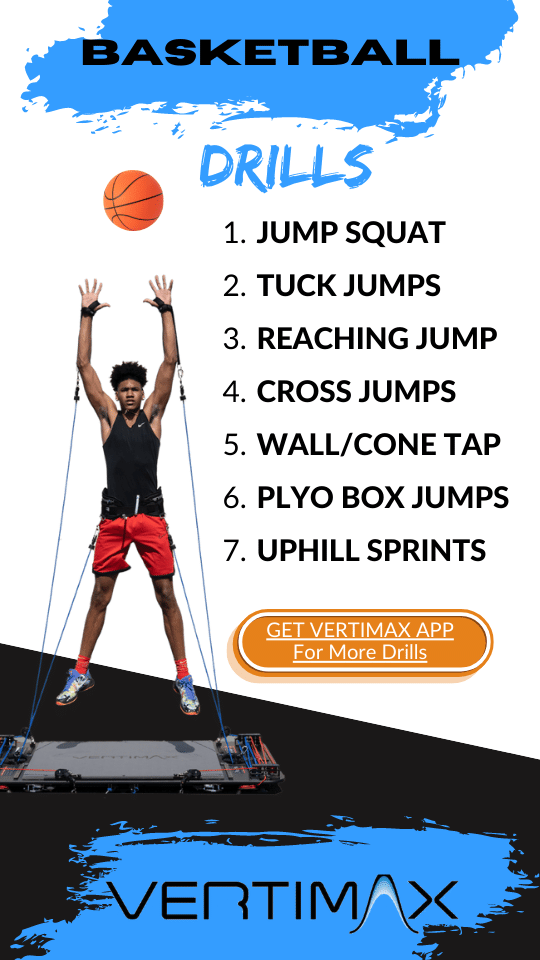
Image Source: f.hubspotusercontent20.net
The Science Behind Jumping Higher
To jump higher, you need to generate more force from the ground in a shorter amount of time. This involves several key elements working together:
- Leg Strength: Powerful leg muscles are the foundation of a high jump.
- Power: The ability to use that strength quickly.
- Technique: How efficiently you use your body to propel yourself upwards.
- Flexibility: A good range of motion allows for better force production.
Key Muscle Groups for Jumping
Several muscles in your lower body are crucial for a powerful vertical jump.
- Quadriceps: The muscles at the front of your thighs help extend your knees.
- Hamstrings: Located at the back of your thighs, they help extend your hips.
- Glutes: Your buttock muscles are primary hip extensors, essential for explosive power.
- Calves: The muscles in your lower legs, including the gastrocnemius and soleus, are vital for the final push-off.
What is Explosive Power?
Explosive power is your body’s ability to produce maximal force in the shortest possible time. For basketball, this translates to a quick, high leap for rebounds, blocks, or dunks. It’s a combination of strength and speed.
Building a Stronger Foundation: Strength Training
Strength training is the bedrock of improving your vertical jump. By making your muscles stronger, you increase the potential force they can produce. Focus on compound exercises that work multiple muscle groups at once.
Essential Strength Exercises
Here are some of the most effective exercises for boosting your jumping power:
Squats
Squats are a king among leg exercises. They work your quads, glutes, and hamstrings.
How to Perform a Barbell Back Squat
- Place a barbell on your upper back, just below your neck.
- Stand with your feet shoulder-width apart, toes pointed slightly outwards.
- Keep your back straight and chest up.
- Lower your hips as if sitting in a chair, aiming to get your thighs parallel to the ground.
- Push through your heels to return to the starting position.
- Sets and Reps: Aim for 3-4 sets of 5-8 repetitions for strength and power.
- Progression: Gradually increase the weight as you get stronger.
Variations for Enhanced Results
- Front Squats: Shifts more emphasis to the quadriceps.
- Goblet Squats: A good option for beginners, using a dumbbell or kettlebell.
Lunges
Lunges are excellent for working each leg individually, which helps address muscle imbalances. They target quads, hamstrings, and glutes.
How to Perform a Walking Lunge
- Stand with your feet together.
- Step forward with one leg, lowering your hips until both knees are bent at approximately 90-degree angles.
- Your front knee should be directly above your ankle, and your back knee should hover just off the ground.
- Push off with your back foot and step forward with it, bringing your legs together.
- Repeat with the other leg.
- Sets and Reps: 3 sets of 10-12 repetitions per leg.
- Progression: Hold dumbbells or a barbell for added resistance.
Other Lunge Types
- Reverse Lunges: Good for reducing stress on the knees.
- Lateral Lunges: Work the inner and outer thighs.
Deadlifts
While not solely a leg exercise, deadlifts are phenomenal for developing overall posterior chain strength (hamstrings, glutes, lower back), which is crucial for jumping.
How to Perform a Conventional Deadlift
- Stand with your feet hip-width apart, with the barbell over the middle of your feet.
- Hinge at your hips and bend your knees to grip the barbell with an overhand or mixed grip, hands just outside your shins.
- Keep your back straight, chest up, and hips down.
- Pull the barbell up by extending your hips and knees simultaneously, keeping the bar close to your body.
- Stand tall with your shoulders back.
- Lower the barbell back to the floor with control.
- Sets and Reps: 3-5 sets of 3-6 repetitions.
- Caution: Proper form is paramount to avoid injury.
Calf Raises
Calf raises directly target the muscles in your lower leg, which are critical for the final push-off phase of your jump.
How to Perform Standing Calf Raises
- Stand with the balls of your feet on the edge of a raised surface (like a step or weight plate), heels hanging off.
- Hold dumbbells or a barbell for added resistance.
- Lower your heels as far as comfortably possible to stretch your calves.
- Push up onto the balls of your feet, lifting your heels as high as possible.
- Hold at the top for a moment, squeezing your calves.
- Lower back down slowly.
- Sets and Reps: 3-4 sets of 15-20 repetitions.
- Progression: Increase weight, or perform on a single leg.
Seated Calf Raises
This variation targets the soleus muscle more effectively.
- Sit on a bench with your feet flat on the floor or on a raised surface.
- Place a weight plate or dumbbell on your thighs, just above your knees.
- Push up onto the balls of your feet, lifting your heels.
- Hold and lower slowly.
Hamstring Curls
Hamstring curls isolate and strengthen your hamstrings, improving their ability to pull your legs forward and contribute to hip extension.
How to Perform Lying Hamstring Curls
- Lie face down on a hamstring curl machine.
- Hook your heels under the padded lever.
- Keeping your hips on the bench, curl your heels towards your glutes by flexing your hamstrings.
- Hold briefly at the top.
- Slowly lower the weight back to the starting position.
- Sets and Reps: 3 sets of 10-15 repetitions.
- Progression: Increase the weight.
Other Hamstring Exercises
- Glute-Ham Raises: A more advanced bodyweight exercise.
- Romanian Deadlifts (RDLs): Excellent for hamstring and glute development.
Unleashing Power Through Plyometrics
Plyometrics, also known as jump training, are exercises that involve rapid stretching and contracting of muscles. This “stretch-shortening cycle” is key to developing the explosive power needed for a higher vertical jump.
What is Jump Training?
Jump training is a broad term that encompasses all exercises designed to improve your jumping ability, with plyometrics being a primary component. It focuses on the rate of force development – how quickly you can apply force.
Foundational Plyometric Exercises
Start with simpler plyometric movements and progress as your body adapts.
Box Jumps
Box jumps are a fantastic plyometric exercise that teaches you to land softly and absorb impact while generating upward force.
How to Perform Box Jumps
- Stand in front of a sturdy box or elevated surface.
- Bend your knees and swing your arms back.
- Explode upwards from your ankles, knees, and hips, jumping onto the box.
- Land softly on the box with your feet shoulder-width apart, keeping your knees bent.
- Step or jump down from the box.
- Sets and Reps: 3-5 sets of 5-10 repetitions.
- Focus: Aim for height and a controlled landing.
- Box Height: Start with a manageable height and gradually increase as you improve.
Important Considerations for Box Jumps
- Surface: Ensure the box is stable and won’t slip.
- Landing: Practice landing quietly and with bent knees.
Depth Jumps
Depth jumps are a more advanced plyometric exercise that further enhances the stretch-shortening cycle.
How to Perform Depth Jumps
- Stand on top of a low box (6-12 inches).
- Step off the box and immediately jump as high as possible into the air.
- Focus on minimal ground contact time.
- Land softly and absorb the impact.
- Sets and Reps: 3-4 sets of 5-8 repetitions.
- Caution: This exercise places significant stress on the joints. Ensure you have a solid strength base before attempting.
Broad Jumps
Broad jumps improve your horizontal power, which can translate to better explosive movements on the court.
How to Perform Broad Jumps
- Stand with your feet shoulder-width apart.
- Swing your arms back and bend your knees.
- Explode forward and upward, extending your hips, knees, and ankles.
- Drive your arms forward to generate momentum.
- Land softly on both feet, absorbing the impact.
- Sets and Reps: 3-4 sets of 5-8 repetitions.
- Focus: Maximize distance with each jump.
Skipping Drills
Various skipping drills, like high-knee skips and butt-kick skips, improve coordination and leg drive.
Plyometric Training Guidelines
- Frequency: Perform plyometrics 1-2 times per week, allowing at least 48-72 hours of recovery between sessions.
- Intensity: Focus on quality over quantity. Each jump should be performed with maximum effort.
- Volume: Keep the total number of ground contacts per session relatively low (e.g., 80-150) to avoid overtraining.
- Warm-up: Always perform a thorough dynamic warm-up before plyometric training.
Refining Your Jump Technique
Even with great strength and power, poor jump technique can limit your vertical leap. Efficiently using your entire body is key.
The Mechanics of a Powerful Jump
A good vertical jump involves a coordinated sequence of movements:
- Countermovement: A quick dip down, bending your knees and hips. This loads your muscles like a spring.
- Arm Swing: As you dip, swing your arms backward. As you jump, swing them forcefully forward and upward. This adds significant momentum.
- Triple Extension: Simultaneously extend your ankles, knees, and hips powerfully to propel yourself upwards.
- Body Posture: Keep your core engaged and your body relatively upright.
Drills to Improve Jump Technique
Jump Squats
These are a slower, more controlled version of a vertical jump, focusing on the upward drive.
- Perform a squat.
- As you rise, focus on exploding upwards, extending your ankles, knees, and hips.
- Land softly and immediately repeat.
- Focus: Emphasize the power generated from the ground.
Tuck Jumps
Tuck jumps increase your ability to bring your knees up, which is important for maximizing jump height and getting your body into a powerful position.
- Jump vertically as high as you can.
- In the air, bring your knees up towards your chest.
- Land softly.
- Focus: Knee drive and explosive upward movement.
Jump Rope
Jumping rope improves ankle stability, coordination, and quickness, all of which contribute to a better jump.
- Variations: Try double unders or high-knee variations.
The Role of Flexibility and Mobility
Flexibility and mobility are often overlooked but are crucial for allowing your muscles to move through their full range of motion, which is essential for generating maximum force.
Key Areas to Focus On
- Ankles: Ankle mobility allows for a deeper squat and a more powerful push-off.
- Hips: Hip flexibility is vital for the countermovement and the powerful hip extension during the jump.
- Hamstrings: Tight hamstrings can limit your hip extension.
Static vs. Dynamic Stretching
- Dynamic Stretching: Performed before workouts, this involves controlled movements that mimic the actions of your sport (e.g., leg swings, torso twists). This prepares your muscles for activity.
- Static Stretching: Holding a stretch for a period (e.g., 30 seconds), best performed after workouts or on separate days to improve flexibility.
Integrating Training for Optimal Results
A well-rounded training program will combine strength, plyometrics, and technique work.
Sample Weekly Training Schedule
This is a sample and should be adjusted based on your current fitness level and sport demands.
Monday: Strength Training (Lower Body Focus: Squats, Deadlifts, Hamstring Curls)
Tuesday: Plyometrics (Box Jumps, Broad Jumps, Depth Jumps) & Light Ball Work
Wednesday: Rest or Active Recovery (Light stretching, foam rolling)
Thursday: Strength Training (Full Body or Upper Body Focus)
Friday: Jump Technique Drills (Jump Squats, Tuck Jumps, Jump Rope) & Basketball Drills
Saturday: Game or Practice
Sunday: Rest
Progression and Periodization
- Progression: Gradually increase the weight, reps, sets, or intensity of your exercises over time.
- Periodization: Plan your training in cycles to peak at specific times, like for a competition. This involves varying the volume and intensity of your training throughout the year.
Nutrition and Recovery
Your training is only as good as your nutrition and recovery.
Nutrition for Performance
- Protein: Essential for muscle repair and growth.
- Carbohydrates: Provide the energy needed for intense workouts.
- Healthy Fats: Support hormone production and overall health.
- Hydration: Crucial for all bodily functions, including muscle performance.
Recovery Strategies
- Sleep: Aim for 7-9 hours of quality sleep per night.
- Foam Rolling: Helps release muscle tension and improve blood flow.
- Massage: Can aid in muscle recovery and reduce soreness.
- Active Recovery: Light activities like walking or swimming can promote blood flow and reduce stiffness.
Frequently Asked Questions (FAQ)
How long does it take to improve vertical jump?
Results vary depending on your starting point, consistency, and training intensity. Most individuals can see noticeable improvements within 4-8 weeks of a structured program, with continued gains over months and years.
Can I improve my vertical jump without weights?
Yes, you can significantly improve your vertical jump using bodyweight exercises and plyometrics. However, adding weights to your strength training will generally lead to greater increases in power and force production over time.
Should I do plyometrics every day?
No, plyometrics are high-impact and demanding on your body. Performing them every day can lead to overtraining, injury, and a plateau in progress. Aim for 1-2 sessions per week with adequate rest in between.
How do I avoid injuries while jump training?
Proper warm-up, cool-down, and listening to your body are key. Ensure you have a solid strength base before undertaking advanced plyometric drills like depth jumps. Focus on controlled landings and proper jump technique.
What is the most important exercise for vertical jump?
While many exercises contribute, squats are fundamental for building lower body strength. However, plyometrics like box jumps are crucial for developing the explosive power and quickness needed for a higher jump. It’s the combination that yields the best results.
How can I improve my vertical jump at home?
You can improve your vertical jump at home by focusing on bodyweight exercises like squats, lunges, calf raises, and plyometric drills like box jumps (using a sturdy chair or step), tuck jumps, and jump squats. Ensure you have enough space and a safe landing surface.
By committing to a consistent and well-rounded training plan that incorporates strength training, plyometrics, and focuses on jump technique, you can significantly boost your vertical jump and elevate your game on the basketball court.