
What is plus minus in basketball? In basketball, plus minus is a statistic that measures how much a team scores or allows its opponents to score when a particular player is on the court. It’s a simple way to see a player’s impact on the game’s scoring margin.
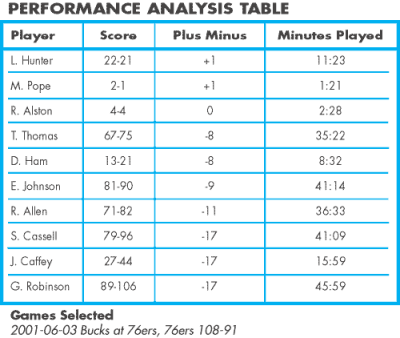
Image Source: coachad.com
Deciphering Basketball Plus Minus
Basketball plus minus is a valuable metric in sports analytics. It helps us grasp a player’s overall contribution beyond just scoring or assisting. This stat tells a story about how a team performs when a specific player is playing. A positive plus minus suggests the team outscored opponents with the player on the floor, while a negative one indicates the opposite. This is fundamental to comprehending advanced basketball statistics.
The Core Plus Minus Formula Basketball
The basic plus minus formula basketball is straightforward. You track the team’s score and the opponent’s score for every second a player is on the court.
Plus Minus = Team Points Scored – Opponent Points Scored
For example, if Player A plays 20 minutes and during those 20 minutes, their team scores 40 points and the opponent scores 35 points, Player A’s plus minus for that game is +5.
Tracking Plus Minus: The Basics
Tracking plus minus involves carefully recording points scored and allowed during a player’s time on the court. This can be done manually or through specialized tracking software. Every time a player enters or exits the game, a new scoring interval begins or ends for their plus minus calculation.
- Start of Play: When a player enters the game, their plus minus count begins.
- During Play: As the game progresses, you record the points your team scores and the points the opponent scores while that player is on the court.
- End of Play: When the player is substituted out, their plus minus for that stint is tallied. The total plus minus is the sum of these individual stints.
Calculating On-Off Court: A Deeper Dive
Calculating on-off court performance is a more refined way of looking at plus minus. Instead of just a player’s individual plus minus, it compares the team’s performance when a player is on the court versus when they are off the court. This helps identify a player’s true impact.
To calculate this:
- Player On-Court Stats: Record the team’s total points scored and allowed while the player is playing.
- Player Off-Court Stats: Record the team’s total points scored and allowed while the player is not playing.
- Comparison: Compare the scoring differential (points scored minus points allowed) when the player is on the court versus when they are off.
This comparison is crucial for understanding a player’s true value, as it accounts for the influence of other players on the court.
Net Rating Calculation: A Sophisticated Approach
Net rating calculation is a more advanced version of plus minus that considers points per 100 possessions. This adjusts for pace, making it a more consistent metric across different games and situations.
Net Rating = (Offensive Rating – Defensive Rating)
- Offensive Rating (ORtg): Points scored per 100 possessions.
- Defensive Rating (DRtg): Points allowed per 100 possessions.
To calculate Offensive Rating:
(Total Points Scored / Total Team Possessions) * 100
To calculate Defensive Rating:
(Total Points Allowed / Total Opponent Possessions) * 100
Possessions are estimated using a formula that considers field goal attempts, free throw attempts, and turnovers.
Player Efficiency Plus Minus: Combining Metrics
Player efficiency plus minus combines traditional plus minus with other efficiency metrics like points, assists, rebounds, and turnovers. This provides a more holistic view of a player’s impact. It aims to quantify how a player’s presence impacts the team’s scoring and efficiency beyond just the raw plus minus number.
This type of analysis often involves regression techniques to isolate a player’s impact from the contributions of their teammates and opponents.
NBA Plus Minus: Context and Interpretation
NBA plus minus statistics are widely used in professional basketball analysis. While a simple plus minus can be misleading due to the influence of teammates and the quality of opposition, advanced versions like Real Plus-Minus (RPM) and Box Plus-Minus (BPM) attempt to provide more accurate individual assessments.
- Raw Plus Minus: The basic, unadjusted stat.
- Adjusted Plus Minus (APM): Statistical models that try to remove the effects of teammates and opponents.
- Regularized Adjusted Plus Minus (RAPM): A more robust version of APM that uses regularization to improve stability.
- Box Plus-Minus (BPM): Estimates a player’s contribution per 100 possessions based on box score stats.
- Player Impact Plus-Minus (PIPM): Another metric aiming to isolate individual impact.
These advanced metrics are crucial for a deeper appreciation of basketball analytics plus minus.
Plus Minus Statistics: What They Tell Us
Plus minus statistics can reveal a lot about a player. A consistently high positive plus minus often indicates a player who positively influences scoring and defense. Conversely, a consistently low negative number might suggest a player who struggles to impact the game positively or perhaps plays a role that involves facing tougher competition.
It’s important to remember that plus minus is a team statistic that is attributed to an individual. A player’s plus minus is heavily influenced by the other four players on the court with them.
Fathoming Basketball Plus Minus: Nuances and Limitations
While plus minus is a powerful tool, it’s not perfect. Several factors can influence its accuracy and interpretation.
Factors Influencing Plus Minus
- Teammate Quality: A star player can boost the plus minus of their less talented teammates simply by being on the court.
- Opponent Quality: Playing against weaker opponents will naturally lead to better plus minus numbers.
- Lineup Combinations: The specific five players on the court at any given time significantly impact the team’s performance.
- Pace of Play: Games with more possessions tend to inflate raw plus minus numbers.
- “Garbage Time”: Players might accumulate positive or negative plus minus in situations where the game’s outcome is already decided, which may not reflect their true impact.
- Small Sample Sizes: Plus minus can be highly variable over short periods. A few good or bad possessions can drastically alter a player’s stat.
Using Plus Minus Effectively
To use plus minus effectively, consider these points:
- Look at Trends: Analyze a player’s plus minus over an entire season or multiple seasons, not just a single game.
- Consider Context: Factor in the quality of teammates, opponents, and the overall game situation.
- Combine with Other Stats: Use plus minus alongside traditional box score stats (points, rebounds, assists) and other advanced metrics for a more complete picture.
- On-Off Court Analysis is Key: Comparing a player’s impact when they are on the court versus off the court provides more reliable insights than raw plus minus alone.
Limitations of Raw Plus Minus
Raw plus minus has significant limitations:
- Ignores Pace: It doesn’t account for how many possessions were played.
- Team Dependent: It attributes team performance to individual players without isolating their specific impact.
- Doesn’t Credit Individual Plays: It doesn’t differentiate between a player’s direct contribution (like a steal leading to a basket) and general team performance.
Advanced Metrics and the Evolution of Plus Minus
The field of basketball analytics plus minus has evolved significantly. Researchers and analysts have developed more sophisticated metrics to address the limitations of basic plus minus.
Real Plus-Minus (RPM)
RPM attempts to isolate a player’s individual contribution by controlling for the quality of their teammates and opponents. It uses a regression analysis that considers all on-court lineup data. RPM is a complex calculation, but its goal is to provide a more accurate estimate of a player’s impact per 100 possessions.
Box Plus-Minus (BPM)
BPM is a box score-based metric that estimates a player’s points per 100 possessions contributed above a league-average player. It uses statistical relationships between box score stats and actual on-court performance. BPM is easier to calculate than RPM but relies solely on the available box score information.
Player Impact Plus-Minus (PIPM)
PIPM is another attempt to measure individual player impact by statistically separating a player’s contribution from that of their teammates and opponents. It typically uses a similar regression-based approach to other adjusted plus-minus metrics.
Interpreting Player Efficiency Plus Minus
When looking at player efficiency plus minus, it’s about how a player’s all-around game contributes to the team’s scoring margin. A player might not score a lot of points but could have a high positive plus minus due to excellent defense, smart passing, and creating good shot opportunities for teammates. Conversely, a high-volume scorer with a poor defensive impact might have a lower or even negative plus minus.
The Role of Plus Minus in Player Evaluation
Plus minus statistics, especially advanced versions, are increasingly used in player evaluation. They can highlight players who might be undervalued by traditional stats. For example, a defensive specialist who doesn’t score much but anchors the team’s defense might have a very strong on-off court differential, indicating their importance.
Example: Tracking Plus Minus for a Game
Let’s consider a hypothetical game scenario for Player X.
| Player X On-Court | Team Score | Opponent Score | Score Differential | Possessions |
|---|---|---|---|---|
| 1st Quarter | 25 | 20 | +5 | 24 |
| 2nd Quarter | 22 | 26 | -4 | 25 |
| 3rd Quarter | 30 | 28 | +2 | 26 |
| 4th Quarter | 28 | 32 | -4 | 27 |
| Total | 105 | 106 | -1 | 102 |
In this example, Player X’s raw plus minus for the game is -1.
Now, let’s add context:
- When Player X is ON the court: Team scored 105 points, Opponent scored 106 points.
- When Player X is OFF the court: Team scored 90 points, Opponent scored 85 points.
From this, we can start to infer. When Player X was playing, the team was outscored by 1 point. When Player X was not playing, the team outscored the opponent by 5 points. This might suggest that Player X’s presence on the court was detrimental to the team’s scoring margin in this particular game.
However, this is a simplified illustration. Advanced metrics would further analyze the quality of teammates and opponents during these periods.
Basketball Analytics Plus Minus: The Future
Basketball analytics plus minus is constantly evolving. Researchers are developing even more sophisticated methods to precisely measure individual player contributions and isolate their impact. These advancements are crucial for coaches, scouts, and fans to gain a deeper appreciation of the game.
Common Misconceptions About Plus Minus
It’s important to address some common misunderstandings about plus minus statistics.
- Myth: Plus minus is solely about an individual player’s scoring.
- Reality: Plus minus measures the team’s scoring margin while the player is on the court, reflecting contributions to both offense and defense, as well as the performance of teammates.
- Myth: A player with a high plus minus is always the best player.
- Reality: A player can have a high plus minus due to playing with other elite players who elevate the team’s performance. Conversely, a star player might have a lower plus minus if they are tasked with guarding the opponent’s best players or playing on weaker lineups.
- Myth: Plus minus is a perfect indicator of a player’s impact.
- Reality: While useful, plus minus has limitations due to factors like pacing, teammate influence, and lineup effects. It should be used in conjunction with other metrics.
Player Efficiency Plus Minus: Bridging the Gap
Player efficiency plus minus attempts to bridge the gap between raw plus minus and more complex analytics by integrating efficiency metrics. This helps paint a more nuanced picture of a player’s overall contribution to the team’s success.
Calculating On-Off Court: Beyond the Raw Number
Calculating on-off court performance is a way to move beyond the raw number. By comparing team performance with and without a player, analysts can better isolate that player’s true impact, accounting for the fact that basketball is a team sport.
Frequently Asked Questions (FAQ)
Q1: Is plus minus the only stat that matters?
No, plus minus is just one of many statistics used to evaluate players. While valuable, it should be considered alongside traditional stats like points, rebounds, assists, and advanced metrics like PER, true shooting percentage, and defensive rating for a comprehensive evaluation.
Q2: Can plus minus be negative?
Yes, a player’s plus minus can be negative. This means the team was outscored by opponents while that player was on the court.
Q3: How does pace affect plus minus?
Pace significantly affects raw plus minus. In faster-paced games with more possessions, players are on the court for more scoring opportunities, which can inflate or deflate their raw plus minus numbers. Advanced metrics like net rating (per 100 possessions) adjust for pace.
Q4: Is a higher plus minus always better?
Not necessarily. While a positive plus minus generally indicates a player’s positive impact, context is crucial. A player might have a high plus minus due to strong teammates, or a player with a lower plus minus might be playing a difficult role, such as guarding the opponent’s best players.
Q5: What is the difference between plus minus and net rating?
Plus minus is the raw scoring difference while a player is on the court. Net rating calculates the points scored per 100 possessions minus points allowed per 100 possessions, making it a pace-adjusted metric and a more standardized measure of team efficiency.
By delving into the various methods and nuances of calculating and interpreting plus minus, basketball enthusiasts and analysts can gain a much deeper appreciation for player performance and team dynamics.