
A basketball gym needs to be at least 25 feet high for professional play, though higher is always better for a more immersive experience and to accommodate various basketball facility standards. The exact requirements can vary slightly depending on the governing body and the level of play.
So, you’re planning a new basketball facility, or perhaps upgrading an existing one? A crucial element, often overlooked in favor of flashy scoreboards or polished hardwood, is the ceiling height. It’s more than just aesthetics; it directly impacts gameplay, player safety, and the overall experience for athletes and spectators alike. Fathoming the ideal basketball gym height is key to creating a functional and regulation-compliant space. Let’s dive deep into what makes a basketball gym the right height.
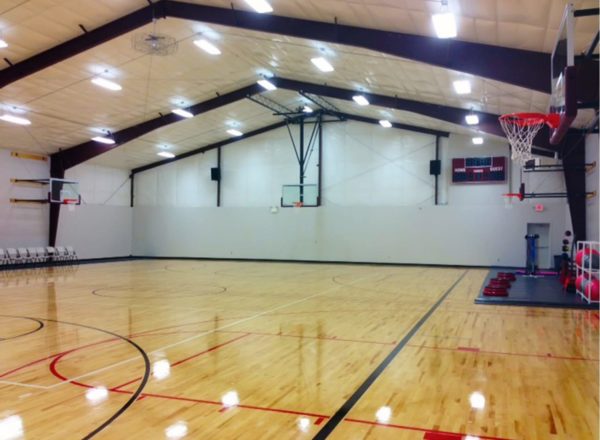
Image Source: gensteel.com
The Science Behind the Sky-High Ceilings
Why is ceiling height so important in a basketball gym? It boils down to physics and the nature of the game itself. Basketball involves vertical movement – jumping, shooting, and reaching for rebounds. A low ceiling can severely restrict these actions, leading to an awkward and potentially dangerous playing environment.
How High is High Enough? Governing Body Standards
Different organizations have their own guidelines for ceiling heights to ensure fair play and athlete well-being. These standards are crucial for anyone looking to build or certify a basketball facility.
FIBA Court Height Requirements
The International Basketball Federation (FIBA) sets global standards for basketball. For an official FIBA court, the recommended minimum ceiling height is 7 meters (approximately 23 feet). However, for major competitions and professional play, this is often extended.
NBA Court Ceiling Height Specifications
The National Basketball Association (NBA) operates with even more generous allowances. While there isn’t a single, universally published “NBA court ceiling height” number that applies to every single arena, a commonly cited minimum for new construction and significant renovations is 35 feet (approximately 10.7 meters). Older arenas might have slightly lower ceilings, but the trend is towards greater height to enhance the game’s visual spectacle and player freedom. This higher ceiling allows for more dramatic aerial plays, like alley-oops and soaring dunks, without the worry of players hitting the roof.
NCAA and High School Guidelines
For collegiate and high school levels, the requirements can be a bit more varied. Generally, the minimum gym ceiling height is often in the range of 20-25 feet for standard courts. However, for championship events or facilities aspiring to host higher-level competitions, aiming for heights closer to NBA or FIBA recommendations is advisable.
Beyond the Minimum: Why Higher is Often Better
While minimums exist, exceeding them can offer significant advantages.
- Player Freedom: A higher ceiling allows players to perform at their full athletic potential without the constant fear of striking the ceiling. This is particularly important for taller players and those who excel at jumping.
- Game Dynamics: The trajectory of a basketball shot is a parabola. A higher ceiling provides more room for lobs, high arcing shots, and clear visibility of the ball’s path.
- Spectator Experience: Higher ceilings can make a venue feel more spacious and grand, enhancing the overall atmosphere for fans.
- Event Versatility: A taller gym can accommodate more than just basketball. It might be suitable for other indoor sports, large gatherings, or even specialized training equipment that requires vertical clearance.
The Importance of Accurate Basketball Court Dimensions
While ceiling height is a major factor, it’s important to remember that it complements the overall basketball court dimensions. A regulation court needs specific length and width measurements, and the ceiling must be high enough to provide adequate clearance above these playing areas.
Regulation Basketball Court Height
When we talk about “regulation basketball court height,” we’re usually referring to the basketball hoop height, which is standardized at 10 feet (3.05 meters) from the floor to the rim. The ceiling, however, is a separate but related consideration. The height of the ceiling must be sufficient to allow the ball to be legally shot and to avoid interference with play.
Indoor Basketball Court Size Considerations
The overall size of the indoor basketball court – its length and width – is also a factor. A standard NBA court is 94 feet long and 50 feet wide. FIBA courts are slightly smaller, measuring 28 meters (91.9 feet) long and 15 meters (49.2 feet) wide. The ceiling must extend well beyond the boundaries of the court, providing ample space above the entire playing area and any surrounding safety zones.
Factors Influencing Basketball Facility Standards
When planning a basketball facility, several elements influence the ideal ceiling height.
Level of Play
- Professional/International: Requires the highest ceilings (e.g., NBA, FIBA elite) to accommodate the athleticism and specific game dynamics.
- Collegiate/High School: Generally needs good height, but perhaps not as extreme as professional levels, though higher is always preferred.
- Youth/Recreational: Minimums might be lower, but providing more height is always beneficial for player development and futureproofing.
Type of Facility
- Dedicated Basketball Arena: Will prioritize optimal ceiling height for performance and aesthetics.
- Multi-Purpose Gymnasium: Might need to balance basketball needs with those of other sports or activities, potentially leading to compromises if not carefully planned.
- Training Facility: May focus on specific drills that require high ceilings, such as vertical jump training or specific shooting techniques.
Budgetary Constraints
Higher ceilings often mean increased construction costs for structural materials, HVAC systems, lighting, and potentially specialized acoustic treatments. This is a significant consideration for any project.
Architectural Design and Aesthetics
The visual impact of the ceiling height on the overall design of the gym is also important. A soaring ceiling can create a dramatic effect, while a lower one might feel more intimate.
Navigating the Practicalities: Lighting, Acoustics, and Maintenance
Beyond just height, the ceiling structure itself has practical implications.
Lighting
Adequate and uniform lighting is crucial for visibility. The height of the ceiling will influence the type and placement of lighting fixtures. For higher ceilings, more powerful and strategically placed lights are needed to ensure the court is evenly illuminated without creating shadows or glare. LED lighting is a common and energy-efficient choice.
Acoustics
Basketball gyms can be noisy environments. The reverberation of sound off hard surfaces, including the ceiling, can be significant. Higher ceilings can sometimes exacerbate echo issues. Consider acoustic treatments such as specialized ceiling tiles, baffles, or wall panels to manage sound and improve the overall auditory experience for players and spectators.
Maintenance and Accessibility
The height of the ceiling impacts maintenance tasks like cleaning, repairing lighting, or replacing scoreboards. Ensure that access for these activities is factored into the design, whether through specialized lifts or accessible catwalks.
Choosing the Right Height: A Balancing Act
When deciding on the recommended gym height for basketball, it’s a balancing act between meeting regulations, optimizing gameplay, and managing costs.
A Look at Different Height Scenarios
Let’s consider some common scenarios and their corresponding height needs:
-
Scenario 1: High School Gymnasium
- Goal: Host regular league games, potential district tournaments.
- Considerations: Need to meet basic safety requirements and allow for reasonable play.
- Recommendation: Aim for at least 25-30 feet. This provides good clearance for most shots and prevents most players from hitting the ceiling. If budget allows, pushing towards 35 feet would be ideal for future-proofing.
-
Scenario 2: NCAA Division I Arena
- Goal: Host conference and national tournaments, attract top recruits.
- Considerations: High level of play, demanding fan experience, professional broadcast standards.
- Recommendation: Minimum of 35 feet, with 40-50 feet being highly desirable for optimal player performance and visual spectacle. This aligns with the upper echelon of basketball facility standards.
-
Scenario 3: Community Center Gym
- Goal: Recreational leagues, youth programs, general community use.
- Considerations: Safety is paramount, but cost-effectiveness is also a major factor.
- Recommendation: A minimum of 22-25 feet is generally acceptable. However, even with lower budgets, prioritizing as much height as feasible will benefit users, especially youth who are rapidly growing.
The “Minimum Gym Ceiling Height” Trap
While a minimum gym ceiling height is often cited, it’s crucial to recognize that this is often the absolute bare minimum and may not provide an optimal playing experience. For any serious basketball program or facility aiming for quality, exceeding the minimum is the standard practice.
Calculating Your Needs: A Simple Guide
To determine the appropriate ceiling height, consider these steps:
- Identify the Primary Use: What level of basketball will be played most often?
- Research Governing Body Rules: Check the specific regulations for any leagues or organizations you plan to adhere to.
- Factor in Player Height and Athleticism: Taller players and higher jumping athletes require more vertical clearance.
- Consider Future Needs: Will the facility host higher-level competitions in the future?
- Consult with Architects and Sports Facility Experts: They can provide invaluable guidance based on your specific project and budget.
Frequently Asked Questions (FAQ)
Q1: What is the absolute minimum ceiling height for a basketball gym?
The absolute minimum is often cited as around 20-22 feet, but this is generally for very basic, low-level recreational use and can be restrictive even for youth play. For any competitive play, especially at high school level and above, significantly more height is recommended.
Q2: Can I build a basketball gym with a 20-foot ceiling?
You can, but it will likely be restrictive for players, especially taller ones. Shots may hit the ceiling, and the overall playing experience might be compromised. It’s not ideal for serious basketball.
Q3: Who sets the standards for basketball gym height?
Organizations like FIBA (International Basketball Federation) and the NBA (National Basketball Association) set standards for professional and international play. National federations and governing bodies for collegiate and scholastic sports also establish their own guidelines.
Q4: Does ceiling height affect the bounce of the basketball?
The ceiling itself doesn’t affect the bounce of the ball on the court. The court surface and the ball’s inflation are the primary factors. However, a very low ceiling can interfere with the trajectory of a shot, indirectly affecting how a player might perceive or execute a shot, but not the actual bounce mechanics.
Q5: What are the dimensions of a regulation basketball court?
A regulation NBA court is 94 feet long by 50 feet wide. A FIBA court is 28 meters long (approx. 91.9 feet) by 15 meters wide (approx. 49.2 feet). The ceiling must extend well beyond these dimensions.
Q6: How high is the basketball hoop?
The basketball hoop height is universally set at 10 feet (3.05 meters) from the floor to the rim for all standard competitive play.
By carefully considering these aspects, you can ensure your basketball gym is not only regulation-compliant but also a superior space for athletes to perform and fans to enjoy the game. The height of your ceiling is a fundamental aspect of creating a truly exceptional basketball facility.