
Building an outdoor basketball court is an exciting project, but the cost can vary widely. The price of an outdoor basketball court can range from $5,000 for a basic DIY setup to over $100,000 for a professional-grade, custom-built court. Several factors influence this cost, including the size of the court, the type of surfacing material, the quality of the hoop and accessories, and whether you hire professionals or go the DIY route.
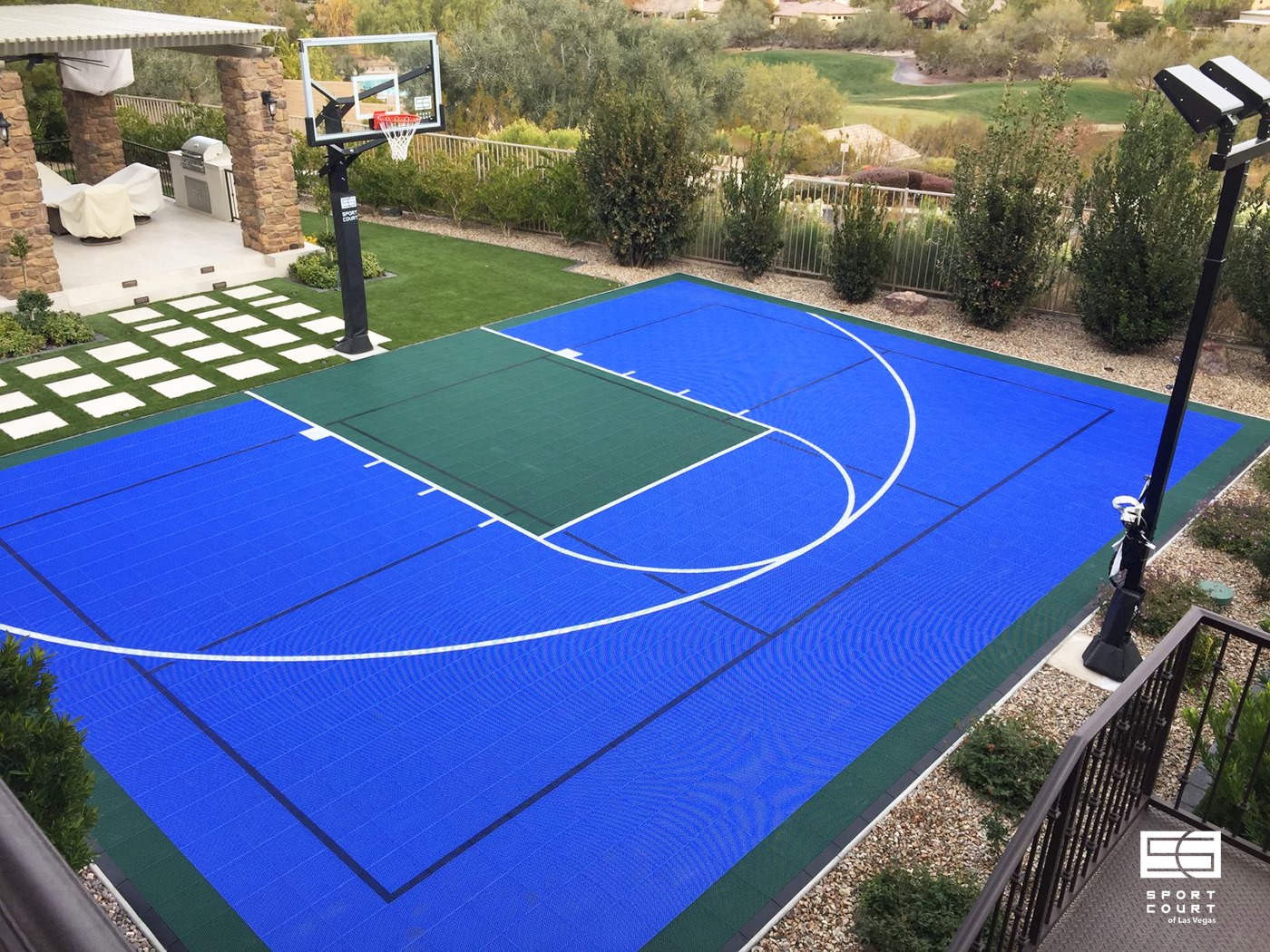
Image Source: cdn-west.sqhk.co
Factors Influencing Your Outdoor Basketball Court Budget
When planning your outdoor basketball court, several key elements will determine the final price tag. Think of these as the building blocks of your investment.
Court Dimensions and Material Costs
The size of your court is a primary driver of cost. Standard NBA and FIBA courts have specific dimensions, but backyard courts can be customized.
- Regulation Size: A full-size NBA court is 94 feet long by 50 feet wide. This requires a significant area and, therefore, more materials and labor.
- Half Court: Many homeowners opt for a half court, which is typically 42 feet long by 50 feet wide. This is a more manageable and often more affordable option.
- Custom Size: You can choose any dimensions that fit your available space. Smaller courts will naturally cost less due to reduced material needs.
The choice of outdoor court surfacing materials is another major cost factor. Each material has its own pros, cons, and price point.
Concrete vs. Asphalt Basketball Court Cost
This is a fundamental decision that significantly impacts your budget.
- Concrete:
- Pros: Extremely durable, long-lasting, provides a solid foundation, can be painted for a professional look.
- Cons: Can crack over time due to weather, requires expansion joints, can be harder on joints for players.
- Estimated Cost: $4 – $8 per square foot for basic installation.
- Asphalt:
- Pros: More flexible than concrete, less prone to cracking, good drainage, can be a slightly more affordable option initially.
- Cons: Requires regular sealing, can soften in extreme heat, may not hold paint as well as concrete over time.
- Estimated Cost: $3 – $7 per square foot for basic installation.
Other Surfacing Options
Beyond concrete and asphalt, other materials offer different aesthetics and performance:
- Modular Tiles (Polypropylene):
- Pros: Excellent drainage, shock absorption, various colors, easy to install, can be replaced individually.
- Cons: Higher initial cost, can be less forgiving on joints than some other surfaces, may fade over time.
- Estimated Cost: $3 – $8 per square foot.
- Acrylic Coating:
- Pros: Applied over concrete or asphalt, provides excellent traction, vibrant colors, good shock absorption, UV resistant.
- Cons: Adds to the overall cost if resurfacing an existing court, requires periodic reapplication.
- Estimated Cost: $1 – $3 per square foot (on top of base material).
Hoop and Backboard Selection
The basketball hoop is a centerpiece of your court, and its quality and features greatly influence the price.
Basketball Hoop Installation Fees
Installation costs vary based on the type of hoop.
- In-Ground Systems:
- Pros: Most stable and professional feel, adjustable height.
- Cons: Requires digging a concrete anchor, more complex installation.
- Estimated Cost: Hoop unit ($300 – $3,000+) + Installation ($300 – $800).
- Wall-Mount Systems:
- Pros: Space-saving, can be mounted on a garage or house.
- Cons: Requires a sturdy wall, may not offer the same rebound as in-ground.
- Estimated Cost: Hoop unit ($300 – $1,500+) + Installation ($100 – $300).
- Portable Systems:
- Pros: Movable, easier to set up.
- Cons: Less stable, can be blown over in high winds, often lower quality.
- Estimated Cost: Hoop unit ($200 – $1,000+), typically no separate installation fee if purchased and set up by the owner.
Backboard Material:
- Acrylic: Offers good rebound, durable, moderate price.
- Polycarbonate: Very durable, excellent rebound, higher price.
- Tempered Glass: Best rebound and “pro” feel, most expensive, requires sturdy mounting.
Site Preparation and Foundation
Before any surfacing can be laid, the ground needs to be prepared. This is a crucial step often overlooked in basic DIY basketball court pricing.
- Excavation: Removing existing grass, soil, or debris.
- Grading: Ensuring a level and smooth surface for proper drainage.
- Base Material: Often a layer of compacted gravel or crushed stone is added for stability and drainage.
- Edging: Materials like concrete curbing or metal edging to contain the court surface.
These steps add to the overall cost, especially if the site is sloped or has challenging soil conditions.
Labor and Professional Installation
The decision to DIY or hire professionals dramatically impacts the backyard basketball court installation costs.
Professional Sports Court Builders Cost
Professional sports court builders cost significantly more than a DIY approach, but they bring expertise and ensure a high-quality, durable result. They handle everything from site preparation to final surfacing and line painting.
- Services Included: Design, excavation, grading, base installation, surfacing, hoop installation, line painting, optional fencing or lighting.
- Estimated Cost: Expect to pay between $30,000 to $100,000+ for a professionally built full or half-court, depending on the complexity and materials.
DIY Basketball Court Pricing
A DIY basketball court pricing model can save money, but it requires significant time, effort, and often specialized tools.
- Cost Savings: Primarily by eliminating labor costs.
- Considerations: Risk of errors in site prep or installation, potential need to rent equipment, time commitment.
- DIY Cost Range: $5,000 – $30,000, depending heavily on the chosen surfacing and hoop.
Additional Features and Customization
Your dream court might include more than just a playing surface and a hoop.
- Lighting: For evening play, consider floodlights or LED lighting systems.
- Fencing: To keep balls contained and provide privacy.
- Spectator Seating: Benches or even small bleachers.
- Water Drainage: While good grading helps, specialized drainage systems might be needed for very wet climates.
- Color and Line Painting: Custom colors and detailed line work add to the aesthetic appeal and can incur extra costs.
Average Price for Tennis Court Conversion to Basketball
If you already have a tennis court, converting it to a basketball court can be a cost-effective option.
- Existing Base: You likely have a solid concrete or asphalt base already in place.
- Resurfacing: The primary cost will be resurfacing with acrylic coatings designed for basketball, adding lines, and installing a basketball hoop.
- Estimated Cost: $5,000 – $20,000, depending on the condition of the existing court and the extent of the conversion. This is generally much less than building from scratch.
Breaking Down the Costs: A Sample Scenario
Let’s look at a hypothetical custom outdoor basketball court estimates for a half-court (50×42 feet) with concrete surfacing.
| Item | Estimated Cost Range (DIY) | Estimated Cost Range (Professional) | Notes |
|---|---|---|---|
| Site Preparation | $500 – $2,000 | $1,000 – $5,000+ | Grading, excavation, base gravel. Varies by site complexity. |
| Concrete Pour (8-inch) | $4,000 – $8,000 | $6,000 – $12,000+ | Includes materials, rebar, finishing. Price per sq ft ($4-$8). |
| Acrylic Coating | $500 – $1,000 | $700 – $1,500 | Includes primer, color coats, top coat. |
| Line Painting | $100 – $300 | $200 – $500 | Professional painters ensure crisp lines. |
| In-Ground Hoop | $400 – $1,500 | $500 – $2,000+ | Mid-range to high-quality adjustable hoop. |
| Hoop Installation | $200 – $500 | $400 – $800 | Professional installation for in-ground systems. |
| Optional Edging | $200 – $600 | $400 – $1,000 | Concrete curbing or similar. |
| Total Estimated Cost | $6,000 – $14,000 | $9,200 – $23,300+ | This is a baseline; custom features will increase costs. |
Note: These are rough estimates. Actual prices will vary by location, specific material choices, and current market conditions.
Cost Comparison: Concrete vs. Asphalt
For the same 50×42 ft half-court:
| Feature | Concrete (Estimated Total) | Asphalt (Estimated Total) |
|---|---|---|
| Base Material | $5,000 – $10,000 | $4,000 – $9,000 |
| Surfacing | $4,000 – $8,000 | $3,000 – $7,000 |
| Coating/Sealing | $500 – $1,500 | $300 – $800 (sealant) |
| Hoop & Installation | $600 – $2,000 | $600 – $2,000 |
| Total Range | $10,100 – $21,500 | $8,000 – $18,800 |
As you can see, asphalt can offer a slight cost advantage for the base and surfacing, but the long-term maintenance and durability of concrete might justify the initial investment for some.
Deciphering the Price for Different Levels of Quality
The price you pay directly correlates with the quality of materials and the level of expertise involved. Sports surfacing contractors pricing reflects this.
Entry-Level Backyard Courts (DIY Focus)
If you’re looking for a budget-friendly option, a DIY basketball court pricing model will be your focus.
- Focus: A basic, functional court.
- Materials: May involve simpler surfacing like compacted gravel with an acrylic overlay, or even a well-prepared dirt base with specialized paint (though less durable). A solid concrete slab is still common.
- Hoop: A sturdy but basic in-ground system or a quality portable hoop.
- Dimensions: Often a half-court or even smaller.
- Estimated Cost: $5,000 – $15,000.
Mid-Range Custom Courts
This is where many homeowners find their sweet spot, balancing quality and cost.
- Focus: A durable, attractive court with good performance.
- Materials: High-quality concrete or asphalt with a multi-layer acrylic coating for excellent playability and aesthetics. Possibly modular tiles.
- Hoop: A high-quality adjustable in-ground hoop with a tempered glass or thick acrylic backboard.
- Dimensions: Full half-court or custom size with precise line markings.
- Estimated Cost: $15,000 – $40,000.
High-End, Professional-Grade Courts
These are built to last and mimic the feel of professional arenas.
- Focus: Maximum durability, performance, and aesthetics.
- Materials: Thick, reinforced concrete slab, premium acrylic coating systems, often with cushioning layers. Potentially specialized interlocking tiles.
- Hoop: Top-tier, professional-grade in-ground hoop systems with breakaway rims and high-quality glass backboards.
- Dimensions: Regulation size or custom, with precise, painted lines and potentially inlaid logos.
- Additional Features: Lighting, fencing, custom landscaping.
- Estimated Cost: $40,000 – $100,000+.
Factors That Can Increase Your Court Cost
While the core elements above dictate the bulk of the expense, several other factors can push the price up.
Site Challenges
- Sloping Terrain: Requires more extensive grading and potentially retaining walls.
- Poor Soil Conditions: May necessitate deeper excavation and more robust base materials.
- Difficult Access: If the installation site is hard to reach with equipment, labor costs can increase.
- Underground Utilities: Locating and working around existing pipes or cables can add complexity and cost.
Permitting and Zoning
- Local Regulations: Some municipalities require permits for building structures like sports courts. These can have associated fees.
- Zoning Laws: Ensure your planned court complies with local zoning ordinances regarding setbacks and property use.
Durability and Longevity
Investing in higher-quality materials and professional installation will generally lead to a longer-lasting court with less maintenance.
- Thicker Slabs: A 6-inch concrete slab is standard, but an 8-inch slab with rebar offers superior durability.
- High-Performance Coatings: Multi-layer acrylics with UV inhibitors and cushioning agents are more expensive but resist fading and impact better.
- Proper Drainage: Crucial for preventing freeze-thaw damage and water pooling, which can degrade any surface.
Getting Your Custom Outdoor Basketball Court Estimates
To get an accurate idea of your project’s cost, you’ll need to get specific quotes.
Working with Professional Sports Court Builders
When you engage professional sports court builders, they will typically follow a process like this:
- Consultation: Discuss your needs, desired size, materials, and budget.
- Site Visit: Assess your property for grading, access, and any potential challenges.
- Design and Quote: Provide a detailed proposal outlining the scope of work, materials, timeline, and total cost.
- Contract Signing: Formalize the agreement.
- Permitting: The builder may handle permit applications.
- Construction: Site preparation, base installation, surfacing, and hoop installation.
- Completion: Final inspection and handover.
DIY Planning and Cost Management
If you’re going the DIY route, careful planning is essential for managing DIY basketball court pricing.
- Measure Your Space: Determine the exact dimensions you can accommodate.
- Research Materials: Compare prices and suitability of concrete, asphalt, modular tiles, and coatings.
- Get Hoop Quotes: Research different brands and models.
- Factor in Tool Rental: Estimate costs for excavators, compactors, concrete finishing tools, etc.
- Calculate Material Needs: Use online calculators or consult suppliers for accurate quantities.
- Get Material Delivery Quotes: Delivery fees can add up.
- Don’t Forget Small Items: Sealants, paint, cleaning supplies, safety gear.
Frequently Asked Questions (FAQ)
Q1: What is the cheapest way to build an outdoor basketball court?
The cheapest way typically involves a smaller court size, basic surfacing like compacted gravel with acrylic paint, and a less expensive hoop system. Going the DIY route for site preparation and installation also significantly cuts costs. However, “cheapest” may not always mean “best value” in terms of durability and playability.
Q2: Can I build a basketball court myself?
Yes, you absolutely can build a basketball court yourself, but it requires significant planning, physical labor, and potentially renting specialized equipment. It’s a substantial project, and careful research into DIY basketball court pricing and techniques is crucial for success.
Q3: Who is the best professional sports court builder?
The “best” builder depends on your location and specific needs. Look for experienced companies with a strong portfolio, good reviews, and relevant certifications. Get multiple quotes to compare. Companies specializing in acrylic coatings or sport surfacing often have the most expertise.
Q4: What are the typical court dimensions for a backyard?
Backyard courts are highly customizable. Common sizes include a full half-court (42 ft x 50 ft) or a three-quarter court. Many people opt for custom dimensions that fit their available space, sometimes even just a driveway section with a hoop.
Q5: How long does an outdoor basketball court last?
With proper installation and regular maintenance, a concrete or asphalt court can last 20-30 years or more. Modular tile courts might have a slightly shorter lifespan depending on material quality and exposure. Regular cleaning, crack repair (for concrete/asphalt), and reapplication of coatings will extend the life of any court.
Q6: Is concrete or asphalt better for a basketball court?
Both have pros and cons. Concrete offers a harder, more consistent surface ideal for rebound and is generally more durable against extreme temperatures. However, it can crack. Asphalt is more flexible, less prone to cracking, and can be more affordable initially, but it requires more frequent sealing and can soften in heat. Many prefer concrete for its longevity and performance.
By carefully considering these factors and obtaining detailed custom outdoor basketball court estimates, you can make informed decisions to build the perfect outdoor basketball court for your home.