
The height of a basketball ring, also known as a hoop or basket, is a fundamental aspect of the game, and for most adult and professional play, the standard basketball ring height is 10 feet (3.05 meters) from the playing surface to the top edge of the rim. This consistent measurement is crucial for fair competition and strategic gameplay across various levels of the sport.
This height isn’t an arbitrary number; it’s a carefully considered standard that has evolved over time to create a balanced and challenging game. From the professional arenas of the NBA to the local parks and recreation centers, this 10-foot mark is the benchmark for a regulation basketball rim height.
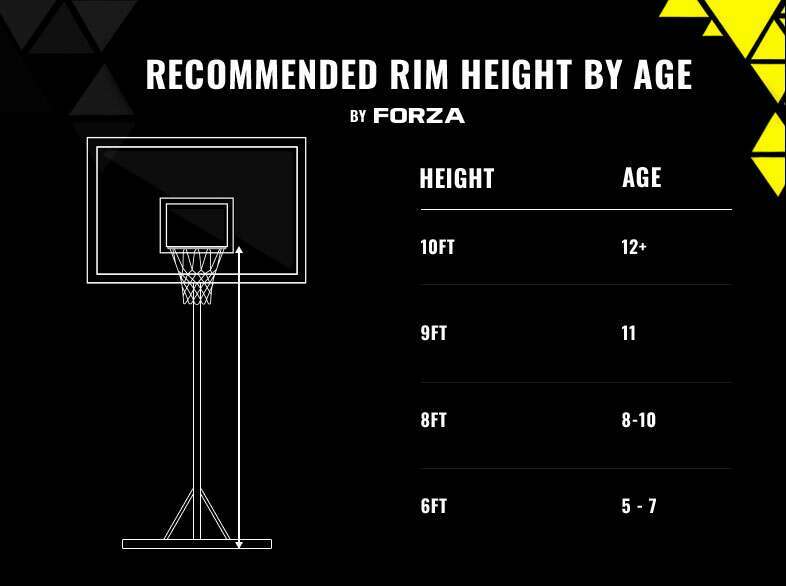
Image Source: nwscdn.com
The Standard Basketball Hoop Height: A Global Constant
The iconic 10-foot basketball hoop height is a global standard, meaning you’ll find it in virtually every corner of the world where the game is played seriously. This uniformity allows players to develop skills and strategies that translate across different leagues and competitions. When you step onto a court, whether it’s in Los Angeles, Tokyo, or Rome, that 10-foot barrier remains the same, presenting the same challenge to players of all skill levels.
This consistency is vital for the sport’s accessibility and its development. A player learning the game at a young age will, with dedication, aspire to reach the professional level, and they’ll be doing so by aiming at the same height they started with, just with increased skill and power.
NBA Hoop Height: The Pinnacle of Professional Play
In the National Basketball Association (NBA), the NBA hoop height adheres strictly to the universal 10-foot standard. This height is a critical element in the strategic and athletic demands of professional basketball. The sheer athleticism of NBA players – their jumping ability, strength, and accuracy – makes the 10-foot rim a formidable, yet achievable, target.
The NBA’s commitment to this height ensures that the game remains a display of skill, strategy, and athleticism. Factors like the speed of the game, the power of dunks, and the precision of jump shots are all influenced by this specific rim elevation.
FIBA Basketball Hoop Height: International Standards
The International Basketball Federation (FIBA), which governs international basketball, also sets the FIBA basketball hoop height at the same 10 feet (3.05 meters). This international alignment is crucial for global competitions like the Olympics and the FIBA World Cup. It ensures that athletes from different countries compete on a level playing field, with the same fundamental rules and equipment.
The standardization of the hoop height by both NBA and FIBA means that the core challenge of scoring points remains consistent, regardless of where the game is played on an international stage.
College Basketball Hoop Height: Next Level Aspirations
For collegiate athletes, the college basketball hoop height is also precisely 10 feet. This level of play serves as a significant stepping stone for many aspiring professional players. The transition from high school to college basketball often involves an increase in speed, physicality, and strategic complexity, but the fundamental challenge of the 10-foot rim remains constant, allowing players to focus on refining their skills rather than adapting to different heights.
The familiarity of the college game’s hoop height with the professional standard provides a smooth transition for players aiming for the NBA or other professional leagues.
Youth Basketball Hoop Height: Growing with the Game
The youth basketball hoop height is where we see variations, and for good reason. As children develop physically and learn the fundamentals of the game, a 10-foot hoop can be an insurmountable obstacle. To foster skill development and enjoyment, lower hoops are used for younger age groups.
Here’s a general guide to common youth basketball hoop heights:
| Age Group | Recommended Hoop Height (Feet) | Recommended Hoop Height (Meters) |
|---|---|---|
| Ages 5-7 | 4 – 6 | 1.2 – 1.8 |
| Ages 8-10 | 7 – 8 | 2.1 – 2.4 |
| Ages 11-13 | 8 – 9 | 2.4 – 2.7 |
| Ages 14+ (or until consistent 10-foot shooting) | 10 | 3.05 |
These are approximate guidelines, and some organizations may have slightly different recommendations based on specific developmental stages and local programs. The key is to ensure that younger players can successfully shoot and score, building confidence and refining their technique before progressing to the regulation height.
The goal with adjusting youth hoop heights is to allow players to focus on proper shooting form, such as elbow alignment and follow-through, without the added difficulty of reaching a high rim. As they grow and their strength and coordination improve, the hoop height is gradually increased.
Adjustable Basketball Hoop Height: Flexibility for All
The advent of adjustable basketball hoop height systems has revolutionized basketball for families and recreational players. These systems allow the hoop to be raised or lowered, making them incredibly versatile. This is particularly beneficial for:
- Families with children of different ages: A single hoop can be adjusted to accommodate younger children and older siblings or parents.
- Skill progression: As a player improves, the hoop can be raised incrementally towards the regulation 10-foot height.
- Practice drills: Coaches can adjust the hoop height for specific drills, perhaps lowering it slightly for shooting practice to focus on form.
Adjustable hoops typically range from as low as 5 feet (1.5 meters) to the standard 10 feet. This flexibility ensures that the game can be enjoyed and practiced effectively by players of all ages and abilities.
Beyond the Height: Standard Basketball Rim Size and Backboard
While the height of the basketball ring is paramount, other dimensions are also standardized to ensure a consistent playing experience.
Official Basketball Rim Diameter
The official basketball rim diameter is also a crucial measurement. The inner diameter is 18 inches (45.7 cm). This precise size is designed to accommodate the standard basketball. Too small, and the ball would frequently bounce out; too large, and scoring would become excessively easy, altering the game’s fundamental challenge.
The thickness of the rim itself is also specified, usually being 5/8 inch (1.6 cm) in diameter for professional and high-level play, ensuring durability and a consistent rebound.
Basketball Backboard Height and Dimensions
The basketball backboard height and dimensions also play a role in the game. While the height of the backboard isn’t directly tied to the hoop’s height in the same way, its position relative to the hoop is standardized.
- Backboard Dimensions: For professional and collegiate play, the backboard is typically 6 feet (1.83 meters) wide and 3.5 feet (1.07 meters) high.
- Positioning: The backboard is positioned so that the front face is 4 feet (1.22 meters) in from the front face of the nearest sideline. The rim is centered on the backboard, 6 inches (15.2 cm) in from the top edge of the backboard.
The backboard’s presence adds another layer of strategy, allowing for bank shots and influencing the trajectory of missed shots. Its size and positioning are critical for these aspects of the game.
The Impact of Hoop Height on Gameplay
The 10-foot hoop height is not just a measurement; it profoundly influences how the game is played at all levels.
Athleticism and Dunking
At the professional level, the 10-foot rim is what allows for the spectacular dunks that fans cheer for. The combination of a player’s vertical leap and the 10-foot barrier creates an athletic feat. If the rim were lower, dunking would become commonplace, potentially diminishing its impact and excitement. Conversely, if it were higher, it might become an almost impossible feat for many players.
Shooting Mechanics and Strategy
The hoop’s height dictates shooting mechanics. Players must develop the proper arc and power to get the ball into the basket. This influences:
- Jump shot technique: A consistent jump shot requires precise upward trajectory.
- Layup and finger roll effectiveness: Players must judge the angle and power needed to get the ball over defenders and into the hoop, often using the backboard.
- Three-point shooting: The increased distance combined with the 10-foot height makes three-point shots a strategic challenge, requiring significant range and accuracy.
Defensive Strategies
The hoop height also impacts defensive strategies. Defenders position themselves to contest shots, block passes, and rebound, all with the 10-foot target in mind. The ability to jump high and reach the rim is a significant defensive advantage.
Historical Evolution of Hoop Height
While 10 feet is the current standard, it wasn’t always the case. The game of basketball was invented by James Naismith in 1891. His original hoops were, in fact, peach baskets nailed to the gymnasium balcony, which was about 10 feet high. So, in a way, the standard basketball rim height has been consistent with the game’s very beginnings.
Over the years, as the sport evolved, so did the equipment. Metal hoops with nets replaced the original peach baskets, but the 10-foot height remained the established standard. This early decision by Naismith set a precedent that has largely endured for over a century.
Frequently Asked Questions (FAQ)
Q1: Is the basketball hoop height the same in all countries?
A1: Yes, for organized and competitive play, the basketball hoop height is universally set at 10 feet (3.05 meters) by FIBA and adopted by most national basketball federations.
Q2: Can I use a lower hoop for my child if they are struggling?
A2: Absolutely. As discussed, youth basketball hoop height is often adjusted for younger players. Using an adjustable hoop or a lower fixed hoop is highly recommended to help children develop proper form and enjoy the game.
Q3: Who decided on the 10-foot hoop height?
A3: The 10-foot hoop height is attributed to the game’s inventor, James Naismith. The original peach baskets he used were placed on a gymnasium balcony railing approximately 10 feet off the ground.
Q4: What is the official basketball rim diameter?
A4: The official inner diameter of a basketball rim is 18 inches (45.7 cm).
Q5: Does the backboard height affect the game?
A5: While the backboard itself doesn’t have a “height” in the same sense as the rim, its dimensions and positioning relative to the rim are standardized. The backboard’s surface allows for bank shots, which is a crucial element of offensive strategy, and it influences rebound play.
Q6: Are there any exceptions to the 10-foot hoop height rule?
A6: The primary exceptions are for youth leagues and recreational play where adjustable hoops or fixed lower hoops are used to accommodate different age groups and skill levels. Professional, collegiate, and international competitive play consistently adhere to the 10-foot standard.
Q7: How does the hoop height influence the way professional players shoot?
A7: The 10-foot height requires professional players to develop significant accuracy, arc, and power in their shots. It necessitates precise jumping ability for layups and dunks, and a refined shooting motion for jump shots to clear defenders and reach the basket.
By maintaining a consistent 10-foot basketball hoop height, the sport of basketball offers a universal challenge, promoting athletic prowess, strategic thinking, and skill development across generations and borders. Whether you’re a beginner on a lowered hoop or an elite athlete aiming for the professional leagues, the 10-foot challenge is the heart of the game.