
The NBA hoop height, or the height of NBA basket, is a precisely defined measurement. In the National Basketball Association (NBA), the standard basketball rim height is unequivocally 10 feet from the playing surface to the top of the rim. This unwavering standard is a cornerstone of the game, influencing everything from player strategy to the very physics of shooting. Let’s delve deeper into the intricacies of this fundamental aspect of the professional basketball world, exploring not just the height but also the related NBA hoop size, regulation basketball hoop specifications, and the broader context of the basketball court dimensions.
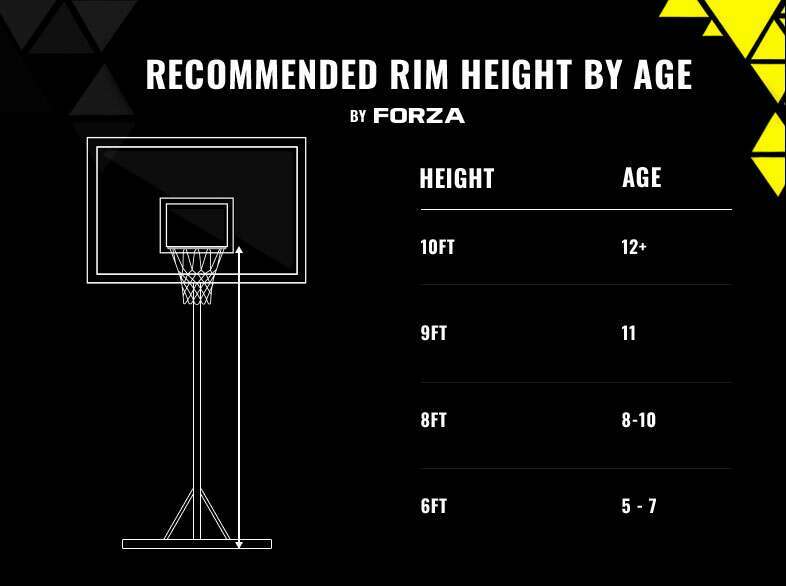
Image Source: nwscdn.com
The Unchanging Standard: 10 Feet
The NBA rim diameter is also a critical factor, measuring 18 inches. This, combined with the 10-foot height, creates the iconic target that countless athletes strive to reach. This standard hoop height has been in place for decades, providing a consistent challenge across generations of players. It’s a number ingrained in the minds of anyone who has ever picked up a basketball, from casual players in driveways to the towering professionals on the hardwood.
A Look at Regulation Basketball Hoop Specifications
When we talk about a regulation basketball hoop, we’re referring to the official measurements and materials used in competitive play. The NBA, along with FIBA (International Basketball Federation) and NCAA (National Collegiate Athletic Association), adheres to a very specific set of guidelines to ensure fairness and uniformity.
Key Specifications of a Regulation Basketball Hoop:
- Rim Height: 10 feet (3.05 meters) from the playing surface to the top edge of the rim.
- Backboard Size: Typically 6 feet wide by 3.5 feet high (1.83 meters by 1.07 meters). While the backboard dimensions can vary slightly in recreational settings, professional leagues mandate specific sizes.
- Rim Diameter (NBA rim diameter): 18 inches (45.72 cm) inside diameter.
- Backboard Material: Usually made of tempered glass or acrylic for durability and bounce.
- Rim Material: Steel, with a specific diameter and thickness to provide a consistent rebound.
- Net: A white, looped net made of nylon or similar material, designed to slow the ball’s passage through the rim.
These specifications are not arbitrary. They are the result of careful consideration of the game’s evolution, player capabilities, and the desired spectacle. The NBA hoop size and its precise NBA basketball rim height are crucial for maintaining the integrity of the sport.
The Significance of the 10-Foot Mark
Why 10 feet? The choice of this standard basketball rim height is a fascinating historical and practical matter. Early forms of basketball, invented by James Naismith in 1891, used peach baskets, which were nailed to the gymnasium balcony. These were mounted at approximately 10 feet. As the game evolved and the need for standardization arose, this height was retained.
The 10-foot height presents a significant challenge for players. It requires a combination of strength, technique, and accuracy to consistently score.
- Vertical Leap: Players need substantial vertical leap to dunk the ball, a feat that requires reaching well above the rim.
- Shooting Arc: The arc of a jump shot is crucial. Too flat, and the ball is more likely to hit the rim. Too high, and it may sail over. The 10-foot height dictates this optimal arc.
- Passing and Rebounding: The height also influences the dynamics of passing, particularly alley-oops, and the angles of rebounds.
The NBA hoop height is not just a measurement; it’s a defining characteristic of the game, shaping the skills and strategies employed by every player.
NBA Hoop Size vs. Other Levels
While the NBA hoop height is 10 feet, it’s important to note that other levels of basketball often adhere to the same regulation basketball hoop standards. This ensures that young players developing their skills are learning with the same fundamental measurements they will encounter at higher levels.
Youth Basketball and Hoop Height
For younger players, especially those just starting out, the 10-foot standard hoop height can be a daunting obstacle. Many youth leagues and recreational facilities utilize adjustable hoops.
- Beginner Levels (e.g., Ages 5-7): Hoops are often lowered to 6 feet or 7 feet.
- Intermediate Levels (e.g., Ages 8-10): Hoops might be set at 8 feet.
- Advanced Youth (e.g., Ages 11-13): Many move to 9 feet before reaching the full 10 feet.
This graduated approach allows children to develop proper shooting form and build confidence without the discouragement of consistently missing due to the rim’s height. The transition to the official basketball hoop size of 10 feet is a significant milestone in a young player’s development.
FIBA and NCAA Standards
The height of NBA basket is remarkably consistent with other major basketball organizations.
- FIBA: The International Basketball Federation also mandates a standard basketball rim height of 3.05 meters (10 feet) for all its competitions. The NBA rim diameter is also the same as FIBA regulations.
- NCAA: Similarly, the National Collegiate Athletic Association follows the NBA basketball rim height of 10 feet.
This global uniformity in NBA hoop size and height is vital for international competition and player development. A player moving from a national league to an international tournament, or from college to the pros, will be accustomed to the same rim height.
The Basketball Court Dimensions: A Related Factor
While the focus is on the NBA hoop height, it’s impossible to discuss it in isolation without acknowledging the basketball court dimensions. The standard NBA court is 94 feet long and 50 feet wide. These dimensions, along with the placement of the hoops at each end, create the playing area where the 10-foot goal is the ultimate target.
NBA Court Dimensions:
- Length: 94 feet (28.65 meters)
- Width: 50 feet (15.24 meters)
- Free Throw Line Distance from Backboard: 19 feet (5.79 meters)
- Three-Point Line Distance from Basket: Varies, but the NBA three-point line is 23 feet 9 inches at the top of the arc and 22 feet in the corners.
The relationship between the court size and the height of NBA basket is synergistic. The length of the court allows for fast-paced transitions, while the width impacts defensive strategies. The 10-foot hoop, positioned at the center of each baseline, is the focal point of all offensive and defensive efforts within these defined basketball court dimensions. The consistent NBA rim diameter also plays a role in how players approach shots from different angles and distances on the court.
Backboard and Rim Placement
The precise placement of the hoop relative to the court is also standardized. The rim is centered over the midpoint of the endline, 4 feet in from the baseline on a standard NBA court. This ensures that the hoop is equidistant from the sidelines and centrally located within the width of the court. This meticulous attention to detail in NBA hoop size and placement contributes to the fairness and predictability of the game.
The Impact of Hoop Height on Gameplay
The 10-foot NBA basketball rim height profoundly influences how the game is played. It dictates the types of shots players attempt, the physicality involved, and the skill sets that are most valuable.
Shooting Mechanics
The trajectory of a basketball shot is directly affected by the standard basketball rim height. Players must develop a consistent shooting form that allows them to generate enough backspin and arc to get the ball over the rim and, ideally, through it.
- Low Shots: Shots taken from closer to the basket or with too little arc tend to hit the front of the rim or bounce out.
- High Shots: Shots with excessive arc can sail over the backboard or miss the rim entirely.
- The Sweet Spot: Professional players train rigorously to find the optimal arc, typically around a 45-degree angle, that gives them the best chance of success.
The NBA rim diameter of 18 inches is narrow enough that even a perfectly aimed shot needs the correct arc to go in.
Dunking and Athleticism
The 10-foot height is also the barrier that separates players who can simply shoot from those who can powerfully assert themselves by dunking. Dunking requires exceptional athleticism, including a high vertical leap and the strength to control the ball above the rim.
- Vertical Leap Requirements: To dunk, a player typically needs to have a standing reach of around 8 feet and a vertical leap of at least 30-35 inches to comfortably get the ball above the 10-foot rim. Elite dunkers can jump much higher.
- Showmanship and Momentum: Dunks are not only about scoring but also about building momentum, energizing the crowd, and intimidating opponents. The 10-foot height of NBA basket makes these athletic feats possible and spectacular.
Rebounding Dynamics
The height of the rim also affects rebounding. When a shot misses, the ball bounces off the rim and backboard, creating opportunities for offensive and defensive rebounds.
- Angle of Rebounds: The 10-foot height influences the angles at which the ball caroms off the rim. Players learn to anticipate these angles based on the shot’s trajectory.
- Contested Rebounds: The battle for rebounds is often a physical one, with players jockeying for position beneath the basket. The 10-foot target height means that many missed shots will land within a relatively confined area, intensifying these contests.
Defensive Strategies
Defenses are designed to prevent opponents from scoring, and the 10-foot rim is the ultimate goal they are protecting.
- Rim Protection: Skilled shot blockers, often tall players with good timing, position themselves near the basket to deter drives and alter shots. Their ability to reach the 10-foot mark and swat the ball away is a critical defensive skill.
- Contesting Shots: Even shorter players can contest jump shots by jumping and extending their arms, trying to disrupt the shooter’s rhythm and arc.
The consistent NBA hoop height and NBA rim diameter allow coaches to develop specific defensive schemes and strategies knowing the exact dimensions they are working with.
Evolution and Standardization of the NBA Hoop
The journey to the current standard basketball rim height of 10 feet involved some experimentation. However, the height has remained remarkably stable for many decades, solidifying its place as a fundamental aspect of the sport.
Early Days and Peach Baskets
As mentioned, James Naismith’s original game used peach baskets, which were approximately 10 feet high. These were nailed to the balcony of the gymnasium at the International YMCA Training School in Springfield, Massachusetts. The game was played with a soccer ball, and players had to retrieve the ball from the basket after each successful shot using a ladder.
The Transition to Hoops and Nets
Over time, the peach baskets were replaced with iron hoops and nets. This transition made the game more fluid, as the ball no longer had to be manually removed after a score. The regulation basketball hoop as we know it began to take shape.
Establishing the Standard
By the early 20th century, the 10-foot height became widely accepted and codified. This standardization was crucial for the growth and professionalization of basketball. It ensured that games played in different cities or by different teams were on an equal playing field, and that records set were comparable. The official basketball hoop size became a critical element of this professionalization.
Materials and Technology in Modern Hoops
While the height and diameter remain consistent, the materials and technology used in modern basketball hoops have advanced significantly. This ensures durability, safety, and optimal performance.
Backboards
- Tempered Glass: The preferred material for professional and high-level play. Tempered glass offers excellent rebound characteristics, is highly durable, and provides a clear view for spectators. The precise thickness and tempering process are crucial for consistent ball response.
- Acrylic: A lighter and often more affordable alternative to glass, acrylic backboards still offer good rebound properties and are widely used in recreational settings and some collegiate arenas.
- Polycarbonate: Another durable plastic option, often used in outdoor or more budget-friendly systems.
Rims
- Steel: The standard material for basketball rims due to its strength and ability to withstand the force of dunks and impact.
- Breakaway Rims: Professional and high-level amateur hoops feature breakaway rims. These are designed to flex or “break away” under pressure, typically when a player hangs on the rim after a dunk. This prevents damage to the rim, backboard, and crucially, protects the player from injury. The tension on these breakaway rims is precisely calibrated to meet safety standards while still allowing for powerful dunks.
Nets
- Nylon: The most common material for basketball nets, providing a good balance of durability, flexibility, and the ability to “catch” the ball, providing a satisfying swish.
- Chain Nets: Less common in professional play, chain nets are more durable but can be noisy and do not provide the same visual feedback as fabric nets.
The NBA hoop size encompasses not just the rim and backboard dimensions but also the quality of materials used to ensure the best possible playing experience.
Frequently Asked Questions (FAQ)
Here are some common questions about NBA hoop height and related specifications:
What is the height of an NBA basketball hoop?
The height of NBA basket is 10 feet (3.05 meters) from the playing surface to the top edge of the rim.
What is the NBA rim diameter?
The NBA rim diameter is 18 inches (45.72 cm) in diameter.
Are all basketball hoops the same height?
While the standard basketball rim height for professional and most organized play is 10 feet, many recreational and youth leagues use adjustable hoops that can be set at lower heights for younger or less experienced players.
What are the standard basketball court dimensions?
An NBA court is 94 feet long and 50 feet wide.
Is the hoop height the same in FIBA or NCAA basketball?
Yes, both FIBA and NCAA adhere to the same regulation basketball hoop height of 10 feet as the NBA.
Why is the hoop height set at 10 feet?
The 10-foot height is a historical standard dating back to the invention of basketball, where early peach baskets were mounted at this height. It has been maintained as it presents a significant but achievable challenge for athletes.
What is the difference between an NBA hoop size and a driveway hoop?
While the fundamental NBA hoop height and NBA rim diameter are the same for regulation play, driveway hoops can vary greatly in quality, material, and sometimes even exact adherence to official specifications. However, many residential hoops are designed to match the official basketball hoop size of 10 feet.
How high do NBA players need to jump to dunk?
To dunk, players typically need a vertical leap of at least 30-35 inches, depending on their standing reach, to get the ball above the 10-foot rim.
Conclusion
The NBA hoop height of 10 feet is more than just a number; it’s a defining element of the sport of basketball. It dictates shooting mechanics, influences athletic feats like dunking, shapes rebounding battles, and guides defensive strategies. The consistency of this regulation basketball hoop measurement across professional, collegiate, and international play ensures a level playing field and allows for the development of highly specialized skills. From the historical roots of peach baskets to the modern advancements in breakaway rims, the height of NBA basket has remained a constant, serving as the ultimate goal for every dribble, pass, and shot taken on the hardwood. The precise NBA rim diameter further refines the challenge, making every score a testament to skill, dedication, and athletic prowess. When you watch an NBA game, remember the seemingly simple, yet profoundly impactful, 10-foot measurement that governs every aspect of the game played above the rim.