
Image Source: i.ytimg.com
How Do You Make A Basketball Net: Easy DIY Guide to Weaving and Repairing
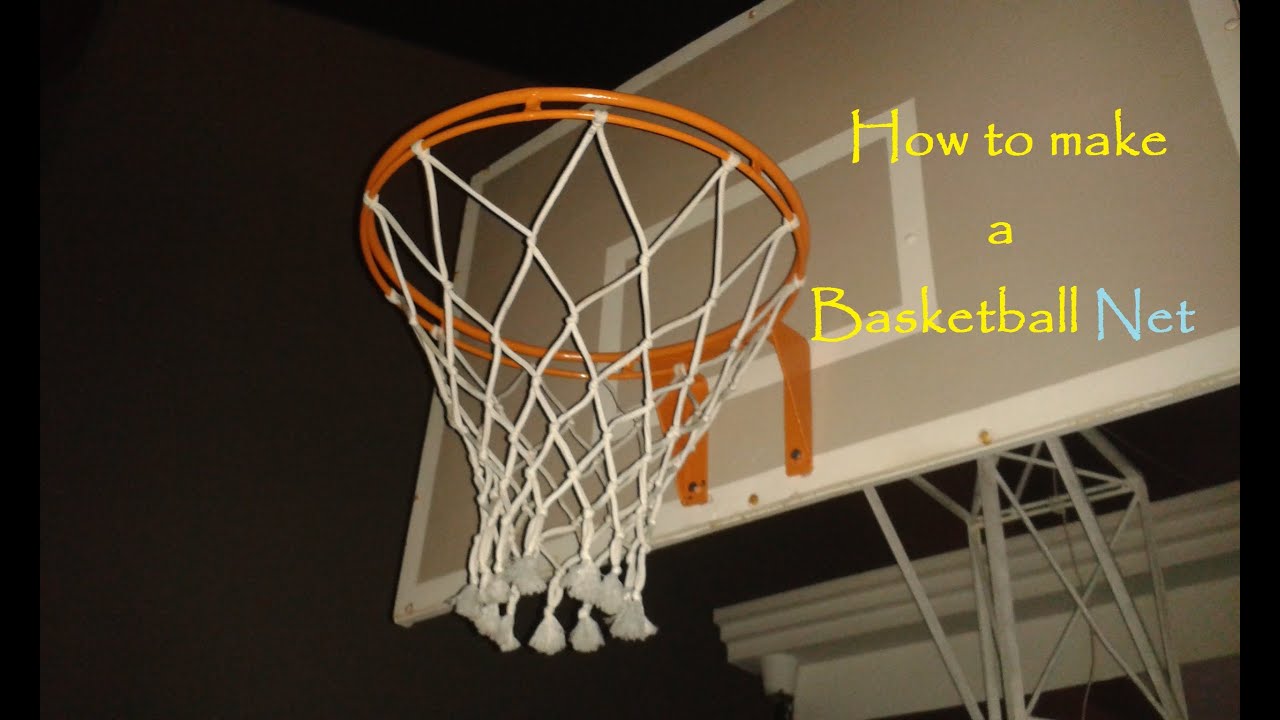
Yes, you can make a basketball net yourself! Whether you want a DIY basketball net for fun, a homemade basketball net for a rustic look, or need to know how to tie a basketball net for a replacement, this guide will walk you through it. We’ll cover the basics of making a basketball hoop net, weaving a basketball net, and even offer tips for basketball net repair. Plus, we’ll touch on different types of basketball nets and the essential basketball net materials. Finally, we’ll discuss basketball net installation for your newly crafted or repaired net.
Why Make Your Own Basketball Net?
Making your own basketball net can be a rewarding project. It’s a great way to save money, especially if you need a replacement basketball net and the store-bought ones are pricey. It’s also a fantastic activity for families or anyone who enjoys a hands-on craft. Imagine the satisfaction of sinking a basket through a net you personally crafted! It adds a unique touch to any basketball setup, whether it’s a backyard hoop or a custom indoor game.
Comprehending Different Types of Basketball Nets
Before you start weaving, it’s helpful to know about the various types of basketball nets. This helps you choose the right materials and techniques for your project.
Traditional Nets
These are the most common nets you see on professional courts. They are typically made from nylon, polyester, or cotton and have a specific number of loops and a standard length. They offer a good swish sound and a classic look.
Chain Nets
Popular in some outdoor settings, chain nets are made from metal chains. They are incredibly durable and produce a distinct metallic clinking sound when the ball goes through. However, they are heavier and can be more expensive.
String/Rope Nets
These are often the DIY nets. They can be made from various types of cordage, from natural fibers to synthetic ropes. The thickness and material of the string will affect the net’s feel, sound, and durability.
Specialty Nets
Some nets are designed for specific purposes, like anti-whip nets that are less likely to tangle or nets with unique color patterns. For a DIY project, sticking to traditional or string nets is generally the easiest.
Essential Basketball Net Materials
The materials you choose will significantly impact the look, feel, and longevity of your homemade basketball net.
Cordage Options
- Nylon: Strong, durable, and resistant to rot and UV rays. It’s a popular choice for good reason.
- Polyester: Similar to nylon in strength and durability, often slightly less stretchy.
- Polypropylene: More affordable but less resistant to UV degradation and abrasion. It can become brittle over time when exposed to sunlight.
- Cotton/Hemp: Natural fibers offer a classic, rustic look and feel. However, they are more susceptible to rot, mildew, and stretching when wet, making them less ideal for outdoor use without proper treatment.
Cord Thickness
- Thin Cord (3-5mm): This will create a finer, more traditional net. It requires more loops and can be more time-consuming to weave.
- Medium Cord (5-7mm): A good balance between durability and ease of weaving. It’s a great choice for most DIY projects.
- Thick Cord (7mm+): This will result in a very robust net, perhaps more suited to a heavy-duty or novelty hoop.
Other Necessary Items
- Scissors or a sharp knife: For cutting the cordage cleanly.
- Measuring tape: To ensure consistent length and spacing.
- Lighter or tape: To seal the ends of synthetic cords to prevent fraying.
- A sturdy hoop: The basketball hoop itself, of course!
- A sturdy surface or tool for weaving: This could be your hoop, a large ring, or even a piece of cardboard with notches.
- A pattern or template (optional but helpful): You can find many online.
Making a Basketball Net: The Weaving Process
Now, let’s get to the exciting part – weaving a basketball net! This guide focuses on a standard knot-based net, similar to most traditional nets.
Step 1: Prepare Your Materials
- Determine the size: Measure the circumference of your basketball hoop. Standard hoops are around 24 inches in circumference.
- Calculate cord length: For a typical net, you’ll need many strands of cord. A good rule of thumb is to cut each strand about three to four times the desired finished length of the net, plus extra for knots. For example, if you want a net that’s about 20 inches long from the hoop, cut your cords to about 60-80 inches each. You’ll need a lot – perhaps 20-30 strands to start, depending on the thickness of your cord.
- Cut the cords: Cut all your cords to the same length.
- Seal the ends: If you’re using synthetic cord (nylon, polyester, polypropylene), carefully melt the ends with a lighter or use tape to prevent fraying. Be cautious when using a flame.
Step 2: Attaching Cords to the Hoop
Most basketball hoops have 12 equally spaced hooks or loops around the rim. You’ll attach your cords to these points.
- Fold and attach: Take one cord, fold it in half.
- Loop through: Pass the folded end through one of the hoop’s attachment points.
- Pass through the loop: Pull the two loose ends of the cord through the loop you just created.
- Tighten: Pull the loose ends to create a secure knot (often called a lark’s head knot or cow hitch) around the hoop’s attachment point.
- Repeat: Do this for all 12 attachment points on the hoop. You’ll have 24 loose ends of cord hanging down.
Step 3: Weaving the Net Body
This is where the magic happens. You’ll be using a series of knots to create the net’s structure. The most common knot is a square knot or a variation of it.
The Basic Knotting Technique:
- Pair up: Take two adjacent strands from the hoop (these are actually the ends of two different cords).
- Form a loop: Create a loop with the left strand, going over the right strand.
- Bring around: Bring the right strand up through the loop you just made.
- Tighten: Pull both strands to form a knot. This is half of a square knot.
- Complete the knot: Now, do the same thing but reverse the direction. Make a loop with the right strand going over the left. Bring the left strand up through this new loop.
- Pull tight: Gently but firmly pull both strands to complete the square knot. This knot will hold your net together.
Weaving Rows:
- Row 1: Start at one side of the hoop. Take the first two strands and tie a square knot. Then, take the second and third strands and tie a square knot, and so on, working your way around the hoop. You’ll end up with approximately 12 knots in this first row, connecting pairs of strands.
- Row 2: Now, you’ll be working with the “free” strand from each knot in the previous row. So, you’ll take the right strand from knot #1 and the left strand from knot #2, tie a square knot. Continue this pattern around the hoop.
- Continue weaving: Keep repeating this process, always taking one strand from the previous knot on its left and one strand from the previous knot on its right, and tying them together. As you go down, the net will start to form a cone shape.
Important Considerations During Weaving:
- Tension: Try to keep your knot tension consistent. This will create a more uniform and visually appealing net.
- Spacing: Ensure your knots are spaced evenly. This affects how the ball passes through the net.
- Counting: Keep track of your strands and knots, especially in the initial rows, to avoid mistakes.
Step 4: Finishing the Net
- Reach desired length: Continue weaving until the net reaches your desired length.
- The bottom knot: At the very bottom, you’ll typically tie all remaining strands together with a large, secure knot (like a series of overhand knots or a gathering knot) to create the opening for the ball. Ensure this knot is strong enough to hold the weight of the ball.
- Trim excess: Trim any significant excess cord from the final knot, and seal the ends if necessary.
Basketball Net Repair: Bringing Your Old Net Back to Life
Even the best nets wear out. Fortunately, basketball net repair is often quite straightforward.
Common Issues and Fixes
- Broken Strands: If only a few strands are broken, you can often repair them by tying new pieces of cord in.
- Method: Cut a new piece of cord slightly longer than the broken strand. Tie one end securely to the intact part of the broken strand using a strong knot (like a fisherman’s knot or a series of square knots). Then, tie the other end to the corresponding strand on the other side of the break. If the break is in the middle of a strand, tie both ends of the new cord to the parts of the old strand.
- Fraying: If the ends or parts of the net are fraying, you can try sealing them with a lighter (for synthetics) or using a strong fabric glue. For more significant fraying, you might need to trim the damaged section and re-tie it.
- Holes: Small holes can be “darned” by weaving new cord through the edges of the hole, essentially patching it. This can be done using a similar knotting technique as the initial weaving.
- Worn Attachment Points: If the loops where the net attaches to the hoop are worn, you might need to re-tie them with a fresh piece of cord, reinforcing the connection.
Replacing a Net: How to Tie a Basketball Net Off
When your net is beyond repair, it’s time for a replacement basketball net. The process is similar to installing a new one.
- Remove the old net: Carefully untie or cut away the old net from the hoop.
- Clean the hoop: Wipe down the hoop attachment points to remove any debris.
- Install your new/repaired net: Follow the basketball net installation steps outlined below.
Basketball Net Installation: Getting Your Net Ready for Play
Once you’ve made or repaired your net, proper basketball net installation is key for optimal play.
Attaching Your Net to the Hoop
- Loop the cords: As described in the making process, fold each cord in half and loop it through an attachment point on the hoop, then pull the ends through the loop to secure it with a knot.
- Even spacing: Ensure the cords are spaced evenly around the hoop. This is crucial for the ball to pass through cleanly. Most hoops have 12 attachment points, so you’ll use 12 cords, each with two hanging ends.
- Weave the first row (if not already done): If you’re attaching a pre-woven net that has loops at the top, you’ll simply loop these through the hoop’s attachment points. If you are attaching a net where you’ve just attached individual cords, you’ll proceed to the weaving steps.
- Check security: Give each attachment point a good tug to ensure it’s secure and won’t come loose during play.
Considerations for Different Hoop Types
- Outdoor Hoops: These are exposed to the elements, so using durable, UV-resistant materials like nylon or polyester is essential. Ensure the net is firmly attached to withstand wind and weather.
- Indoor Hoops: You might have more flexibility with materials, but a lighter, quieter net is often preferred to avoid loud clanking sounds.
FAQs About Making and Repairing Basketball Nets
Here are some common questions people have when embarking on this DIY project.
Q: What is the best material for a DIY basketball net?
A: For durability and weather resistance, nylon or polyester cord in a medium thickness (5-7mm) is generally the best choice for a DIY basketball net, especially for outdoor use.
Q: Can I use rope to make a basketball net?
A: Yes, you can use various types of rope. Natural fiber ropes like cotton or hemp will give a rustic look but are less durable outdoors. Synthetic ropes (nylon, polyester) are more resilient.
Q: How long should the cords be for making a basketball net?
A: A good starting point is to cut cords three to four times the desired finished length of the net, plus extra for tying knots. For a typical 20-inch net, cords of 60-80 inches are a good estimate.
Q: How many knots are in a basketball net?
A: The number of knots varies depending on the cord thickness and the desired openness of the net. For a standard 12-loop hoop, you’ll typically start with 12 knots in the first row and continue weaving, with the number of knots in subsequent rows decreasing as the net tapers.
Q: How do I repair a hole in my basketball net?
A: You can repair small holes by “darning” them with new cord, using knots similar to the original net construction to weave across the hole and re-establish the net’s structure.
Q: Who is this guide for?
A: This guide is for anyone interested in making a homemade basketball net, repairing an existing one, or learning how to tie a basketball net. It’s suitable for DIY enthusiasts, parents looking for a craft project, or anyone wanting to save money on a replacement basketball net.
Q: What can I do if my basketball net is constantly tangling?
A: Ensuring consistent knot tension and spacing during weaving can help. Some specialty nets are designed to reduce tangling, but for DIY nets, the key is careful construction. Avoid using cords that are too thin or too slick.
Q: How do I measure my basketball hoop for a new net?
A: Measure the circumference of the hoop where the net attaches. Also, count the number of attachment points (usually 12). This information is crucial for calculating cord length and planning your weaving.
Making your own basketball net or repairing an old one is a fun and practical skill. With the right materials and a little patience, you can create a functional and attractive net that’s perfect for your game. Enjoy the process and the satisfaction of sinking a basket through your own creation!