
Becoming a basketball coach involves gaining knowledge, practical experience, and developing a coaching philosophy. Can you start coaching without formal training? Yes, but formal training and certifications significantly enhance your credibility and effectiveness. Who guides aspiring coaches? Experienced coaches, mentors, and educational resources all play a vital role. This guide will walk you through the essential steps on your path to becoming a successful basketball coach.
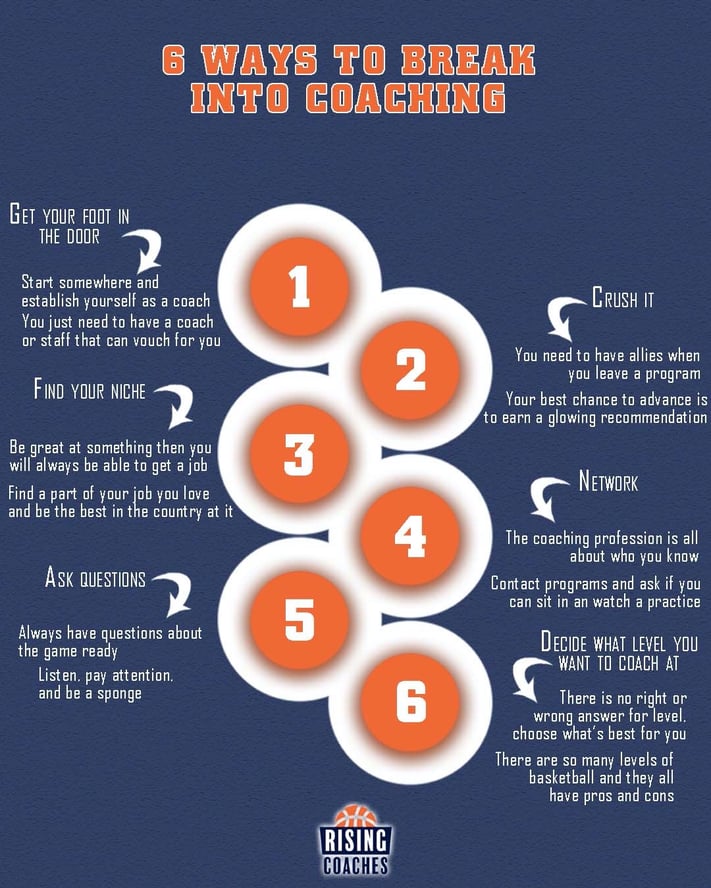
Image Source: risingcoaches.com
Laying the Foundation: Building Your Basketball Knowledge
Before you can effectively guide others, you need a strong grasp of the game. This involves more than just knowing the rules. It requires a deep appreciation for offensive and defensive schemes, player development principles, and the psychological aspects of sports.
Deciphering the Game: Rules, Positions, and Strategies
- Core Rules: A thorough understanding of basketball’s fundamental rules is non-negotiable. This includes understanding fouls, violations, scoring, and game timing.
- Player Roles: Learn the typical responsibilities and skills associated with each position: point guard, shooting guard, small forward, power forward, and center.
- Offensive Concepts: Explore various offensive strategies like motion offense, isolation plays, pick-and-roll variations, and fast-break tactics.
- Defensive Principles: Study man-to-man defense, zone defenses (like 2-3 or 3-2 zones), trapping, and pressing techniques.
Mastering Basketball Drills
Effective coaching relies on a repertoire of well-executed basketball drills that target specific skills. These drills help players improve their shooting, dribbling, passing, defense, and conditioning.
- Shooting Drills:
- Form shooting (close range, focusing on mechanics)
- Spot shooting (from various locations on the court)
- Shooting off the dribble
- Catch-and-shoot drills
- Dribbling Drills:
- Stationary dribbling (crossovers, between-the-legs, behind-the-back)
- Dribbling on the move (full court, changing pace and direction)
- Dribbling under pressure (against defenders)
- Passing Drills:
- Stationary passing (chest pass, bounce pass, overhead pass)
- Passing on the move (transition passing)
- Passing under pressure (reacting to defense)
- Defensive Drills:
- Defensive slides
- Closeout drills
- On-ball defense drills
- Help-side defense drills
- Conditioning Drills:
- Suicides/Line drills
- Agility ladder drills
- Reaction drills
Gaining Hands-On Experience: Your Coaching Journey Begins
Theoretical knowledge is only one part of the equation. Practical application is crucial for developing your coaching skills and building confidence.
Starting at the Grassroots: Youth Basketball Coaching
Youth basketball coaching is often the entry point for aspiring coaches. It’s a fantastic opportunity to learn the fundamentals of teaching the game in a supportive environment.
- What to Expect: You’ll likely work with younger players (ages 5-13) who are still learning the basics. Patience and enthusiasm are key.
- Focus Areas: Emphasis should be on skill development, sportsmanship, teamwork, and making the game fun. Complex game strategy often takes a backseat to fundamental instruction.
- Finding Opportunities:
- Local recreation centers
- YMCA programs
- Community sports leagues
- School-sponsored youth programs
Stepping Up: High School Basketball Coaching
High school basketball offers a more competitive environment and a chance to work with more skilled athletes.
- Responsibilities: This level requires more advanced game strategy, player development planning, and often involves longer seasons with more travel.
- Key Skills: Developing effective offensive and defensive systems, managing team dynamics, and recruiting players become more important.
- Gaining Experience:
- Volunteer as an assistant coach.
- Offer to run practices or drills.
- Demonstrate a strong work ethic and commitment.
The Collegiate Path: College Basketball Coaching
Reaching the college level requires significant experience and a proven track record. It’s a highly competitive arena demanding deep knowledge and exceptional leadership.
- NCAA Divisions: Be aware of the different divisions (Division I, II, III) as their requirements and philosophies can vary.
- Recruiting: Player evaluation and recruitment are significant components of college coaching.
- Professionalism: Coaching at this level demands meticulous game strategy, advanced player development, and sophisticated team management.
- How to Get There:
- Work as a graduate assistant or volunteer coach at a college.
- Gain experience as a head coach at the high school or AAU (Amateur Athletic Union) level.
- Network with college coaches.
Exploring Other Avenues: AAU and Club Teams
Amateur Athletic Union (AAU) and other club teams offer year-round playing opportunities and a different coaching environment.
- AAU Coaching: Often involves working with highly motivated players who aspire to play at the collegiate level.
- Club Teams: Can vary widely in structure and competitiveness, from developmental programs to elite travel teams.
- Benefits: Exposure to different player pools, competitive tournaments, and a chance to hone your coaching skills against diverse opposition.
Developing Your Coaching Philosophy: Guiding Principles
Your coaching philosophy is the bedrock of your coaching style. It’s your core beliefs about the game, player development, and the role of a coach.
Defining Your Vision: What Do You Believe?
- Player Development Focus: Do you prioritize individual skill improvement, team cohesion, or both?
- Winning vs. Development: How do you balance the desire to win games with the long-term development of your players?
- Core Values: What principles do you want to instill in your team (e.g., effort, respect, accountability, resilience)?
- Communication Style: How will you communicate with players, parents, and administrators?
Crafting Your Approach
Your philosophy will shape how you plan practices, manage games, and interact with your team.
- Practice Planning: Will your practices be intense and drill-focused, or more fluid and game-like?
- Game Strategy: How will you adapt your game strategy based on your team’s strengths and weaknesses, as well as the opponent?
- Player Motivation: What methods will you use to motivate and inspire your players?
Acquiring Essential Coaching Certifications
While not always mandatory at the entry-level, coaching certifications provide valuable education and can significantly boost your coaching credibility.
Why Get Certified?
- Structured Learning: Certifications offer a structured curriculum covering coaching techniques, sports psychology, injury prevention, and more.
- Credibility: Demonstrates a commitment to professional development and a foundational knowledge base.
- Networking: Often provides opportunities to connect with other coaches and learn from experienced professionals.
Common Certifications and Organizations
The availability and requirements for coaching certifications vary by region and sport governing body. In the United States, here are some common pathways:
| Organization | Typical Focus | Notes |
|---|---|---|
| USA Basketball | Youth and High School Coaching | Offers various levels of coaching certifications. |
| National Federation of State High School Associations (NFHS) | High School Sports Coaching | Many states require NFHS certifications for high school coaches. |
| National Strength and Conditioning Association (NSCA) | Strength and Conditioning for Athletes | Beneficial for coaches wanting to focus on athletic development. |
| American Sport Education Program (ASEP) | General Coaching Education and Certification | Provides broad-based coaching knowledge. |
Researching Local and Regional Requirements
It’s crucial to research the specific requirements of the leagues or organizations you intend to coach for. Some may mandate specific coaching certifications for insurance or liability purposes.
Developing Players: More Than Just Xs and Os
Effective coaches are not just strategists; they are also educators and mentors who focus on player development.
Skill Enhancement
- Individualized Attention: Recognize that players develop at different rates and have different needs. Offer personalized feedback and drills.
- Progressive Training: Introduce new skills and concepts gradually, building upon existing foundations.
- Feedback Loop: Provide constructive feedback, highlighting both areas for improvement and successes.
Building Basketball IQ
- Teaching the “Why”: Explain the reasoning behind plays, defensive schemes, and individual actions.
- Situational Awareness: Help players understand how to react in different game situations.
- Film Study: Utilize video analysis to break down plays, identify trends, and teach concepts.
Character and Mental Toughness
- Resilience: Teach players how to bounce back from mistakes and losses.
- Sportsmanship: Emphasize respect for opponents, officials, and teammates.
- Teamwork: Foster a sense of unity and shared purpose.
Mastering Team Management: Leading Your Squad
Successful coaching extends beyond the court to effectively managing your team’s dynamics and resources.
Communication is Key
- Clear Expectations: Set clear expectations for behavior, effort, and performance from day one.
- Open Dialogue: Encourage players to communicate concerns and ideas.
- Parent Communication: Establish a professional and transparent communication channel with parents.
Practice and Game Day Operations
- Organized Practices: Plan your practices efficiently, ensuring you maximize your time with the team.
- Logistics: Manage travel, equipment, and other logistical aspects of the season.
- Bench Management: Develop effective strategies for managing substitutions and motivating players during games.
Dealing with Challenges
- Player Conflicts: Learn to mediate and resolve disputes between players.
- Discipline: Implement fair and consistent disciplinary measures when necessary.
- Time Management: Balance coaching duties with other personal and professional commitments.
Frequently Asked Questions (FAQ)
Q1: What is the fastest way to become a basketball coach?
The fastest way often involves starting at the youth level as an assistant coach, actively seeking mentorship, and pursuing relevant coaching certifications. Gaining practical experience, even in volunteer roles, is crucial for rapid progression.
Q2: Can I become a basketball coach without playing the sport at a high level?
Yes, you absolutely can. While playing experience can be beneficial, it’s not a prerequisite. A deep knowledge of the game, a passion for teaching, strong leadership skills, and a willingness to learn are more critical for becoming a successful coach.
Q3: Who is the most important person on a basketball coaching staff?
While the head coach leads the team, all members of the coaching staff play vital roles. The effectiveness of assistant coaches in their specific areas (e.g., skill development, scouting, strength and conditioning) is critical to overall team success.
Q4: How much do basketball coaches make?
Coaching salaries vary drastically depending on the level (youth, high school, college, professional), location, and the specific organization. Youth coaches often volunteer or receive minimal stipends. High school coaches might receive a supplemental contract. College and professional coaches can earn substantial salaries, often including benefits and performance bonuses.
Q5: What are the essential qualities of a good basketball coach?
Essential qualities include strong communication skills, patience, passion for the game, leadership, the ability to motivate, a commitment to player development, strategic thinking, and excellent organizational skills. A good coach also possesses integrity and a strong ethical compass.
Q6: Do I need coaching certifications to coach youth basketball?
Requirements vary by league and organization. Many youth leagues may not mandate formal certifications, but having them can improve your knowledge and coaching effectiveness. Some organizations might require basic first aid or background checks.
Q7: How do I develop my game strategy?
Game strategy development comes from studying the game, analyzing your team’s strengths and weaknesses, scouting opponents, and continuously learning from experienced coaches. Experimentation and adaptation are also key components.
Q8: What is the difference between coaching youth basketball and high school basketball?
Coaching youth basketball typically focuses on fundamental skills, sportsmanship, and making the game enjoyable for young participants. High school coaching involves more advanced game strategy, competitive play, player development for higher levels, and often more intense training regimens.
By focusing on building a solid knowledge base, actively seeking experience, developing a clear coaching philosophy, and continuously learning, you can forge a rewarding path as a basketball coach.