

Ever feel like you’re drowning in a sea of programming books? You want to learn Java, a powerful language used by so many companies, but picking the perfect textbook feels like a puzzle with missing pieces. It’s tough to know which book will actually teach you well and not just confuse you.
Many students and aspiring coders face this challenge. They spend money on books that are too difficult, too basic, or just plain boring. This can slow down your learning and make you feel discouraged. You might end up with a book that doesn’t explain things clearly or skips important steps.
But don’t worry! This post is here to help you navigate the world of Java textbooks. We’ll break down what makes a good Java book and what to look for. By the end, you’ll feel more confident about choosing a book that will guide you smoothly on your Java journey, helping you build your coding skills step-by-step.
Our Top 5 Textbook Java Recommendations at a Glance
Top 5 Textbook Java Detailed Reviews
1. Starting Out with Java: From Control Structures through Data Structures (What’s New in Computer Science)

Rating: 9.0/10
Starting Out with Java: From Control Structures through Data Structures (What’s New in Computer Science) is a helpful book for anyone wanting to learn Java programming.
What We Like:
- It clearly explains the basics of Java.
- The book covers important topics like control structures and data structures.
- It’s designed for beginners, making it easy to follow along.
- The “What’s New in Computer Science” part hints at modern concepts.
What Could Be Improved:
- The “N/A” for features makes it hard to know specific details.
- More examples or practice problems would be great.
- It might be a bit dry for some readers.
This book offers a solid foundation in Java programming. It’s a good starting point for your coding journey.
2. Introduction to Java Programming and Data Structures

Rating: 8.6/10
Dive into the exciting world of computer programming with the “Introduction to Java Programming and Data Structures, Comprehensive Version.” This guide is designed to help you learn the basics of Java, a powerful and popular programming language. You’ll explore fundamental concepts and discover how to organize data efficiently using data structures. It’s a fantastic starting point for anyone curious about building software or understanding how technology works.
What We Like:
- It clearly explains complex ideas in a way that’s easy to understand.
- The book covers a wide range of important topics for beginners.
- You’ll build a strong foundation for future programming adventures.
- It encourages hands-on learning with practical examples.
What Could Be Improved:
- More interactive exercises could be included to test understanding.
- Visual aids like diagrams might enhance some explanations.
- A glossary of terms would be helpful for quick reference.
This comprehensive version is a valuable resource for aspiring programmers. It provides the essential knowledge you need to begin your journey in Java development.
3. Head First Java: A Brain-Friendly Guide

Rating: 8.9/10
Java is a popular programming language, and learning it can be a super fun adventure! “Head First Java: A Brain-Friendly Guide” is a book that makes learning Java feel less like homework and more like solving puzzles. It uses cool pictures and silly stories to help your brain remember all the important stuff. This book doesn’t just give you facts; it helps you actually understand how Java works.
What We Like:
- It’s super engaging! The book uses lots of visuals and real-life examples.
- It explains complex ideas in a simple way, making them easy to grasp.
- You’ll actually enjoy the learning process, not just get through it.
- It builds a strong foundation for understanding Java programming.
- The exercises help you practice what you learn right away.
What Could Be Improved:
- Sometimes the humor can be a bit much for some readers.
- It’s not a quick reference guide; it’s meant for learning from the beginning.
If you want to learn Java and have a good time doing it, “Head First Java” is definitely worth checking out. It’s a fantastic way to build your coding skills.
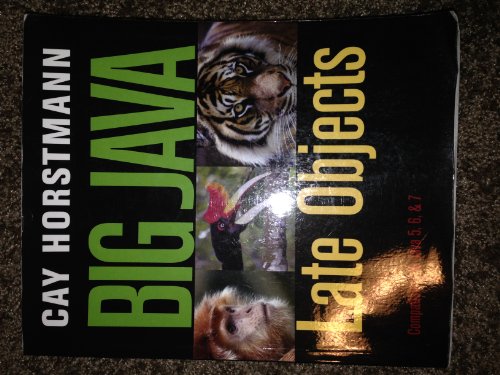
4. Big Java: Late Objects
Rating: 9.4/10
Big Java: Late Objects is a textbook designed to teach you the Java programming language. It focuses on object-oriented programming concepts. This book is aimed at students learning Java for the first time. It helps you understand how to build programs using objects. The “late objects” approach means it introduces these concepts a bit later in the learning process. This can make it easier for beginners to grasp the fundamentals first.
What We Like:
- Clear explanations of complex programming ideas.
- Many examples that show how to use Java code.
- Exercises to help you practice what you learn.
- Builds a strong foundation in object-oriented programming.
What Could Be Improved:
- Some users find the “late objects” approach might delay understanding for very experienced programmers.
- The book can be quite dense, requiring dedicated study time.
- Could benefit from more interactive online resources.
Big Java: Late Objects offers a solid path for learning Java. It guides you through important programming concepts effectively. This textbook is a valuable tool for anyone starting their Java journey.
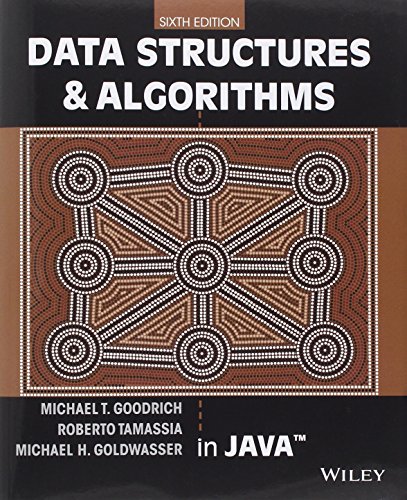
5. Data Structures and Algorithms in Java
Rating: 8.9/10
This book, “Data Structures and Algorithms in Java,” is a fantastic tool for anyone wanting to learn how computer programs organize and solve problems. It covers important concepts like arrays, linked lists, trees, and sorting. You’ll discover how to make your code faster and more efficient. It’s a great way to build a strong foundation for computer science.
What We Like:
- Explains complex ideas clearly and simply.
- Uses lots of examples to show how things work.
- Helps you understand how to write better Java code.
- It’s a great resource for students and beginners.
What Could Be Improved:
- Some advanced topics could be explained with more depth.
- More real-world application examples would be helpful.
- The exercises might be a bit challenging for absolute beginners without prior programming knowledge.
This book is a solid choice for mastering data structures and algorithms in Java. It will definitely help you become a better programmer.
Your Guide to Choosing the Best Java Textbook
Learning Java can be exciting! It’s a powerful language used to build many apps and websites. Finding the right Java textbook makes a big difference. This guide helps you pick the perfect book for your learning journey.
1. Key Features to Look For
What Makes a Good Java Textbook?
- Clear Explanations: The book should explain Java concepts in a way you can easily understand.
- Lots of Examples: Seeing code in action helps you learn. Look for books with many code examples.
- Practice Problems: After learning, you need to practice. Good books have exercises and challenges.
- Up-to-Date Information: Java changes. Make sure the book covers recent versions of Java.
- Good Organization: A well-organized book makes it easy to find what you need. Chapters should flow logically.
2. Important Materials
What Should Be Inside Your Java Book?
- Core Java Concepts: This includes variables, data types, loops, and methods.
- Object-Oriented Programming (OOP): Java is big on OOP. The book must explain classes, objects, inheritance, and polymorphism.
- Data Structures: You’ll learn about arrays, lists, and other ways to store data.
- Error Handling: Books should teach you how to deal with mistakes in your code (exceptions).
- Input/Output (I/O): Learn how programs read from and write to files.
- Optional: Some books cover advanced topics like GUIs (graphical user interfaces) or web development.
3. Factors That Improve or Reduce Quality
What Makes a Java Book Great or Not So Great?
- Author’s Expertise: Experienced Java developers often write better books.
- Publisher Reputation: Well-known publishers usually have stricter quality checks.
- Reviews: Read what other students and developers say about the book.
- Errata: Some books have errors. Check if the publisher provides corrections online.
- Outdated Content: A book that is too old might not teach you the latest Java features.
4. User Experience and Use Cases
How Will You Use Your Java Textbook?
- Beginner Programmer: If you’re new to coding, choose a book that starts from the very basics and builds up slowly.
- Student in a Class: Your teacher might recommend a specific book. Stick to that if possible.
- Self-Learner: You have more freedom. Look for books that are engaging and provide clear steps.
- Developer Learning Java: If you already know other programming languages, you might want a book that quickly gets to the core Java concepts.
A good Java textbook feels like a helpful friend. It guides you through challenges and celebrates your successes. By looking at these points, you can find a book that makes learning Java enjoyable and effective.
Frequently Asked Questions (FAQ)
Q: What is the most important thing to learn first in Java?
A: The most important thing to learn first is the basic syntax and fundamental concepts like variables, data types, and simple commands.
Q: Do I need a computer to learn Java with a textbook?
A: Yes, you will need a computer to write and run Java code. The textbook will guide you on how to set up your computer.
Q: Are there free Java textbooks available?
A: Yes, some excellent Java resources are available online for free, but paid textbooks often offer more structured learning and in-depth explanations.
Q: How long does it take to learn Java?
A: Learning Java takes time and practice. It can take a few months to become comfortable with the basics and much longer to master advanced topics.
Q: Should I get a book for the latest Java version?
A: It’s best to get a book that covers a recent version of Java. This ensures you learn modern practices and features.
Q: What if I don’t understand a concept in the book?
A: Look for online tutorials, forums, or ask a teacher or experienced programmer for help. Many books also have companion websites.
Q: Is learning Java useful for getting a job?
A: Yes, Java is widely used in many industries, especially for enterprise applications and Android development. Knowing Java can open up many job opportunities.
Q: Can I learn Java just by reading a textbook?
A: Reading is important, but you must also practice by writing and running code. Hands-on experience is key to mastering Java.
Q: What’s the difference between Java and JavaScript?
A: They are different languages. Java is used for many types of applications, while JavaScript is mainly used for making websites interactive.
Q: Should I buy a used Java textbook?
A: A used textbook can be a good option if it’s in good condition and not too old. Just make sure it has all the pages and is readable.
In conclusion, every product has unique features and benefits. We hope this review helps you decide if it meets your needs. An informed choice ensures the best experience.
If you have any questions or feedback, please share them in the comments. Your input helps everyone. Thank you for reading.