
Ever watched a poker game and wondered how the players always seem to know what to do? Maybe you’ve tried playing yourself and felt a little lost, not sure why you won or lost a hand. Learning poker can feel like trying to read a secret code sometimes, and picking the right book to help you crack it can be even trickier. There are so many books out there, it’s hard to know which ones are actually good for someone just starting out.
Don’t worry, you’re not alone! Many beginners feel overwhelmed by all the choices and don’t know where to start. That’s why we’ve put together this guide. We’re going to help you cut through the confusion and find the best poker books that will teach you the basics and help you play smarter.
By reading on, you’ll discover which books are perfect for new players, what makes them great, and how they can help you understand the game better. Get ready to move from feeling confused to feeling confident at the poker table!
Our Top 5 Poker Books For Beginners Recommendations at a Glance
| Image | Product | Rating | Links |
|---|---|---|---|
 |
Poker For Dummies | 9.0/10 | Check Price |
 |
How to Play Poker for Beginners – Learn the Strategy | 9.5/10 | Check Price |
 |
Essential Poker Math | 9.3/10 | Check Price |
 |
How to Play Poker for Beginners: Learn Instructions | 9.4/10 | Check Price |
 |
The Illustrated Guide to Texas Hold’em | 9.4/10 | Check Price |
Top 5 Poker Books For Beginners Detailed Reviews
1. Poker For Dummies
Rating: 8.6/10
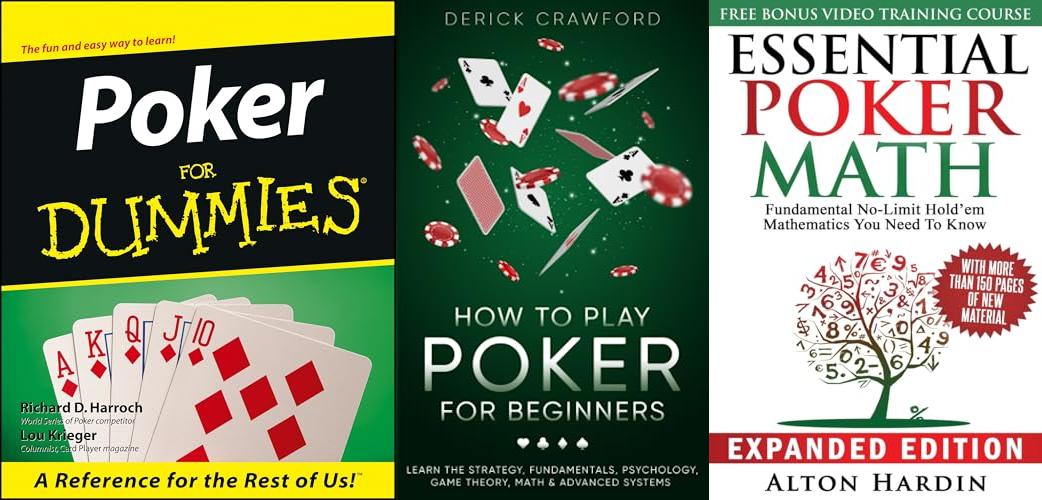
Thinking about diving into the exciting world of poker but don’t know where to start? Poker For Dummies is your friendly guide. This book breaks down everything you need to know to play and enjoy poker. It’s packed with clear explanations and helpful tips. You’ll learn the rules of different games and how to make smart moves.
What We Like:
- Super easy to understand for beginners.
- Covers the basics of many popular poker games.
- Helps you learn key strategies to improve your play.
- It’s a fun way to learn about gambling and strategy.
- Great for anyone who wants to play with friends or at a casino.
What Could Be Improved:
- Might not go deep enough for experienced players.
- Some advanced strategies are not covered in detail.
- Could use more visual examples or practice scenarios.
Poker For Dummies truly simplifies the game. It makes learning poker fun and accessible for everyone.
2. How to Play Poker for Beginners – Learn the Strategy
Rating: 9.2/10
Ready to learn poker? This guide, “How to Play Poker for Beginners – Learn the Strategy, Fundamentals, Psychology, Game Theory, Math & Advanced Systems,” is your ultimate starting point. It breaks down everything you need to know to play and win. You’ll learn the basic rules and then dive into how to think like a pro. It covers smart ways to play, understanding your opponents, and even the math behind the game. Get ready to impress your friends at your next game night!
What We Like:
- It covers all the important parts of poker.
- It explains tricky ideas like game theory and psychology clearly.
- Beginners will find it easy to understand.
- It helps you learn both the basics and some advanced ideas.
What Could Be Improved:
- There are no specific examples of hands or scenarios shown.
- More visual aids like diagrams or charts would be helpful.
- It could offer some practice exercises for readers.
This guide equips you with the knowledge to start playing poker confidently. It’s a fantastic resource for anyone wanting to go from beginner to skilled player.
3. Essential Poker Math
Rating: 9.4/10
Unlock the secrets of No-Limit Hold’em with “Essential Poker Math, Expanded Edition.” This book breaks down the math behind poker in a way that’s easy to understand. If you want to get better at poker, knowing the math is super important. This book teaches you the fundamental math you need to play smarter. It helps you make better decisions at the table. You’ll learn about odds, probabilities, and how to use them to your advantage. It’s like having a cheat sheet for winning.
What We Like:
- Makes complex math simple and clear.
- Helps you understand why certain plays are good.
- Covers important concepts for No-Limit Hold’em.
- Expanded edition means more helpful information.
What Could Be Improved:
- Some readers might find it a bit dry at times.
- More examples could be helpful for some concepts.
This expanded edition of “Essential Poker Math” is a must-have for any serious poker player. It gives you the tools to improve your game and understand the math that drives successful play.
4. How to Play Poker for Beginners: Learn Instructions
Rating: 8.7/10
Ready to join the poker table but don’t know where to start? This beginner-friendly guide, “How to Play Poker for Beginners: Learn Instructions, Game Rules, Expert Strategies and Basic Poker Math for Texas Hold’Em and More (Card games),” is your ultimate cheat sheet. It breaks down the game of poker into easy-to-understand steps, covering everything from the basic rules of Texas Hold’em to simple math that helps you make smart decisions. Whether you’re playing with friends or dreaming of the casino, this book equips you with the knowledge to play confidently.
What We Like:
- Clear and simple instructions for beginners.
- Covers multiple poker variations, including Texas Hold’em.
- Includes basic math concepts to improve your game.
- Offers expert strategies explained in an easy way.
- Well-organized and easy to navigate.
What Could Be Improved:
- Could benefit from more visual aids like diagrams or illustrations.
- Some advanced strategies might require further explanation.
This book is an excellent starting point for anyone new to poker. It empowers you to learn the game and start playing with confidence.
5. The Illustrated Guide to Texas Hold’em
Rating: 9.0/10
Ready to master the game of Texas Hold’em? This “The Illustrated Guide to Texas Hold’em” is your ticket to understanding all the ins and outs of this popular poker game. It’s a used book, but it’s in good condition, meaning you can still learn a ton without spending a lot of money. You’ll find clear explanations and helpful pictures to guide you through every step. Whether you’re a total beginner or just want to sharpen your skills, this book is a great resource.
What We Like:
- Easy-to-understand explanations make learning simple.
- Illustrations help you visualize the game and strategies.
- Great for beginners and those looking to improve.
- Affordable price since it’s a used book.
- Covers essential rules and basic strategies.
What Could Be Improved:
- Might not cover advanced strategies for seasoned players.
- As a used book, there might be minor wear and tear.
- Could benefit from more modern examples or online play tips.
This guide offers a solid foundation for anyone wanting to play Texas Hold’em. It’s a smart way to learn the game and have fun at the same time.
Your Winning Hand: A Beginner’s Guide to Poker Books
Ready to learn the ropes of poker and impress your friends at the next game night? A good poker book can be your secret weapon. It’s like having a coach in your pocket, showing you how to play smart and win more often. Let’s dive into what makes a great poker book for beginners.
What to Look For in a Poker Book
When you’re just starting out, you need a book that explains things clearly. Think of it as building a strong foundation.
Key Features to Seek
- Clear Explanations: The book should break down complex ideas into simple steps. It should define poker terms you don’t know.
- Step-by-Step Learning: A good book guides you from the very basics to more advanced strategies. It builds your knowledge gradually.
- Practical Examples: You need to see how strategies work in real game situations. Examples make the lessons stick.
- Focus on Fundamentals: The best beginner books concentrate on the core concepts of the game. They don’t overwhelm you with too much information at once.
- Easy-to-Understand Language: Avoid books filled with jargon you can’t understand. The language should be friendly and accessible.
Important Materials and Content
The content of the book is what truly matters. It’s the knowledge you gain.
- Rules of the Game: You must fully understand how to play. This includes hand rankings, betting rules, and how to deal.
- Basic Strategy: Learn about starting hands, position at the table, and simple betting techniques.
- Reading Opponents: Discover how to tell if your opponents are bluffing or have a strong hand.
- Bankroll Management: This is super important! It teaches you how to manage your poker money so you don’t lose it all quickly.
- Common Mistakes: Learning what not to do is just as valuable as learning what to do.
What Makes a Poker Book Great (or Not So Great)?
Quality can vary a lot. Here’s how to spot a good one.
Factors that Improve Quality
- Experienced Author: Look for authors who are known poker players or coaches. They have real-world experience.
- Up-to-Date Information: Poker strategies change. A newer book often has more current advice.
- Good Reviews: See what other beginners have said about the book. Positive feedback is a good sign.
- Logical Structure: The book should flow well. Each chapter should build on the last.
Factors that Reduce Quality
- Too Advanced: Some books jump into complex math or advanced tactics that confuse beginners.
- Outdated Information: Old strategies might not work well in today’s games.
- Confusing Language: If you have to reread sentences many times, it’s not a good sign.
- Lack of Examples: Without real game examples, it’s hard to know how to use the advice.
User Experience and Use Cases
How will you use your poker book? Think about your goals.
- Learning the Basics: If you’ve never played before, a book will teach you everything from scratch.
- Improving Your Game: Even if you know how to play, a book can help you make better decisions.
- Preparing for Games: You can read a chapter before playing to refresh your memory or learn a new tip.
- Quiet Study: Poker books are perfect for learning at your own pace, whenever you have free time. They are excellent for self-study.
Frequently Asked Questions About Poker Books for Beginners
Q: What is the most important thing a beginner poker book should teach?
A: A beginner poker book should teach you the basic rules of poker and simple strategies for playing your first hands. It should also explain how to manage your money.
Q: Do I need to know anything about poker before buying a book?
A: No, not at all! The best beginner books start from the very beginning. They assume you know nothing about the game.
Q: How much do good poker books for beginners usually cost?
A: Prices can vary, but you can often find good beginner poker books for $15 to $30. Look for sales to get a better deal.
Q: Can reading a book help me win money right away?
A: Reading a book will definitely help you play better and make smarter choices. While it doesn’t guarantee wins, it increases your chances of success over time.
Q: What is “position” in poker, and will a book explain it?
A: Position refers to where you are sitting at the poker table compared to the dealer. Good poker books always explain position because it is a very important part of strategy.
Q: Should I buy a book about Texas Hold’em or another type of poker?
A: Texas Hold’em is the most popular poker game. Most beginner books focus on this game, so it’s a great place to start.
Q: How long will it take me to learn poker from a book?
A: It depends on how much you read and practice. You can learn the basics in a few days, but becoming a good player takes much longer.
Q: Are there any free resources for learning poker?
A: Yes! Many websites offer free poker lessons and articles. However, a well-written book often provides a more structured and complete learning experience.
Q: What if a book uses a lot of math? Is that bad for beginners?
A: Some math is used in poker, but beginner books usually keep it simple. If a book relies too heavily on complex math, it might be too advanced for you right now.
Q: How can I tell if a poker book is still relevant today?
A: Check the publication date. Books published in the last 5-10 years are generally more up-to-date. Look for reviews that mention current strategies.
In conclusion, every product has unique features and benefits. We hope this review helps you decide if it meets your needs. An informed choice ensures the best experience.
If you have any questions or feedback, please share them in the comments. Your input helps everyone. Thank you for reading.