
A regulation basketball hoop diameter measures 18 inches (45.72 cm) from inner edge to inner edge. This precise measurement is crucial for the sport, ensuring fair play and consistent challenges for players at all levels, from amateur leagues to the professional NBA rim size.
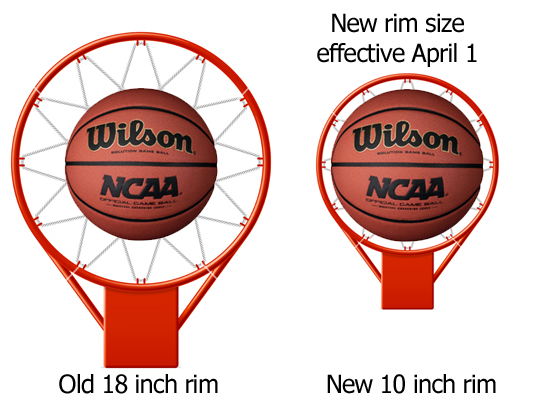
Image Source: blogger.googleusercontent.com
The Science Behind the Hoop: Why 18 Inches Matters
The 18-inch diameter of a basketball rim isn’t just an arbitrary number; it’s a carefully considered dimension that directly influences the game’s dynamics. This specific measurement creates a challenge that is neither impossibly small nor trivially large for a standard basketball. The goal is to make scoring a skill that requires precision, control, and practice. If the hoop were significantly wider, shots that might otherwise miss would often go in, diminishing the importance of shooting technique. Conversely, a much narrower rim would make scoring so difficult that the game could become frustrating and less engaging for spectators. The inner diameter of the basketball rim is the critical measurement that dictates whether the ball passes through cleanly.
Historical Evolution of Hoop Dimensions
While the 18-inch diameter is the standard today, the journey to this precise basketball hoop diameter wasn’t always so straightforward. Early basketball, invented by James Naismith, used peach baskets as hoops. These were far from uniform and, naturally, influenced how the game was played. As the sport evolved, so did the equipment. The transition from peach baskets to metal hoops marked a significant step towards standardization.
- Early Days: Peach baskets were used, which were open at the bottom and required manual retrieval of the ball.
- Introduction of Metal Hoops: Metal hoops with a closed bottom began to appear, making the game faster. The dimensions were less standardized initially.
- The Birth of the Net: The addition of nets further refined the game, providing a clear indication of a successful shot.
- Standardization Efforts: Over time, governing bodies like the NBA and FIBA worked to establish uniform specifications for all aspects of the court, including the basketball goal width. This led to the universally recognized 18-inch inner diameter.
Deciphering the Measurements: Inner vs. Outer Diameter
It’s important to distinguish between the inner diameter and the outer diameter of a basketball rim. When we talk about the “width” of the hoop, we are almost always referring to the inner diameter, which is the actual opening the ball must pass through.
- Inner Diameter: This is the critical measurement of the usable opening. For a regulation basketball, this is 18 inches (45.72 cm). This ensures that a standard basketball, which typically has a circumference of about 29.5 inches (75 cm) for men’s leagues, can pass through.
- Outer Diameter: This measurement includes the thickness of the rim itself. While not directly relevant to whether a shot goes in, it contributes to the overall structural integrity of the hoop. The thickness of the rim is typically around 5/8 inch. This means the outer diameter would be approximately 19.25 inches (18 inches + 2 * 5/8 inch).
Understanding the difference is key when discussing regulation basketball hoop width. The target for a successful shot is the empty space within the rim.
Official Basketball Rim Measurements: What the Rules Say
The official basketball rim measurements are set by various governing bodies to ensure consistency and fair competition. The most prominent of these is the National Basketball Association (NBA).
The NBA Rim Size
The NBA adheres to the universally accepted standard for basketball rim dimensions. Therefore, the NBA rim size is the same as the regulation size: an inner diameter of 18 inches (45.72 cm). This means that whether you’re watching a professional game, playing in a pickup game at your local park, or setting up a hoop at home, the target for scoring remains the same.
FIBA and Other Governing Bodies
While the NBA is widely followed, it’s worth noting that other international and national basketball federations also have their own rulebooks. However, the regulation basketball hoop width of 18 inches is a global standard. Federations like FIBA (International Basketball Federation) also mandate this 18-inch inner diameter for their competitions. Minor variations might exist in the materials or thickness of the rim, but the crucial hoop opening size remains consistent.
The Basketball Backboard Rim Distance: Another Critical Dimension
Beyond the width of the rim itself, the basketball backboard rim distance is another vital measurement that contributes to the game’s playability and fairness. This distance dictates how the backboard can be used for bank shots.
- Standard Distance: The standard distance from the front of the backboard to the front of the rim is 6 inches (15.24 cm).
- Importance for Bank Shots: This specific distance allows players to utilize the backboard effectively for bank shots. The angle and trajectory required to hit the backboard and bounce into the hoop are finely tuned by this measurement. If the rim were closer or further from the backboard, the physics of bank shots would be significantly altered, changing shooting strategies.
Materials and Construction of Basketball Rims
The materials used to construct basketball rims can vary, influencing their durability, flexibility, and even their sound when the ball goes through. The standard basketball rim dimensions remain constant, but the construction methods can differ.
Common Rim Materials:
- Steel: Most commonly, basketball rims are made from steel. Steel offers excellent strength and durability, capable of withstanding the force of powerful dunks and frequent use.
- Solid Steel: These are typically found on professional or heavy-duty rims, offering maximum sturdiness.
- Tubular Steel: Often used in less expensive or recreational rims, these are still strong but might be slightly less rigid than solid steel.
- Other Materials: While less common for official play, some recreational or specialized hoops might incorporate other materials, but for anything resembling official basketball rim measurements, steel is the standard.
Rim Thickness and Flexibility:
The thickness of the rim, as mentioned earlier, is usually around 5/8 inch. However, some rims are designed with a degree of flexibility to absorb impact and prevent injury.
- Breakaway Rims: These are designed to “break away” or flex downwards when a player hangs on the rim after a dunk. This feature is crucial for player safety, preventing potential injuries to ankles, knees, and hands. Breakaway rims are standard in professional and collegiate play.
- Non-Breakaway Rims: Simpler, often less expensive rims do not have this breakaway feature. They are more rigid and might not withstand aggressive dunking.
Even with these variations in flexibility, the hoop opening size remains the critical 18-inch inner diameter.
Basketball Hoop Diameter in Different Contexts
While the 18-inch diameter is the standard, there are situations where you might encounter slightly different dimensions or sizes related to basketball hoops.
Youth Basketball and Smaller Hoops
For younger players, the standard 18-inch rim might be too challenging. Many youth leagues and home play sets use smaller hoops or adjustable height systems that allow for a reduced challenge. However, when transitioning to regulation play, the 18-inch diameter is the target.
Variations in Backboard Size
The backboard itself comes in various sizes. While the rim’s diameter is standardized, the backboard dimensions can differ between professional arenas, gymnasiums, and backyard setups.
- Professional Backboards: Typically rectangular, measuring 72 inches wide by 42 inches high (183 cm x 107 cm).
- Fan-Shaped Backboards: Less common in professional play today but still found in some recreational settings, these have a different shape but the same rim placement and diameter.
The basketball goal width refers to the overall width of the structure that holds the hoop, which is primarily determined by the backboard size. The inner diameter of basketball rim is always the key measurement for scoring.
The Impact of Rim Size on Gameplay
The precise 18-inch basketball hoop diameter has a profound impact on how the game is played and the skills required to succeed.
Shooting Accuracy
- Requires Precision: The 18-inch opening demands accuracy in shooting. Players must develop a consistent shooting form, a good touch, and the ability to judge distance and trajectory.
- The Role of Arc: The height of the shot’s arc is crucial. A well-arced shot has a better chance of going in, even if it hits the rim, as it has more time to drop through the opening.
Rebounding Dynamics
- Rim as a Factor: The rim’s diameter influences where rebounds will go. A shot hitting the front or back of the rim tends to bounce in a particular direction, which players can anticipate and use to their advantage. The outer diameter of basketball rim is less relevant here than the ball’s interaction with the inner edge.
- Tip-Ins: Players positioned close to the basket can sometimes tip or push the ball in directly off the rim, a skill that requires quick reflexes and an understanding of how the ball reacts off the metal.
Dunking and Showmanship
- The Force of a Dunk: While the rim’s diameter remains constant, its strength and flexibility are crucial for players who dunk. Breakaway rims are designed to absorb the immense force of a powerful dunk without breaking, allowing for exciting aerial displays while prioritizing player safety.
- Rim Hang: In professional leagues, hanging on the rim after a dunk is generally a technical foul. This rule discourages players from putting undue stress on the equipment and prevents potential delays in the game.
Frequently Asked Questions (FAQ)
Q1: What is the exact width of a basketball rim?
A1: The regulation basketball hoop width, referring to the inner diameter, is exactly 18 inches (45.72 cm).
Q2: Does the NBA have a different rim size than other leagues?
A2: No, the NBA rim size is the standard 18-inch inner diameter, consistent with most international and national basketball federations.
Q3: Can I use a basketball rim with a different diameter for official games?
A3: No, for official games, you must use a rim that meets the standard 18-inch inner diameter. Using a different size would invalidate the competition.
Q4: How far is the rim from the backboard?
A4: The standard basketball backboard rim distance is 6 inches (15.24 cm) from the front of the backboard to the front of the rim.
Q5: What is the outer diameter of a basketball rim?
A5: The outer diameter of a basketball rim is approximately 19.25 inches, as it includes the thickness of the rim itself.
Q6: What is the hoop opening size?
A6: The hoop opening size is the inner diameter of the rim, which is 18 inches.
Q7: What are standard basketball rim dimensions?
A7: Standard basketball rim dimensions include an 18-inch inner diameter and a 6-inch distance from the backboard.
Q8: Is the basketball goal width the same as the rim diameter?
A8: The basketball goal width typically refers to the overall width of the structure supporting the hoop, often determined by the backboard size. The critical scoring dimension is the rim’s inner diameter.
Q9: Who sets the official basketball rim measurements?
A9: Official basketball rim measurements are set by governing bodies such as the NBA, FIBA, and other national basketball associations.
Q10: What is the material of most basketball rims?
A10: Most basketball rims are made of steel, often with a breakaway feature for safety in higher levels of play.
Conclusion: The Significance of Standardized Dimensions
The seemingly simple question of “How wide is a basketball rim?” opens up a discussion about precision, history, and the very nature of the sport. The 18-inch inner diameter of the basketball rim is a cornerstone of the game, shaping shooting mechanics, rebounding strategies, and player safety. From the NBA rim size to local park courts, this consistent measurement ensures that the challenge of scoring remains the same, fostering skill development and fair competition across all levels of play. The careful consideration of dimensions like the basketball backboard rim distance further refines the game, making it the intricate and captivating sport we know and love. Whether you’re a seasoned player or just starting, appreciating these standard basketball rim dimensions adds another layer to your enjoyment of the game.