
What is a basketball scoreboard and how do you use it in basketball? A basketball scoreboard is a vital piece of equipment that displays key game information, helping players, coaches, fans, and officials keep track of the basketball scoring, game time, and other important details. Learning to read and use a scoreboard is fundamental to following or participating in any basketball game.
Basketball is a game of points, precision, and time. At the heart of tracking these elements lies the humble yet essential basketball scoreboard. Whether you’re a budding player, a passionate fan, or an aspiring scorekeeper, knowing how to interpret and utilize this electronic wizard is crucial. This guide will break down the ins and outs of scorekeeping basketball, making the entire process easy and accessible.
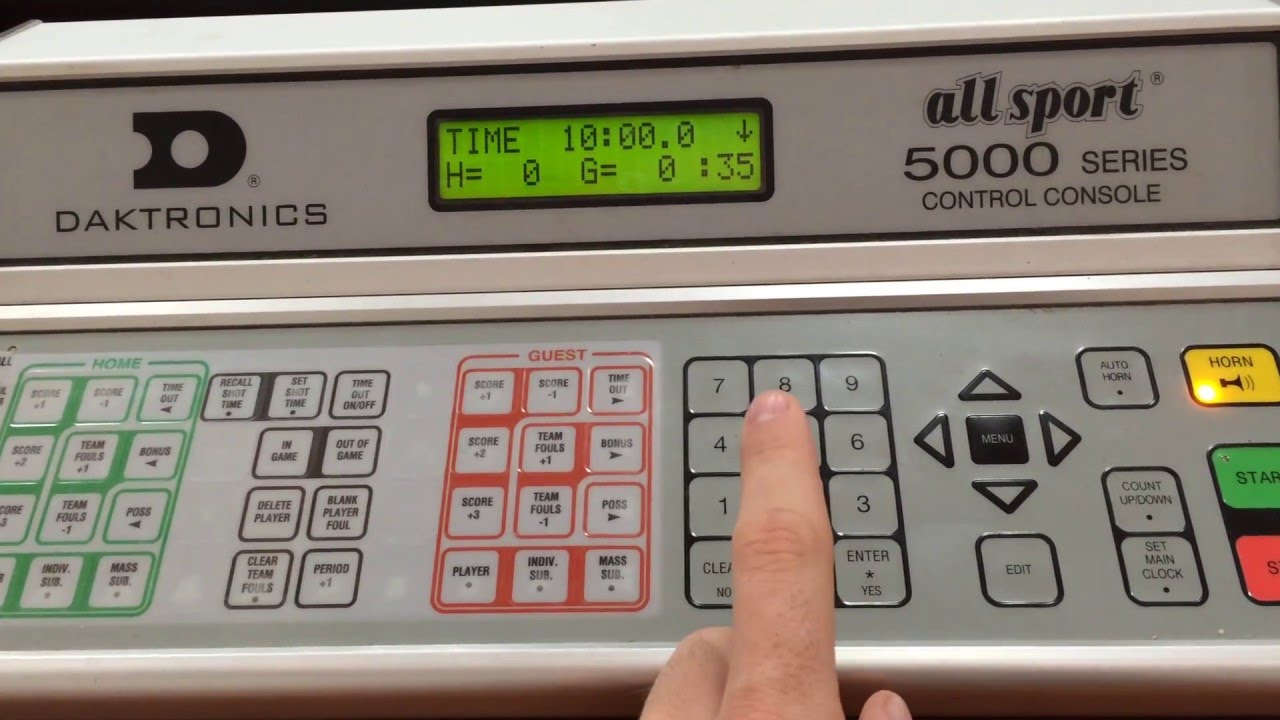
Image Source: i.ytimg.com
Deciphering the Digital Display: Essential Components of a Basketball Scoreboard
A typical basketball scoreboard is a hub of information, presenting data in a clear, concise manner. While designs may vary slightly, most share common elements that are vital for basketball game time and overall comprehension.
The Core Numbers: Score and Time
- Team Scores: This is the most prominent information. You’ll usually see two large sets of numbers, one for each team. These numbers represent the basketball scoring – the total points each team has accumulated. These scores update after every successful basket.
- Basketball Game Clock: This is the running timer that dictates the pace of the game. It counts down the remaining time in the current period or quarter. When the buzzer sounds, the clock signifies the end of that playing segment. The basketball game clock is a constant reminder of the urgency and strategic pacing required.
- Period Display: This indicates which quarter or period of the game is currently being played. In most basketball games, there are four periods. Knowing the current period helps in anticipating the game’s progression and understanding the remaining basketball game time.
Tracking the Intricacies: Beyond the Basics
Beyond the primary score and clock, advanced scoreboards offer more detailed insights into the game’s flow.
- Shot Clock: This is a smaller clock, typically displaying 24 seconds (though this can vary by league). It represents the time a team has to attempt a shot after gaining possession. If the shot doesn’t hit the rim before the shot clock expires, it results in a turnover. The shot clock adds a layer of tactical pressure to offensive play.
- Possession Arrow: This small, often illuminated arrow indicates which team has possession of the ball. It’s crucial for jump balls and out-of-bounds situations, ensuring fair play and smooth transitions. The possession arrow helps clarify who gets the ball next.
- Team Fouls: Most scoreboards will display the cumulative number of fouls committed by each team in the current period. Once a team reaches a certain foul limit (often five in a period), the opposing team enters the “bonus” and shoots free throws on subsequent fouls. Keeping an eye on team fouls is essential for understanding foul trouble.
- Player Fouls: Some more advanced scoreboards may also show individual player fouls. This is extremely useful for coaches and players to monitor how close a player is to fouling out of the game. Player fouls can significantly impact a team’s strategy and lineup.
- Timeout Displays: Many scoreboards will indicate how many timeouts each team has remaining. This is critical for game management and strategic substitutions.
Navigating the Numbers: How to Read a Basketball Scoreboard
Reading a basketball scoreboard is like learning a new language, but with practice, it becomes second nature. Here’s a step-by-step approach to interpreting the information presented:
Step 1: Identify the Teams
Typically, the scoreboard will clearly label which score belongs to which team. This might be through team names, abbreviations, or simply by their position on the display.
Step 2: Focus on the Scores
The most obvious numbers are the scores. These are constantly updated. If Team A has 45 points and Team B has 42, Team A is currently winning.
Step 3: Monitor the Basketball Game Clock
Observe the countdown on the basketball game clock. This tells you how much time is left in the current period. Is it the first quarter, or the final seconds of a close game? This context is vital.
Step 4: Check the Period Display
The period display confirms which part of the game you’re in. Is it the first period, second, third, or fourth? This helps in understanding the game’s overall status.
Step 5: Observe the Shot Clock (When Active)
When the ball is in play and a team has possession, the shot clock will likely start counting down. Pay attention to how much time they have left to make their shot.
Step 6: Note the Possession Arrow
The possession arrow tells you which team has control of the ball. This is especially important after a stoppage in play.
Step 7: Keep Track of Fouls
Scan the team foul indicators. Are either team close to reaching the bonus? This can influence defensive strategies. If player foul information is available, check individual player foul counts.
The Art of Scorekeeping: Effectively Using a Scoreboard
Scorekeeping basketball is more than just recording points; it’s about accurately and efficiently managing all the critical game information. Whether you’re using a manual scorebook or a digital system, the principles remain the same.
Tools of the Trade: Scorebook and Pen (or Digital Device)
Traditionally, scorekeepers use a specialized scorebook. Modern scorekeeping often involves electronic devices or specialized software that interface with the scoreboard. Regardless of the method, accuracy is paramount.
The Process of Recording Points
- Field Goals (2 points): When a player makes a shot from inside the three-point line, add 2 points to their team’s score.
- Three-Point Field Goals (3 points): If a player makes a shot from beyond the three-point arc, add 3 points to their team’s score.
- Free Throws (1 point): When a player is fouled and earns free throws, add 1 point for each successful free throw.
Managing the Basketball Game Clock
- Starting the Clock: The basketball game clock should be started when a player in possession of the ball touches it on a throw-in or when the ball is legally touched inbounds after a free throw.
- Stopping the Clock: The clock must be stopped for fouls, violations, timeouts, substitutions, and when the ball is dead or out of bounds.
- Fouls and Violations: These stoppages are crucial for accurate scorekeeping basketball. Each foul and violation needs to be noted in the scorebook, along with the player and team responsible.
The Role of the Shot Clock Operator
The shot clock operator is a critical role. They are responsible for accurately starting and stopping the shot clock and displaying the remaining time. Their actions directly influence the game’s pace and outcome.
Handling Fouls and the Bonus
- Personal Fouls: Each player has a limit on personal fouls they can commit before being disqualified from the game.
- Team Fouls: As mentioned, once a team reaches a certain number of fouls in a period, they are in the bonus. This means the opposing team gets free throws on subsequent shooting fouls. Team fouls and player fouls need meticulous recording.
Tracking Possessions with the Possession Arrow
The possession arrow is updated after each jump ball or out-of-bounds call where possession is disputed. The team that gains possession after the call is awarded the next arrow. This ensures a fair rotation of who gets to inbound the ball.
Substitutions and Timeouts
- Substitutions: When players enter or leave the game, this must be recorded, along with the player numbers.
- Timeouts: When a timeout is called, it must be recorded, along with which team called it and how much time is remaining on their timeouts.
Common Scoreboard Scenarios and How to Interpret Them
Let’s walk through some typical game situations and how they would be reflected on the scoreboard:
Scenario 1: A Fast Break and a Basket
- Scoreboard Action: Team A’s score increases by 2 points. The basketball game clock continues to run.
- Scorekeeper Action: Add 2 points to Team A’s score in the scorebook and note the player who scored. Ensure the basketball game clock is running.
Scenario 2: A Foul and Free Throws
- Scoreboard Action: The basketball game clock stops. The team fouls for the offending team might increase. If it’s a shooting foul, the shot clock is irrelevant until play resumes.
- Scorekeeper Action: Record the foul for the offending player and team. Note the type of foul. Prepare to record points if free throws are made.
Scenario 3: A Timeout Called
- Scoreboard Action: The basketball game clock stops. The timeout indicator for the calling team decreases.
- Scorekeeper Action: Record the timeout for the correct team. Note the time remaining in the period.
Scenario 4: End of a Period
- Scoreboard Action: The basketball game clock hits zero, usually accompanied by a buzzer. The period display updates to the next quarter.
- Scorekeeper Action: Ensure all scoring and foul data for the completed period is accurate. Prepare for the start of the next period.
Frequently Asked Questions (FAQ)
Q1: What is the primary purpose of a basketball scoreboard?
A1: The primary purpose of a basketball scoreboard is to display crucial game information such as the score, game time, period, and other relevant data to all participants and spectators.
Q2: How do I know which team is winning?
A2: The team with the higher point total displayed on the scoreboard is winning.
Q3: What does the possession arrow indicate?
A3: The possession arrow indicates which team has the right to inbound the ball following a stoppage where possession was in dispute.
Q4: When does the basketball game clock stop?
A4: The basketball game clock stops for fouls, violations, timeouts, substitutions, and when the ball is dead or out of bounds.
Q5: What is the shot clock used for?
A5: The shot clock is used to limit the time a team has to shoot the ball after gaining possession, ensuring a faster pace of play.
Q6: How are team fouls tracked?
A6: Team fouls are tracked by the scorekeeper and displayed on the scoreboard, indicating the cumulative number of fouls committed by a team in a period. This is important for determining when a team is in the bonus.
Q7: Can the scoreboard show player fouls?
A7: Yes, some advanced scoreboards do display individual player fouls, allowing for closer monitoring of players nearing disqualification.
Q8: What happens if the shot clock expires before a shot is taken?
A8: If the shot clock expires before a shot is attempted or hits the rim, it results in a turnover, with possession awarded to the opposing team.
Q9: How important is accurate scorekeeping basketball?
A9: Accurate scorekeeping basketball is vital for the integrity of the game, ensuring fair play and correct recording of all points, fouls, and game time.
Q10: What are the common ways to record scorekeeping basketball?
A10: Scorekeeping basketball can be done using traditional paper scorebooks or modern digital devices and software, often integrated with the scoreboard itself.
By familiarizing yourself with these components and functions, you’ll be well-equipped to follow the ebb and flow of any basketball game with confidence. Whether you’re in the stands or on the bench, a clear grasp of the scoreboard transforms you from a passive observer to an informed participant in the dynamic world of scorekeeping basketball.