
What is the best way for basketball players to train for strength? The best way involves a balanced program focusing on developing power training basketball and explosive power basketball through smart, targeted exercises that build leg strength basketball, core strength basketball, and upper body strength basketball. This approach enhances overall athletic performance basketball, supporting speed and agility basketball and reducing injury risk.
Training for strength as a basketball player is not just about lifting heavy weights; it’s about building functional strength that directly translates to better on-court performance. This means focusing on movements that mimic the demands of the game, such as jumping, sprinting, changing direction, and absorbing impact. A well-designed strength and conditioning program for basketball players targets key muscle groups, enhances power output, and improves the body’s ability to withstand the rigors of a long season.
This comprehensive guide will delve into the essential components of a smart strength training plan for basketball players, covering everything from foundational principles to specific exercise selections and programming considerations.
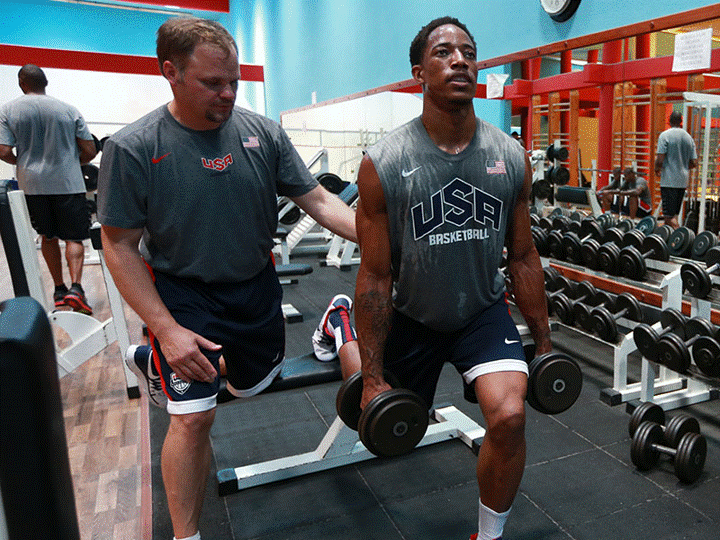
Image Source: storage.googleapis.com
The Foundation of Basketball Strength
Basketball is a dynamic sport that requires a unique blend of strength, speed, agility, and endurance. Simply put, being strong helps you jump higher, run faster, be more physical, and recover quicker. It’s the bedrock upon which other athletic qualities are built.
Why Strength Training is Crucial for Basketball
- Improved Jumping Ability: Stronger legs and core allow for more powerful push-off, leading to higher vertical leaps for rebounds and shots.
- Enhanced Speed and Agility: Greater muscle force production means quicker acceleration and more explosive changes in direction.
- Increased Durability and Injury Prevention: Stronger muscles, tendons, and ligaments are better equipped to handle the stress of the game, reducing the likelihood of common basketball injuries like ankle sprains, knee issues, and muscle strains.
- Better Force Absorption: The ability to absorb impact during landings and defensive stances is directly linked to muscular strength.
- Improved Shooting and Passing: While not directly obvious, a strong core and stable base provide a solid platform for accurate shooting and powerful passes.
- Dominance in Physical Play: Strength allows players to establish position, battle for rebounds, and finish through contact.
Distinguishing Strength from Hypertrophy for Basketball
While hypertrophy basketball (muscle growth) is often a byproduct of strength training, the primary goal for basketball players is strength and power, not simply size.
- Strength: The ability of muscles to exert maximal force against a resistance. This is typically trained with lower repetitions and heavier loads.
- Hypertrophy: An increase in the size of muscle fibers. This is often trained with moderate repetitions and moderate to heavy loads.
For basketball, the focus should be on maximizing the force-output capacity of muscles. This doesn’t mean avoiding all hypertrophy, as some muscle mass can contribute to force production, but it does mean prioritizing neurological adaptations (how well your nervous system recruits muscle fibers) and improving the efficiency of movement patterns.
Key Areas of Focus for Basketball Strength Training
A comprehensive program addresses all major movement patterns and muscle groups critical for basketball performance.
1. Leg Strength Basketball: The Engine of Movement
Your legs are your primary tools on the court. Developing strong, powerful legs is non-negotiable.
H3: Building a Powerful Lower Body
- Compound Movements: These are the cornerstone of leg strength. They work multiple muscle groups simultaneously, mimicking real-world actions.
- Squats: Back squats, front squats, goblet squats. These build overall lower body strength, engaging quads, hamstrings, glutes, and core.
- Deadlifts: Conventional deadlifts, Romanian deadlifts (RDLs). Excellent for posterior chain development (hamstrings, glutes, lower back) and overall strength.
- Lunges: Forward lunges, reverse lunges, lateral lunges, walking lunges. Improve unilateral (single-leg) strength, balance, and stability, crucial for dribbling, cutting, and jumping off one leg.
- Hinges: Kettlebell swings, glute bridges, hip thrusts. Primarily target the glutes and hamstrings, vital for explosive power and preventing hamstring injuries.
H4: Essential Leg Exercises for Basketball
| Exercise | Primary Muscles Worked | Why it’s Important for Basketball |
|---|---|---|
| Back Squat | Quadriceps, Hamstrings, Glutes, Core | Builds foundational lower body strength for jumping, driving, and defensive stances. |
| Romanian Deadlift | Hamstrings, Glutes, Lower Back | Develops posterior chain power for explosive first steps and vertical leaps. |
| Walking Lunge | Quadriceps, Hamstrings, Glutes, Calves, Core | Improves unilateral strength, balance, and coordination, mimicking the demands of running and cutting. |
| Box Jumps | Quadriceps, Hamstrings, Glutes | Develops explosive power and reactive strength needed for jumping. |
| Calf Raises | Gastrocnemius, Soleus | Strengthens calf muscles, crucial for ankle stability, jumping, and sprinting. |
| Lateral Lunges | Quadriceps, Glutes, Adductors, Abductors | Enhances lateral power and stability, vital for defensive slides and cutting. |
2. Core Strength Basketball: The Stabilizing Force
Your core is the bridge between your lower and upper body. A strong core transfers force efficiently and stabilizes your body during dynamic movements.
H3: Forging a Powerful Core
The core isn’t just your abs; it includes muscles in your back, hips, and pelvis. A strong core is fundamental for athletic performance basketball.
- Anti-Extension: Exercises that resist arching the lower back.
- Plank: Standard plank, side plank.
- Ab Wheel Rollouts: Progressively challenging anti-extension.
- Anti-Rotation: Exercises that resist twisting.
- Pallof Press: Using bands or cables to resist rotational force.
- Farmer’s Walk (with single weight): Uneven loading challenges rotational stability.
- Anti-Lateral Flexion: Exercises that resist side bending.
- Suitcase Carry: Carrying a single heavy weight in one hand.
- Side Plank with Hip Dip: Adds a dynamic challenge.
- Flexion/Extension: Traditional abdominal work.
- Leg Raises: Target lower abdominals.
- Russian Twists: For rotational strength, but with careful form.
- Back Extensions: For spinal erector strength.
H4: Core Exercises Enhancing Basketball Performance
| Exercise | Primary Muscles Worked | Why it’s Important for Basketball |
|---|---|---|
| Plank Variations | Rectus Abdominis, Transverse Abdominis, Obliques, Erector Spinae | Improves core stability, essential for transferring force between lower and upper body during shooting, passing, and jumping. |
| Pallof Press | Obliques, Transverse Abdominis, Core Stabilizers | Develops anti-rotational strength, crucial for maintaining balance during dribbling and shooting while resisting defender contact. |
| Suitcase Carry | Obliques, Quadratus Lumborum, Core Stabilizers | Builds anti-lateral flexion strength, enhancing stability during one-legged actions and resisting sideways forces. |
| Medicine Ball Throws | Core, Obliques, Shoulders, Back | Develops rotational power and core explosiveness, useful for powerful outlet passes and shooting mechanics. |
| Bird Dog | Core Stabilizers, Glutes, Back | Improves proprioception and stability, enhancing balance and reducing the risk of lower back pain. |
3. Upper Body Strength Basketball: Power for Shooting, Passing, and Defense
While legs are paramount, upper body strength is vital for shooting, passing, rebounding, defense, and finishing at the rim.
H3: Sculpting a Powerful Upper Body
Focus on exercises that build strength in pressing, pulling, and rotating movements.
- Pushing Movements: For shooting, finishing, and defensive positioning.
- Bench Press: Flat, incline, decline. Develops chest, shoulders, and triceps.
- Overhead Press: Builds shoulder strength and stability.
- Push-ups: A versatile bodyweight exercise that can be modified for difficulty.
- Pulling Movements: For rebounding, post play, and arm strength.
- Pull-ups/Chin-ups: Develops back, biceps, and forearms.
- Rows: Barbell rows, dumbbell rows, seated cable rows. Target the upper back and biceps.
- Face Pulls: Crucial for shoulder health and posture, working the rear deltoids and upper back.
- Rotational Power: Essential for passing and shooting mechanics.
- Medicine Ball Rotational Throws: Develops explosive rotational strength.
- Cable Wood Chops: Works the obliques and core in a rotational pattern.
H4: Upper Body Exercises for Enhanced Basketball Play
| Exercise | Primary Muscles Worked | Why it’s Important for Basketball |
|---|---|---|
| Bench Press | Pectorals, Triceps, Anterior Deltoids | Builds pressing strength for finishing at the rim and pushing opponents away. |
| Overhead Press | Deltoids, Triceps, Upper Chest | Enhances shoulder strength and stability, crucial for shooting form and rebounding. |
| Pull-ups | Latissimus Dorsi, Biceps, Forearms, Rhomboids | Develops pulling strength for rebounding battles, finishing through contact, and improving overall upper body power. |
| Dumbbell Rows | Latissimus Dorsi, Rhomboids, Biceps | Strengthens the back muscles that support posture and pulling power, important for rebounds and defensive positioning. |
| Medicine Ball Chest Pass | Pectorals, Triceps, Core | Improves upper body power and explosiveness for quicker, stronger passes. |
| Face Pulls | Rear Deltoids, Rotator Cuff, Upper Back | Essential for shoulder health and balance, preventing common shoulder injuries common in overhead athletes. |
Incorporating Power and Explosiveness
Basketball is a game of bursts of speed and powerful movements, making power training basketball and explosive power basketball paramount. This is where plyometrics basketball comes into play.
Understanding Plyometrics
Plyometrics are exercises that involve a rapid stretch and contraction of a muscle. This stretch-shortening cycle can significantly improve your explosive power, which is crucial for jumping, sprinting, and cutting.
H3: The Science of Plyometrics
Plyometrics work by:
1. Eccentric Phase (Loading): The muscle is rapidly stretched.
2. Amortization Phase (Transition): A very brief pause where the muscle stores elastic energy.
3. Concentric Phase (Explosion): The muscle rapidly contracts, releasing the stored energy for a powerful movement.
This rapid stretch-recoil mechanism is what we want to enhance for better explosive power basketball.
H4: Effective Plyometric Drills for Basketball Players
- Lower Body Plyometrics:
- Box Jumps: Focus on landing softly and exploding upwards.
- Depth Jumps: Stepping off a box and immediately jumping as high as possible upon landing.
- Broad Jumps: Measuring horizontal explosive power.
- Bounding: Exaggerated running strides focusing on height and distance.
- Single-Leg Hops: For unilateral power and stability.
- Upper Body Plyometrics:
- Medicine Ball Slams: Slamming a medicine ball to the ground.
- Medicine Ball Chest Passes (explosive): Throwing a medicine ball with maximal velocity.
- Clapping Push-ups: Push-ups where the chest is lifted off the ground enough to clap.
- Core Plyometrics:
- Rotational Medicine Ball Throws (against a wall): Develops explosive core rotation.
- Rotational slams: Slamming the ball in a rotational pattern.
Important Considerations for Plyometrics:
* Proper Progression: Start with basic exercises and gradually increase intensity and complexity.
* Adequate Recovery: Plyometrics are taxing; allow sufficient rest between sessions and within sets.
* Good Landing Mechanics: Always focus on absorbing impact softly to prevent injuries.
* Base Strength: Ensure a solid foundation of strength before undertaking advanced plyometrics.
Integrating Strength and Conditioning: The Smart Approach
A successful strength and conditioning basketball program isn’t just about picking exercises; it’s about smart programming and periodization.
Periodization: Structuring Your Training
Periodization involves dividing your training year into distinct phases, each with specific goals. This helps prevent overtraining, maximize performance at key times (e.g., playoffs), and build a well-rounded athlete.
H3: Phases of Training
- Off-Season (Strength & Hypertrophy Focus):
- Goal: Build a strong base, increase muscle mass, and correct muscular imbalances.
- Training: Higher volume, moderate intensity, focus on compound lifts and hypertrophy basketball.
- Pre-Season (Power & Speed Focus):
- Goal: Transition strength into power and speed.
- Training: Lower volume, higher intensity, incorporate more plyometrics basketball and Olympic lifts (if appropriate). Focus on explosive power basketball.
- In-Season (Maintenance & Performance):
- Goal: Maintain strength and power while managing fatigue.
- Training: Lower volume, higher intensity, focus on power development and recovery. Avoid heavy lifting that causes excessive soreness.
- Post-Season (Active Recovery):
- Goal: Allow the body to recover while maintaining a low level of fitness.
- Training: Light activity, mobility work, low-intensity cardio.
Sample Weekly Strength Training Split (Off-Season Example)
This is a general guideline and should be adjusted based on individual needs, recovery, and sport-specific demands.
Monday: Lower Body Strength & Power
* Back Squats: 3 sets of 5 reps
* Romanian Deadlifts: 3 sets of 8 reps
* Box Jumps: 4 sets of 5 reps
* Walking Lunges: 3 sets of 10 reps per leg
* Calf Raises: 3 sets of 15 reps
Tuesday: Upper Body Strength & Core
* Bench Press: 3 sets of 5 reps
* Pull-ups: 3 sets to near failure
* Overhead Press: 3 sets of 8 reps
* Dumbbell Rows: 3 sets of 10 reps per arm
* Plank: 3 sets, hold for 60 seconds
* Pallof Press: 3 sets of 10 reps per side
Wednesday: Active Recovery or Light Cardio
Thursday: Lower Body Power & Speed
* Power Cleans (or Hang Cleans): 5 sets of 3 reps (focus on explosiveness)
* Depth Jumps: 4 sets of 5 reps
* Lateral Lunges: 3 sets of 8 reps per leg
* Glute Ham Raises (or Hamstring Curls): 3 sets of 10 reps
Friday: Upper Body Power & Core
* Medicine Ball Chest Pass (explosive): 4 sets of 8 reps
* Push-ups (explosive/clapping): 3 sets of max reps
* Face Pulls: 3 sets of 15 reps
* Medicine Ball Slams: 4 sets of 10 reps
* Suitcase Carry: 3 sets, 30 yards per side
Saturday & Sunday: Rest
Speed and Agility Integration
Speed and agility basketball are direct beneficiaries of strength training. However, they also need to be trained specifically.
H3: Connecting Strength to Speed and Agility
- Plyometrics: As mentioned, these are crucial for explosive acceleration and change of direction.
- Sprint Drills: Incorporate short sprints, acceleration drills, and change-of-direction drills.
- Agility Drills: Cone drills, ladder drills, and reactive agility drills improve footwork, coordination, and responsiveness.
- Proper Form: Focus on efficient mechanics in all movements. Stronger athletes can apply more force, but only if their movement patterns are efficient.
Nutrition and Recovery: The Unsung Heroes
Even the best training plan will falter without proper nutrition and recovery.
H3: Fueling for Performance
- Protein: Essential for muscle repair and growth. Aim for adequate protein intake throughout the day.
- Carbohydrates: Provide energy for intense workouts. Choose complex carbohydrates for sustained energy.
- Healthy Fats: Important for hormone production and overall health.
- Hydration: Crucial for performance and recovery.
H3: Prioritizing Recovery
- Sleep: Aim for 7-9 hours of quality sleep per night. This is when your body repairs and rebuilds.
- Active Recovery: Light activities like walking, swimming, or foam rolling can improve blood flow and reduce muscle soreness.
- Stretching and Mobility: Regular stretching and mobility work improve range of motion and can help prevent injuries.
- Listen to Your Body: Don’t push through sharp pain. Differentiate between muscle soreness and injury.
Common Pitfalls to Avoid
- Over-reliance on Isolation Exercises: While some isolation work can be useful, prioritize compound movements that mimic basketball actions.
- Poor Lifting Technique: Incorrect form leads to injury and ineffective training. Always prioritize quality over quantity.
- Neglecting the Core: A weak core limits the effectiveness of your limbs.
- Not Enough Recovery: Overtraining is counterproductive.
- Focusing Only on Weight: Strength is about force production, not just how much you can lift. Power and speed are also critical.
- Ignoring Mobility and Flexibility: This can limit your range of motion and increase injury risk.
- Inconsistent Training: Sporadic efforts yield inconsistent results.
Frequently Asked Questions (FAQ)
Q1: How many days a week should a basketball player strength train?
A: During the off-season, 2-4 days per week is typical, depending on volume and intensity. In-season, 1-2 days per week is usually sufficient for maintenance.
Q2: What are the most important strength exercises for basketball?
A: Compound movements like squats, deadlifts, lunges, bench press, and pull-ups are foundational. Specific plyometric exercises for power and core stability drills are also critical.
Q3: Can I build strength and power simultaneously?
A: Yes, but the emphasis shifts. For pure strength, focus on heavier weights and lower reps (1-5). For power, use moderate weights and focus on moving them as quickly as possible, often with explosive or plyometric movements. Combining both with proper periodization is ideal.
Q4: How do I know if my strength training is benefiting my basketball game?
A: Track improvements in your vertical jump, sprint times, ability to finish through contact, defensive lateral quickness, and overall durability (fewer injuries).
Q5: Should I use free weights or machines?
A: Free weights (barbells, dumbbells, kettlebells) are generally preferred as they require more stabilizer muscle activation, leading to more functional strength. Machines can be useful for specific muscle isolation or rehabilitation but shouldn’t be the primary focus.
Q6: Is it okay to lift weights on the same day as basketball practice?
A: It depends on the intensity and focus of both. If practice is light, a light strength session might be fine. If practice is intense, it’s usually better to separate them, or do strength training after practice, or on separate days, to maximize recovery and performance.
Q7: How much rest do I need between sets?
A: For strength-focused sets (heavy weight, low reps), rest 2-4 minutes. For hypertrophy or power-focused sets, rest 60-90 seconds. For plyometrics, rest can vary depending on the drill and the athlete’s recovery, but sufficient rest between sets to maintain explosiveness is key.
By adopting a smart, strategic approach to strength training, basketball players can unlock their full athletic potential, improve their performance on the court, and build a more resilient, durable body. Remember, consistency, proper form, and smart programming are the keys to success.