
Can you shoot consistently in basketball? Yes, by focusing on mastering your basketball shooting form through dedicated practice and understanding key principles. This guide will break down everything you need to know to elevate your shooting game.
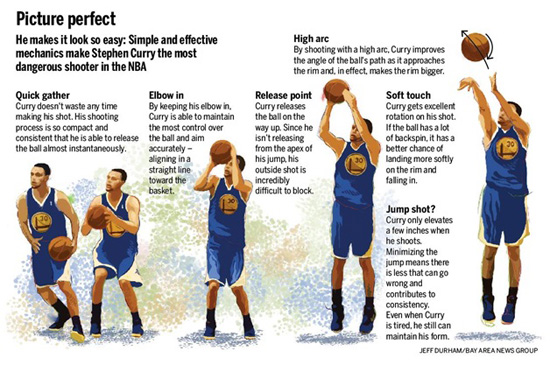
Image Source: www.breakthroughbasketball.com
The Foundation: Building Elite Basketball Shooting Form
Consistent shooting in basketball is built on a strong foundation of proper form. It’s not just about making shots; it’s about making them repeatable, reliable, and effective, regardless of the situation. Every great shooter has a distinct but fundamentally sound shooting stroke. Let’s dissect the essential elements that contribute to elite basketball shooting form.
The “B.E.E.F.” Acronym: A Simple Guide to Proper Technique
Many coaches use the acronym B.E.E.F. to remember the core components of a good shot.
- Balance: Your feet should be shoulder-width apart, with your shooting foot slightly ahead. Your knees should be bent, creating a stable base. This allows for power transfer from your legs to your shot.
- Eyes: Focus on your target. Whether it’s the front of the rim, the back of the rim, or a specific part of the net, lock your eyes onto it throughout the entire shooting motion.
- Elbow: Your shooting elbow should be directly under the ball, forming an “L” shape. Keep it tucked in, pointing towards the basket. Avoid letting it flare out to the side, as this creates inconsistency.
- Follow-Through: This is crucial for accuracy and touch. After releasing the ball, extend your shooting arm fully towards the basket, keeping your wrist flicked and fingers spread. Imagine reaching into the cookie jar.
Hand Placement Shooting: The Grip of Success
Proper hand placement shooting is vital. The shooting hand should be behind the ball, with your fingers spread comfortably. Your palm should not be touching the ball. The guide hand (non-shooting hand) rests on the side of the ball, offering support and balance but not interfering with the shot. It should come off the ball cleanly just before release.
- Shooting Hand: Your shooting hand should feel natural. The ball should rest on your fingertips, not your palm. The seam of the ball can run between your index and middle finger.
- Guide Hand: Position your guide hand on the side of the ball. It’s there to stabilize, not to add force or spin. Ensure it doesn’t “chicken wing” (turn outwards), which can affect your shot’s trajectory.
The Stance and Setup: Your Shooting Platform
Your stance is your launchpad. A solid stance provides the power and stability needed for a consistent shot.
Footwork for Shooting
- Shoulder-Width Apart: Stand with your feet roughly shoulder-width apart. This provides a stable base.
- Shooting Foot Slightly Ahead: For most players, having the shooting foot slightly in front of the other foot creates a natural alignment towards the basket. Experiment to find what feels most comfortable and powerful for you.
- Knee Bend: A slight bend in the knees is essential. This allows you to generate power from your legs. The amount of bend can vary based on the shot, but a good starting point is about a quarter-squat.
- Square to the Basket: Ideally, your feet and shoulders should be somewhat square to the basket. If you’re off-balance or angled, it’s harder to shoot straight.
Body Alignment
Your entire body should be aligned towards the basket. From your feet to your head, everything should be working in sync to direct the ball towards your target.
The Shot Motion: From Legs to Fingertips
The shot itself is a fluid, coordinated movement. It’s a symphony of body parts working together to deliver the ball with precision.
The Proper Jump Shot: A Step-by-Step Breakdown
A proper jump shot involves a smooth upward motion, transferring energy from your legs through your body and into the release.
- Dip and Load: As you prepare to shoot, you’ll often dip your knees slightly, bringing the ball down a few inches. This is your power load.
- Upward Extension: Begin extending your legs and body upwards in one fluid motion.
- Ball Up: Bring the ball up with your shooting hand and guide hand.
- Release Point: The ball should reach its highest point of the shooting motion at the peak of your jump or slightly before.
- The Shot: Extend your shooting arm fully towards the basket.
- Follow-Through: The most critical part after the release.
Shooting Rhythm: Finding Your Flow
Shooting rhythm is that magical feeling when your shot feels natural, smooth, and automatic. It’s about finding a consistent tempo and flow in your shooting motion. This rhythm is developed through consistent practice and muscle memory. It’s the feeling of your body and the ball moving together seamlessly.
The Release: Touch and Trajectory
The release is where everything comes together. It’s the final action that sends the ball towards the hoop.
Wrist Snap and Finger Control
A proper wrist snap at the end of the shooting motion imparts backspin on the ball, which helps it roll into the basket more easily. Your fingers should be spread and relaxed. The ball should leave your fingertips, with your index and middle fingers being the last to touch it.
Arc and Trajectory
The ideal shot arc is typically between 45 and 50 degrees. This provides a good balance of height to clear defenders and a soft landing on the rim. Too flat an arc makes it harder to get the ball in, while too high an arc can lead to inconsistency.
Drills for Consistent Shooting: Practice Makes Perfect
Shooting drills are the backbone of developing consistent shooting. They isolate specific aspects of your shot, helping you build muscle memory and refine your technique.
Essential Shooting Drills
Here are some fundamental drills to incorporate into your practice:
Form Shooting
This is the most important drill for developing basketball shooting form. It focuses solely on the mechanics without the added pressure of making shots from far away.
- Start Close: Begin just a few feet from the basket.
- Focus on B.E.E.F.: Concentrate on your balance, eyes, elbow, and follow-through.
- One-Handed Shots: Shoot without your guide hand to really feel the mechanics of your shooting hand.
- Add Guide Hand: Once comfortable, add your guide hand, ensuring it only supports.
- Gradually Increase Distance: As your form becomes more consistent, take one step back at a time. The goal isn’t to make every shot, but to execute the form perfectly on every attempt.
“Make It” Drills
These drills add a slight element of pressure and progression.
- Make 5 in a Row: Choose a spot and make five consecutive shots before moving to the next spot.
- Make 10 from 5 Spots: Shoot from five different spots around the basket (e.g., baseline, wing, top of the key, opposite wing, opposite baseline) and make 10 shots from each.
Shooting off the Dribble Drills
Many shots in a game come after a dribble.
- Dribble to Shoot: Practice a quick dribble into your shooting motion. This could be a one-dribble pull-up or a jab step into a shot.
- Exercise: Start at the wing. Dribble once towards the basket, then pull up for a jump shot. Focus on a smooth transition from dribble to shot.
- Variations: Practice with two dribbles, cross-over dribbles, and step-back dribbles.
Shooting off the Catch Drills
This is crucial for catch-and-shoot situations.
- Pass and Shoot: Have a partner pass you the ball. Catch it in a ready position, feet set, and shoot. Focus on a quick release and good form.
- “Star” Drill: Position yourself at various spots around the court and have a passer throw you the ball. This simulates game-like cuts and passes.
Practice Free Throws: The Ultimate Consistency Test
Practice free throws religiously. Free throws are uncontested shots where you have no excuse for missing due to defensive pressure. They are the ultimate test of your shooting consistency and mental toughness.
Establishing a Free Throw Routine
Develop a consistent pre-shot routine. This could include:
- Taking a few dribbles.
- Spinning the ball in your hands.
- Taking a deep breath.
- Visualizing the shot going in.
This routine helps calm your nerves and prepares your body and mind for the shot.
Free Throw Drills
- Make 10 Consecutive: Aim to make 10 free throws in a row without missing. If you miss, you start over. This builds mental fortitude.
- “Beat Your Number”: Set a goal, like making 8 out of 10. Track your progress over time.
- Free Throw Competition: Shoot free throws with a teammate and make it a competition.
Game-Specific Shooting Situations
You don’t just shoot stationary shots in a game. You need to be able to shoot under various conditions.
Shooting off the Dribble
As mentioned in drills, being able to pull up for a shot after a dribble is essential. The key is to get your feet set quickly and transition smoothly from dribbling to shooting.
- Protect the Ball: Keep the ball protected during your dribble.
- Gather and Go: When you decide to shoot, gather the ball cleanly and get into your shooting motion quickly.
- Pound Dribble: A strong, controlled dribble can help you gather momentum and square up to the basket.
Shooting off the Catch
This requires anticipating the pass and getting your feet and body ready before the ball arrives.
- “On the Hop”: Catch the ball with a slight hop, allowing you to land in your shooting stance.
- Catch Ready: Always be ready to catch the ball in a position where you can shoot immediately.
- Adjusting to the Pass: Learn to adjust your feet slightly based on the pass to ensure you’re square to the basket.
Shooting Under Pressure
This is where mental game comes into play. Basketball shooting tips for pressure situations often revolve around focusing on your process, not the outcome.
- Trust Your Training: Remind yourself of all the hours you’ve put into practice.
- Focus on the Fundamentals: Go back to B.E.E.F.
- Block Out Distractions: Tune out the crowd and focus on your target.
Maintaining Consistency: Long-Term Shooting Improvement
Consistency isn’t achieved overnight. It’s a continuous process of refinement and dedication.
The Power of Repetition
Shooting repetition is the most critical factor in developing a consistent shot. The more you practice with proper form, the more your muscles learn and the more automatic your shot becomes.
- Quality Over Quantity: While repetition is key, it’s crucial that each repetition is performed with good form. Bad habits formed through mindless repetition are hard to break.
- Varied Practice: Practice from different spots on the court, in different scenarios (off the dribble, off the catch), and under different levels of fatigue.
Film Study and Self-Correction
Watching yourself shoot on video can be incredibly insightful. You can identify flaws in your form that you might not notice otherwise.
- Record Your Shot: Set up your phone or a camera and record yourself shooting from different angles.
- Analyze Your Form: Compare your shooting form to that of elite shooters. Look for differences in your elbow, wrist flick, and follow-through.
- Make Adjustments: Based on your analysis, make small, focused adjustments in your practice.
Mental Aspect of Shooting
Shooting is as much mental as it is physical.
- Confidence: Believe in your ability to make shots. This confidence comes from consistent practice.
- Focus: Maintain focus throughout your shooting motion and during games.
- Resilience: Don’t get discouraged by misses. Every miss is an opportunity to learn and adjust.
Troubleshooting Common Shooting Problems
Even with good form, players can encounter issues. Here are some common problems and solutions.
Too Flat a Shot (Low Arc)
- Cause: Insufficient leg drive, not enough wrist snap, or pushing the ball.
- Solution: Focus on getting more power from your legs, ensuring a strong wrist flick, and extending through your follow-through. Practice form shooting with an emphasis on arc.
Ball Wobbles in the Air
- Cause: Improper grip, the ball not being released cleanly from the fingertips.
- Solution: Ensure your shooting hand is behind the ball, fingers are spread, and the ball is released off the fingertips. Practice with one-hand shooting to feel the clean release.
Inconsistent Release Point
- Cause: Not bringing the ball to the same spot every time, or releasing at different heights.
- Solution: Establish a consistent “shooting pocket” where you bring the ball before starting your upward motion. Aim to release the ball at the peak of your jump or at a consistent point in your upward motion.
Guide Hand Interference
- Cause: The guide hand is pushing or flicking the ball.
- Solution: Keep the guide hand on the side of the ball, fingers pointing upwards. It should provide stability but not add spin or force. Practice shooting with your guide hand barely touching the ball.
Conclusion: The Journey to Consistent Shooting
Mastering your basketball shooting form is a journey that requires patience, dedication, and intelligent practice. By focusing on the fundamentals, incorporating specific shooting drills, and consistently working on your shooting rhythm, you can transform your game. Remember to practice free throws, work on your proper jump shot mechanics, and refine your ability to dribble to shoot. With diligent shooting repetition and attention to hand placement shooting, you’ll unlock your potential for consistent, reliable scoring on the court. Apply these basketball shooting tips, and you’ll be well on your way to becoming a sharpshooter.
Frequently Asked Questions (FAQ)
Q1: How many shots should I take per day to get better?
There’s no magic number, but consistency is key. Aim for quality reps with good form. Many players benefit from taking 200-500 shots per day, but it’s more about focused practice sessions than just the raw number.
Q2: Should I shoot with two hands or one hand?
While you’ll use both hands to hold and stabilize the ball, the shooting motion should primarily come from your shooting hand. Many drills focus on one-handed shooting to build proper wrist action and follow-through. The guide hand is for balance and should not impart force.
Q3: How do I develop a consistent shooting rhythm?
A consistent shooting rhythm is developed through repetition and establishing a routine. Ensure your stance, shot preparation, and release are the same every time. Practicing drills that involve a smooth transition from movement to shooting can help build this flow.
Q4: What if I can’t get the ball to go in during practice?
Don’t get discouraged! Focus on your form, not just making the shot. Go back to close-range form shooting and ensure your mechanics are correct. Sometimes, a few days of pure form shooting can reset your stroke better than shooting from distance and missing.
Q5: How do I improve my shooting when I’m tired?
This is where mental toughness and muscle memory come in. Continue to focus on your fundamental shooting form, even when fatigued. Your practice sessions should include periods of shooting when you are tired to simulate game conditions. Trust your training.
Q6: How important is the follow-through in basketball shooting?
The follow-through basketball is one of the most critical aspects of a consistent shot. It ensures you are extending fully towards the basket, imparting good spin and touch, and that your shooting arm is in a good position. Imagine holding your follow-through until the ball reaches the rim.
Q7: What is the best way to practice shooting if I don’t have a partner?
You can do many drills solo. Form shooting, shooting from different spots, and drills like “make 5 in a row” can all be done by yourself. You can also use a rebounding machine or simply retrieve your own rebounds to maximize shooting time.
Q8: How can I shoot better from three-point range?
Shooting from three-point range requires more power, which comes from your legs and core. Ensure you have a strong base, a fluid motion that transfers energy up your body, and a good follow-through. Practice gradually increasing your range as your form allows.
Q9: What are some common mistakes players make when trying to shoot consistently?
Common mistakes include:
* Not having a stable base (poor balance).
* Flaring the shooting elbow.
* Not using enough leg power.
* Not following through.
* Flicking the guide hand.
* Rushing the shot.
Q10: How long does it take to become a consistent shooter?
There’s no set timeline, as it depends on individual effort, natural ability, and the quality of practice. However, with consistent, focused practice of at least 30-60 minutes daily, you can see significant improvement in consistency within a few weeks to a few months. Long-term mastery is an ongoing process.