
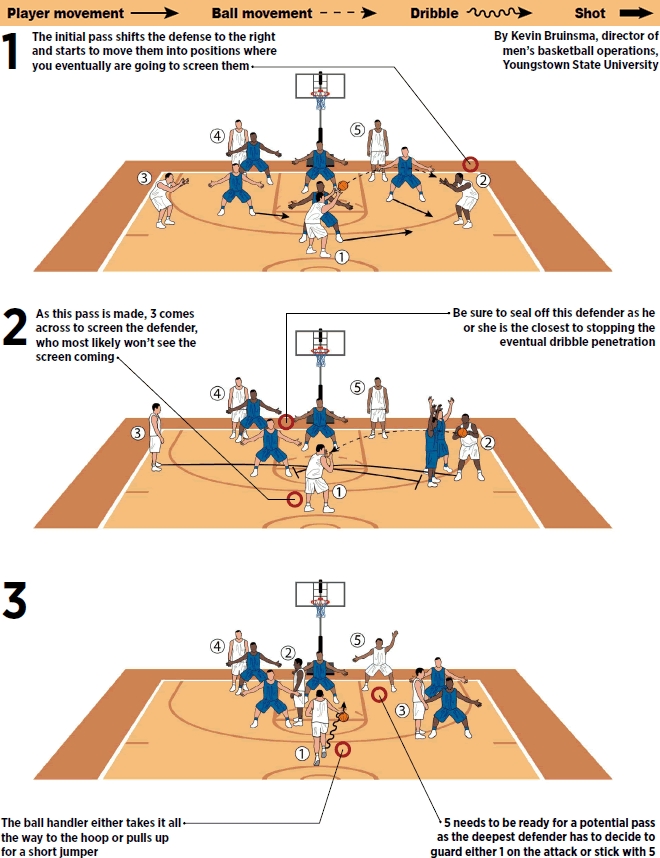
Image Source: d3rqy6w6tyyf68.cloudfront.net
How To Play Zone Defense In Basketball: Master the Strategy
What is zone defense in basketball? Zone defense in basketball is a defensive strategy where players guard specific areas or “zones” on the court rather than directly marking opposing players. Can I switch between man-to-man and zone? Yes, teams can and often do switch between man-to-man and zone defense during a game to keep opponents off balance. Who is zone defense best against? Zone defense is often effective against teams with poor outside shooting, slow offensive players, or those who struggle to break down a packed defense.
Deciphering the Zone Defense Basketball Framework
Zone defense basketball is a tactical approach that divides the court into distinct areas, each assigned to a specific defender. The primary goal is to obstruct passing lanes, deny offensive players easy access to the basket, and force turnovers or poor-quality shots. Unlike man-to-man defense, where each defender is responsible for one offensive player regardless of their position, zone defenders react to the ball and the offensive players entering their designated area.
Key Principles of Zone Defense
Several core principles underpin successful zone defense strategy basketball:
- Ball Movement Awareness: Defenders must constantly track the ball’s movement. When the ball enters a zone, the defender responsible for that zone becomes the primary defender.
- Communication: Constant, clear communication between defenders is vital. Call out cutters, screens, and ball movement to ensure no gaps are exploited.
- Pressure on the Ball: The defender guarding the ball should apply pressure to disrupt the offense. This might involve a quick close-out or active hands.
- Help Defense: Defenders not directly guarding the ball must be in a position to offer help defense, anticipating drives or passes into their zone.
- Rebounding: Zones can sometimes leave defenders out of position for rebounds, so boxing out is crucial.
Exploring Different Basketball Zones
Basketball zone coverage comes in various formations, each with its strengths and weaknesses. The most common basketball zones are designed to protect different areas of the court and counter specific offensive actions.
The 2-3 Zone
The 2-3 zone is one of the most popular and straightforward zone defenses. It features two guards up top and three players along the baseline.
- Formation: Two defenders positioned near the free-throw line extended, and three defenders near the baseline – one in each corner and one in the middle.
- Strengths:
- Good at protecting the paint and forcing outside shots.
- Effective against teams that like to penetrate the middle.
- Relatively easy to teach and implement.
- Weaknesses:
- Vulnerable to strong outside shooters, especially in the high post and corners.
- Can be susceptible to dribble penetration by quick guards.
- Requires good communication and rotation to cover the gaps.
- Player Responsibilities:
- Top Two Defenders (Guards): Cover the wings and the top of the key. They must close out on perimeter shooters and rotate to help on drives.
- Bottom Three Defenders (Forwards/Center): Cover the blocks, the high post, and the corners. The center typically anchors the middle, while the wings cover the corners and help with drives.
The 3-2 Zone
The 3-2 zone shifts the emphasis to perimeter defense, with three players up top and two along the baseline.
- Formation: Three defenders positioned higher on the court, covering the top of the key and wings, with two defenders near the blocks.
- Strengths:
- Strong at contesting perimeter shots and disrupting passing lanes on the perimeter.
- Can pressure guards and make it difficult to initiate offense.
- Good against teams that rely heavily on outside shooting.
- Weaknesses:
- Vulnerable to offensive rebounding and interior post play due to fewer players near the basket.
- Can be exploited by quick passes into the seams between defenders.
- Requires active movement and communication to cover the baseline.
- Player Responsibilities:
- Top Three Defenders (Guards/Wings): Cover the perimeter aggressively. They are responsible for closing out, contesting shots, and preventing dribble penetration.
- Bottom Two Defenders (Forwards/Center): Protect the paint and are responsible for rebounding and covering offensive players who get into the low post.
The 1-3-1 Zone
The 1-3-1 zone is an aggressive and often disruptive zone defense. It features one player at the top, three in the middle, and one on the baseline.
- Formation: One defender at the point, three defenders forming a “diamond” or “T” shape in the middle (one at the high post, two on the wings), and one defender on the baseline.
- Strengths:
- Excellent at forcing turnovers and creating traps.
- Can disrupt passing lanes effectively, particularly on the wings and in the high post.
- Can confuse offenses that are not accustomed to it.
- Weaknesses:
- Requires excellent conditioning and active defenders.
- Vulnerable to quick ball movement and passes into the corners and behind the defense.
- Can leave the basket vulnerable if not executed perfectly.
- Player Responsibilities:
- Top Defender: Covers the point and the high post area.
- Middle Three Defenders: Form a connected unit, covering the wings and the high post. They are responsible for trapping offensive players with the ball.
- Baseline Defender: Covers the low post and the corners, acting as a rover and a weak-side defender.
The Box-and-One
The Box-and-One is a hybrid defense that combines zone principles with man-to-man marking. It’s often used to neutralize a single dominant offensive player.
- Formation: Four defenders play a box zone around the paint, while one defender plays man-to-man on the opponent’s best scorer.
- Strengths:
- Highly effective at shutting down a star player.
- Can disrupt the flow of offenses that are overly reliant on one player.
- Weaknesses:
- Can leave other offensive players open if the zone defenders are not sharp.
- Requires exceptional communication and coordination.
- Can be susceptible to mismatches if the man-to-man defender is outmatched.
- Player Responsibilities:
- Man-to-Man Defender: Sticks to the designated offensive player like glue.
- Box Zone Defenders: Cover the four corners of a box around the paint, reacting to the ball and helping to cover the perimeter and interior threats not covered by the man-to-man defender.
Playing Man vs. Zone Defense: A Strategic Comparison
The decision of playing man vs. zone defense is a critical strategic choice for any basketball team. Both have distinct advantages and disadvantages that influence offensive and defensive game plans.
Advantages of Zone Defense
- Preserves Energy: Defenders don’t have to chase their assigned player all over the court, which can save energy, especially in long games or against quick guards.
- Disrupts Offensive Flow: Zones can confuse offenses and make it harder for them to find comfortable spots or execute their plays.
- Protects the Paint: Many zone defenses are designed to clog the lane and force teams to score from the outside.
- Forces Turnovers: Well-executed zones can create passing lane disruptions and traps, leading to steals.
- Hides Weaker Individual Defenders: Players who struggle with man-to-man defense can be more effective in a zone by guarding an area rather than a specific player.
- Effective Against Poor Shooters: Teams that struggle to make outside shots are often neutralized by a zone that forces them into those situations.
Disadvantages of Zone Defense
- Vulnerability to Outside Shooting: If offensive players can consistently hit outside shots, zones can be exploited.
- Rebounding Challenges: Zone defenders may be out of position for defensive rebounds, especially on the weak side.
- Gaps Between Zones: Well-drilled offenses can find seams and gaps between zone defenders, leading to open shots or drives.
- Requires Excellent Communication: Zones break down quickly without constant talking and coordination.
- Less Pressure on Individual Players: It can be harder to apply intense ball pressure on specific offensive players who are not the primary ball-handler.
- Can Be Predictable: If a team only plays one type of zone, opponents can often develop strategies to attack it.
Playing Man-to-Man Defense
Man-to-man defense requires each defender to guard a specific offensive player.
- Advantages:
- Directly pressures individual offensive players.
- Can be more effective at shutting down specific offensive stars.
- Often leads to better defensive rebounding as players are assigned to box out.
- Can be more aggressive in contesting shots and passes.
- Disadvantages:
- Can be tiring, especially against quick guards.
- Vulnerable to screens and off-ball movement.
- Requires strong individual defensive skills from every player.
- A mismatch can be easily exploited if a defender struggles against their assignment.
Implementing Zone Defense Basketball: A Practical Guide
Implementing zone defense basketball effectively requires careful planning, consistent practice, and a clear understanding of player roles.
Step-by-Step Implementation Process
- Educate Players on Principles: Start by teaching the fundamental concepts of zone defense: covering an area, reacting to the ball, communication, and help defense.
- Choose the Right Zone: Select the zone that best suits your team’s personnel and the tendencies of your opponents. A 2-3 zone is a good starting point for many teams.
- Drill Specific Movements: Practice the rotations and transitions within the chosen zone. This includes closing out, recovering, and shifting to cover open areas.
- “Ball Fake” Drills: Defenders practice reacting to ball fakes and moving to the correct defensive position.
- “Pass and Rotate” Drills: Offensive players pass the ball around the perimeter, and zone defenders practice shifting and closing out.
- “Screen Away” Drills: Offensive players set screens away from the ball, and zone defenders practice navigating through or around them to maintain their zone responsibilities.
- Emphasize Communication: Dedicate practice time to verbal communication. Players should be encouraged to call out the ball’s location, cutters, and screens.
- Practice Against Different Offensive Sets: Simulate various offensive attacks to test the zone’s effectiveness and identify weaknesses. This includes drives, post-ups, and perimeter offense.
- Develop “Zone Offense” Counter-Strategies: Teach your players how to attack zone defenses effectively. This involves sharp passing, dribble penetration, and exploiting gaps.
- Review and Adjust: After games and practices, analyze the zone’s performance. Identify areas for improvement and make adjustments as needed.
Key Coaching Points for Zone Defense
- “See the Ball, See Your Man”: While primarily guarding an area, defenders must also be aware of the offensive player within their zone, especially if they are a shooting threat.
- “Jump to the Ball”: When the ball is passed to a player in your general vicinity, close out quickly and aggressively to prevent easy passes or shots.
- “Shuffle, Don’t Cross Over”: When moving within the zone or recovering, defenders should shuffle their feet to maintain balance and be ready to move in any direction. Crossing over can lead to being off-balance or beaten.
- “Protect the Paint First”: The primary goal of most zones is to prevent easy baskets. Defenders near the basket should prioritize stopping drives and post-ups.
- “Communicate, Communicate, Communicate”: This cannot be stressed enough. Effective communication is the backbone of a successful zone.
Common Zone Defenses Basketball: Strengths and Applications
Beyond the fundamental 2-3, 3-2, and 1-3-1, there are variations and more complex zone defenses used in basketball.
The 1-2-2 Zone
This zone is a variation that can be effective against certain offensive sets.
- Formation: One defender at the point, two defenders in the middle (one on each wing), and two defenders on the baseline (in the corners).
- Strengths:
- Good perimeter coverage.
- Can apply pressure on the wings.
- Can transition into trapping situations on the wings.
- Weaknesses:
- Vulnerable to post-ups in the middle.
- Can struggle against quick ball movement to the corners.
The 2-1-2 Zone
This zone offers a different balance between interior and perimeter defense.
- Formation: Two defenders up top, one defender in the high post area, and two defenders on the baseline.
- Strengths:
- Strong interior presence with the middle defender.
- Good baseline coverage.
- Weaknesses:
- Can be vulnerable to strong perimeter shooters on the wings.
- Requires good coordination between the top and middle defenders.
Transitioning Between Man and Zone
The ability to fluidly transition between playing man vs. zone defense is a hallmark of a well-coached team. This can be done for several reasons:
- To Surprise the Offense: Switching defenses can disrupt an opponent’s rhythm and force them to adapt on the fly.
- To Counter Specific Offensive Sets: If an offense is having success with a particular play against man-to-man, switching to a zone can disrupt it. Conversely, if a zone is being exploited, switching to man-to-man can provide tighter coverage.
- To Manage Fouls: If key players are in foul trouble, switching to a zone can sometimes reduce the risk of drawing fouls compared to aggressive man-to-man defense.
- To Control Game Tempo: A zone can sometimes slow down a fast-paced offense, while a man-to-man can help maintain a higher defensive pressure.
Common Transition Strategies
- “Match-up Zone”: This hybrid defense blends man-to-man principles within a zone structure. Defenders guard their area but are responsible for matching up with any offensive player who enters their zone. It provides some of the benefits of both.
- “Trap” Zones: Some zones are designed to aggressively trap the ball handler, often on the sidelines or in the corners, forcing turnovers.
- “Sag” Zones: Conversely, some zones are designed to “sag” off shooters, prioritizing preventing drives and post-ups, daring opponents to shoot from the outside.
Advantages of Zone Defense in Specific Scenarios
The advantages of zone defense become particularly apparent in certain game situations:
- Against Teams with Poor Shooters: If an opponent consistently misses open jump shots, a zone defense that forces them to take these shots can be highly effective.
- Against Teams with One Dominant Scorer: While the Box-and-One is specifically designed for this, other zones can also limit the touches and effectiveness of a primary offensive threat by packing the defense.
- To Slow Down Fast Breaks: A zone can be quickly set up in transition, providing a defensive presence and making it harder for the opponent to get easy fast-break points.
- When a Team is Tired or in Foul Trouble: As mentioned, zones can be less physically demanding and potentially lead to fewer fouls than aggressive man-to-man.
Disadvantages of Zone Defense in Specific Scenarios
Conversely, zones have their Achilles’ heels:
- Against Elite Shooters: Teams with multiple players capable of hitting three-pointers consistently can pick apart a zone defense.
- Against Teams with Strong Inside Players: If an opponent has a dominant post player who can score over multiple defenders, a zone might not provide adequate protection.
- Against Teams with Excellent Ball Movement: Quick, crisp passing can exploit the gaps and rotations in a zone defense before defenders can recover.
- Against Teams with Skilled Cutters: Players who are adept at cutting through the seams of a defense can find open looks for layups.
Frequently Asked Questions (FAQ)
Q1: Is zone defense better than man-to-man defense?
A1: Neither is definitively “better.” The effectiveness of zone vs. man-to-man depends on the players, the opponent, and the game situation. Both have strengths and weaknesses.
Q2: When should a coach implement zone defense?
A2: Coaches often implement zone defense when facing teams with poor outside shooting, when their own team’s individual defense is weak, or to change the pace of the game and confuse the opponent.
Q3: What is the most common basketball zone defense?
A3: The 2-3 zone is generally considered the most common and fundamental basketball zone defense due to its relative simplicity and effectiveness in protecting the paint.
Q4: How do you effectively attack a zone defense?
A4: Attacking a zone typically involves sharp passing, dribble penetration to draw defenders, finding gaps between defenders, and exploiting offensive rebounding opportunities.
Q5: Can you play zone defense in the NBA?
A5: While the NBA primarily features man-to-man defense, teams do employ zone defenses strategically. However, the rules in the NBA generally make it harder to sustain a pure zone for extended periods compared to college or international basketball.
Mastering zone defense basketball requires dedication to practice, a deep comprehension of its principles, and the adaptability to adjust to offensive strategies. By exploring the different basketball zones and understanding the nuances of playing man vs. zone defense, coaches and players can unlock a powerful defensive weapon. The successful implementation of zone defense basketball hinges on constant communication, precise rotations, and a collective effort to protect the court as a cohesive unit.