
Basketball 21, also known as Twenty-one basketball, is a fun and fast-paced shooting game that tests your accuracy and endurance. You play by making shots from various spots on the court, with each successful shot earning you points or advancing you through the game’s progression.
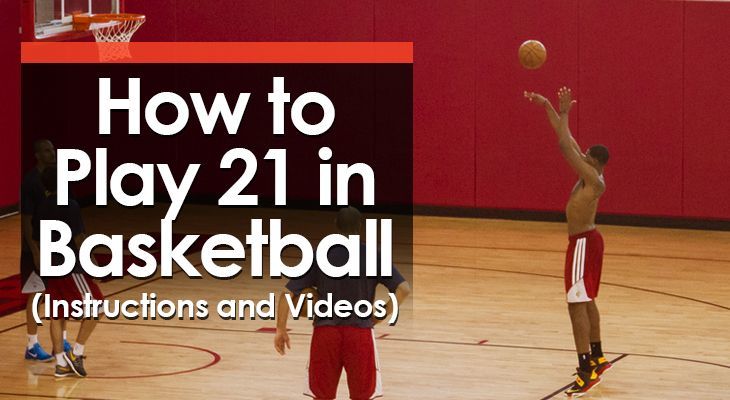
Image Source: www.basketballforcoaches.com
The Core Concept: Aiming for 21
At its heart, Basketball 21 is a game of skill and repetition. You move around the basketball court, taking shots from designated spots. The goal is to be the first player to reach or exceed 21 points, but there’s a twist: you can also be eliminated if you miss too many shots. This dynamic makes playing Twenty-one basketball game an engaging challenge for players of all skill levels. It’s a great way to practice shooting and work on your court movement, all while having a blast.
Essential Equipment for Playing
To get started with Basketball 21, you don’t need much:
- A Basketball: A standard size 7 or size 6 basketball is ideal, depending on the players’ age and hand size.
- A Basketball Hoop: Any regulation hoop or even a portable one will do.
- An Open Court: A half-court or full court works perfectly.
- Players: You can play with one player for practice or with multiple players for a competitive game.
Deciphering the Basketball 21 Rules
The Basketball 21 rules are straightforward, making it easy to pick up and play. The game focuses on making shots from different locations on the court. While there can be variations, the most common setup involves a series of “stations” or “spots” where players take turns shooting.
The Standard Setup
-
Designated Spots: The court is divided into several shooting spots. Typically, these include:
- Baseline corners (left and right)
- Wing areas (left and right)
- Top of the key
- Sometimes, free-throw line or elbow areas can be included for more advanced games.
-
Player Order: Players usually shoot in a predetermined order. This can be decided by a quick shooting contest or simply by agreement.
-
Shooting Turns: Players take turns shooting from each designated spot.
Scoring and Progression
The scoring system is where the game gets its name and its challenge. The most common scoring method is as follows:
- First Shot Made: You get one point.
- Second Shot Made (from the same spot): You get two points.
- Third Shot Made (from the same spot): You get three points.
Crucially, if you miss your first shot from a spot, you typically move to the next spot without scoring for that turn. Some variations allow for a “second chance” or a different penalty for missing the first shot.
Table 1: Standard Scoring in Basketball 21
| Consecutive Shots Made from a Spot | Points Awarded |
|---|---|
| First Shot | 1 |
| Second Shot | 2 |
| Third Shot | 3 |
Elimination and Winning
The primary way to be eliminated is by accumulating too many “strikes” or “outs.” A strike is usually given when you miss a shot from a designated spot.
- Common Strike Rule: If you miss your first shot from a spot, you get a “strike.” Accumulate a certain number of strikes (often three or four), and you are out of the game.
- Winning: The last player remaining, or the first player to reach 21 points without being eliminated, wins.
Important Variation: Some versions of how to play 21 basketball focus solely on reaching 21 points. In these variations, players keep shooting from their designated spots until they make their third shot in a row from that spot, earning 1+2+3 = 6 points for that round. They then move to the next spot. The first player to accumulate 21 points wins. This version is often seen in practice drills.
Variations of the Twenty-one Basketball Game
Basketball 21 is incredibly adaptable. Here are a few popular variations:
The “Knockout” Style
This is a highly competitive version, often played with larger groups.
- How it Works: Players line up. The first player shoots. If they make it, they stay in and pass the ball to the next player. If they miss, they get a “strike.” If they miss their next shot (from a different spot or the same, depending on the rules), they are “out.” The goal is to be the last player shooting. This version is less about accumulating points and more about survival. It’s a good way to add a competitive edge to your playing sessions.
The “Card Game 21” Influence
This variation draws inspiration from the card game Blackjack (also known as 21).
- How it Works: Instead of fixed spots, players draw “cards” that dictate their shot location and the points they need to earn. For example, a “7” might mean shoot from the three-point line, and you need to make a shot to “hit” 7 points. You can continue shooting from different locations to get closer to 21 without “busting” (going over 21). This is a more complex adaptation of Basketball card game 21.
The “Score Accumulation” Style
This is the version most commonly used for shooting practice.
- How it Works: Players start at a designated spot (e.g., the wing). They shoot until they make three shots in a row from that spot. Each successful shot earns points: 1 for the first, 2 for the second, 3 for the third. Once they make three in a row, they move to the next spot and repeat the process. The first player to reach a target score (e.g., 21, 30, or even 100) wins. This method