
Can you make a basketball hoop net yourself? Absolutely! Making your own basketball hoop net is a rewarding DIY project that can save you money and allow for customization. Whether you need to replace a worn-out net, repair a damaged one, or simply want a fresh look for your court, this guide will walk you through the simple steps for a DIY basketball net.
The good news is that you don’t need to be a master craftsman to create a functional and durable homemade hoop net. With a few basic tools and the right basketball net materials, you can have a new net ready for action in no time. This article will cover everything you need to know, from selecting your materials to the final basketball net assembly.
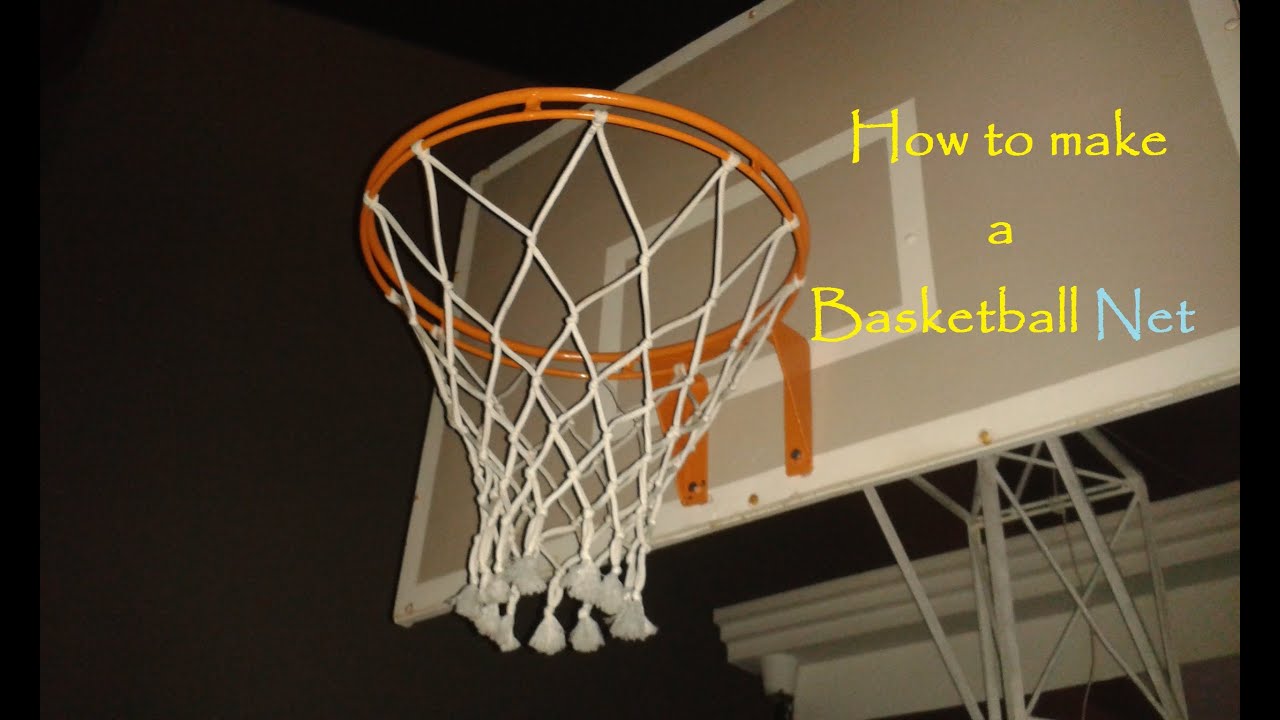
Image Source: i.ytimg.com
Why Make Your Own Basketball Net?
There are several great reasons to consider making your own basketball hoop net.
- Cost Savings: Store-bought nets can be surprisingly expensive. By making your own, you can significantly reduce the cost.
- Customization: You can choose the color, material, and even the pattern to match your personal style or your existing court setup.
- Durability: By selecting high-quality basketball net materials, you can often create a net that is more durable than many commercially available options.
- Satisfaction: There’s a unique sense of accomplishment that comes with creating something useful with your own hands. It’s a great way to replace basketball net wear and tear with your own hard work.
- Repair and Restoration: If your existing net has a few broken strands, you might be able to repair basketball net sections rather than replacing the entire thing. This guide also offers insights into that.
Gathering Your Basketball Net Materials
The foundation of any good DIY basketball net is the quality of your basketball net materials. What you choose will impact the net’s durability, appearance, and how easy it is to work with.
Here’s a breakdown of common and effective materials:
-
Rope/Cord: This is the primary material for your net.
- Nylon: Strong, durable, and resistant to rot and mildew. It’s a popular choice for its weather resistance.
- Polypropylene: Also durable and weather-resistant, but can be more susceptible to UV degradation over time. It’s often a more budget-friendly option.
- Polyester: Offers good strength and abrasion resistance. It’s also quite resistant to stretching.
- Cotton: While natural and soft, cotton is not recommended for outdoor use as it absorbs moisture, can rot, and can be prone to mildew. It’s better suited for indoor recreational play if chosen.
- Thickness: Aim for a cord thickness between 1/8 inch (3mm) and 1/4 inch (6mm). Thicker cords will make a sturdier net but can be heavier and harder to work with. Thinner cords are lighter but might wear out faster.
-
Netting Material (Optional): Some people prefer to start with a pre-made netting fabric and then cut it to size and reinforce it.
- Knotted Netting: This is the most common type found in sports nets. It’s made from interwoven cords that are knotted at each intersection to prevent unraveling.
- Knotless Netting: Similar to knotted netting but uses a different weaving technique that eliminates knots. It can sometimes be more flexible.
-
Tools:
- Scissors or Utility Knife: For cutting your rope or netting.
- Measuring Tape: Essential for accurate measurements.
- Crochet Hook or Large Needle (for crochet/knitting methods): If you plan to crochet basketball net or knit your net. The size of your hook will depend on the thickness of your cord.
- Weaving Shuttle (for weaving methods): If you decide to weave basketball net sections.
- Safety Gloves: To protect your hands, especially when working with thicker cords.
- Marker or Chalk: For marking measurements on your materials.
- Attachment Method: This could be heavy-duty zip ties, carabiner clips, or even extra lengths of rope for tying.
Choosing Your Basketball Net Pattern
The basketball net pattern you choose will dictate the final look and structure of your net. There are several popular methods, each with its own advantages.
Method 1: The Classic Crochet/Knot Method
This is a very popular and traditional way to create a DIY basketball net. It involves making a series of knots to form the net.
- Pros: Creates a classic look, highly durable if knotted correctly, satisfying to make.
- Cons: Can be time-consuming, requires learning specific knots.
Knots to Know:
- Sheet Bend Knot: A secure knot for joining two ropes of potentially different sizes.
- Square Knot (Reef Knot): Useful for securing ends or joining ropes of the same size.
- Overhand Knot: The simplest knot, often used to secure the ends of your work.
How to Crochet a Basketball Net
If you’re looking to crochet basketball net, you’ll be creating a continuous loop of stitches that forms the mesh.
Materials Needed:
- Strong cord (nylon or polyester recommended), approximately 100-150 feet (30-45 meters) for a standard net.
- Large crochet hook (size K, L, or larger, depending on your cord thickness).
- Measuring tape.
- Scissors.
Steps for a Crochet Basketball Net:
- Measure and Cut: Determine the circumference of your basketball hoop. A standard hoop is 18 inches (45.7 cm) in diameter. You’ll need a length of cord that can form a net with enough slack to hang properly. A good starting point is about 100-150 feet of cord. Cut your cord.
- Start the Base Ring: Create a slip knot and place it on your crochet hook. Make a chain of stitches that, when looped, will be roughly the circumference of your hoop. You’ll want the finished net to be slightly larger than the hoop so it has room to sag. A chain of about 70-80 stitches is a good estimate, but you’ll adjust based on your hook size and cord.
- Join the Ring: Once your chain is the desired length, join the last stitch to the first stitch with a slip stitch to form a ring.
- First Row (Netting):
- Chain 3 (this counts as your first double crochet stitch).
- Work a double crochet stitch into each chain around the ring.
- Join the last stitch to the top of the starting chain-3 with a slip stitch.
- You should now have a ring of stitches that can attach to your hoop.
- Second Row (Creating the Mesh):
- Chain 3.
- Skip the next stitch on the previous row and work a double crochet in the following stitch.
- Chain 1.
- Repeat this pattern (skip a stitch, double crochet in the next, chain 1) all the way around.
- Join to the top of the chain-3.
- Subsequent Rows: Continue to create rows of double crochet stitches, working into the chain-1 spaces from the previous row. Each row will increase the depth of your net. You’ll want to create enough rows so the net hangs down sufficiently when a ball goes through. Aim for about 10-15 rows, depending on the desired depth.
- Finishing: After your last row, fasten off your yarn, leaving a tail. Thread this tail through the last loop and pull it tight to secure the knot.
- Attaching to Hoop: Thread the tail through the loops at the top of your net and tie it securely around the basketball hoop. You might need to tie several knots or use a secure loop to ensure it stays in place.
Method 2: The Traditional Weave Method
This method is closer to how commercially made nets are often constructed, using a technique to weave basketball net sections.
- Pros: Very strong and uniform pattern, can be faster for those familiar with weaving.
- Cons: Requires learning weaving techniques, may need a weaving shuttle, can be less forgiving for beginners.
How to Weave a Basketball Net
This method often involves creating individual net panels or working in a circular fashion.
Materials Needed:
- Strong cord (nylon or polyester), approximately 100-150 feet.
- A sturdy ring or a template to keep the top consistent.
- A weaving shuttle (optional but helpful).
- Scissors.
- Measuring tape.
Steps for a Woven Basketball Net:
- Prepare Your Hoop/Template: You need something to maintain the shape and size of the top of your net. This could be the actual basketball hoop itself, or you can create a circular template from sturdy cardboard or wood.
- Warping the Hoop: Tie your cord to the hoop at evenly spaced intervals (e.g., every 2-3 inches). This creates the vertical “warp” threads of your net. You’ll want enough warp threads to create a dense enough net.
- Weaving the Net:
- Take another length of cord (the “weft”). Thread it through a weaving shuttle if you have one.
- Begin to weave the weft thread over and under the warp threads, moving horizontally around the hoop.
- The key to a net is creating a pattern where you essentially skip a warp thread for each weft pass to create the holes. For example, you might go over the first warp, under the second, over the third, under the fourth, etc., for one row.
- The next row would reverse this pattern (under the first warp, over the second, etc.). This interlocking pattern is what forms the net.
- Knotting: After each weft pass or every few passes, you’ll need to secure the weave. A common method is to use a larks head knot or a similar hitch knot around the warp threads where the weft passes over them. This is crucial for creating a strong knot basketball net.
- Continue weaving around the hoop, creating your desired net depth. As you weave downwards, the net will start to form.
- Creating the Bottom: Once you’ve reached the desired depth, you’ll need to gather the bottom of the net and tie it off securely. You can do this by grouping several warp threads together and tying them off with a strong knot, or by creating a “drawstring” effect.
- Finishing: Trim any excess cord and secure all loose ends.
Method 3: The Simple Knot-Tying Method (No Hook or Loom)
This method focuses purely on tying knots to build the net from the bottom up or top down.
- Pros: Requires minimal specialized tools, can be very durable.
- Cons: Can be very slow and repetitive, requires precise knot tying.
How to Knot a Basketball Net
This method is all about creating a strong, interconnected network of knots.
Materials Needed:
- Strong cord, approximately 100-150 feet.
- Scissors.
- Measuring tape.
- A way to hold the top of the net while you work (e.g., a coat hanger, a temporary frame).
Steps for a Knot Basketball Net:
- Create the Top Loops: You need to attach your net to the hoop. You can do this by tying short lengths of cord to the hoop, creating loops that you will then tie your main net onto. Alternatively, you can start by tying a continuous knotting strand to the hoop itself and working outwards.
- Working the First Row of Knots: This is where you build the foundation. Imagine your hoop as a circle. You’ll be tying knots at intervals along this circle. A common approach is to tie a series of square knots or similar secure knots to create the first edge of the net.
- Building Downwards: For each subsequent row, you’ll be creating new knots that connect the previous row’s knots, forming the diamond or square pattern of the net.
- For example, if you tied a knot at point A and point B on the row above, you would tie a new knot between them, forming the next layer of the net.
- You will need to maintain consistent tension and spacing between your knots to ensure the net is uniform.
- The Pattern: The goal is to create a pattern of interconnected knots that forms a mesh. This might involve alternating knot positions or creating a staggered effect, similar to a fishing net. A specific basketball net pattern might involve creating a series of diamond shapes.
- Bottom Closure: Similar to the weaving method, you’ll need to bring the bottom strands together and tie them off securely.
Basketball Net Assembly: Attaching Your New Net
Once you’ve made your net, the final step is the basketball net assembly, which means attaching it securely to your hoop.
Steps for Attaching Your Net:
- Position the Net: Drape your newly made net over the basketball hoop, ensuring the top edge is aligned with the hoop.
- Secure the Top Edge:
- Using Cords: If your net was made with a continuous cord or has loops at the top, thread the cord through the hoop or through the loops. Tie strong, secure knots to fasten it. Ensure you distribute the tension evenly around the hoop.
- Using Zip Ties: For a quick and strong attachment, heavy-duty zip ties are an excellent option. Thread them through the top loops of your net and around the hoop, then tighten them securely. You might need 6-12 zip ties depending on the construction of your net and the hoop.
- Using Clips: Sturdy carabiner clips can also be used to attach pre-made loops on your net to the hoop.
- Check for Slack: Ensure there’s enough slack in the net for the ball to pass through and for the net to hang naturally. Too tight a net will not perform as well.
- Reinforce if Needed: If you notice any areas that seem weak or might stretch or break, add extra knots or zip ties for reinforcement.
- Test It Out: Give your new net a few test shots to ensure it’s secure and functions correctly.
Repairing Your Basketball Net
Sometimes, you don’t need to completely replace basketball net components. You might only need to repair basketball net sections that have started to fray or break.
Simple Repair Techniques:
- Re-knotting: If a knot has come undone, try to re-tie it securely using the same type of knot.
- Patching: For small holes or tears, you can try to “patch” them by weaving or crocheting small sections of cord to fill the gap.
- Reinforcing: If a section of cord looks worn, you can try wrapping it with strong tape or additional cord to reinforce it.
Tips for Success
- Practice Knots: If you’re using a knot-tying method, practice the specific knots you’ll be using until you can tie them quickly and correctly.
- Consistent Tension: Maintaining consistent tension throughout the netting process is key to a uniform and durable net.
- Weatherproofing: If your net will be outdoors, choose weather-resistant materials like nylon or polyester.
- Start Small: If you’re new to this, consider practicing on a smaller project first, like a practice net or a smaller piece of netting, before tackling a full-size basketball net.
- Patience is Key: Making a basketball net can be a labor of love. Be patient with yourself, and enjoy the process!
Frequently Asked Questions (FAQ)
How long does a DIY basketball net typically last?
The lifespan of a DIY basketball net depends heavily on the basketball net materials used, the quality of your basketball net assembly, and the environmental conditions. If made with durable materials like nylon and kept outdoors, it can last anywhere from 6 months to several years. Indoor nets can last much longer.
What is the best type of cord for a basketball net?
For durability and weather resistance, nylon or polyester cord is generally considered the best. The thickness should be between 1/8 inch and 1/4 inch.
Can I use fishing line to make a basketball net?
While fishing line is strong, it’s often too thin and can cut into itself under pressure, leading to breakage. It also doesn’t have the flexibility needed for a good net. It’s generally not recommended for a basketball net.
How many yards of cord do I need for a DIY basketball net?
For a standard 18-inch diameter hoop, you’ll likely need between 100 and 150 feet (about 30-45 yards) of cord. This can vary based on the tightness of your weave or crochet and the desired depth of the net. It’s always better to have a little extra cord than to run short.
Is it cheaper to buy or make a basketball net?
In most cases, making your own DIY basketball net is significantly cheaper than buying a new one, especially if you purchase your basketball net materials in bulk. The cost savings are often substantial, making it a worthwhile project.
How do I ensure my crocheted basketball net is strong enough?
Use a strong cord, a crochet hook that matches the cord thickness appropriately, and ensure you are using sturdy stitches like double crochet. When finishing and attaching, make sure all knots are tight and secure, and consider reinforcing attachment points.
By following these steps and choosing the right basketball net materials, you can successfully create your own homemade hoop net that will provide hours of basketball fun!