
So, you want to get into basketball? Yes, anyone can learn to play basketball, regardless of age or current skill level. The journey starts with a passion for the game and a willingness to learn and practice. This guide is your roadmap, covering everything from the basic rules and positions to effective training methods and how to find opportunities to play.
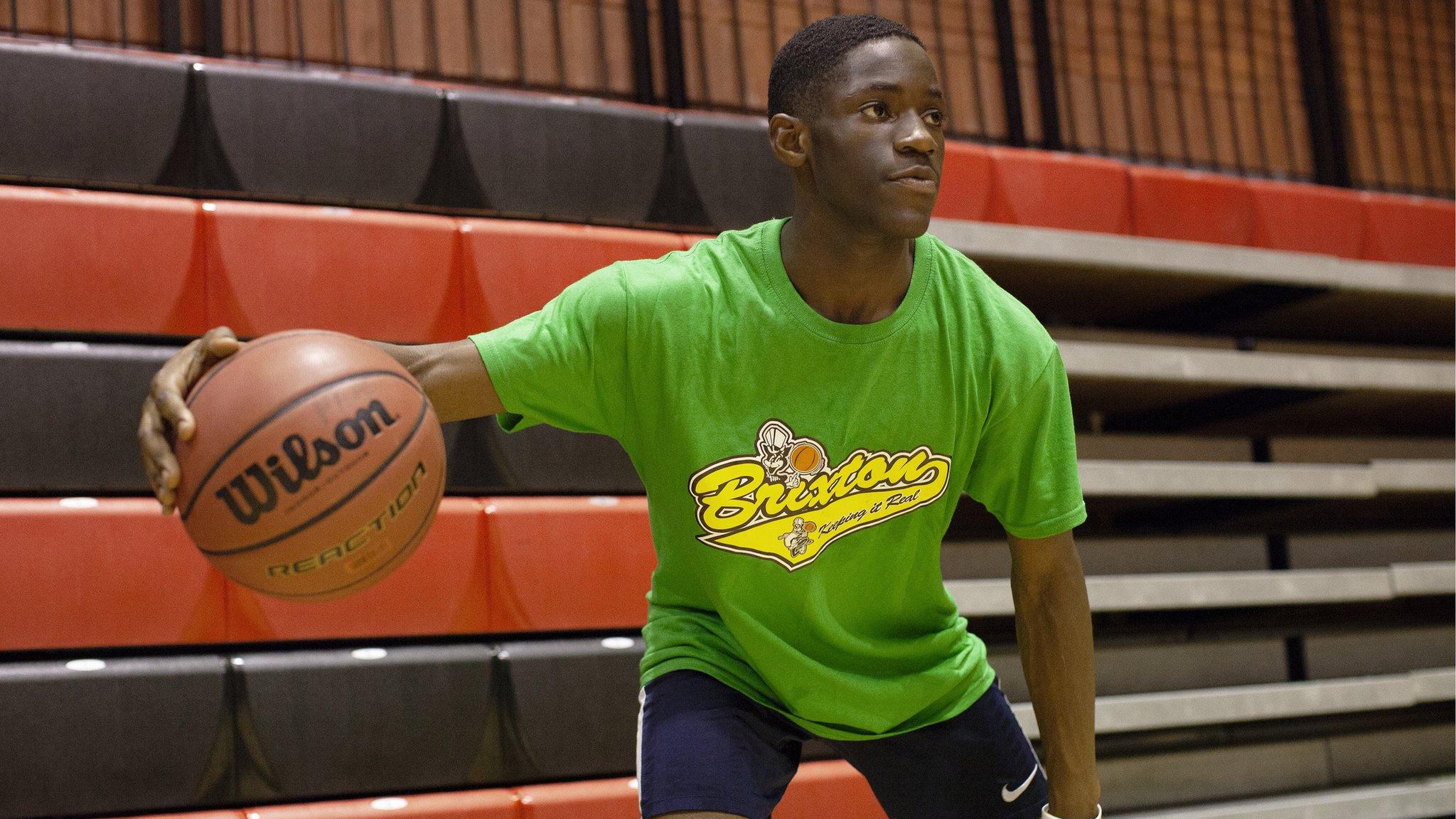
Image Source: ichef.bbci.co.uk
Getting Started: The Essentials
Before you even step onto the court, it’s good to have a grasp of the basics. This includes knowing the fundamental basketball rules and the different basketball positions.
Deciphering the Basketball Rules
Basketball is played by two teams, usually of five players each, on a rectangular court. The objective is to shoot a ball through a hoop (basket) mounted high at each end of the court. The team with the most points at the end of the game wins.
Here’s a breakdown of key rules:
- Scoring:
- A successful shot from inside the three-point line is worth 2 points.
- A successful shot from outside the three-point line is worth 3 points.
- A free throw, awarded after certain fouls, is worth 1 point.
- Ball Movement: Players move the ball by passing it to teammates or by dribbling (bouncing the ball while walking or running).
- Dribbling Violations:
- Double Dribble: Dribbling with both hands simultaneously or stopping and then resuming dribbling.
- Traveling: Taking too many steps without dribbling the ball.
- Fouls: Illegal physical contact with an opponent. Common fouls include pushing, holding, and blocking. Players can be disqualified after committing a certain number of fouls.
- Violations: Infractions of the rules that don’t involve physical contact, such as traveling or double dribbling. When a violation occurs, the opposing team gets possession of the ball.
- Game Duration: Games are typically divided into quarters or halves, with a set time limit.
Fathoming Basketball Positions
Each player on the court has a role, and knowing these basketball positions can help you understand team strategy and your own potential strengths. While modern basketball often features fluid roles, the traditional positions are:
- Point Guard (PG): Often the primary ball-handler and playmaker. They typically have good dribbling skills, court vision, and the ability to pass accurately. They initiate the offense.
- Shooting Guard (SG): A strong scorer, often good at shooting from various distances. They complement the point guard on offense and can also play defense.
- Small Forward (SF): A versatile player who can score both inside and outside the paint. They are often good rebounders and can defend multiple positions.
- Power Forward (PF): Usually plays closer to the basket. They are strong rebounders and good at scoring in the post. They often defend taller players.
- Center (C): The tallest player on the team, typically playing near the basket. Centers are strong rebounders, shot-blockers, and inside scorers.
Developing Your Skills: Improving Basketball Skills
Once you have a basic grasp of the rules and positions, it’s time to focus on improving basketball skills. This involves consistent practice and dedication to mastering the fundamentals.
Mastering Basketball Fundamentals
The foundation of any great basketball player lies in strong basketball fundamentals. These are the core skills that, when perfected, make everything else on the court easier.
- Dribbling:
- Stationary Dribbling: Practice dribbling with your head up, keeping the ball low and controlled. Use your fingertips, not your palm.
- Dribbling on the Move: Incorporate dribbling into walking, running, and changing directions. Practice crossover dribbles, behind-the-back dribbles, and between-the-legs dribbles.
- Weak Hand Dribbling: Dedicate significant time to dribbling with your non-dominant hand to become a more versatile player.
- Shooting:
- Form Shooting: Focus on proper technique: B.E.E.F. (Balance, Eyes, Elbow, Follow-through). Ensure your feet are shoulder-width apart, eyes are on the rim, elbow is tucked, and you follow through with your shooting hand.
- Layups: Practice layups from both sides of the basket, focusing on using the backboard and soft touch.
- Mid-Range Shots: Develop consistency with shots taken inside the three-point line.
- Three-Point Shots: Once your mid-range game is solid, work on extending your range.
- Passing:
- Chest Pass: A fundamental pass for short to medium distances. Step into the pass and snap your wrists.
- Bounce Pass: Effective for getting around defenders. Aim for a point about two-thirds of the way to your receiver.
- Overhead Pass: Useful for longer passes or passing over defenders.
- Rebounding:
- Boxing Out: Position yourself between your opponent and the basket to prevent them from getting to the ball.
- Timing and Jumping: Learn to anticipate where the ball will bounce and jump at the right time to secure the rebound.
- Defense:
- Stance: Maintain a low, balanced stance with your feet wide and knees bent.
- Footwork: Use quick, shuffle steps to stay in front of your opponent. Avoid crossing your feet.
- Anticipation: Watch your opponent’s hips and shoulders to predict their moves.
Engaging in Basketball Drills
Consistent practice with targeted basketball drills is crucial for skill development. Drills isolate specific aspects of the game, allowing you to refine your technique.
Here are some essential drills:
- Dribbling Drills:
- Cone Drills: Set up cones and dribble around them using various moves (crossovers, between-the-legs).
- Two-Ball Dribbling: Dribbling two balls simultaneously improves coordination and ball control.
- Full Court Dribbling: Practice dribbling at speed while maintaining control and changing direction.
- Shooting Drills:
- Form Shooting Series: Start close to the basket and gradually move back, focusing on perfect form for each shot.
- Spot Shooting: Pick five spots around the court and make a certain number of shots from each spot before moving.
- Free Throw Routine: Develop a consistent routine for free throws to build confidence and muscle memory.
- Layup Lines: Players line up and take turns driving for layups.
- Passing Drills:
- Partner Passing: Stand facing a partner and practice chest passes, bounce passes, and overhead passes.
- Passing on the Move: Practice passing while jogging or running.
- Defensive Drills:
- Defensive Slides: Practice sliding laterally across the court without crossing your feet.
- Closeout Drills: Practice closing the distance to an offensive player quickly and under control.
- One-on-One Defense: Practice guarding an offensive player in a half-court setting.
Structured Basketball Training
Beyond individual drills, structured basketball training provides a comprehensive approach to improvement. This often involves organized programs that combine skill development, conditioning, and tactical knowledge.
Enhancing Your Game with Basketball Practice
Basketball practice is where skills are honed, and game-like situations are simulated. It’s about repetition, feedback, and pushing your limits.
- Consistent Schedule: Aim for regular practice sessions, whether it’s daily or several times a week. Consistency is key to improvement.
- Vary Your Drills: Don’t just do the same drills every time. Introduce variety to keep your training engaging and to work on different aspects of your game.
- Simulate Game Scenarios: Incorporate drills that mimic game pressure, like timed shooting drills or practice scrimmages.
- Focus on Weaknesses: Dedicate extra time to the skills you find most challenging.
- Active Recovery: Don’t forget rest and recovery. Proper nutrition and sleep are vital for muscle repair and performance.
The Benefits of Basketball Camps and Clinics
Basketball camps and clinics offer intensive training opportunities. They are often run by experienced coaches and provide a focused environment for skill development.
- Skill Specialization: Many camps focus on specific skills like shooting, ball-handling, or defense.
- Expert Coaching: You’ll receive instruction from coaches with a proven track record.
- Exposure to New Techniques: Camps often introduce players to advanced drills and strategies.
- Networking: You’ll meet other players who are passionate about the game, fostering a sense of community and healthy competition.
- Intense Conditioning: Camps often include rigorous physical training to improve stamina and agility.
Joining Basketball Leagues and Teams
The best way to truly get into basketball is to play with a basketball team. Joining basketball leagues provides a competitive platform to apply your skills and learn teamwork.
- Finding a Team:
- School Teams: If you’re in school, try out for the school team.
- Community Leagues: Many communities have recreational basketball leagues for various age groups and skill levels.
- Club Teams: For more competitive play, look for local youth basketball clubs.
- Pickup Games: Informal games in parks or gyms are a great way to get playing time and practice against different players.
- Teamwork: Basketball is a team sport. Learn to communicate with your teammates, trust them, and work together towards a common goal.
- Game Experience: Playing in games is invaluable. It teaches you how to handle pressure, make decisions on the fly, and adapt to different opponents.
- Learning from Others: Observe experienced players, learn from your coaches, and be open to constructive criticism.
Physical and Mental Preparation
Basketball is as much a mental game as it is a physical one. Preparing your body and mind is crucial for success.
Conditioning for Basketball
To excel on the court, you need to be in good physical shape. Basketball training should include a focus on:
- Cardiovascular Endurance: Running, jumping, and constant movement require excellent stamina. Incorporate activities like running, swimming, or cycling into your routine.
- Agility and Speed: Quick changes of direction and bursts of speed are essential. Drills like suicides, cone drills, and ladder drills are beneficial.
- Strength Training: Building core strength, leg strength, and upper body strength will improve your ability to jump, shoot, defend, and handle physical contact. Focus on compound exercises like squats, lunges, push-ups, and pull-ups.
- Flexibility: Proper stretching before and after practice helps prevent injuries and improves range of motion.
Cultivating a Basketball Mindset
The mental aspect of basketball is often overlooked but is equally important.
- Focus and Concentration: Stay focused on the game, even when things aren’t going your way. Block out distractions.
- Resilience: Learn to bounce back from mistakes and losses. Every player misses shots or makes turnovers; it’s how you respond that matters.
- Sportsmanship: Be a good sport. Respect your opponents, referees, and teammates.
- Coachability: Be open to feedback from your coaches. They are there to help you improve.
- Visualization: Imagine yourself performing well on the court. Visualize successful shots, defensive stops, and clutch plays.
Putting It All Together: Your Basketball Journey
Embarking on your basketball training journey is an exciting process. It’s a marathon, not a sprint, and consistent effort will yield the best results.
A Sample Practice Plan
Here’s a sample one-hour practice plan to give you an idea of how to structure your time. This can be adjusted based on your needs and available time.
Practice Session Breakdown
| Activity | Duration | Focus |
|---|---|---|
| Warm-up | 10 min | Dynamic stretching, light cardio |
| Dribbling Drills | 15 min | Ball handling, weak hand work, crossovers |
| Shooting Drills | 20 min | Form shooting, layups, mid-range shots |
| Passing Drills | 5 min | Partner passing, accuracy |
| Defensive Drills | 5 min | Slides, closeouts |
| Cool-down | 5 min | Static stretching |
Finding Basketball Opportunities
- Local Community Centers: Often have open gym times for pickup games.
- YMCA/YWCA: Similar to community centers, they offer recreational basketball.
- Online Resources: Websites like Meetup or local sports forums can help you find pickup games or leagues.
- Ask Around: Talk to friends, classmates, or colleagues who play basketball. They might know of opportunities.
The Joy of Playing Basketball
Ultimately, the most important aspect of getting into basketball is to enjoy it. The game offers a fantastic way to stay active, build friendships, develop character, and experience the thrill of competition. Whether you dream of playing professionally or simply want to have fun with friends, the path to becoming a basketball player is open to everyone.
Frequently Asked Questions (FAQ)
Q1: Can I start playing basketball at any age?
A1: Absolutely! While starting young can offer advantages, many people pick up basketball later in life and become quite skilled. The key is dedication and consistent practice.
Q2: What’s the most important fundamental skill to learn first?
A2: Dribbling is often considered the most crucial fundamental. Being able to control the ball effectively opens up opportunities to pass, shoot, and move around the court.
Q3: How often should I practice to see improvement?
A3: Consistency is more important than intensity. Aim for at least 3-4 practice sessions per week, even if they are short. As you get more serious, you can increase the frequency and duration.
Q4: What if I’m not very athletic?
A4: Basketball requires a variety of athletic skills, but many of them can be developed through specific training. Focus on improving your agility, stamina, and ball-handling skills, and don’t be afraid to learn defensive techniques that can compensate for pure speed.
Q5: How do I know which basketball position is best for me?
A5: Your preferred playing style and physical attributes will influence your best position. Guards are typically smaller and quicker, forwards are often versatile, and centers are usually the tallest. Try playing different positions to see what feels most comfortable and effective.
Q6: What equipment do I need to get started?
A6: You’ll need a basketball (size 7 for men/boys 15+, size 6 for women/girls 11+ and boys 12-14, size 5 for younger players) and comfortable athletic shoes. A good pair of basketball shorts and a jersey are also standard.
Q7: Should I join a basketball camp or a league first?
A7: Both offer different benefits. A basketball camp can quickly boost your skills with intensive coaching. A basketball league provides consistent game experience. If you’re completely new, starting with a recreational league or pickup games might be less intimidating. You can then consider a camp to refine specific skills.
Q8: How important is shooting form?
A8: Shooting form is incredibly important for consistency and accuracy. Developing proper shooting mechanics from the start will save you a lot of trouble down the line and is a key part of improving basketball skills.
Q9: What are some good basketball drills for beginners?
A9: For beginners, focus on basic dribbling drills (stationary, crossover), form shooting close to the basket, and simple passing drills. As you improve, you can move on to more complex basketball drills.
Q10: How can I improve my basketball conditioning?
A10: Incorporate cardiovascular exercises like running and jumping. Add agility drills like sprints and defensive slides. Strength training that focuses on your legs and core will also greatly help your overall basketball training.