
Want to know how to get in shape for basketball? You can improve your game with the right training. This guide will show you how to build basketball fitness, boost your endurance, and increase your agility.
Basketball is a sport that demands a lot from your body. You need to be fast, strong, and have incredible stamina. To truly dominate the court, you need more than just dribbling skills; you need peak physical conditioning. This means focusing on basketball fitness that encompasses every aspect of your athleticism. This article will provide a comprehensive roadmap to achieving that goal, breaking down the essential components of basketball conditioning and how to implement them effectively.
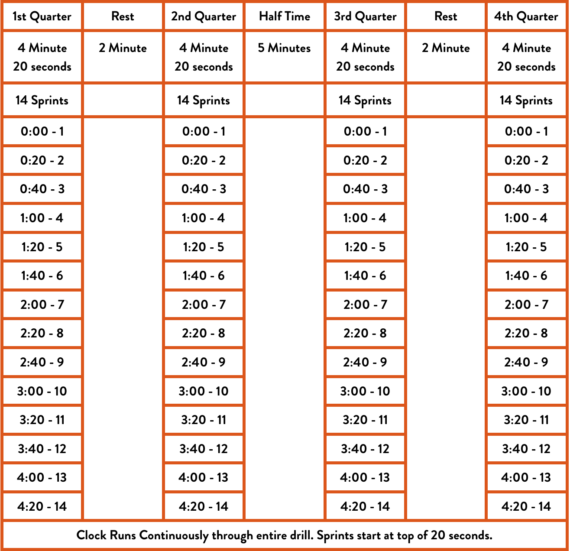
Image Source: pgcbasketball.com
Building a Foundation: Strength and Power
Being strong on the court translates to better defense, more powerful drives to the basket, and the ability to box out opponents. Building basketball strength is not just about lifting heavy weights; it’s about developing functional strength that directly impacts your performance.
Key Strength Exercises for Basketball Players
Here are some fundamental exercises that will form the backbone of your strength program:
- Squats: These work your quads, hamstrings, and glutes. They are crucial for jumping, sprinting, and defensive slides.
- Variations to Consider: Back Squats, Front Squats, Goblet Squats.
- Deadlifts: Excellent for overall posterior chain strength, including your hamstrings, glutes, and lower back. This helps with explosive power.
- Variations to Consider: Conventional Deadlifts, Romanian Deadlifts (RDLs).
- Lunges: Improve single-leg strength and balance, vital for cutting, driving, and landing after jumps.
- Variations to Consider: Forward Lunges, Reverse Lunges, Lateral Lunges.
- Push-ups: Develop upper body pushing strength for finishing at the rim and rebounding.
- Variations to Consider: Standard Push-ups, Incline Push-ups, Decline Push-ups.
- Pull-ups/Chin-ups: Build upper body pulling strength for defense, rebounding, and handling the ball under pressure.
- Variations to Consider: Assisted Pull-ups, Lat Pulldowns (if pull-ups are too difficult initially).
- Core Strengthening: A strong core is the foundation for all movements.
- Exercises: Planks, Russian Twists, Leg Raises, Bicycle Crunches.
Strength Training Schedule Considerations
When planning your basketball training schedule, aim for 2-3 full-body strength sessions per week. Ensure you have at least one rest day between sessions to allow your muscles to recover and rebuild.
| Day | Focus | Exercises | Sets | Reps |
|---|---|---|---|---|
| Monday | Full Body | Squats, Deadlifts, Push-ups, Pull-ups, Plank | 3 | 8-12 |
| Wednesday | Full Body | Lunges, RDLs, Overhead Press, Rows, Crunches | 3 | 10-15 |
| Friday | Full Body | Goblet Squats, Glute Bridges, Bench Press, Bicep Curls, Leg Raises | 3 | 10-15 |
Important Note: Always prioritize proper form over the amount of weight lifted. Consult with a coach or trainer if you are unsure about any exercise.
Enhancing Your Vertical Jump: The Power Within
A higher basketball vertical jump can be a game-changer, allowing you to outrebound opponents, block shots, and finish dunks. This requires explosive power, which is developed through targeted exercises.
The Role of Plyometrics
Basketball plyometrics are exercises that involve explosive movements designed to increase power and speed. They train your muscles to produce maximum force in a short amount of time, directly improving your jumping ability.
- Box Jumps: Leap onto a stable box, focusing on explosive hip extension.
- Progression: Increase box height gradually.
- Depth Jumps: Step off a box and immediately jump as high as possible upon landing. This teaches your body to absorb force and redirect it upwards quickly.
- Jump Squats: Perform a squat and then explode upwards into a jump.
- Broad Jumps: Jump forward as far as possible, focusing on power and distance.
- Knee Tuck Jumps: Jump and bring your knees towards your chest in the air.
Plyometrics Training Guidelines
- Frequency: Incorporate plyometrics 1-2 times per week.
- Volume: Start with 2-3 sets of 6-10 repetitions for each exercise.
- Rest: Allow ample rest between sets (60-90 seconds) to ensure maximum effort on each jump.
- Warm-up: Always perform a thorough dynamic warm-up before plyometrics.
- Progression: Only increase intensity or volume when you can maintain good form.
Caution: Plyometrics are high-impact. Ensure you have a solid strength base before starting a plyometric program to minimize the risk of injury.
Stamina and Speed: Basketball Endurance
Basketball is a game of constant movement – sprinting, cutting, jumping, and changing direction. Developing basketball endurance is crucial to maintaining performance throughout the entire game, especially in the crucial final minutes.
Cardiovascular Conditioning
Your heart and lungs need to be in top shape to keep up with the demands of the game.
- Interval Training: This is highly effective for basketball because it mimics the stop-and-go nature of the sport.
- Examples:
- Sprint for 30 seconds, jog for 30 seconds, repeat for 10-15 minutes.
- Suicide drills: Sprint to a line and back, then sprint to the next line and back, and so on.
- Examples:
- Steady-State Cardio: While not as game-specific, activities like jogging or cycling for longer durations (30-45 minutes) can build a strong aerobic base.
- Fartlek Training: This Swedish term means “speed play.” It involves unstructured bursts of speed mixed with jogging. For instance, sprint to the next lamppost, then jog until you feel recovered, then sprint again.
Sport-Specific Conditioning Drills
These drills directly translate to on-court actions and improve your basketball conditioning.
- Suicides: As mentioned above, these are excellent for building both speed and stamina.
- Defensive Slides: Practice sliding laterally across the court for extended periods to build defensive leg endurance.
- Full-Court Layup Drills: Go up and down the court multiple times with layups, focusing on maintaining speed and accuracy.
- Transition Drills: Simulate fast breaks, requiring players to sprint the length of the court.
Building Endurance: A Gradual Approach
It’s important to build endurance gradually. Overdoing it too soon can lead to fatigue and injury.
- Start: Begin with shorter durations and fewer repetitions, focusing on consistency.
- Progress: As your fitness improves, gradually increase the duration of your sprints, the number of repetitions, or the intensity of your workouts.
- Listen to Your Body: Pay attention to how your body feels. Rest and recovery are just as important as the training itself.
Agility and Quickness: Moving with Precision
Basketball players need to change direction quickly, react to opponents, and move efficiently. Improving basketball agility is key to outmaneuvering defenders and staying in front of your man on defense.
Footwork Drills
Excellent footwork is the foundation of agility.
- Cone Drills:
- Weave Drill: Set up cones in a line and weave through them as quickly as possible.
- T-Drill: Arrange cones in a “T” shape. Sprint forward, shuffle laterally to one side, shuffle back to the center, shuffle to the other side, shuffle back to the center, and backpedal.
- Pro Agility Shuttle: Set up cones 10 yards apart. Start in the middle, sprint to one side, touch the line, sprint to the other side, touch the line, and then sprint back to the middle.
- Ladder Drills: Use an agility ladder to improve foot speed and coordination.
- Drills: Ickey Shuffle, In-In-Out-Out, Single Leg Hops.
- Defensive Slides: Practice continuous defensive slides along the baseline or sideline. Focus on staying low and quick with your steps.
Reaction Drills
The ability to react quickly to stimuli is crucial.
- Partner Mirror Drills: Face a partner. One person leads, moving in different directions, and the other mirrors their movements. This helps with reaction time and change of direction.
- Ball Drop Drills: Have a partner drop a basketball from waist height. React and catch it before it bounces twice. Increase the difficulty by having them drop it from higher up.
Incorporating Agility into Training
- Frequency: Aim to include agility work 2-3 times per week.
- Integration: You can incorporate agility drills into your warm-ups or as separate conditioning sessions.
- Focus: Emphasize explosive first steps and sharp changes of direction.
Improving Basketball Skills: The Ultimate Goal
While conditioning is vital, it’s all in service of improving your actual basketball skills. Improving basketball skills means refining your shooting, passing, dribbling, and defense, and good conditioning makes these actions more effective and sustainable.
Shooting Drills
- Form Shooting: Start close to the basket and focus on proper shooting form (elbow in, follow-through). Gradually increase the distance.
- Catch and Shoot: Practice receiving a pass and shooting immediately.
- Shooting off the Dribble: Work on pulling up for shots after dribbling.
- Free Throws: Develop a consistent routine and practice them regularly, especially when fatigued.
Dribbling Drills
- Stationary Dribbling: Focus on ball control with both hands, varying speed and height of dribbles.
- Dribbling on the Move: Practice dribbling while walking, jogging, and running.
- Two-Ball Dribbling: Dribble two balls simultaneously to improve coordination and ambidexterity.
- Cone Dribbling: Combine dribbling with agility drills, dribbling around cones.
Passing Drills
- Wall Passing: Pass a basketball against a wall, practicing chest passes, bounce passes, and overhead passes.
- Partner Passing: Work with a partner on various types of passes, focusing on accuracy and crispness.
- Passing on the Move: Practice passing while jogging or running.
Defensive Drills
- Defensive Stance and Slides: Master the proper defensive stance and practice staying low and moving laterally.
- Closeout Drills: Practice closing out on a shooter, disrupting their shot without fouling.
- On-Ball Defense Drills: Work on staying in front of your offensive player and mirroring their movements.
Putting It All Together: Sample Training Week
Here’s a sample of how you might structure your basketball training week, balancing conditioning, strength, and skill work. This is a template and should be adjusted based on your current fitness level and specific goals.
Monday:
* Morning: Strength Training (Focus: Lower Body & Core)
* Squats (3×10)
* Romanian Deadlifts (3×12)
* Lunges (3×10 per leg)
* Calf Raises (3×15)
* Plank (3×60 sec)
* Leg Raises (3×15)
* Afternoon: Basketball Skills & Shooting
* Warm-up: Dynamic stretching, light dribbling
* Shooting drills (form shooting, catch & shoot)
* Dribbling drills (stationary, on the move)
* Free throw practice
Tuesday:
* Morning: Basketball Conditioning & Agility
* Warm-up: Dynamic stretching, agility ladder drills
* Suicide drills (4 sets)
* Defensive slide drills (3 sets of 30 sec)
* Cone drills (T-Drill, Weave Drill)
* Cool-down: Static stretching
Wednesday:
* Morning: Strength Training (Focus: Upper Body & Core)
* Bench Press (3×10)
* Pull-ups or Lat Pulldowns (3x as many reps as possible or 10-12)
* Overhead Press (3×10)
* Rows (3×12)
* Push-ups (3x as many reps as possible)
* Russian Twists (3×20)
* Afternoon: Basketball Skills & Passing
* Warm-up: Dynamic stretching, light passing
* Passing drills (wall passing, partner passing)
* Dribbling drills with passing
* Shooting off the dribble
Thursday:
* Active Recovery or Light Conditioning
* Light jog, swimming, or cycling (30 minutes)
* Foam rolling and stretching
* Focus on mobility and flexibility
Friday:
* Morning: Plyometrics & Explosive Power
* Warm-up: Dynamic stretching, light jogging
* Box Jumps (3×8)
* Depth Jumps (3×6)
* Jump Squats (3×10)
* Knee Tuck Jumps (3×8)
* Cool-down: Static stretching
* Afternoon: Game Simulation or Scrimmage (if possible)
* Apply all learned skills and conditioning in a game-like setting.
Saturday:
* Rest or Light Activity: Focus on recovery.
Sunday:
* Rest: Complete rest to allow the body to fully recover.
Nutrition and Recovery: Fueling Your Performance
Your basketball fitness is only as good as the fuel you provide your body and how well you allow it to recover.
Nutrition for Athletes
- Hydration: Drink plenty of water throughout the day, especially before, during, and after training.
- Balanced Diet:
- Complex Carbohydrates: Provide sustained energy (whole grains, fruits, vegetables).
- Lean Protein: Essential for muscle repair and growth (chicken, fish, beans, tofu).
- Healthy Fats: Support hormone production and reduce inflammation (avocado, nuts, seeds, olive oil).
- Pre-Workout Meal: Consume a meal rich in carbohydrates and moderate in protein 1-2 hours before training.
- Post-Workout Meal/Snack: Replenish glycogen stores and aid muscle repair with a combination of protein and carbohydrates within 30-60 minutes after training.
Recovery Strategies
- Sleep: Aim for 7-9 hours of quality sleep per night. This is when your body does most of its repair.
- Stretching: Static stretching after workouts helps improve flexibility and reduce muscle soreness.
- Foam Rolling: Can help release muscle tension and improve blood flow.
- Rest Days: Crucial for preventing overtraining and allowing your body to adapt to training stimuli.
Common Pitfalls to Avoid
- Overtraining: Pushing too hard without adequate rest can lead to burnout, injury, and decreased performance.
- Neglecting Nutrition: Poor diet will hinder your progress, no matter how hard you train.
- Ignoring Injuries: Playing through pain can turn a minor issue into a serious one.
- Lack of Consistency: Sporadic training won’t yield the results you desire. Stick to a plan.
- Focusing Only on One Aspect: You need a balanced approach that includes strength, conditioning, agility, and skills.
Frequently Asked Questions (FAQ)
How long does it take to get in shape for basketball?
The time it takes to get in shape for basketball depends on your starting fitness level and the intensity of your training. Generally, you’ll start to see noticeable improvements in endurance and strength within 4-6 weeks of consistent training. Reaching peak physical condition can take several months.
Can I get in shape for basketball without a gym?
Yes, absolutely! Many effective basketball conditioning and strength exercises can be done at home or outdoors with minimal equipment. Bodyweight exercises, resistance bands, and even household items can be used to create a comprehensive workout plan. For basketball drills, you’ll of course need a basketball and a hoop.
What are the most important physical attributes for basketball players?
The most important attributes include cardiovascular endurance, explosive power (for jumping and sprinting), agility, speed, strength, and flexibility. These all contribute to overall basketball fitness.
How often should I train for basketball?
A balanced approach typically involves 3-5 training sessions per week. This should include a mix of basketball-specific drills, strength training, and conditioning. Ensure you incorporate rest days for recovery.
Is it important to do plyometrics for basketball?
Yes, basketball plyometrics are extremely important for developing explosive power, which directly impacts your basketball vertical jump, speed, and quickness. However, it’s crucial to build a solid strength base first to prevent injuries.
How can I improve my basketball endurance if I get tired quickly?
Focus on interval training and sport-specific conditioning drills like suicides and full-court sprints. Gradually increase the duration and intensity of these workouts. Ensure you are also prioritizing proper nutrition and adequate rest.
What’s the difference between basketball fitness and general fitness?
While general fitness provides a good base, basketball fitness is more specialized. It focuses on the specific demands of the sport, such as explosive movements, rapid changes of direction, and sustained high-intensity bursts combined with recovery periods. Basketball conditioning tailors exercises to replicate these on-court actions.