
What is basketball conditioning? Basketball conditioning is a comprehensive approach to physical preparation designed to enhance a player’s performance on the court by improving their cardiovascular fitness, muscular strength, agility, speed, and power. Can I improve my basketball conditioning with a targeted program? Yes, you absolutely can improve your basketball conditioning with a well-designed and consistently followed program. Who is this guide for? This guide is for any basketball player, from beginner to advanced, looking to elevate their game through superior physical conditioning.
Playing basketball demands a unique blend of physical attributes. It’s not just about shooting or dribbling; it’s about being able to do those things repeatedly, at high intensity, for the entire game. This requires robust conditioning. Whether you’re aiming to outrun your opponent in a fast break, jump higher for rebounds, or maintain your focus during clutch moments, proper conditioning is your secret weapon. This guide will equip you with the knowledge and practical strategies to build a basketball-specific conditioning program that will transform your game.
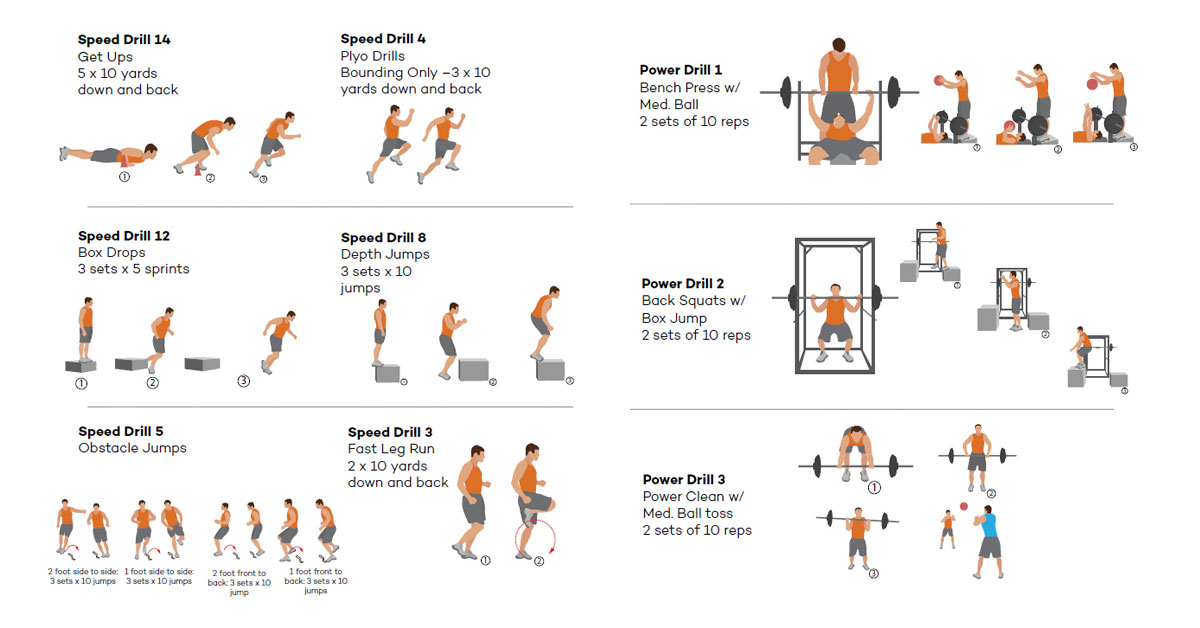
Image Source: www.online-basketball-drills.com
The Foundation: Cardiovascular Fitness
The heart of any basketball conditioning program lies in building a strong cardiovascular system. This is the engine that powers your every move on the court. Without adequate cardiovascular fitness, you’ll tire quickly, your decision-making will suffer, and your performance will decline significantly.
Building Basketball Endurance
Basketball endurance training is crucial for sustained performance. It ensures you can maintain a high level of play throughout the game, not just for a few minutes. This means your body can efficiently deliver oxygen to your working muscles and remove waste products.
Aerobic Conditioning: The Base
Aerobic exercise is the cornerstone of endurance. It strengthens your heart and lungs, allowing them to work more efficiently.
- Long, Slow Distance (LSD) Runs: While not directly basketball-specific, these runs build a solid aerobic base. Aim for 30-45 minutes at a conversational pace. This helps improve your body’s ability to use fat for fuel, sparing glycogen for high-intensity bursts.
- Cycling: A great low-impact option for building aerobic capacity. Maintain a steady pace for 40-60 minutes.
- Swimming: Another excellent full-body aerobic workout that is easy on the joints. Swim laps for 30-45 minutes.
Anaerobic Conditioning: The Game-Day Intensity
Basketball is a game of sprints, jumps, and quick changes of direction, all of which rely on anaerobic energy systems. This type of conditioning focuses on short, intense bursts of activity followed by brief recovery periods.
- Interval Training: This is highly relevant to basketball. It mimics the stop-and-go nature of the game.
- High-Intensity Interval Training (HIIT): Short bursts of maximum effort followed by short rest periods.
- Sprinting Intervals: Sprint for 20-30 seconds, jog or walk for 60-90 seconds. Repeat 8-10 times.
- Supramaximal Sprints: Sprint for 10 seconds at 95-100% effort, rest for 50-60 seconds. Repeat 5-6 times. This targets the phosphocreatine system for explosive power.
- Fartlek Training: “Speed play” in Swedish. This involves varying your pace and intensity spontaneously during a continuous run. For example, sprint to the next lamppost, jog to the one after, then do a few high knees.
- High-Intensity Interval Training (HIIT): Short bursts of maximum effort followed by short rest periods.
Basketball Conditioning Drills for Stamina
These drills directly translate aerobic and anaerobic improvements to basketball-specific movements.
- Suicides/Line Drills: Sprint to the first line, back, then to the second line, back, and so on. Adjust distances based on your fitness level. This is a classic for building court endurance.
- Full-Court Sprints: Sprint from baseline to baseline. Rest for an adequate recovery period (e.g., 30-60 seconds) and repeat. Gradually decrease rest or increase the number of sprints.
- Shuttle Runs: Combine forward sprints with backward sprints and defensive slides. This replicates the multi-directional movements common in basketball.
- In-and-Out Drills: Sprint down the court, perform a defensive slide back to the free-throw line, then sprint again to the opposite baseline.
Developing Basketball Strength Training
Strength is the foundation upon which power and speed are built. A strong athlete can generate more force, resist fatigue, and protect themselves from injury. Basketball strength training focuses on compound movements that target the major muscle groups used in the sport.
Basketball Lower Body Strength
The legs are your primary movers in basketball. Strong quads, hamstrings, glutes, and calves are essential for jumping, sprinting, cutting, and absorbing impact.
Key Exercises:
- Squats:
- Back Squats: Excellent for overall lower body development. Focus on proper form, keeping your back straight and chest up.
- Front Squats: Emphasize quadriceps and core strength.
- Goblet Squats: Good for beginners to learn squat mechanics and build core stability.
- Deadlifts:
- Conventional Deadlifts: Targets the posterior chain (hamstrings, glutes, lower back) and builds incredible overall strength.
- Romanian Deadlifts (RDLs): Focuses on hamstrings and glutes, crucial for jumping power and preventing hamstring pulls.
- Lunges:
- Forward Lunges: Works quads, glutes, and hamstrings.
- Reverse Lunges: Easier on the knees and targets glutes and hamstrings well.
- Walking Lunges: Adds a dynamic element and improves balance.
- Lateral Lunges: Essential for improving lateral movement and defensive slides.
- Calf Raises: Strengthens the calf muscles, important for explosive push-offs and landing stability.
Sample Basketball Lower Body Strength Workout:
| Exercise | Sets | Reps | Rest (sec) | Notes |
|---|---|---|---|---|
| Back Squats | 3-4 | 6-10 | 60-90 | Focus on depth and controlled movement. |
| Romanian Deadlifts | 3 | 8-12 | 60 | Keep back straight, feel hamstring stretch. |
| Walking Lunges | 3 | 10-12/leg | 60 | Maintain upright posture. |
| Box Jumps | 3 | 6-8 | 60 | Focus on explosive take-off and soft landing. |
| Calf Raises | 3 | 15-20 | 45 | Slow and controlled eccentric phase. |
Basketball Core Strength
A strong core (abs, obliques, lower back) is vital for stability, power transfer, and preventing injuries. It connects the upper and lower body, allowing you to rotate efficiently and maintain balance.
Key Exercises:
- Plank Variations:
- Standard Plank: Hold for time (30-60 seconds).
- Side Plank: Targets obliques.
- Plank with Shoulder Taps: Adds a dynamic stability challenge.
- Russian Twists: With or without weight, for rotational core strength.
- Leg Raises: Targets the lower abs.
- Bird-Dog: Improves core stability and balance.
- Medicine Ball Throws: Rotational throws against a wall or with a partner.
- Cable Wood Chops: Mimics rotational movements in basketball.
Sample Basketball Core Strength Workout:
| Exercise | Sets | Reps/Time | Rest (sec) | Notes |
|---|---|---|---|---|
| Plank | 3 | 60 sec | 45 | Keep body in a straight line. |
| Side Plank (each side) | 3 | 30-45 sec | 45 | Avoid hip sag. |
| Russian Twists (w/ KB) | 3 | 15-20/side | 60 | Rotate torso, not just arms. |
| Leg Raises | 3 | 15-20 | 45 | Keep lower back pressed into the floor. |
| Medicine Ball Rotational Throws | 3 | 10-12/side | 60 | Explosive rotation, controlled finish. |
Upper Body Strength for Basketball
While legs are primary, a strong upper body is important for defense, rebounding, finishing through contact, and passing.
Key Exercises:
- Push-ups: Various forms (standard, diamond, wide-grip) for chest, shoulders, and triceps.
- Bench Press: Develops chest and triceps strength.
- Overhead Press: Targets shoulders and triceps.
- Pull-ups/Chin-ups: Excellent for back and biceps strength. Use assisted pull-up machines if needed.
- Rows:
- Bent-Over Rows: Targets the upper back.
- Seated Cable Rows: Good for back thickness.
- Dumbbell Rows: Works one side at a time for balanced development.
- Dips: For triceps and chest.
Mastering Basketball Agility and Speed
Basketball is a game of quick movements, rapid changes of direction, and explosive bursts of speed. Basketball agility drills and speed work are essential to excel in these areas.
Basketball Speed and Agility Drills
Agility refers to your ability to change direction quickly and efficiently while maintaining balance and control. Speed is about how fast you can move in a straight line.
Speed Development:
- Sprinting: Focus on proper running mechanics, including arm drive, knee lift, and foot strike.
- Acceleration Drills: Starting from a stationary position or a three-point stance. Focus on driving out explosively.
- Top Speed Sprints: Work on maintaining speed over longer distances (20-40 yards).
- Resisted Sprints: Using a sled, parachute, or resistance band to improve acceleration and power.
- Hill Sprints: Excellent for building explosive leg power and improving running form.
Agility Development:
- Cone Drills:
- T-Drill: Sprint forward, shuffle right, shuffle left, shuffle right, backpedal. Improves change-of-direction ability.
- Pro Agility (5-10-5 Shuttle): Start in the middle, sprint 5 yards right, touch the line, sprint 10 yards left, touch the line, sprint back to the middle. Focus on staying low and efficient changes of direction.
- Box Drill: Set up four cones in a square. Sprint forward, shuffle to the side, backpedal, shuffle back.
- Ladder Drills: Improve foot speed, coordination, and quickness. Focus on staying on the balls of your feet.
- Ickey Shuffle: A popular drill for lateral quickness.
- In-Out Drills: Moving quickly in and out of ladder squares.
- Single-Leg Hops: For balance and explosiveness.
- Defensive Slides: Practice sliding laterally with a low center of gravity, keeping your feet wide.
- Mirror Drills: With a partner, one person leads with movements and the other mirrors them. Develops reaction time and change-of-direction skills.
Unleashing Basketball Explosive Power
Basketball explosive power, often referred to as “pop,” is the ability to generate maximum force in a minimum amount of time. This is what allows you to jump high, sprint fast, and make quick cuts.
The Role of Plyometrics
Basketball plyometrics are exercises that involve rapid stretching and contracting of muscles to increase power output. They are crucial for developing the explosive movements needed in basketball.
Key Plyometric Exercises:
- Lower Body Plyometrics:
- Box Jumps: Jumping onto a raised platform. Focus on a quick jump and a soft landing.
- Depth Jumps: Stepping off a box and immediately jumping as high as possible upon landing. This emphasizes the stretch-shortening cycle.
- Broad Jumps: Jumping forward as far as possible. Improves horizontal explosiveness.
- Squat Jumps: Squatting down and explosively jumping upwards.
- Lunge Jumps: Alternating lunges with a jump at the top.
- Bounding: Exaggerated running strides, focusing on covering ground with each leg.
- Single-Leg Hops: For single-leg power and stability.
- Upper Body Plyometrics:
- Medicine Ball Throws:
- Chest Pass: Explosive pass against a wall.
- Overhead Throws: For passing or shooting power.
- Rotational Throws: Develops core and upper body rotational power.
- Clap Push-ups: Standard push-up with an explosive push at the top to clap hands.
- Medicine Ball Slams: Slamming a medicine ball down forcefully.
- Medicine Ball Throws:
Sample Basketball Plyometrics Session (Perform 1-2 times per week, not on heavy strength training days):
| Exercise | Sets | Reps | Rest (sec) | Notes |
|---|---|---|---|---|
| Box Jumps | 3 | 6-8 | 60 | Focus on height and explosiveness. |
| Depth Jumps | 3 | 5-6 | 90 | Focus on quick ground contact and maximal height. |
| Broad Jumps | 3 | 3-4 | 75 | Focus on distance and a stable landing. |
| Medicine Ball Chest Pass | 3 | 8-10 | 60 | Explosive, crisp passes against a wall. |
| Squat Jumps | 3 | 8-10 | 60 | Focus on height and quick transition. |
Important Considerations for Plyometrics:
- Warm-up Thoroughly: Always perform a dynamic warm-up before plyometrics.
- Proper Landing Mechanics: Crucial for injury prevention. Land softly, absorbing the impact through your legs.
- Volume Management: Start with lower volume and intensity and gradually increase.
- Recovery: Allow adequate rest between sets and sessions.
Integrating Conditioning into Your Basketball Training
A truly effective conditioning program isn’t just a collection of exercises; it’s a well-structured plan that complements your basketball skills training.
Periodization: The Strategic Approach
Periodization is the systematic planning of training to maximize performance and minimize overtraining and injury. It involves dividing your training year into phases, each with a specific focus.
- Off-Season: Focus on building a strong aerobic base, general strength, and correcting any muscular imbalances. More time can be dedicated to heavier lifting and longer cardio sessions.
- Pre-Season: Transition to more basketball-specific conditioning. Increase intensity and volume of plyometrics, speed, and agility drills. Strength training shifts towards power and maintenance.
- In-Season: Focus on maintaining fitness levels while prioritizing recovery. Conditioning sessions should be shorter and less demanding to avoid fatigue impacting game performance.
Sample Weekly Conditioning Schedule (Example during Pre-Season)
This is a general template and should be adjusted based on individual needs, training volume, and recovery.
Monday: Basketball Skills Practice + Basketball Lower Body Strength Training
Tuesday: Basketball Conditioning (Focus: Speed & Agility Drills) + Light Ball Handling
Wednesday: Basketball Skills Practice + Basketball Core Strength Training
Thursday: Basketball Conditioning (Focus: Plyometrics & Explosive Power) + Light Shooting
Friday: Basketball Skills Practice + Light Conditioning (e.g., short sprints, defensive slides)
Saturday: Game Simulation or Scrimmage
Sunday: Active Recovery (e.g., light walk, stretching, foam rolling) or Complete Rest
Nutrition and Hydration: Fueling Performance
Your conditioning efforts will be significantly hampered without proper nutrition and hydration.
- Hydration: Drink water consistently throughout the day, especially before, during, and after training. Electrolyte drinks can be beneficial during intense or prolonged sessions.
- Nutrition:
- Carbohydrates: Provide the primary energy source for high-intensity activities. Focus on complex carbs like whole grains, fruits, and vegetables.
- Protein: Essential for muscle repair and growth. Include lean protein sources like chicken, fish, beans, and tofu.
- Healthy Fats: Important for hormone production and overall health. Avocados, nuts, and olive oil are good choices.
- Pre-Workout Meal: A balanced meal with carbohydrates and a small amount of protein 2-3 hours before training.
- Post-Workout Meal/Snack: Replenish glycogen stores and aid muscle recovery with carbohydrates and protein within 30-60 minutes of finishing.
Rest and Recovery: The Unsung Heroes
Muscle growth and adaptation happen during rest. Overtraining can lead to fatigue, decreased performance, and injuries.
- Sleep: Aim for 7-9 hours of quality sleep per night.
- Active Recovery: Light activities like walking, cycling, or swimming can promote blood flow and aid recovery.
- Stretching and Foam Rolling: Improves flexibility, reduces muscle soreness, and can help prevent injuries.
- Listen to Your Body: Don’t push through extreme pain. If you feel overly fatigued, take an extra rest day.
Frequently Asked Questions (FAQ)
Q1: How often should I condition for basketball?
A1: For optimal results, aim for 3-4 dedicated conditioning sessions per week, in addition to your basketball skills practice. The intensity and focus of these sessions should vary depending on the phase of your training cycle (off-season, pre-season, in-season).
Q2: Is it better to lift weights or do plyometrics for explosive power?
A2: Both are crucial. Strength training builds the foundation for power, while plyometrics trains the muscles to apply that strength explosively. A balanced program includes both.
Q3: How can I improve my stamina for a full basketball game?
A3: Focus on basketball endurance training, incorporating a mix of aerobic conditioning (like steady-state runs or cycling) and anaerobic interval training that mimics game intensity (e.g., suicides, sprint intervals). Proper nutrition and rest are also key.
Q4: Can I do conditioning every day?
A4: While consistency is important, training every day without adequate rest can lead to overtraining and injury. It’s better to have 1-2 active recovery days or complete rest days per week to allow your body to adapt and rebuild.
Q5: What are some common mistakes basketball players make in conditioning?
A5: Common mistakes include:
* Focusing too much on one aspect (e.g., only cardio, or only lifting) and neglecting others.
* Poor form during exercises, leading to injury.
* Not allowing adequate rest and recovery.
* Neglecting nutrition and hydration.
* Doing too much too soon, without a proper progression.
Q6: How important is basketball core strength?
A6: Extremely important. A strong core stabilizes your body, allows for efficient transfer of power between your lower and upper body, and is vital for balance, agility, and injury prevention.
Q7: When should I incorporate plyometrics into my training?
A7: Plyometrics should be introduced after you have built a solid foundation of strength. They are best performed when your muscles are fresh, typically at the beginning of a workout after a thorough warm-up, or on separate days from heavy lifting.
By implementing a comprehensive and strategic conditioning program tailored to the demands of basketball, you’ll build the stamina, strength, speed, and power needed to dominate on the court. Remember to prioritize proper form, listen to your body, and stay consistent. Your game will thank you for it.