
Can you break a full-court press? Yes, you absolutely can break a full-court press with the right strategies, practice, and composure.
A full-court press is a defensive tactic where a team applies pressure on the opposing team’s offense from baseline to baseline. The goal is to force turnovers, disrupt the offensive flow, and create easy scoring opportunities. While it can be daunting, effectively breaking a full court press is a hallmark of a well-coached and disciplined team. This guide will delve into the essential basketball press break strategies, offensive plays against press, and drills to help you dominate your opponents.
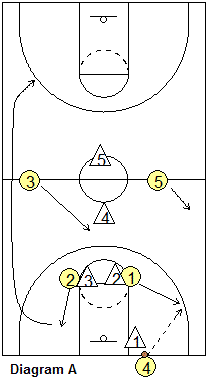
Image Source: cccdn-fe9e.kxcdn.com
The Art of the Press Break: Key Principles
Fathoming how to break a press starts with a clear grasp of fundamental principles. It’s not just about executing plays; it’s about mindset, spacing, and smart decision-making.
1. Composure and Patience: The Foundation
The most crucial element in breaking a full court press is maintaining composure. When the ball is inbounded under pressure, panic can set in quickly. However, a calm approach allows players to see the court, make smart passes, and avoid forced turnovers.
- Stay Calm: Remind yourself and your teammates to breathe. Don’t rush passes.
- Look Up: Always scan the court before passing. Your eyes should be up, not glued to the ball.
- Protect the Ball: Use your body to shield the ball from defenders, especially when receiving passes.
2. Spacing: Creating Passing Lanes
Good spacing is vital for any offense, but it’s absolutely critical against a press. Proper spacing forces defenders to cover more ground and opens up passing lanes.
- Spread the Floor: Players should spread out across the court, not clump together. This stretches the defense thin.
- Utilize the Width of the Court: Don’t be afraid to use the sidelines. They can act as an extra defender, preventing easy traps.
- Create Angles: Players receiving passes should move to create sharp angles for their teammates to throw to, making the passes harder to intercept.
3. Quick Ball Movement: The Engine of the Press Break
Static play is a press’s best friend. Rapid, crisp passes are the most effective way to dislodge defenders and advance the ball up the court.
- One and Two Dribble Passes: Encourage players to make a pass after one or two dribbles, rather than holding the ball for extended periods.
- Pass Ahead: Look to pass the ball ahead of the defenders whenever possible. This forces the defense to react quickly and can catch them out of position.
- Pass to the Open Man: Always look for the player who is truly open, not just the closest teammate.
4. Dribbling Savvy: When and How
While passing is key, effective dribbling through a press is also a critical skill. It’s about knowing when to dribble and how to protect the ball while doing so.
- Controlled Dribbles: Use controlled, low dribbles to keep the ball away from defenders.
- Protect with Your Body: Use your off-hand and body to shield the ball from defenders trying to poke it away.
- Attack Open Gaps: If a defender is out of position, a well-timed dribble can break a trap and create an advantage.
- Avoid Over-Dribbling: This is the biggest mistake. Dribbling too much makes you a target for traps and reduces your passing options.
Strategies for Breaking Different Types of Presses
Full-court presses can be either man-to-man or zone. The approach to breaking them differs.
Beating a Man-to-Man Press
In a man-to-man press, each defender is responsible for guarding a specific offensive player. The objective is to outmaneuver your individual defender and exploit mismatches.
1. The “5-Across” Formation
This is a classic basketball press break strategy. Five offensive players spread horizontally across the court, usually between the free-throw line and the 3-point line on the offensive side of the court.
-
Positions:
- Inbounder: The player closest to the ball, usually a guard or point forward.
- Primary Ball Handler: A player positioned to receive the initial inbound pass, typically a strong ball-handler.
- Wing Receivers (2): Players positioned on the wings, ready to receive passes.
- “Safety Valve” or Trailer: A player positioned deeper, often near half-court, as a safety outlet if the primary options are covered.
-
Execution:
- The inbounder looks to pass to the primary ball handler or a wing receiver.
- Players make themselves available with good spacing and by moving towards the ball at opportune moments.
- Once the ball is inbounded, the primary ball handler uses dribbling through a press if necessary, but prioritizes quick passing.
- The focus is on making 2-3 quick passes to break the initial pressure and get into your basketball transition offense.
2. The “4-Across, 1-Back” Formation
This is another effective setup, with one player positioned further back to act as a primary outlet.
-
Positions:
- Inbounder: Same as above.
- Ball Handler/Receiver: Positioned to receive the inbound.
- Wing Receivers (2): Spread wide.
- Deep Outlet: A player positioned closer to their own baseline, ready to receive a long pass if the press is slow to react.
-
Execution:
- The inbounder tries to hit the deep outlet or a wing receiver.
- The deep outlet player can then dribble or pass to initiate the offense.
- This formation can be particularly effective against presses that aggressively trap near the inbounder.
3. Individual Skills to Counter Man-to-Man Press
- “See the Ball, See the Man”: Players without the ball must constantly be aware of both their defender and the ball. This allows them to react to defensive movements and anticipate passing lanes.
- V-Cuts and L-Cuts: Use sharp cuts to create separation from your defender and get open for a pass.
- Backdoor Cuts: If a defender overplays you, a quick cut behind them can lead to an easy layup.
Beating a Zone Press
In a zone press, defenders are responsible for guarding an area of the court rather than a specific player. The objective is to find the gaps in the zone and exploit them with smart passing and movement.
1. The “Diamond” Formation
This is a common and effective setup for beating a zone press.
-
Positions:
- Inbounder: Same as before.
- Point Guard: Positioned in the middle, near half-court.
- Two Wing Players: Spread wide near the sidelines, further up the court.
- “Safety” or “Deep Man”: Positioned further back, often near the inbounder’s baseline, as an initial outlet.
-
Execution:
- The inbounder’s primary target is usually the “Safety” or one of the wing players.
- Once the ball is inbounded and the initial pressure is beaten, the goal is to quickly move the ball into the middle of the court, ideally to the Point Guard.
- The Point Guard then has options to pass to the wings or “slice” to the basket if a gap opens.
- Crucially, the players receiving passes should look to immediately pass again, trying to “unzip” the zone.
2. The “1-2-1-1” or “1-3-1” Alignment
Some teams use these formations to break a zone press.
- Execution:
- The inbounder passes to a player positioned to receive the ball, often a guard or wing.
- The key is to secure the ball and immediately look for the open player.
- Often, the offensive team will have a player deep to receive a longer pass.
- The objective is to create a 2-on-1 situation against a defender or force defenders to cover too much ground.
3. Key Principles for Beating Zone Presses
- Attack the Gaps: Identify the spaces between zone defenders and pass the ball into those areas.
- Pass to the Middle: Getting the ball to the center of the court often collapses the zone and creates easier passing opportunities to the sides or to a player cutting to the basket.
- Utilize the “Overload”: Sometimes, positioning more players on one side of the court can force defenders to shift, creating space on the other side.
- “Pass and Fill”: After making a pass, the passer should move into an open space to become a potential receiver for the next pass.
Offensive Plays Against Press: Structured Attacks
Beyond general strategies, specific offensive plays against press can be highly effective. These plays are designed to exploit common press tendencies.
Play: “The Skip Pass”
This is a fundamental play designed to beat traps and gain significant yardage up the court.
- Formation: Use a 4-across or Diamond formation.
- Execution:
- Inbounder passes to the primary ball handler or wing receiver.
- The defense attempts to trap the ball handler.
- The ball handler, instead of dribbling, makes a long “skip pass” across the court to the opposite wing or a trailing player who has spaced out.
- This pass forces the defense to recover quickly or risk giving up an open look.
Play: “The Overload”
This play aims to overload one side of the court, forcing the defense to commit, and then quickly swinging the ball to the weak side.
- Formation: Players align on one side of the court.
- Execution:
- Inbounder passes to the player on the overload side.
- Defenders on that side may converge to trap.
- The ball handler makes a quick pass to a player on the weak side who has moved to fill the open space.
- This creates a 2-on-1 or 3-on-2 advantage going towards the basket.
Play: “The Middle Dive”
This play focuses on getting the ball into the middle of the court and creating scoring opportunities from there.
- Formation: Diamond or a similar formation with a player positioned in the middle.
- Execution:
- Inbounder passes to a wing or deep outlet.
- The middle player makes a diagonal cut towards the ball.
- The receiver passes to the middle player.
- The middle player can then dribble, pass to a wing, or drive to the basket.
Dribbling Through a Press: Mastering the Skill
Effective dribbling through a press is more art than science, requiring agility, awareness, and confidence.
Key Dribbling Techniques
- The “Change of Pace” Dribble: Speed up and slow down your dribble to throw off defenders.
- The “Change of Direction” Dribble: Use crossovers, between-the-legs, or behind-the-back dribbles to evade defenders.
- The “Body Protection” Dribble: Use your non-dribbling arm and shoulder to shield the ball from the defender.
- The “Control Dribble”: Keep the dribble low and under control, especially when facing pressure.
When to Dribble vs. Pass
This is a critical decision point.
-
Dribble When:
- You have a clear path to advance the ball.
- A defender is out of position, and you can beat them.
- You need to create a passing lane by drawing defenders.
- You have ample space and are not about to be trapped.
-
Pass When:
- You are trapped or about to be trapped.
- A teammate is open and has a better angle or opportunity.
- You need to move the ball quickly to avoid the clock running down.
- You don’t have the dribbling skills to evade the pressure safely.
Passing Out of a Press: The Ultimate Goal
The ultimate goal of breaking a full court press is to advance the ball safely and effectively, ideally creating a scoring opportunity. Passing out of a press requires precision, vision, and good decision-making.
Types of Passes in a Press Break
- Chest Pass: The most common and efficient pass. Use it for shorter, direct passes.
- Bounce Pass: Useful for getting the ball around a defender’s outstretched arms. Ensure it’s a strong, direct bounce.
- Overhead Pass: Good for longer passes or when the receiver is further away.
- Skip Pass: A longer, angled pass across the court to exploit defensive shifts. This is crucial for quick ball movement press break strategies.
- Outlet Pass: The initial pass from the inbounder, designed to get the ball safely into a primary ball handler’s hands.
Pass Selection Tips
- Pass to the Hands: Aim for your teammate’s hands. A pass that is too high or too low is harder to catch cleanly.
- Pass to Where They’re Going: If a player is cutting, aim the pass slightly ahead of them so they can catch it on the run.
- Avoid Cross-Court Passes Unless Necessary: While skip passes are good, avoid casual cross-court passes that are easily intercepted.
- Protect the Pass: As you pass, use your body to shield the ball from defenders who might try to deflect it.
Transition Offense: Capitalizing on the Break
Once you successfully break the press, you enter basketball transition offense. This is your chance to score before the defense can set up.
Key Elements of Transition Offense
- Numbers Advantage: Often, breaking a press leaves the defense outnumbered. Push the ball quickly to exploit this.
- Spacing: Continue to space the floor in transition. This gives the ball handler options.
- Cutting: Players without the ball should make smart cuts to the basket or to open spots on the perimeter.
- Decision Making: The ball handler must decide quickly: pass for an open shot, dribble to draw defenders, or take it themselves.
Press Offense Drills: Honing Your Skills
Consistent practice with specific press offense drills is the key to mastering press breaks.
Drill: “3-on-2 Continuous”
- Objective: Practice offensive spacing, passing, and decision-making in transition.
- Setup: Three offensive players and two defensive players. Start with the ball at one baseline.
- Execution:
- The offense tries to advance the ball quickly and score.
- After a score or made basket, the defense immediately becomes offense, and two new defenders step on. The original three offensive players transition to defense.
- This drill can be adapted to start with the offense trying to break a full-court press. The inbounder passes to a teammate, and the other two offensive players spread out to receive passes. The defense applies pressure.
Drill: “Beat the Clock”
- Objective: Improve speed and efficiency in breaking the press.
- Setup: An inbounder, a ball handler, and two other players forming a press break formation. A defender applies pressure. A clock is set (e.g., 5-7 seconds).
- Execution: The offense must inbound the ball and advance it past half-court before the clock runs out, using as few dribbles as possible.
Drill: “Passing Lanes”
- Objective: Develop the ability to see and make passes through tight lanes.
- Setup: Two teams of offensive players. A coach or defender stands in a designated area, blocking passing lanes.
- Execution: Offensive players practice passing to each other, trying to thread the ball through the defender’s outstretched arms or around them. Focus on different types of passes.
Drill: “Full Court Press Break Scrimmage”
- Objective: Simulate game conditions and practice all aspects of press breaking.
- Setup: Two teams, one starting with the ball at their baseline, the other applying a full-court press.
- Execution: Play out possession by possession, focusing on proper spacing, quick ball movement, and smart decision-making. Rotate players to practice both offense and defense.
Common Mistakes to Avoid
Even with the best strategies, teams can falter by making common mistakes.
- Over-Dribbling: The number one culprit. Too many dribbles give the defense time to recover and trap.
- Clumping Together: Lack of spacing makes it impossible to create passing lanes.
- Panic Passes: Throwing the ball wildly or into double coverage.
- Not Using the Whole Court: Sticking to the middle of the court makes you an easy target for traps. Use the sidelines.
- Defensive Communication Breakdown: Offensive players not communicating with each other about where the open spaces are.
- Lack of Confidence: Hesitation can be as bad as a bad pass. Trust your skills.
Frequently Asked Questions (FAQ)
Q1: What is the most important skill when breaking a full-court press?
A1: Composure and quick, smart passing are arguably the most important. While dribbling is necessary, excessive dribbling leads to turnovers.
Q2: How should a team practice breaking a press?
A2: Regularly practice specific press offense drills like “3-on-2 Continuous,” “Beat the Clock,” and full-court press break scrimmages. Focus on spacing, ball movement, and decision-making.
Q3: Should I dribble or pass when facing a press?
A3: This depends on the situation. Dribble if you have space and can advance the ball safely. Pass if a teammate is open, you’re trapped, or you need to move the ball quickly. Prioritize passing to break the press effectively.
Q4: What is the best formation for breaking a zone press?
A4: The “Diamond” formation is very effective, as it allows for quick ball movement to the middle and exploits gaps in the zone. However, flexibility and adapting to the defense are key.
Q5: How can I help my team improve their full-court press break?
A5: Ensure players understand the key principles: composure, spacing, and quick ball movement. Implement consistent practice with drills that simulate game pressure. Encourage communication and smart decision-making on the court.
Mastering the art of breaking a full court press is a vital component of a successful basketball team. By focusing on composure, intelligent spacing, crisp passing, and the effective use of dribbling, combined with specific offensive plays and diligent practice, any team can turn a defensive advantage for the opponent into an offensive opportunity for themselves. Remember, a well-executed press break not only avoids turnovers but also fuels your basketball transition offense, setting the stage for victory.