
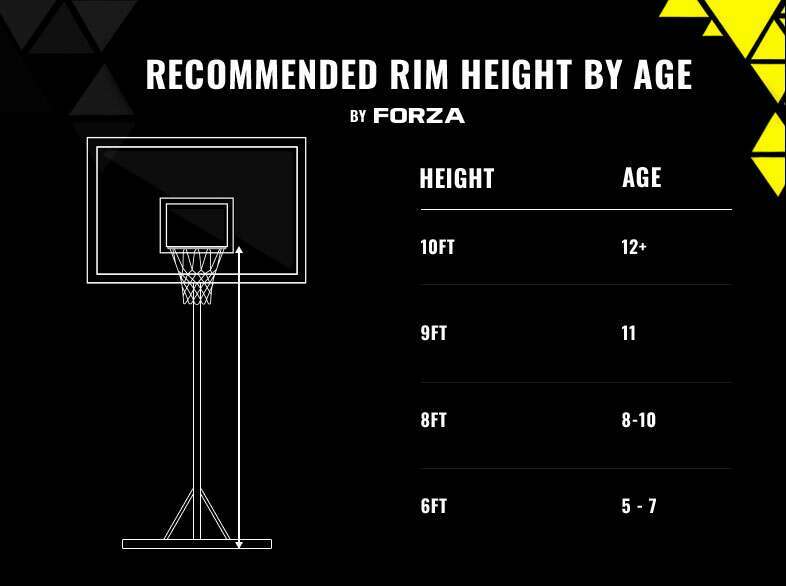
Image Source: nwscdn.com
How Tall Is The Professional Basketball Hoop? Explained
The professional basketball hoop is exactly 10 feet high from the court surface to the top of the rim.
For anyone stepping onto a basketball court, whether for a casual pickup game or aspiring to play professionally, understanding the fundamental dimensions is crucial. Among these, the height of the basketball hoop stands as perhaps the most iconic and universally recognized element of the game. But just how tall is this pivotal piece of equipment, and has it always been this way? This in-depth exploration dives into the specifics of professional basketball hoop height, its historical evolution, and the reasons behind its standardization. We’ll cover everything from the basketball hoop height itself to the nuances of regulation basketball hoop specifications across different leagues.
The Standard of 10 Feet: A Deep Dive
The standard basketball rim height is unequivocally 10 feet. This measurement is consistent across virtually all levels of professional and organized basketball. Whether you’re watching the NBA hoop height battles or international competitions governed by FIBA rules, that familiar 10-foot mark remains constant. This uniformity is vital for the integrity and fairness of the sport, ensuring that athletes of all backgrounds and skill levels are competing under the same physical conditions.
Measuring the Mark: Precision in Place
The measurement from the playing surface (the court floor) to the very top edge of the rim is what defines the regulation basketball hoop height. This is not an arbitrary number; it’s a carefully considered dimension that influences every aspect of the game, from shooting mechanics to defensive strategies.
A Look Back: The Evolution of Hoop Height
While 10 feet is the standard today, it wasn’t always the case. The game of basketball, as invented by Dr. James Naismith in December 1891, had slightly different beginnings.
Early Days: The Peach Basket Era
Naismith’s original game used peach baskets nailed to the gymnasium balcony railing at the International YMCA Training School in Springfield, Massachusetts. The height of these baskets was not precisely standardized but was generally around 10 feet, mimicking the height of a runner’s path to the basket in a game called “duck on a rock.” This initial setup was more about a novelty than a meticulously engineered sporting apparatus.
The Transition to a Rim
As the sport grew in popularity and the need for a more dynamic gameplay emerged, the peach baskets were eventually replaced with iron rims and nets. This change was significant because it allowed the ball to pass through the hoop, unlike the peach baskets which had bottoms. Early rims were often solid metal rings, and the net was a crucial addition for signaling a successful shot.
Gradual Standardization
The journey to a universally accepted 10-foot rim height was gradual. As basketball evolved from a recreational pastime into a competitive sport with organized leagues, governing bodies began to establish official rules and specifications. This included the precise basketball post height and the height of the rim. The 10-foot measurement solidified over time as the optimal height for challenging yet achievable scoring.
Why 10 Feet? The Rationale Behind the Height
The 10-foot hoop height is not a random choice. It’s a carefully balanced decision that significantly impacts the game’s dynamics, player development, and the skills required to succeed.
Balancing Offense and Defense
- Shooting Arc: The 10-foot height dictates the required arc for a successful shot. Players must develop the skill to loft the ball with enough trajectory to clear defenders and fall through the hoop.
- Rebounding: The height also influences the dynamics of rebounding. Players need to develop athleticism, positioning, and jumping ability to contest for rebounds near the rim.
- Dunking: While dunking is a spectacular part of the game, the 10-foot height makes it a challenging feat, requiring significant athleticism. This prevents the game from becoming dominated solely by dunks and keeps the focus on shooting and skill.
- Layups and Close-Range Shots: The height allows for various types of close-range shots, such as layups and floaters, requiring finesse and touch around the basket.
Player Development
The consistent hoop height allows for consistent player development across generations. Young players learn the fundamentals of shooting, dribbling, and passing with a clear, achievable goal in mind. As they grow and improve, the 10-foot rim remains a constant challenge, pushing them to refine their skills.
League-Specific Rules: FIBA vs. NBA
While the 10-foot standard is widely adopted, it’s worth noting that slight variations or specific interpretations can exist between major basketball organizations. However, for all intents and purposes, the FIBA hoop height and the NBA hoop height are the same: 10 feet.
The National Basketball Association (NBA)
The NBA, as the premier professional basketball league in the world, adheres strictly to the 10-foot rim height. All NBA arenas feature hoops that are precisely 10 feet from the floor to the top of the rim. This ensures a consistent playing field for all teams throughout the season and playoffs.
The International Basketball Federation (FIBA)
FIBA, the governing body for international basketball, also mandates a 10-foot hoop height for all its competitions, including the Olympics and the FIBA World Cup. The rules regarding the basketball hoop height are harmonized to ensure fair play and consistent standards for athletes worldwide.
Other Levels of Play
- College Basketball (NCAA): NCAA basketball uses the same 10-foot height.
- High School and Youth Basketball: While younger age groups might use lower hoops to aid development, official high school and youth leagues typically transition to the standard 10-foot height as players progress. This helps prepare them for higher levels of competition.
Components of the Basketball Hoop System
Beyond just the rim, a professional basketball hoop system comprises several key components, each with its own specifications.
The Rim
- Regulation Rim Diameter: The inside diameter of a regulation basketball rim is 18 inches (45.7 cm). This size is precisely engineered to allow the ball, which has a circumference of approximately 29.5 inches for men’s professional play, to pass through cleanly.
- Rim Material and Strength: Professional rims are typically made of reinforced steel to withstand the force of dunks and constant play. They are designed to be durable and not bend or break under pressure.
The Backboard
The backboard, while not directly involved in scoring, plays a crucial role in the game.
- Backboard Dimensions: Standard backboards in professional play are typically 6 feet wide by 3.5 feet high (1.83m x 1.07m).
- Backboard Material: Professional backboards are usually made of tempered glass for durability and consistent ball bounce. Older or lower-level courts might use acrylic or even wood.
- Backboard Offset: The backboard is positioned so that the rim is 4 feet in from the baseline of the court. This offset ensures that players have some space behind the basket to shoot and rebound.
The Basketball Post Height
The basketball post height refers to the height of the pole or structure that supports the backboard and rim. While the rim itself is fixed at 10 feet, the basketball post height can vary in overall length to accommodate different installation needs and mounting surfaces. The critical aspect is that the post securely holds the rim at the precise 10-foot elevation.
The Net
- Basketball Net Height: The basketball net height is not a measurement from the ground but refers to the length of the net that hangs from the rim. Regulation nets are typically 15-18 inches long and are made of braided nylon or similar durable material. The net’s purpose is to slow the ball down after it passes through the rim, making it easier to see if a shot was successful and adding a satisfying sound.
Court Dimensions Basketball Context
The court dimensions basketball games are played on also contribute to the overall game experience, but the hoop height remains constant regardless of the court size.
- NBA Court: An NBA court is 94 feet long by 50 feet wide.
- FIBA Court: A FIBA court is slightly smaller, measuring 28 meters long by 15 meters wide (approximately 91.9 feet by 49.2 feet).
Even with these minor differences in court size, the 10-foot hoop height is the universal standard, ensuring consistency in the critical scoring element of the game.
Indoor vs. Outdoor Hoops
The 10-foot standard applies to both indoor basketball hoop height and outdoor courts. However, the materials and construction might differ based on the environment.
- Indoor Hoops: Typically feature glass backboards and sturdier steel rims designed for controlled environments.
- Outdoor Hoops: Often use acrylic or polycarbonate backboards, and the posts and rims are treated with weather-resistant coatings to prevent rust and corrosion. Despite these differences in material durability, the regulation basketball hoop height remains 10 feet.
The Impact of Hoop Height on Gameplay
The 10-foot hoop height profoundly influences how the game of basketball is played at all levels.
Shooting and Scoring
- Shooting Mechanics: Players develop specific shooting forms and follow-throughs to achieve the correct arc and backspin needed to score from various distances.
- Range: The 10-foot height defines the effective range for different types of shots. Jump shots, free throws, and three-pointers all rely on the player’s ability to get the ball to the hoop from their respective positions.
Athleticism and Skill Development
- Jumping Ability: The need to jump to contest shots, block passes, and grab rebounds emphasizes the importance of vertical leap and overall athleticism.
- Coordination: Players must coordinate their body movements, ball control, and vision to execute plays effectively. The hoop height is a constant anchor for these skills.
Strategic Considerations
- Offensive Strategies: Offensive plays are designed to create scoring opportunities near the basket or open up shooting lanes for perimeter players.
- Defensive Strategies: Defenses focus on preventing opponents from reaching the rim easily and contesting shots, making the 10-foot height a focal point of defensive schemes.
Frequently Asked Questions (FAQ)
Q1: Is the basketball hoop height the same for men and women?
A1: Yes, the standard basketball rim height for both men’s and women’s professional basketball, including the NBA, WNBA, and FIBA competitions, is 10 feet.
Q2: Do younger players use lower hoops?
A2: Yes, for developmental purposes, younger children often use lower hoops. For instance, youth leagues may use hoops set at 8 feet or 9 feet. However, as players progress, they transition to the regulation basketball hoop height of 10 feet to prepare them for higher levels of play.
Q3: What is the hoop rim diameter?
A3: The inside hoop rim diameter for a regulation basketball hoop is 18 inches (45.7 cm).
Q4: Does the basketball net height affect the game?
A4: The basketball net height (referring to the length of the net hanging from the rim) doesn’t affect the scoring, but it helps confirm a successful shot by slowing the ball and providing a visual cue. The net itself is typically 15-18 inches long.
Q5: Is the basketball hoop height different in other countries?
A5: No, the FIBA hoop height is the same as the NBA hoop height, which is 10 feet. This global standard ensures consistency in international competitions.
Q6: What is the basketball post height?
A6: The basketball post height refers to the entire support structure for the backboard and rim. While the rim is fixed at 10 feet, the overall post can vary in length depending on installation and design, but its primary function is to securely hold the rim at the correct elevation.
Conclusion
The regulation basketball hoop stands at a precise and iconic 10 feet from the court surface to the top of the rim. This seemingly simple dimension is a cornerstone of the game of basketball, dictating shooting mechanics, influencing athletic requirements, and shaping strategic play. From the historical peach baskets to the modern, reinforced steel rims, the 10-foot standard has been meticulously maintained, ensuring fairness and consistency across all levels of professional play, whether you’re following the NBA hoop height or the FIBA hoop height. This universal measurement allows players worldwide to develop their skills on a common playing field, fostering a shared passion for the sport. The next time you watch a game, take a moment to appreciate the significant role that this precise 10-foot height plays in every dribble, pass, and shot.