
The NBA basketball rim height is a foundational element of the game, and to answer directly, the height of basketball hoop in the NBA, and indeed in all official basketball competitions sanctioned by FIBA and the NCAA, is 10 feet from the playing surface. This unwavering standard is crucial for maintaining the integrity and competitive balance of the sport.
From casual backyard games to the electrifying atmosphere of professional arenas, the basketball rim measurement remains a constant. This seemingly simple detail, the standard basketball hoop size, is a cornerstone of basketball strategy, skill development, and athletic spectacle. Knowing the exact basketball net height is essential for anyone looking to understand the game’s mechanics, from shooting arcs to dunking prowess.
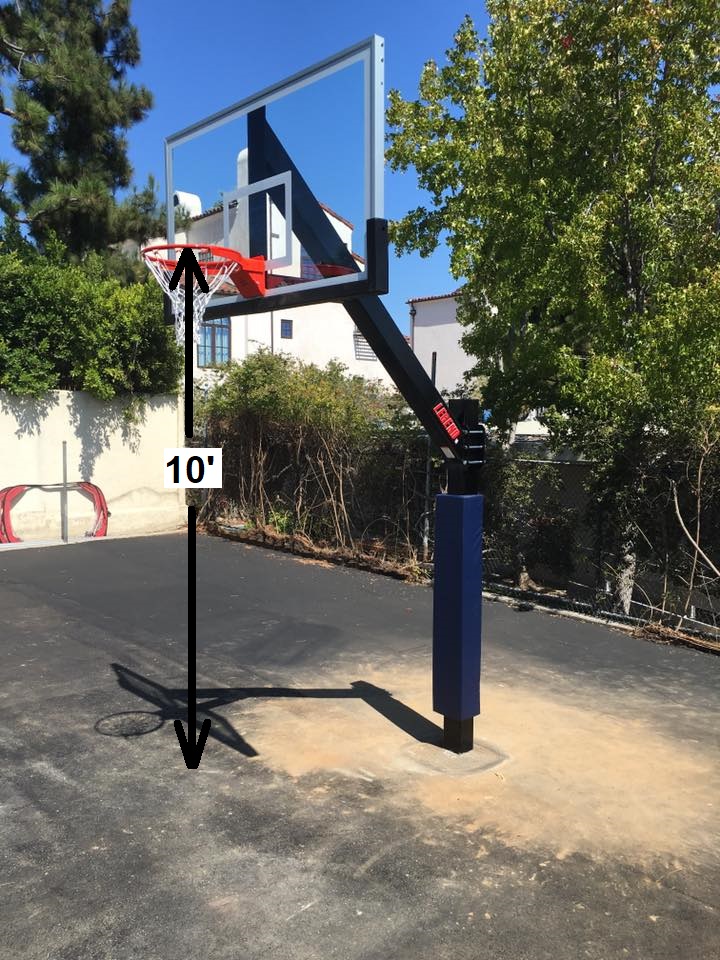
Image Source: www.firstteaminc.com
The Unwavering Standard: 10 Feet
The NBA regulation height for the basketball rim has been a consistent 10 feet for over a century. This standard was established to create a challenging yet achievable height for players, fostering the development of shooting, jumping, and strategic play. It’s not just about putting a ball through a hoop; it’s about the dynamics of the game that this specific height facilitates.
Historical Roots of the 10-Foot Rim
The origins of the 10-foot rim can be traced back to the early days of basketball. When James Naismith invented the game in 1891, he initially used peach baskets, which were nailed to the gymnasium balcony. The exact height of these early baskets isn’t precisely documented in relation to a modern court, but as the sport evolved and specialized equipment was developed, the 10-foot height emerged as the accepted standard.
The transition from peach baskets to a standardized hoop was gradual. Early hoops were essentially open-ended cylinders, and the ball had to be manually retrieved after each made basket. As the game grew in popularity, rules and equipment began to formalize. The introduction of backboards was a significant development, intended to prevent players from simply jamming the ball through the hoop.
By the early 20th century, the 10-foot rim had become widely adopted across various levels of play. This consistency allowed for the development of predictable trajectories for shots and a consistent challenge for players attempting to score. It’s a testament to Naismith’s foresight that this fundamental aspect of the game has remained so remarkably stable.
Why 10 Feet? The Rationale Behind the Height
The decision to set the official NBA rim height at 10 feet was not arbitrary. Several factors contributed to this decision, all aimed at creating a balanced and engaging game:
- Balance of Offense and Defense: The 10-foot height strikes a balance between allowing offensive players to score with reasonable frequency and providing defensive players opportunities to block shots and control the game. If the rim were lower, scoring would become too easy, potentially turning the game into a scoring contest with less strategic depth. If it were higher, scoring would be exceptionally difficult, making the game less accessible and potentially frustrating.
- Skill Development: This height encourages the development of specific basketball skills. Players need to develop proper shooting form to elevate the ball to the hoop, practice their jumping ability for layups and dunks, and hone their passing and dribbling skills to navigate defenses effectively.
- Spectator Appeal: The 10-foot rim contributes to the visual excitement of basketball. The athleticism required for players to jump high enough to dunk, the grace of a well-executed jump shot, and the dramatic moments of blocked shots are all amplified by this standard height.
- Universal Application: While this post focuses on the NBA, the 10-foot standard is recognized globally. This universality ensures that players transitioning between different leagues or playing recreationally can do so without adapting to vastly different fundamental rules.
Beyond the Hoop: The Context of the NBA Court
While the NBA hoop height is a critical measurement, it exists within the larger framework of NBA court dimensions and other equipment standards. These elements work together to create the playing environment.
NBA Court Dimensions
An official NBA court is a rectangular playing surface measuring 94 feet long and 50 feet wide. The baskets are positioned at the center of each baseline. This size dictates the pacing of the game, the types of plays that can be executed, and the athletic demands placed on players.
The Basketball Itself
The official NBA basketball has a circumference of approximately 29.5 inches and a weight of about 22 ounces. The size and weight of the ball are also calibrated to work effectively with the 10-foot rim, influencing shooting mechanics and handling.
The Backboard
The backboard, typically made of tempered glass, measures 72 inches wide by 42 inches high. It is positioned 4 feet in from the baseline, meaning the rim is 4 feet in from the end of the court. The backboard’s presence is crucial, offering players an option for bank shots and influencing the geometry of offensive plays.
The Rim and Net
The rim itself is made of solid steel and has an inner diameter of 18 inches. The net, usually made of nylon or cotton, is 15 to 18 inches long and is designed to create a satisfying swish sound when a shot is made. The basketball net height, therefore, is directly tied to the rim’s height.
Variations and Related Measurements
While the 10-foot standard is ubiquitous in professional and collegiate basketball, it’s worth noting that slight variations exist for different age groups and recreational settings. However, for the purposes of the NBA and official play, 10 feet is absolute.
Youth Basketball and Lowered Rims
For younger players, particularly children, the height of basketball hoop is often lowered to make the game more accessible and enjoyable. Common heights for youth leagues include:
- Ages 6-8: 8 feet
- Ages 9-11: 9 feet
These adjustments allow younger players to develop their shooting skills without being discouraged by the difficulty of reaching a 10-foot rim. As they grow and mature, they gradually transition to the standard height.
Recreational and Backyard Hoops
Many adjustable basketball systems are available for home use. These systems can typically be adjusted to various heights, allowing families to set the rim to a level appropriate for different ages and skill levels. While these offer flexibility, the standard basketball hoop size for serious play remains 10 feet. The basketball pole height refers to the vertical support structure that holds the backboard and rim, and its adjustability is a key feature for home systems.
Fathoming the Importance of the 10-Foot Standard
The consistency of the NBA hoop height is not merely a technicality; it’s a fundamental aspect that shapes the entire sport.
Impact on Player Development
- Vertical Leap: The 10-foot rim directly influences the importance of a player’s vertical leap. Dunking, a visually spectacular part of the game, requires significant jumping ability. Players train to increase their vertical reach to score close to the basket and to block shots.
- Shooting Arc: The height of the rim dictates the optimal shooting arc. A higher arc can make shots more difficult to block but requires more power and precision. Players develop their shooting form to achieve a consistent and effective arc.
- Rebounding: The 10-foot rim affects the dynamics of rebounding. Players must position themselves effectively and jump strategically to secure missed shots. The height influences where the ball will likely bounce off the rim.
Strategic Implications
- Zone Defenses: The 10-foot rim can influence the effectiveness of zone defenses. Defenders may position themselves to clog the paint and prevent easy access to the hoop, forcing outside shots.
- Fast Breaks: The ability to quickly transition from defense to offense, often culminating in a layup or dunk, is a key strategy in basketball. The 10-foot rim is the target for these high-speed plays.
- Post Play: Players who operate near the basket often use a variety of moves, including hooks and layups, to score over defenders. The 10-foot rim is the ultimate goal of these close-range efforts.
The Role of Other Measurements
It’s important to reiterate that the basketball rim measurement of 10 feet operates within a system. The NBA court dimensions, the size and weight of the ball, and the specifications of the backboard all interact with the rim height to create the game as we know it. For instance, if the court were significantly smaller or larger, the dynamics of play would change, even with the same rim height. Similarly, a heavier or lighter ball would alter shooting and dribbling techniques.
Deciphering the “Swish”
The satisfying sound of a basketball going through the net, the “swish,” is also influenced by the basketball net height and the rim’s specifications. The net hangs from the rim, and its length and how it’s secured affect the ball’s passage through it. While not directly impacting the primary height, it’s a sensory element of the game tied to the scoring mechanism.
Common Misconceptions and Clarifications
Despite the widespread understanding of the 10-foot standard, some minor confusion can arise, often due to variations in recreational settings or informal discussions.
Is the NBA rim height the same everywhere?
Yes, the official NBA rim height is consistently 10 feet. This standard is also adopted by FIBA (International Basketball Federation) and NCAA (National Collegiate Athletic Association) basketball. While youth leagues and some recreational facilities may use lower hoops, the professional and collegiate standard remains 10 feet.
Does the backboard affect the rim height?
The backboard is positioned at a specific distance from the baseline, and the rim is attached to the backboard. The backboard’s size and positioning are standardized, but they don’t alter the fundamental height of basketball hoop. The rim is always 10 feet from the court floor.
What about different types of basketball?
While there are variations in basketballs for different levels of play (e.g., indoor vs. outdoor, men’s vs. women’s), the NBA hoop height and the specifications of the rim and net remain the same across all official NBA games.
Table: Key NBA Basketball Dimensions
| Measurement | Standard Dimension |
|---|---|
| NBA Hoop Height | 10 feet (3.05 meters) |
| Court Length | 94 feet (28.65 meters) |
| Court Width | 50 feet (15.24 meters) |
| Rim Inner Diameter | 18 inches (45.72 cm) |
| Backboard Width | 72 inches (182.88 cm) |
| Backboard Height | 42 inches (106.68 cm) |
| Backboard Depth from Baseline | 4 feet (1.22 meters) |
This table clearly illustrates the fixed nature of the NBA regulation height and its context within the overall court setup.
The Unchanging Pillar of Basketball
The 10-foot rim is more than just a measurement; it’s a silent architect of the game. It dictates how players move, how they shoot, how they defend, and how they celebrate. It’s a constant that allows for the evolution of strategy and the display of incredible athleticism. Whether you’re a casual observer or a dedicated fan, recognizing the significance of this seemingly simple measurement provides a deeper appreciation for the intricate design of basketball. The basketball goal height of 10 feet is a fundamental truth in the world of hoops, from the smallest park courts to the grandest NBA arenas.
Frequently Asked Questions (FAQ)
Q1: What is the official height of an NBA basketball hoop?
A1: The official NBA hoop height is 10 feet (3.05 meters) from the playing surface.
Q2: Is the NBA rim height different from other basketball leagues?
A2: No, the 10-foot standard is generally consistent across major basketball organizations like FIBA and NCAA. While youth leagues may use lower heights, the professional and collegiate standard is 10 feet.
Q3: What is the measurement of the basketball rim itself?
A3: The inner diameter of the basketball rim measurement is 18 inches (45.72 cm).
Q4: How high is the basketball net?
A4: The basketball net height is determined by its attachment to the rim and its length, which typically ranges from 15 to 18 inches. The top of the net hangs from the 10-foot rim.
Q5: Does the basketball pole height affect the rim height in the NBA?
A5: In the NBA, the basketball pole height supports a rim that is fixed at 10 feet. While adjustable poles exist for recreational use, professional courts have fixed 10-foot heights.
Q6: What are the standard NBA court dimensions?
A6: NBA court dimensions are 94 feet long and 50 feet wide. The basket is positioned at the center of each baseline, 4 feet in from the end line.
Q7: Why is the NBA regulation height for the hoop 10 feet?
A7: The 10-foot standard is a carefully chosen height that balances offensive scoring opportunities with defensive challenges, promotes skill development, and enhances spectator appeal.
Q8: Can I buy a basketball hoop for my home that is 10 feet tall?
A8: Yes, many adjustable basketball systems allow you to set the height of basketball hoop to 10 feet, aligning with the standard basketball hoop size used in professional play.