
The NBA basketball hoop is 10 feet (3.05 meters) from the floor to the top of the rim. This official NBA rim height is a cornerstone of basketball game rules and has remained consistent throughout the league’s history, defining the challenge and skill required in professional basketball.
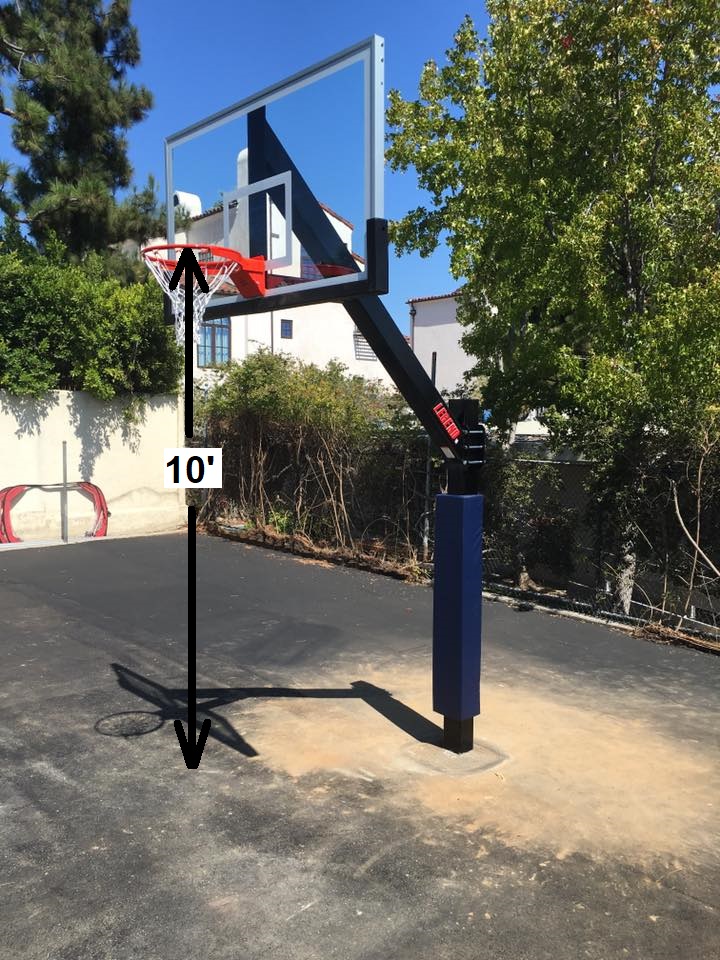
Image Source: www.firstteaminc.com
The Science Behind the Standard NBA Hoop Height
The NBA hoop height of 10 feet might seem arbitrary to some, but it’s a carefully considered dimension that has evolved over time. This standard basketball hoop size is not just about aesthetics; it directly impacts the gameplay, the strategies employed by teams, and the athletic feats we witness. Let’s dive into why this specific height is so important and how it influences every aspect of the game.
Historical Roots of the 10-Foot Rim
The history of basketball is relatively short, but the 10-foot rim has been a constant for most of it. When James Naismith invented the game in 1891, he used peach baskets nailed to the gymnasium balcony. The initial height of these baskets was determined by the balcony railing, which happened to be 10 feet off the ground. This accidental measurement set the precedent for the game’s most iconic dimension.
- Early Days: Peach baskets were used initially. These were solid containers, and after each basket, the ball had to be manually retrieved.
- Evolution of Equipment: As the game evolved, solid baskets were replaced with open-ended nets. This change eliminated the need for constant retrieval, speeding up the game.
- Standardization: The 10-foot height was formally adopted early in the sport’s development and has been a part of regulation basketball hoop height for both professional and amateur leagues, including the NBA, ever since. This consistency allows players to develop skills and muscle memory that are transferable across different levels of play.
Why 10 Feet? Factors Influencing the Height
The 10-foot measurement is more than just a historical artifact; it’s a functional height that balances several key aspects of the game:
- Player Agility and Jumping Ability: The 10-foot rim requires players to possess significant jumping ability and athleticism. It necessitates dynamic movements, including powerful leaps, skillful layups, and contested dunks. The height challenges players to reach their athletic peak.
- Shooting Arc and Strategy: The 10-foot height dictates the optimal shooting arc. Players must develop a precise trajectory to get the ball over defenders and into the hoop. This influences offensive strategies, such as the pick-and-roll, post-up plays, and the importance of three-point shooting.
- Defensive Dynamics: The rim height also plays a crucial role in defense. It allows for shot-blocking opportunities and influences defensive positioning. Players can contest shots effectively without needing to jump to unrealistic heights.
- Game Pace and Flow: The 10-foot height contributes to the fast-paced nature of basketball. While high enough to require skill, it’s not so high as to slow down scoring dramatically. This balance keeps the game exciting and engaging for spectators.
Deconstructing the NBA Basketball Hoop: Dimensions and Components
Beyond the height, a professional NBA basketball hoop comprises several precisely measured components that contribute to its functionality and adherence to standard basketball hoop size requirements. Understanding these dimensions provides a complete picture of the playing environment.
The Hoop and Net
- The Rim: The rim itself is a steel ring with an inner diameter of 18 inches (45.7 cm). This size is crucial for allowing a 9.5-inch (24 cm) diameter basketball to pass through. The rim’s thickness is also standardized, typically around 5/8 inch (1.6 cm) in diameter.
- The Net: The net is made of nylon or a similar durable material and is usually 15 to 18 inches (38 to 45 cm) long. It’s designed to slow the ball down as it passes through, providing a clear indication of a successful shot. The net must be attached in a way that doesn’t interfere with the ball’s entry.
The Backboard
The backboard is another critical component of the NBA court measurements. It’s not just a passive surface; it’s strategically used by players for bank shots and other advanced maneuvers.
- Material: Modern NBA backboards are typically made of tempered glass, providing a clear view of the game and a consistent bounce. Older backboards were made of wood or acrylic.
- Dimensions: The standard NBA backboard is rectangular and measures 6 feet (1.83 meters) wide by 3.5 feet (1.07 meters) high.
- Mounting: The backboard is mounted to the basketball post at a distance of 4 feet (1.22 meters) from the baseline. This placement ensures the hoop is centered over the court.
The Basketball Post
The post is the structure that supports the backboard and rim. Its design and construction are vital for stability and player safety.
- Structure: The basketball post is typically a sturdy metal pole, often made of steel. It needs to be robust enough to withstand the forces exerted during play, including player contact.
- Placement: The post is positioned behind the backboard and away from the playing surface to minimize the risk of injury to players. The exact basketball post height varies depending on the overall structure, but its primary function is to elevate the backboard and rim to the regulation height.
- Padding: For safety, the basketball post is usually padded, especially in professional arenas, to protect players who might accidentally collide with it.
Comparing NBA Hoop Height to Other Basketball Leagues
While the 10-foot NBA hoop height is the gold standard, understanding how it compares to other levels of basketball can provide valuable context. The consistency in regulation basketball hoop height across most organized play is a testament to its effectiveness.
Youth Basketball
- Younger Divisions (e.g., 6-8 years old): Often use significantly lower hoops, typically 6 feet (1.83 meters) or 7 feet (2.13 meters). This allows younger players to develop proper shooting form and experience success.
- Older Youth Divisions (e.g., 9-12 years old): Gradually transition to higher hoops, often 8 feet (2.44 meters) or 9 feet (2.74 meters).
- High School and NCAA: These levels universally adopt the 10-foot basketball rim height, preparing players for the professional game.
International Basketball (FIBA)
FIBA (International Basketball Federation) rules are largely aligned with NBA rules regarding hoop height. The official NBA rim height of 10 feet is also the standard for international competition. This global consistency is crucial for international tournaments and player development pathways.
- FIBA Hoop Height: 10 feet (3.05 meters)
- FIBA Court Dimensions: While hoop height is the same, FIBA court measurements differ slightly from NBA court measurements. The overall court size and lane dimensions are adjusted, but the rim’s elevation remains constant.
Recreational and Casual Play
- Adjustable Hoops: Many recreational basketball hoops are adjustable. This allows individuals and families to set the basketball hoop dimensions to their preferred height, catering to players of all ages and skill levels. While convenient, these adjustable heights deviate from the regulation basketball hoop height.
- Driveway Hoops: Home basketball systems can be set at various heights, often between 6 and 10 feet. This flexibility is great for family fun but doesn’t replicate the professional playing environment.
The Impact of Hoop Height on Gameplay
The 10-foot NBA hoop height is not merely a physical attribute of the game; it actively shapes how basketball is played. It influences player development, offensive and defensive strategies, and the very nature of athletic performance.
Player Development and Skill Acquisition
- Jumping and Vertical Leap: The 10-foot rim necessitates and rewards players with impressive vertical leaps. Training to increase vertical jump is a significant part of a player’s regimen.
- Shooting Mechanics: Developing a proper shooting arc is paramount. Players learn to elevate the ball and use backspin to create a soft touch on shots. The height influences the trajectory, making shots that are too flat more likely to miss.
- Ball Handling and Dribbling: While not directly related to hoop height, the agility and speed required to operate under a 10-foot rim emphasize the importance of exceptional ball-handling skills.
- Footwork: Precise footwork is essential for creating space, driving to the basket, and executing post moves. The 10-foot rim means players often have to elevate their shots or use the glass, requiring sophisticated footwork.
Offensive Strategies
- Layups and Dunks: The 10-foot height is the gateway for layups and the ultimate expression of athleticism: the dunk. These scoring methods require players to get close to the basket and elevate significantly.
- Mid-Range Jumpers: Players who excel at mid-range shots must master their shooting form to clear the rim and defenders from a distance.
- Three-Point Shooting: The three-point line, introduced to add another dimension to scoring, also works in conjunction with the hoop height. Players must have a strong, consistent shot to make these longer-range attempts.
- Post Play: Big men in the post often operate close to the basket, utilizing hook shots and fadeaways. The 10-foot rim means these shots are often contested by taller defenders, requiring exceptional skill and touch.
Defensive Strategies
- Shot Blocking: The 10-foot rim provides ample opportunity for shot blockers to influence the game. Timing jumps and reaching to deflect shots are key defensive skills.
- Rebounding: The height of the rim influences the trajectory of missed shots, creating opportunities for offensive and defensive rebounds. Players need to anticipate where the ball will bounce.
- Zone vs. Man-to-Man: Defensive schemes are adapted to protect the basket. The 10-foot height means defenders can actively contest shots without being directly under the rim constantly.
NBA Court Measurements and Hoop Placement
The placement of the hoop is just as crucial as its height. The NBA court measurements dictate where the backboard and rim are positioned, ensuring a standardized playing field.
- Court Size: An NBA court is 94 feet (28.65 meters) long and 50 feet (15.24 meters) wide.
- Free Throw Line: The free throw line is 15 feet (4.57 meters) from the front of the backboard. This is the spot from which players shoot free throws, a critical aspect of basketball game rules.
- Basket Placement: The center of the rim is positioned directly above the center of the playing surface, 15 feet from the baseline. This ensures symmetry and fairness.
Considerations for Sports Equipment Height
The NBA hoop height is a prime example of how sports equipment height is designed to optimize athletic performance and engagement. This principle applies across various sports.
- Tennis Net Height: The net height in tennis varies at the center and sides, but its purpose is to create a challenge for players to get the ball over.
- Volleyball Net Height: Similarly, volleyball net heights are standardized for men’s and women’s play to create a challenging but achievable playing height.
- Gymnastics Apparatus: The heights of equipment like the vault or uneven bars are meticulously set to test gymnasts’ strength, agility, and precision.
The consistent NBA hoop height ensures that the game remains a test of skill, athleticism, and strategy, providing a fair and challenging environment for all players.
Frequently Asked Questions (FAQ)
Q1: What is the NBA basketball hoop height?
A1: The NBA basketball hoop height is 10 feet (3.05 meters) from the floor to the top of the rim.
Q2: Has the NBA hoop height always been 10 feet?
A2: Yes, the 10-foot hoop height has been a standard in basketball since its early days and has remained consistent for the NBA.
Q3: What are the standard basketball hoop dimensions in the NBA?
A3: The crucial dimension is the rim height at 10 feet. The rim itself has an inner diameter of 18 inches (45.7 cm), and the backboard measures 6 feet (1.83 m) wide by 3.5 feet (1.07 m) high.
Q4: Why is the basketball rim height 10 feet?
A4: The 10-foot height was established early in basketball’s history and is considered ideal for balancing player athleticism, shooting mechanics, and the overall flow of the game. It challenges players without being excessively difficult.
Q5: Do other basketball leagues use the same hoop height?
A5: Yes, most organized basketball leagues, including international competitions governed by FIBA, use the same regulation basketball hoop height of 10 feet. Youth leagues often use lower heights for younger age groups.
Q6: What is the significance of the backboard’s placement and size?
A6: The backboard’s size and placement are part of the NBA court measurements. It’s used strategically by players for bank shots and helps guide shots. Its placement ensures the rim is centered within the court.
Q7: Can I play basketball on a hoop that isn’t 10 feet tall?
A7: Absolutely! Many recreational and youth basketball hoops are adjustable. While playing on a non-standard height is fine for casual play and practice, it’s important to know the official NBA rim height for competitive play.
Q8: How does the basketball post height relate to the hoop height?
A8: The basketball post height is designed to elevate the backboard and rim to the regulation 10 feet. The post itself is a support structure, and its height is determined by the desired rim elevation.
Q9: Are there different basketball hoop dimensions for different types of basketball?
A9: For official, competitive basketball, the standard basketball hoop size and height are universally 10 feet. Variations primarily exist in recreational settings or for specific training purposes.
Q10: What is the purpose of the net on the basketball hoop?
A10: The net serves to slow down the ball after it goes through the rim, providing a clear visual and auditory signal that a basket has been scored. It also helps confirm the ball went cleanly through the hoop.