
The NBA rim is 10 feet high. This NBA rim height is a fundamental aspect of the game, defining the challenge and spectacle of professional basketball. Many may wonder about the specifics of this measurement, so let’s dive deep into the basketball hoop height NBA and its significance.
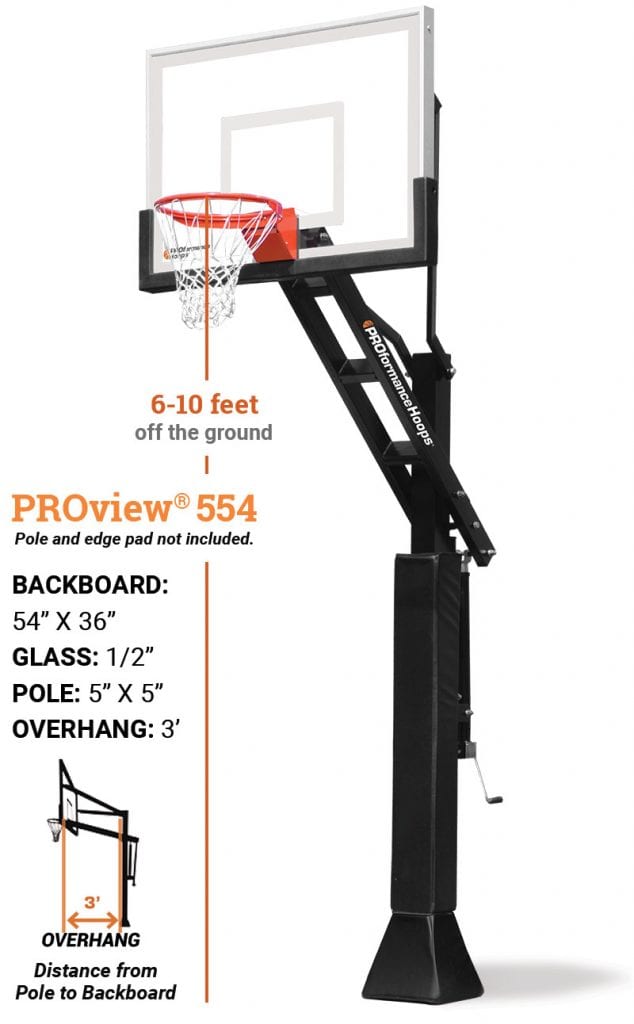
Image Source: superiorplay.com
The Standard Height of an NBA Basketball Hoop
The regulation basketball hoop height in the National Basketball Association (NBA) is a precise 10 feet, measured from the playing surface (the court) to the top edge of the rim. This isn’t an arbitrary number; it’s a cornerstone of basketball history and gameplay that has remained consistent for decades. Whether you’re watching a slam dunk contest or a crucial game-winning shot, that 10-foot barrier is always present.
This standard basketball rim height is critical for several reasons. It creates a challenging but achievable target for players, requiring skill, athleticism, and strategy to score. Without this specific height, the game would be drastically different, potentially less exciting and less reliant on the particular skills that basketball fans have come to appreciate.
Deciphering the Basketball Rim Measurement in the NBA
The exact basketball rim measurement NBA refers to the diameter of the hoop itself, which is 18 inches. However, when people ask “how high is a basketball hoop,” they are specifically referring to the height of the rim off the ground. This 10-foot mark is universally applied across all NBA arenas. The backboard, which the rim is attached to, also has specific dimensions and positioning relative to the rim, but the rim’s height is the most talked-about measurement.
Historical Roots of the 10-Foot Rim
The origin of the 10-foot basketball rim can be traced back to the very invention of the game by Dr. James Naismith in December 1891. Naismith, a physical education instructor at the International YMCA Training School in Springfield, Massachusetts, was tasked with creating a new indoor sport that was less rough than football. He famously used peach baskets as goals.
Initially, these peach baskets were nailed to the gymnasium balcony, which was 10 feet from the floor. After each basket was scored, the ball had to be manually retrieved from the basket, as they had bottoms. This requirement for retrieval is part of the reason why rims are open today. The height was chosen because Naismith wanted a game that required skill and finesse, not just brute strength. The 10-foot height was deemed appropriate for this balance.
Over time, as the sport evolved, the peach baskets were replaced with iron rims and nets, but the 10-foot height remained a constant. This standardization was crucial for the development and spread of the game, ensuring that competitions were held on consistent playing fields.
NBA Court Dimensions and Hoop Placement
The placement of the hoop is intrinsically linked to the NBA court dimensions hoop. An NBA court is a rectangular playing area measuring 94 feet long by 50 feet wide. The basketball hoops are positioned at the center of each baseline, meaning they are centered on the shorter end of the court.
The basketball rim measurement NBA also includes the distance from the baseline to the front of the backboard. This distance is 4 feet. So, while the rim itself is 10 feet high, its placement on the backboard, which is set back from the baseline, is also a carefully considered aspect of the court setup.
- Court Length: 94 feet
- Court Width: 50 feet
- Hoop Height: 10 feet
- Distance from Baseline to Front of Backboard: 4 feet
- Backboard Dimensions: 6 feet wide by 3.5 feet high (top edge)
These dimensions ensure fair play and consistent conditions for all teams. The width of the court and the positioning of the hoops are designed to allow for strategic play, including fast breaks, defensive positioning, and offensive set plays.
The Backboard: More Than Just a Support
While the height of the rim is the most prominent measurement, the backboard plays a significant role in gameplay. In the NBA, the backboard is made of tempered glass and measures 6 feet wide by 3.5 feet high. The rim is centered horizontally on the backboard. The rim is also 4 feet in from the baseline. This means the center of the rim is 4 feet from the end line.
The backboard’s surface is white and has a rectangular outline in the center, known as the “key” or “box,” which is 2 feet wide and 1.5 feet high. This key is a crucial visual cue for players, particularly for bank shots where players aim to hit the ball off the backboard into the hoop. The positioning and size of the backboard influence the angles and strategies used for scoring.
The Basketball Net Height NBA
The basketball net height NBA refers to the length of the net hanging from the rim. Standard basketball nets are designed to hang approximately 15-18 inches from the rim. This provides a visual confirmation of a successful shot as the ball passes through the net. The net’s purpose is not to affect the height of the rim, but rather to clearly indicate a made basket. It also slows the ball down slightly after it passes through, preventing it from bouncing wildly away and making it easier to collect.
Why 10 Feet? The Impact on Gameplay
The official basketball rim height of 10 feet is not just an arbitrary rule; it profoundly shapes the game of basketball.
- Athleticism and Skill: This height demands exceptional leaping ability, strength, and shooting accuracy. Players need to jump high enough to dunk, shoot over defenders, and rebound effectively. It separates players who are merely tall from those who possess the athleticism and skill to excel.
- Strategy and Tactics: The 10-foot rim influences offensive and defensive strategies. Teams practice plays designed to create open shots at this height, and defensive strategies focus on preventing opponents from reaching the rim or getting clean looks. Rebounding battles are crucial as players vie for control of the ball near the basket.
- The Spectacle of the Game: Dunks, layups, and soaring jump shots are iconic elements of basketball. The 10-foot rim is the canvas on which these athletic feats are performed, contributing significantly to the visual appeal and excitement of the sport. Imagine if the rim were significantly lower; the athleticism and skill required would be diminished.
Dunking: A Testament to the Rim’s Height
The act of dunking is a direct manifestation of the 10-foot rim. For a player to dunk, they must be able to elevate their hand holding the ball above the rim and force it downwards through the hoop. This requires significant vertical leap. The average NBA player is around 6’7″, but through training and natural ability, many can jump well over 30 inches, with some exceeding 40 inches. This allows them to reach well above the 10-foot mark to perform dunks.
Shooting Arcs and Trajectories
The 10-foot rim also dictates the optimal shooting arcs. A higher arc generally means a softer touch and a better chance of the ball going in if it hits the rim. Players develop a feel for the trajectory needed to get the ball over the rim and through the net from various distances. The 3-point line, which adds another layer of strategic complexity, is also a product of how the game has evolved around the fundamental 10-foot goal.
Consistency Across Leagues and Levels
While the NBA is the pinnacle of professional basketball, the 10-foot rim height is not exclusive to the NBA. This basketball goal height NBA is also the standard in many other leagues and levels of play:
- FIBA (International Basketball Federation): FIBA also uses a 10-foot (3.05 meters) rim height. This standardization is crucial for international competitions and allows players to transition between leagues more easily.
- NCAA (College Basketball): College basketball, governed by the NCAA, also adheres to the 10-foot rim height. This ensures continuity for athletes transitioning from college to the professional ranks.
- High School and Youth Basketball: While some younger age groups may use lower rims to help develop skills, the standard 10-foot rim is introduced as players progress towards higher levels of competition. For instance, youth leagues often use adjustable hoops that can be lowered, typically to 8 or 9 feet, for younger players. This allows them to develop proper shooting form and experience success before facing the full challenge of the regulation height.
This widespread adherence to the 10-foot standard fosters a unified approach to the game, allowing players to develop their skills on consistent equipment regardless of where they play.
Variations and Adaptations
While 10 feet is the standard, it’s important to note that for recreational play or for younger children, adjustable basketball hoops are common. These allow parents and coaches to lower the hoop to a height that is appropriate for the age and skill level of the players. This adaptability is key to introducing the sport to beginners and fostering their love for the game.
However, when discussing the NBA, the 10-foot mark is unwavering. The integrity of the game and the challenge it presents are built upon this precise measurement.
Equipment Specifications
Beyond the height, the basketball rim measurement NBA also specifies the diameter of the rim, which is 18 inches. This ensures that the ball, which has a circumference of about 29.5 inches for a men’s regulation ball, fits through the hoop with just enough clearance. The hoop itself is typically made of solid steel, providing durability and a consistent rebound surface.
The materials and construction of the rim and net are designed to withstand the rigors of professional play, including powerful dunks and constant use. The net, usually made of nylon or chain, is a critical component that provides feedback to players and officials about whether a shot was successful. The basketball net height NBA is not a strict measurement from the ground, but rather the length of the net itself, which should hang from the rim.
Conclusion: The Enduring Significance of 10 Feet
The height of the basketball rim in the NBA, a steadfast 10 feet, is more than just a number; it’s a defining characteristic of the sport. It’s a standard that has been in place since basketball’s inception, a testament to Dr. Naismith’s vision for a game that balanced athleticism, skill, and strategy. From the precise basketball rim measurement NBA to the context of NBA court dimensions hoop, every element is designed to create a challenging and compelling spectacle.
Whether you’re a casual fan or an aspiring player, appreciating the significance of this 10-foot barrier provides a deeper insight into the game of basketball. It’s the height that defines legends, inspires incredible athleticism, and continues to captivate audiences worldwide. The standard basketball rim height is a simple yet profound element that contributes to the enduring appeal of this beloved sport.
Frequently Asked Questions (FAQ)
Q1: What is the exact height of an NBA basketball hoop from the floor?
A1: The exact height of an NBA basketball hoop from the floor to the top of the rim is 10 feet.
Q2: Is the basketball rim height the same in all professional leagues?
A2: Generally, yes. The 10-foot rim height is a standard used by most major professional and international basketball organizations, including FIBA and the NCAA.
Q3: What are the dimensions of an NBA basketball court?
A3: An NBA basketball court measures 94 feet long and 50 feet wide.
Q4: How far is the basketball hoop from the baseline in the NBA?
A4: The front of the backboard is 4 feet from the baseline, meaning the center of the rim is also 4 feet in from the baseline.
Q5: What is the diameter of an NBA basketball rim?
A5: The inner diameter of an NBA basketball rim is 18 inches.
Q6: Why is the rim set at 10 feet?
A6: The 10-foot height was established by the game’s inventor, Dr. James Naismith, in 1891. He chose this height to create a game that required skill and athleticism, rather than just brute force, and it has remained a standard ever since.
Q7: Does the basketball net height affect the rim’s height?
A7: No, the basketball net hangs from the rim and is typically 15-18 inches long. Its purpose is to indicate a made basket, not to alter the rim’s height.