
The standard height for a basketball goal, measured from the playing surface to the top of the rim, is 10 feet. This height applies universally across professional, collegiate, and most organized amateur basketball leagues.
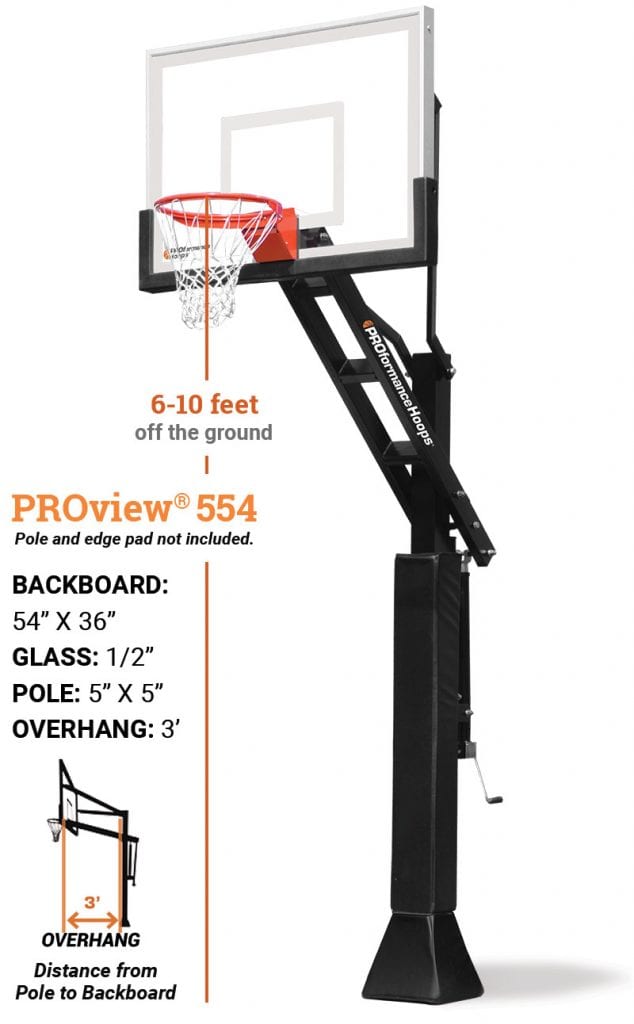
Image Source: superiorplay.com
The Foundation: Standard Basketball Hoop Height
The iconic 10-foot height of a basketball goal isn’t an arbitrary number; it’s a carefully established standard that has shaped the game of basketball for over a century. This measurement, from the playing surface to the highest point of the rim, is the bedrock of competitive play. Whether you’re watching a nail-biting NBA game or playing a casual pickup game in the park, this consistent height ensures a level playing field and a universally recognized challenge.
Deciphering Regulation Basketball Net Height
When we talk about the “height” of a basketball goal, we’re primarily referring to the regulation basketball net height, which is directly tied to the rim. The net itself, while crucial for signaling a successful shot, doesn’t dictate the standard height. The crucial element is the position of the rim. This standard is so ingrained in the sport that any deviation would fundamentally alter the mechanics and strategy of playing.
Standard NBA Hoop Height: The Pinnacle of Professional Play
In the realm of professional basketball, the standard NBA hoop height is precisely 10 feet. This measurement is adhered to strictly in every NBA arena across the globe. The consistency of this height is paramount for the league’s athletes, allowing them to develop and perfect their shooting form, driving techniques, and defensive strategies based on a predictable vertical challenge. The ability of NBA players to consistently dunk, shoot from various distances, and execute complex plays relies on this unvarying rim elevation.
FIBA Basketball Rim Height: Global Consistency
The international governing body for basketball, FIBA (International Basketball Federation), also mandates the same FIBA basketball rim height of 10 feet (3.05 meters). This global uniformity ensures that the game is played under the same conditions worldwide, from the Olympics to international club competitions. This standardization is vital for the international development and popularization of basketball, making it easier for players to transition between different leagues and for fans to follow competitions without worrying about variations in equipment.
The Evolution of the Basketball Goal Height
While 10 feet is the modern standard, it’s worth noting that early forms of basketball had different heights. Dr. James Naismith, the inventor of basketball, initially used peach baskets, which were nailed to the gymnasium balcony at a height of 10 feet. This initial setup directly influenced the enduring standard. The early baskets also had bottoms, meaning after each made basket, someone had to retrieve the ball. This was eventually replaced by nets that allowed the ball to pass through, a design that has largely remained consistent.
Youth Basketball Hoop Height: Growing with the Game
Recognizing that younger players are still developing their strength and coordination, youth basketball hoop height is often adjusted. This is a crucial aspect of making the game accessible and enjoyable for children. For younger age groups, the hoop height is typically lowered to help them develop proper shooting form and build confidence.
Common Youth Hoop Heights:
- Ages 5-8: Often use a hoop height of 6 feet.
- Ages 9-11: May use a hoop height of 8 feet.
- Ages 12 and Up: Typically transition to the regulation 10-foot height, often through an adjustable basketball goal height system.
These adjusted heights allow young athletes to experience success and build foundational skills without the frustration of consistently missing shots due to a too-high rim. The use of adjustable goals is particularly beneficial as children grow and their abilities improve.
Adjustable Basketball Goal Height: Versatility for All Levels
The advent of adjustable basketball goal height systems has revolutionized how and where basketball can be played, especially in recreational settings and for training purposes. These systems allow users to customize the rim height, making them ideal for:
- Families: Allowing parents and children of different ages and skill levels to play together.
- Training Facilities: Enabling coaches to tailor drills for specific age groups or skill development needs.
- Home Courts: Providing flexibility for backyard games and practice sessions.
These adjustable goals typically range from as low as 6 feet up to the standard 10 feet, offering a wide spectrum of playability.
Men’s Basketball Goal Height: The Standard in Action
When referring to men’s basketball goal height, it’s synonymous with the regulation 10-foot standard. This applies to men’s professional leagues (NBA, WNBA uses the same height), collegiate play, and international competitions. The physical demands and athletic capabilities of male players in these leagues make the 10-foot rim a significant but achievable challenge.
Factors Influencing Hoop Height Beyond the Rim
While the rim height is the most critical measurement, other components of the basketball goal system also play a role in the overall setup and stability.
The Basketball Backboard Height
The basketball backboard height is also standardized, though its measurement is less critical to the scoring aspect of the game than the rim height. The backboard is typically positioned so that the rim is centered horizontally on the board and the top of the backboard is 6 feet and 6 inches (1.98 meters) above the playing surface. The size and positioning of the backboard are designed to enhance the game, allowing for bank shots and influencing ball trajectory.
Official Basketball Post Height: The Support System
The official basketball post height refers to the vertical support structure that holds the backboard and rim assembly in place. While the post itself has a measurable height, its primary function is to securely anchor the goal at the correct 10-foot rim elevation. The materials and design of the post can vary, from portable bases to in-ground installations, but the goal is always to maintain the precise height of the rim.
Basketball Court Dimensions and Hoop Placement
The placement of the hoop is intrinsically linked to the basketball court dimensions hoop. The goal is positioned at the center of each end line of the rectangular court.
Standard Court Dimensions:
- NBA: 94 feet long by 50 feet wide.
- FIBA: 28 meters long by 15 meters wide (approximately 91.9 feet by 49.2 feet).
The distance from the baseline (the end line) to the front of the backboard is a crucial, standardized measurement. This distance is 4 feet (1.2 meters) in both NBA and FIBA regulations. This spacing ensures that players have adequate room to operate under the basket without colliding with the support post and allows for offensive and defensive strategies that utilize the area behind the backboard.
Why 10 Feet? The Rationale Behind the Standard
The consistent 10-foot rim height is a fundamental element that contributes to the strategic depth and athletic spectacle of basketball.
- Skill Development: It requires a specific amount of force, arc, and accuracy to get the ball into the hoop. This encourages players to develop proper shooting mechanics, including a strong follow-through and a consistent release point.
- Athleticism: The 10-foot height necessitates athleticism for dunks, layups, and defensive blocks. It creates a visual and physical challenge that separates the skilled from the merely competent.
- Game Flow: The height influences the pace and style of play. It encourages perimeter shooting and strategic drives to the basket, rather than simply overwhelming opponents with sheer height close to the rim.
- Historical Continuity: As mentioned, the original setup by Dr. Naismith established this height, and its proven effectiveness has led to its preservation throughout the evolution of the sport.
Variations and Exceptions: When 10 Feet Isn’t The Rule
While 10 feet is the dominant standard, there are situations where you might encounter different heights, primarily outside of competitive, organized play.
- Unsupervised Public Courts: Sometimes, public courts in parks or recreational areas may have poorly maintained equipment, leading to goals that are not at the regulation height.
- Specialty Training: Some specialized training programs or drills might temporarily adjust hoop heights for specific skill development, though this is usually done with adjustable goals.
- Very Young Children: As discussed with youth basketball, much younger children may use significantly lower hoops to learn the game.
However, for any officially sanctioned game or competitive league, the 10-foot standard is non-negotiable.
Ensuring Proper Hoop Height
For coaches, players, and facility managers, verifying the correct basketball hoop height is essential.
Checking the Height:
- Use a Measuring Tape: The most accurate method is to use a measuring tape. Measure from the playing surface directly below the rim to the highest point of the rim itself.
- Observe Gameplay: While not precise, observing how players interact with the rim can offer clues. If most players are able to dunk with ease or struggle significantly with layups, the height might be suspect.
- Consult Equipment Manuals: If you are using adjustable goals or have specific basketball equipment, refer to the manufacturer’s instructions for proper setup and measurement.
The Impact of Height on Strategy
The 10-foot rim height profoundly influences basketball strategy at all levels.
- Shooting Range: It dictates effective shooting ranges and encourages the development of jump shots and three-point shooting. Without the 10-foot challenge, the game might devolve into more of a close-range battle.
- Rebounding: The height of the rim affects the trajectory of missed shots and influences rebounding strategies, as players vie for position to grab the ball after a shot.
- Driving and Finishing: Players must develop finesse and skill to finish at the rim against taller defenders, often using floaters, runners, or creative layups to score over the 10-foot barrier.
- Defense: The height forces defenders to be positionally sound and agile to block or alter shots without fouling.
Frequently Asked Questions (FAQ)
Q1: What is the standard height of a basketball goal?
A1: The standard height of a basketball goal, from the playing surface to the top of the rim, is 10 feet (3.05 meters).
Q2: Is the basketball hoop height the same for men and women?
A2: Yes, the men’s basketball goal height and the women’s basketball goal height are both the standard 10 feet in professional and collegiate play.
Q3: Can I adjust my home basketball hoop to 10 feet?
A3: If you have an adjustable basketball goal height system, you can typically adjust it to the standard 10 feet. Always check the product’s specifications to confirm its adjustable range.
Q4: How far is the backboard from the baseline?
A4: The distance from the baseline to the front of the backboard is 4 feet (1.2 meters) in both NBA and FIBA regulations.
Q5: Why is the regulation basketball net height so important?
A5: The regulation height ensures fairness and consistency in competition, challenges players’ skills and athleticism, and dictates the strategic flow of the game.
Q6: Are there any professional leagues that use a different hoop height?
A6: No, all major professional basketball leagues globally, including the NBA and FIBA-sanctioned events, adhere to the 10-foot rim height.
Q7: What is the typical basketball backboard height from the ground?
A7: The top of the backboard is typically 6 feet and 6 inches (1.98 meters) above the playing surface, with the rim centered on it.
Q8: How can I ensure my youth basketball hoop is at the correct height for my child?
A8: For younger children, lower heights (e.g., 6 or 8 feet) are recommended. As they grow and develop, you can use an adjustable goal to gradually raise the height towards the regulation 10 feet.
In conclusion, the 10-foot standard for a basketball goal is a fundamental aspect of the sport, influencing everything from player development to game strategy. Its consistent application across various levels of play ensures a universally recognized challenge and a foundation for the exciting and dynamic game of basketball.