
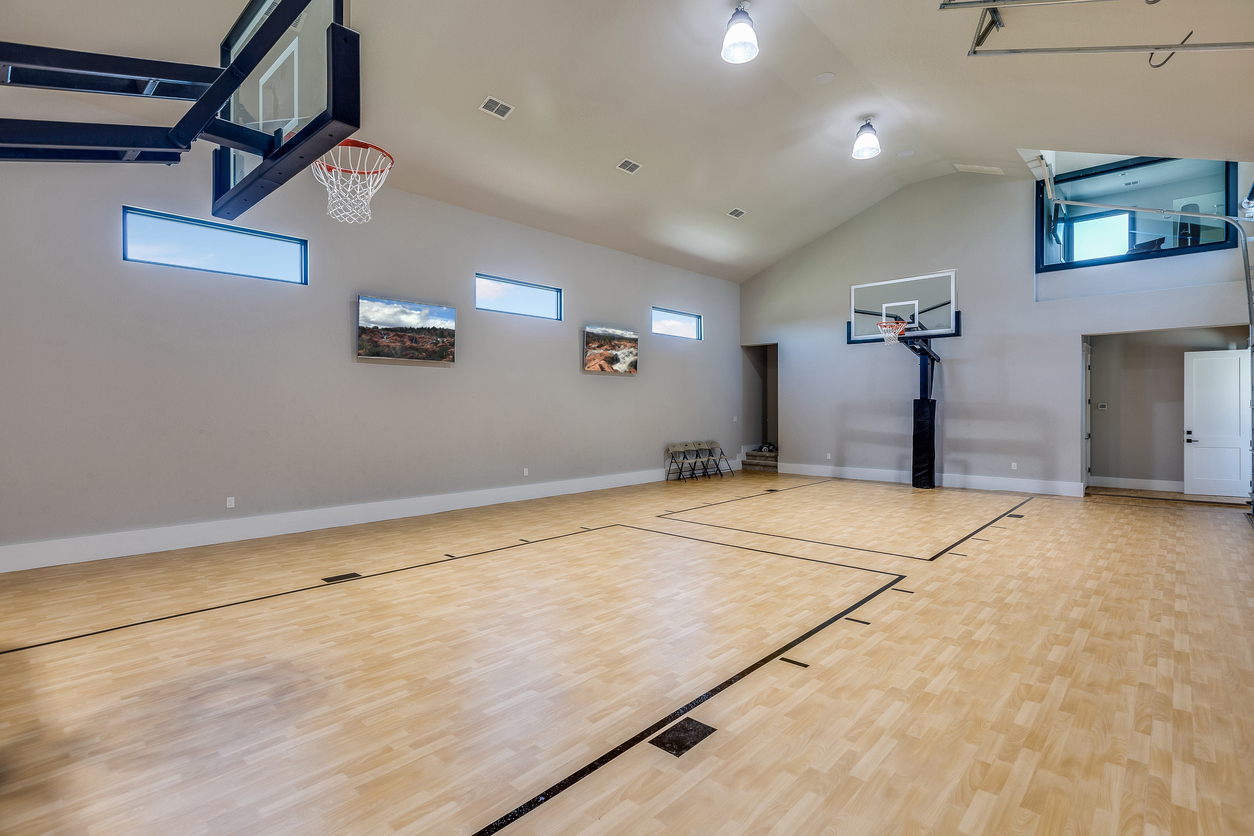
Image Source: www.dominatorhoop.com
How Much Would A Indoor Basketball Court Cost: Budgeting
What is the average cost to build an indoor basketball court? Building an indoor basketball court can range from $10,000 for a basic setup in a converted garage or basement to over $100,000 for a custom-built, professional-grade facility.
Embarking on the journey to build your own indoor basketball court is an exciting prospect, promising endless hours of practice, friendly games, and a dedicated space for athletic pursuit. However, before you lace up your sneakers and imagine sinking that winning shot, a crucial step awaits: budgeting. The home basketball court price is not a one-size-fits-all figure. It’s a complex equation influenced by a myriad of factors, from the size and location of your court to the quality of materials and the extent of customization. This comprehensive guide will delve into the various cost components, helping you navigate the financial landscape and create a realistic budget for your dream indoor basketball court.
Deciphering the Initial Investment: Factors Influencing Cost
The initial investment for an indoor basketball court is the most significant hurdle. It’s essential to break down where your money will go.
Location, Location, Location: Where Will Your Court Be?
The decision of where to build your indoor basketball court dramatically impacts the overall cost. Here are the common scenarios:
- Basement Conversion: This is often the most budget-friendly option. You’re leveraging existing space, which means less structural work. However, basements can present challenges like low ceiling heights, moisture issues, and the need for extensive electrical and lighting upgrades. The basement basketball court conversion cost will largely depend on the current state of your basement and the extent of renovation required.
- Garage Conversion: Similar to basements, garages offer existing structure. However, they often require more significant modifications, such as insulation, climate control, and potentially foundation reinforcement if you plan on a high-quality indoor sports court construction cost.
- Dedicated New Build: This is the most expensive but offers the most control over design and quality. You can build a structure specifically for your basketball court, ensuring optimal dimensions, ceiling height, and ventilation. The residential basketball court installation cost here will be substantially higher due to new construction expenses.
- Existing Structure Modification: This could involve repurposing a large barn, warehouse, or even a section of a commercial property. The cost will depend on the existing condition of the structure and the extent of adaptation needed.
Size Matters: Court Dimensions and Their Impact
The size of your indoor basketball court is a primary driver of cost. Regulations for official NBA courts are 94 feet long by 50 feet wide. However, for residential use, dimensions can be more flexible.
- Regulation Size: A full-sized court requires a significant footprint and therefore, a larger budget for materials and construction.
- Half Court: Many homeowners opt for a half court, which is still ample space for practice and recreation. This significantly reduces material costs.
- Custom Sized: You can tailor the size to fit your available space, but remember that standard basketball hoop setups and court lines are designed for specific dimensions.
Material Selections: Flooring, Walls, and More
The materials you choose for your court, walls, and ceiling will significantly influence both the initial cost and the long-term durability and performance.
The Heart of the Court: Indoor Court Flooring Cost
The indoor court flooring cost is arguably the most critical component. The type of flooring you choose directly impacts playability, player safety, and the overall aesthetics.
- Maple Hardwood: This is the gold standard for professional basketball courts due to its bounce, durability, and natural aesthetics. However, it comes with a premium price tag. Expect to pay anywhere from $10 to $20+ per square foot for high-quality maple flooring, including installation.
- Engineered Wood: A more budget-friendly alternative to solid maple, engineered wood offers a similar look and feel but is often less expensive. Costs can range from $5 to $15 per square foot.
- Synthetic/Resilient Flooring: These options, such as vinyl, rubber, or polyurethane, are designed for sports use. They offer excellent shock absorption and are often more durable and easier to maintain than wood. Prices can vary widely, from $3 to $10 per square foot, depending on the material and thickness.
- DIY vs. Professional Installation: While a DIY indoor basketball court cost might seem appealing for flooring, it’s often a complex job requiring specialized tools and techniques to ensure a level, seamless surface. Professional installation is generally recommended for optimal results.
Beyond the Floor: Other Material Considerations
- Wall Padding: Safety is paramount. Professional-grade wall padding is essential to prevent injuries. This can add several thousand dollars to your project, depending on the area to be covered.
- Ceiling: The height of your ceiling is crucial for avoiding “air balls” hitting the roof. If you’re converting an existing space, you might need to excavate or raise the ceiling, which adds significant cost.
- Lighting: Proper lighting is essential for visibility and an enjoyable playing experience. LED lighting systems are energy-efficient and provide excellent illumination. The cost to build indoor gym facilities often includes a substantial budget for lighting.
- Ventilation and Climate Control: Maintaining a comfortable temperature and humidity level is vital for player comfort and preserving the court materials. HVAC systems can be a significant investment.
- Basketball Hoops and Backboards: While seemingly straightforward, high-quality, adjustable hoops with tempered glass backboards can add a considerable sum. Expect to pay anywhere from $500 to $5,000 or more per hoop.
- Court Markings and Graphics: Professional line painting and custom graphics can enhance the court’s appearance and functionality.
Unveiling the Construction Costs: Labor and Professional Services
Beyond the raw materials, the cost of labor and professional services is a significant portion of the overall budget.
Basketball Court Builder Prices: Who to Hire?
When embarking on a project of this scale, engaging professionals is usually necessary.
- General Contractor: For a new build or extensive conversion, a general contractor will oversee the entire project, coordinating subcontractors and ensuring everything runs smoothly. Their fees typically range from 10% to 20% of the total project cost.
- Specialized Court Builders: Some companies specialize in building indoor sports courts. They have the expertise and experience to handle all aspects of court construction, from foundation to finishing. Basketball court builder prices will vary based on their reputation, location, and the scope of work.
- Subcontractors: You might hire individual subcontractors for specific tasks like electrical work, plumbing, HVAC installation, or flooring installation.
Permits and Inspections
Don’t forget to factor in the cost of building permits and any required inspections from your local municipality. These are essential for ensuring your construction meets safety codes and regulations.
The Customization Factor: Tailoring Your Court
The allure of a custom-built indoor basketball court lies in its ability to perfectly match your vision and needs. However, customization comes with a custom indoor basketball court expense.
Beyond the Basics: Premium Features
- Soundproofing: If noise is a concern, soundproofing materials can be incorporated into the walls and ceiling, adding to the cost.
- Retractable Seating: For a more professional feel, you might consider retractable bleachers or seating.
- Advanced Climate Control: More sophisticated HVAC systems for precise temperature and humidity control will increase the budget.
- High-End Lighting Systems: Dimmable lights, specialized sports lighting, or scoreboards can add to the expense.
- Luxury Finishes: While not directly related to playability, premium finishes for walls, doors, and entryways can elevate the overall aesthetic and the residential basketball court installation cost.
Budgeting Strategies: Making Your Dream a Reality
Now that we’ve explored the various cost components, let’s talk about how to create a workable budget.
The DIY Indoor Basketball Court Cost: Pros and Cons
While tempting, a fully DIY approach to building an indoor basketball court can be challenging.
- Pros: Potential for significant cost savings on labor.
- Cons: Requires extensive knowledge of construction, access to specialized tools, and a considerable time commitment. Mistakes can be costly to fix. For flooring, a botched installation can ruin expensive materials.
If you’re considering a DIY route, focus on tasks you’re confident in, such as painting, minor electrical work, or assembly of pre-fabricated components. Leave the heavy construction, electrical wiring, and flooring installation to professionals.
Sample Budget Breakdown: A Hypothetical Scenario
To provide a tangible idea, let’s consider a hypothetical budget for a moderately sized indoor basketball court (e.g., 40ft x 60ft) in a converted garage or basement:
| Cost Component | Estimated Cost Range (USD) | Notes |
|---|---|---|
| Structural Modifications | $2,000 – $10,000+ | Ceiling height adjustment, insulation, foundation reinforcement, wall framing. |
| Flooring | $3,000 – $15,000+ | Resilient flooring ($3-$7/sq ft) or engineered wood ($5-$15/sq ft) for a 2400 sq ft court. |
| Wall Padding | $1,000 – $5,000+ | High-impact padding for safety. |
| Lighting | $500 – $3,000+ | LED lighting fixtures and installation. |
| HVAC (if needed) | $2,000 – $8,000+ | Climate control system installation. |
| Basketball Hoops | $1,000 – $5,000+ | Two adjustable, high-quality hoops. |
| Court Markings | $200 – $1,000 | Professional line painting. |
| Permits & Inspections | $300 – $2,000 | Varies by location. |
| Labor (Contractor) | $5,000 – $20,000+ | General contractor fees or specialized court builder. |
| Contingency (10-20%) | $1,500 – $8,000+ | For unexpected expenses. |
| Total Estimated Cost | $16,500 – $77,000+ | This is a broad estimate; actual costs can be higher or lower based on specific choices and location. |
Important Note: This is a simplified example. The backyard basketball court cost for a new, freestanding structure would be significantly higher. The cost to build indoor gym facilities with professional amenities can easily exceed $100,000.
Tips for Cost Savings
- Start Small: Consider a half-court or a smaller, custom size if space is limited.
- Phased Approach: You don’t have to do everything at once. Prioritize essential elements like flooring and hoops, and add features like premium lighting or soundproofing later.
- Explore Material Options: While hardwood is desirable, good quality resilient flooring can offer excellent performance at a lower price point.
- Get Multiple Quotes: Always obtain quotes from several contractors and suppliers to ensure you’re getting competitive pricing.
- DIY Where Possible: If you have construction experience, tackle tasks like painting or minor repairs yourself.
Frequently Asked Questions
Q: How long does it take to build an indoor basketball court?
A: The timeframe can vary greatly, from a few weeks for a simple garage conversion to several months for a custom-built structure.
Q: Are there ongoing maintenance costs for an indoor basketball court?
A: Yes, ongoing maintenance is necessary. This includes regular cleaning, potential refinishing of wood floors, and upkeep of lighting and HVAC systems.
Q: Can I install an indoor basketball court in a standard-sized room?
A: A standard room is unlikely to be large enough for a regulation or even a half-court. You’ll need a significant open space, ideally with high ceilings.
Q: What is the most expensive part of building an indoor basketball court?
A: The flooring and any necessary structural modifications (like raising ceilings or reinforcing foundations) are typically the most expensive components.
Q: Is a permit required to build an indoor basketball court?
A: In most cases, yes. It’s crucial to check with your local building department for specific requirements and regulations.
Q: Can I get financing for an indoor basketball court?
A: Depending on the scale and location, some homeowners may be able to secure home equity loans or personal loans for such projects, though it’s less common than for primary home renovations.
Building an indoor basketball court is a significant investment, but with careful planning and budgeting, it can be a rewarding endeavor that provides a lifetime of enjoyment and athletic development. By thoroughly researching your options, obtaining multiple quotes, and prioritizing your needs, you can create a functional and inspiring space for your passion for basketball.