
Real Costs: How Much Would A Half Court Basketball Court Cost?
So, how much would a half court basketball court cost? The cost of a half court basketball court can range anywhere from $1,000 for a basic DIY setup to over $15,000 or more for a professionally installed, high-quality court, depending on materials, size, and features.
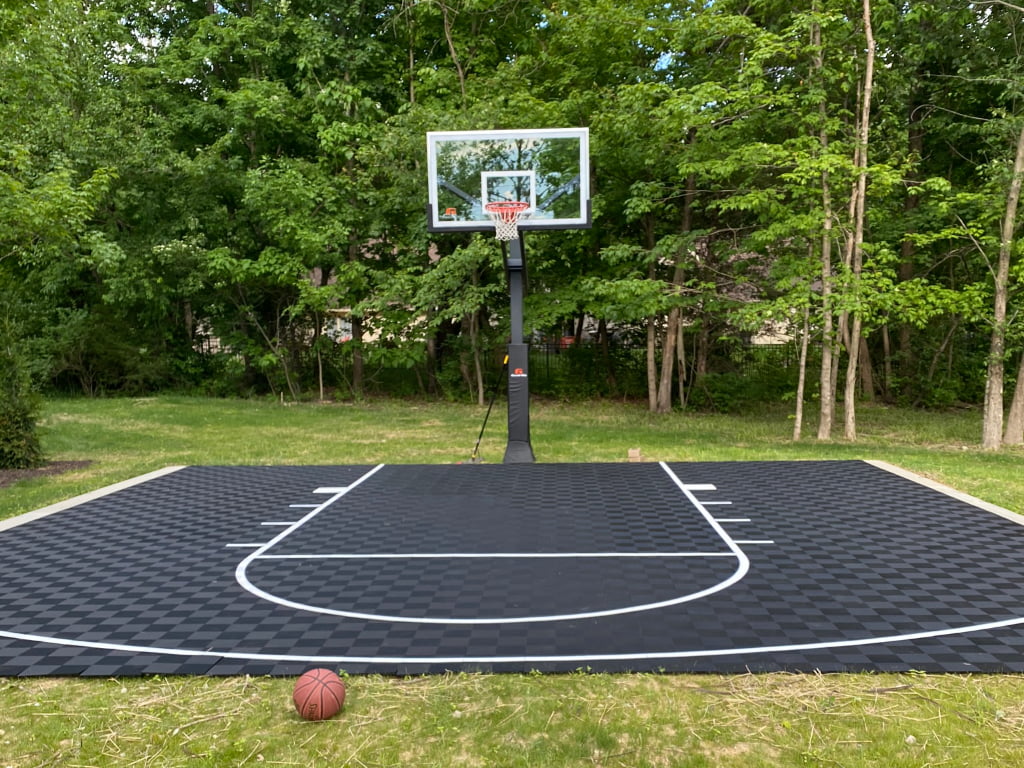
Image Source: modutile.com
The Price Tag: Breaking Down Half Court Basketball Costs
Dreaming of shooting hoops in your own backyard? A half court basketball court can be a fantastic addition to any home, providing endless hours of fun and exercise. But before you start visualizing slam dunks, it’s essential to get a clear picture of the financial investment involved. The truth is, there’s no single answer to “how much does a half court cost?” because it depends on a multitude of factors. This guide will delve deep into the various components that contribute to the overall half court basketball installation cost, helping you budget effectively for your dream court.
Backyard Half Court Pricing: What to Expect
When we talk about a backyard half court pricing, we’re generally looking at the cost to create a dedicated playing space in your private property. This typically involves preparing the ground, laying down a playing surface, installing a hoop, and marking the court lines. The size of your court, the type of playing surface, and the quality of the basketball hoop will significantly influence the final price.
DIY Half Court Construction Cost: Saving Money, Gaining Sweat Equity
Many homeowners opt for a DIY half court construction cost to save money. This route requires more time and effort but can be very rewarding. You’ll need to factor in the cost of materials for the foundation (like concrete or asphalt), the playing surface (often modular tiles or painted asphalt), the hoop system, and any necessary tools. While you can save on labor costs, don’t underestimate the expense of materials and the potential for unexpected challenges.
Deconstructing the Costs: Key Components of a Half Court
Let’s break down the typical costs associated with building a half court basketball court:
Playing Surface: The Foundation of Your Game
The playing surface is arguably the most significant cost factor. Here are the common options and their price ranges:
- Concrete: This is a durable and popular choice.
- DIY Cost: If you’re pouring concrete yourself, the primary costs are for the concrete mix, rebar or mesh for reinforcement, and any tools you might need to rent or buy. Expect to spend anywhere from $4 to $10 per square foot for materials. A typical half court might be 30 feet by 30 feet (900 sq ft), so concrete material costs alone could range from $3,600 to $9,000.
- Professional Installation: Hiring a professional concrete contractor will significantly increase the cost due to labor, equipment, and expertise. This could push the half court construction materials cost and labor to $15 to $30 per square foot, making a 900 sq ft court cost between $13,500 and $27,000.
- Asphalt: Another durable option, often seen on commercial courts.
- DIY Cost: Laying asphalt yourself is generally not feasible for homeowners.
- Professional Installation: Professional asphalt installation can be more affordable than concrete. The half court construction materials cost for asphalt, including grading and paving, typically ranges from $5 to $15 per square foot. For a 900 sq ft court, this could be $4,500 to $13,500.
- Modular Sports Tiles: These interlocking plastic tiles offer a good bounce and drainage.
- DIY Cost: Modular tiles are designed for easy DIY installation. The half court basketball pad price for these tiles can vary greatly depending on the brand and quality. Expect to pay between $3 and $8 per square foot. For a 900 sq ft court, this would be $2,700 to $7,200. This is a popular choice for residential half court residential cost because of its flexibility and aesthetic options.
- Painted Surface (over existing concrete/asphalt): If you already have a suitable concrete or asphalt slab, you can simply paint it.
- DIY Cost: This is the most budget-friendly option. You’ll need specialized outdoor court paint, line marking paint, rollers, brushes, and potentially a primer. The half court resurfacing cost for materials could be as low as $200 to $500 for a basic paint job, while a higher-quality, multi-layer coating might run $800 to $2,000.
The Hoop System: More Than Just a Hoop
The basketball hoop system is a crucial element, and its price can vary wildly.
- In-Ground Systems: These are anchored directly into the ground, usually with concrete.
- Entry-Level: A basic in-ground pole with a 44-inch acrylic backboard and standard rim can cost between $300 and $600.
- Mid-Range: For better durability and adjustability, you might look at systems with tempered glass backboards, breakaway rims, and thicker poles, costing $700 to $1,500.
- High-End/Professional: These feature superior backboards (glass or acrylic), reinforced rims, robust poles, and advanced height adjustment mechanisms, often ranging from $1,500 to $5,000+.
- Wall-Mount Systems: These attach directly to a sturdy wall or garage door.
- Cost: Generally less expensive than in-ground systems, ranging from $200 to $1,000, depending on the backboard size and material.
- Portable Hoops: These have a base that can be filled with water or sand.
- Cost: The portable half court cost is typically lower, ranging from $200 to $800 for a decent home unit. However, they are generally less stable and durable than in-ground systems and not ideal for a dedicated, permanent court.
Installation Labor: The Hidden (or Not-So-Hidden) Cost
If you’re not doing it yourself, labor is a significant expense. Professional installation includes site preparation, pouring and finishing concrete or asphalt, assembling and installing the hoop, and marking the lines. This can add anywhere from $500 to $5,000+ to the total cost, depending on the complexity of the job and local labor rates.
Ancillary Costs: The Small Details That Add Up
Don’t forget about these potential extra expenses:
- Site Preparation: If your yard isn’t level or requires significant excavation, you might need to hire professionals for grading, drainage solutions, or debris removal. This could add several hundred to a few thousand dollars.
- Lighting: If you plan to play after dark, consider the cost of installing outdoor lighting, which can range from $300 to $1,000 or more.
- Fencing: Some homeowners opt for fencing around the court for safety or to keep balls from going too far. This can add a significant cost, depending on the material and extent of the fencing.
- Permits: Check with your local municipality to see if any permits are required for court construction. This is usually a minimal cost, but it’s essential to comply with local regulations.
- Customization: Adding features like personalized logos, different colored lines, or premium materials will increase the custom half court pricing.
Putting It All Together: Estimated Cost Ranges
Let’s summarize with some estimated cost ranges for different scenarios:
Scenario 1: Basic DIY Half Court
- Playing Surface: Modular tiles (approx. $3-$5/sq ft) or painted asphalt/concrete.
- Hoop: Entry-level in-ground system.
- Labor: Your own time.
- Estimated Cost: $1,500 – $5,000 (depending heavily on playing surface choice and hoop quality)
Scenario 2: Mid-Range Backyard Half Court (Professional Installation)
- Playing Surface: Professionally installed asphalt or high-quality modular tiles.
- Hoop: Mid-range in-ground system with tempered glass.
- Labor: Professional installation.
- Estimated Cost: $5,000 – $12,000
Scenario 3: High-End Residential Half Court
- Playing Surface: Professionally poured and finished concrete, possibly with premium coatings.
- Hoop: High-end, professional-grade in-ground system with breakaway rim and large glass backboard.
- Labor: Professional installation.
- Ancillary: Lighting, minor site prep.
- Estimated Cost: $10,000 – $20,000+
Indoor Half Court Cost: Bringing the Game Inside
What about an indoor half court cost? This is a significantly different proposition, usually involving dedicated indoor facilities or retrofitting existing spaces.
- Playing Surface: Specialized indoor basketball flooring (wood or high-performance vinyl) is expensive, often costing $10-$25+ per square foot for materials and installation.
- Hoop: Wall-mounted or ceiling-suspended hoops are common indoors, with prices similar to outdoor wall-mount systems.
- Infrastructure: You’ll need adequate ceiling height, proper lighting, ventilation, and possibly soundproofing, adding substantial costs.
- Overall: An indoor half court can easily run into the tens of thousands of dollars, often exceeding $15,000-$30,000, and frequently much more, depending on the scale and facility build-out.
Half Court Resurfacing Cost: Revitalizing an Existing Court
If you already have a concrete or asphalt slab that’s seen better days, you might be looking at half court resurfacing cost.
- Cleaning and Repair: This involves pressure washing, filling cracks, and patching any damaged areas. Costs can range from $200 to $1,000.
- Painting: Applying new court lines and a fresh coat of specialized court paint is the most common form of resurfacing. This can cost between $800 and $3,000, depending on the quality of the paint and the extent of the work.
- Resurfacing Compounds: For more severe damage, specialized acrylic resurfacing compounds can be applied to create a new playing surface. This is more expensive, potentially costing $3,000 to $7,000 for a half court.
Custom Half Court Pricing: Tailoring to Your Vision
For those who want a truly unique playing experience, custom half court pricing comes into play. This can include:
- Unique court dimensions or shapes.
- Specialized playing surface materials or patterns.
- Personalized logos or team colors embedded in the court.
- Premium hoop systems with advanced features.
- Integrated features like seating or shade structures.
The sky’s the limit with customization, and costs can easily add several thousand dollars or more to the base price.
Making the Decision: Budgeting for Your Basketball Dream
When planning your half court, it’s crucial to:
- Define Your Needs: How will the court be used? Who will be playing? What is your budget?
- Get Multiple Quotes: If you’re hiring professionals, get quotes from several reputable contractors.
- Consider Longevity: Investing in higher-quality materials upfront can save you money on repairs and replacements down the line.
- Factor in Maintenance: All courts require some level of maintenance to stay in good condition.
Building a half court basketball court is a significant investment, but with careful planning and research, you can create a fantastic recreational space that will be enjoyed for years to come. Whether you’re going the DIY route or hiring professionals, knowing the real costs involved is the first step to making your basketball dreams a reality.
Frequently Asked Questions (FAQ)
Q1: Can I build a half court basketball court on grass?
A: No, a half court basketball court requires a firm, level surface. Grass is unsuitable. You’ll need to prepare the area by excavating and installing a concrete or asphalt base, or using modular sports tiles on a prepared aggregate base.
Q2: How long does it take to build a half court?
A: For a DIY project, it could take several weekends, depending on your skill level and available time. Professional installation can often be completed within a week to ten days, assuming good weather and no unforeseen issues.
Q3: What is the minimum size for a half court?
A: While full courts are 50 feet wide by 94 feet long, a half court is typically played on a rectangular area of 30 feet by 30 feet, 30 feet by 40 feet, or even 37 feet by 37 feet (which is half of a full-size NBA court’s width and length). The size can be adapted to your available space.
Q4: How much does it cost to resurface a basketball court?
A: The half court resurfacing cost can range from $200-$500 for a simple DIY paint job to $3,000-$7,000 for professional resurfacing with specialized compounds, depending on the condition of the existing surface and the chosen materials.
Q5: Is a portable basketball hoop good for a half court?
A: While a portable half court cost is attractive for its flexibility, these hoops are generally less stable and durable than in-ground systems. They are better suited for casual play rather than a dedicated half court installation where consistent rebound and stability are desired.
Q6: What are the cheapest ways to build a half court?
A: The cheapest options usually involve DIY labor and using modular sports tiles or painting an existing, well-prepared concrete or asphalt surface. Choosing an entry-level hoop system also significantly reduces costs.
Q7: What are the most durable playing surfaces for a half court?
A: Concrete and high-quality asphalt are generally considered the most durable for outdoor courts. For indoor courts, specialized hardwood or high-performance vinyl flooring offers excellent durability.