
How much does overseas basketball pay? Overseas basketball salaries can range drastically, from as low as $1,000 per month for developmental players in less prominent leagues to upwards of $100,000 per month for elite players in the top European leagues. The average overseas basketball salary is difficult to pinpoint due to this wide disparity, but many players aim for contracts in the $3,000-$10,000 monthly range. Pro basketball overseas earnings are heavily influenced by the player’s skill level, experience, nationality, and the economic standing of the league and country.
For many aspiring and established basketball players, the dream of playing professionally extends beyond their home country. The allure of making money playing basketball internationally while experiencing new cultures is a powerful draw. However, a significant question looms for anyone considering this path: “How much does overseas basketball pay?” The answer, as with many professional sports, is not a simple one. It’s a complex equation involving numerous variables that dictate basketball contract abroad pay.
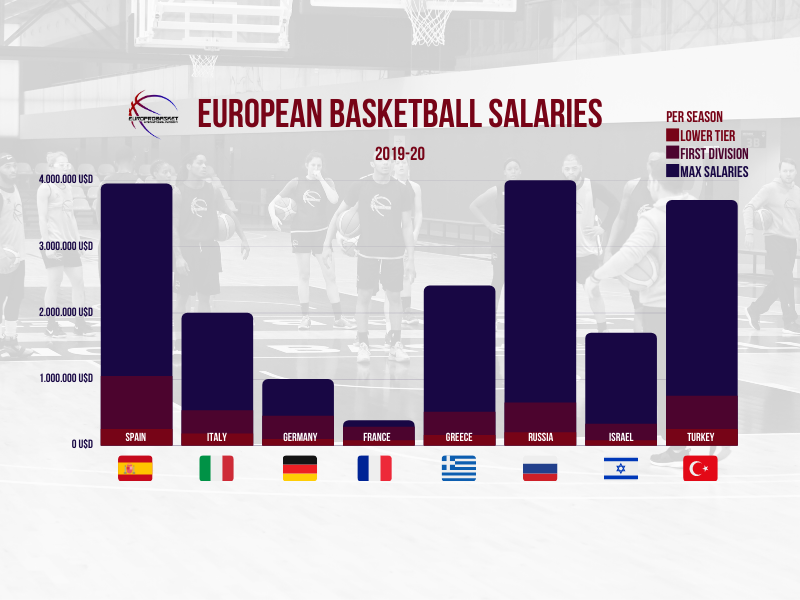
Image Source: europrobasket.com
Deciphering Basketball Contract Abroad Pay
The world of international professional basketball offers a spectrum of earning potential. For players who have not yet reached the highest echelons of the sport, or for those seeking new opportunities after a stint in their domestic league, overseas play can provide a stable and sometimes lucrative career. Understanding the factors that influence these contracts is crucial for setting realistic salary expectations for overseas basketball.
Factors Influencing Overseas Basketball Salaries
Several key elements come into play when determining how much an international basketball player can earn. These can make the difference between a modest income and a comfortable living.
Player’s Skill and Experience
This is arguably the most significant factor.
* Top-tier talent: Players with proven track records of success, particularly those with NBA experience (even brief stints), can command much higher salaries. These players often bring a level of polish and athleticism that leagues are willing to pay a premium for.
* Emerging talent: Younger players with high potential but less professional experience might start with lower salaries. Their contracts often include incentives for good performance or potential bonuses for future development.
* Role players: Players who excel in specific roles, such as defensive specialists or reliable shooters, can also find consistent work and decent pay, even if they aren’t star players.
League Strength and Reputation
The economic power and competitive level of a basketball league directly correlate with the salaries it can offer. Some leagues are known for their financial stability and high paychecks, making them the best paying overseas basketball leagues.
- Tier 1 Leagues: These are generally the most well-funded and competitive leagues, offering the highest salaries. Think of the top leagues in Spain (Liga ACB), Turkey (BSL), Italy (LBA), Greece (HEBA), and to some extent, Russia (VTB United League, though its landscape has shifted).
- Tier 2 Leagues: These leagues offer respectable salaries but are a step down from the elite. Examples might include leagues in Germany, France, Israel, and some Eastern European countries.
- Developmental Leagues: Many countries have leagues designed to develop local talent or provide opportunities for aspiring foreign players. Salaries here are typically lower.
Country and Economic Conditions
The economic health of a country and the specific financial situation of a basketball club within that country play a vital role.
- Western Europe: Countries with strong economies, like Germany, Spain, and France, often have more financially stable clubs that can offer competitive salaries.
- Eastern Europe and Asia: While some leagues in these regions can be very lucrative, there can be more variability. Factors like currency exchange rates and the overall economic climate can impact contract offers.
- Middle East: Countries like Saudi Arabia and Qatar, with oil-rich economies, have been known to offer extremely high salaries to attract top talent, especially in recent years.
Player’s Nationality and “Import” Slots
Most international leagues have rules regarding the number of foreign players (often called “imports”) a team can sign. The demand for players from certain countries or with specific skill sets can influence negotiations.
- American players: American players are often highly sought after due to their strong basketball backgrounds and athleticism. This demand can drive up salaries, especially for players with college experience.
- Other nationalities: Players from countries with established basketball traditions (e.g., former Yugoslavia, Lithuania, Argentina) are also valued.
Contract Length and Structure
The duration of a contract and how it’s structured can impact the overall earnings.
- Short-term contracts: These might be for a few months, often to replace an injured player or for a specific tournament. They can offer a good per-diem rate but less long-term security.
- Full-season contracts: These typically run for 8-10 months and provide more stability.
- Bonuses and incentives: Contracts can include clauses for performance-based bonuses, such as scoring averages, team wins, or playoff success. These can significantly boost pro basketball overseas earnings.
What Do European Basketball Players Make?
European basketball leagues are generally considered to be among the strongest and most financially stable outside of the NBA. Players in these leagues can earn a wide range of salaries.
-
Top European Leagues (Spain, Italy, Turkey, Greece):
- Star players: Can earn anywhere from $200,000 to over $1,000,000 per season (approximately $25,000 to $100,000+ per month). These are often players with NBA experience or those who have consistently performed at a high level in these leagues for years.
- Solid starters: Typically earn between $80,000 and $200,000 per season ($10,000 to $25,000 per month).
- Role players/bench players: May earn from $30,000 to $80,000 per season ($3,750 to $10,000 per month).
-
Mid-tier European Leagues (Germany, France, Israel):
- Top players: Can earn $100,000 to $250,000 per season ($12,500 to $31,250 per month).
- Average players: Often in the $50,000 to $100,000 per season range ($6,250 to $12,500 per month).
-
Lower-tier European Leagues: Salaries can drop significantly, with some players earning as little as $1,500 to $3,000 per month. These contracts might also not include housing or other benefits.
It’s important to note that these figures are often quoted as gross salaries. Players are responsible for taxes in their host country, which can vary greatly. Some contracts are structured to include benefits like housing, flights, and meals, which reduce a player’s out-of-pocket expenses and effectively increase their take-home pay.
How Much Do NBA Castoffs Make Overseas?
The term “NBA castoff” can be a bit harsh, but it generally refers to players who have spent time in the NBA, whether on a full contract, a two-way contract, or in training camp, but haven’t solidified a long-term NBA career. These players often have significant basketball experience and a recognizable name, which can make them attractive to overseas teams.
International basketball player salary for these individuals can vary wildly based on their NBA experience:
- Players with recent NBA experience (even limited minutes): Can often command salaries in the $10,000 to $30,000+ per month range, especially in strong European leagues or lucrative Asian leagues. Their NBA pedigree signals a certain level of skill that teams are willing to pay for.
- Players who spent time on NBA G-League rosters or training camps: Might earn anywhere from $5,000 to $15,000 per month, depending on the league and their specific role.
- Players who were waived before the season or had very brief NBA stints: Could see their salary expectations for overseas basketball fall into the $3,000 to $8,000 per month range.
The key for these players is leveraging their NBA connection. Teams might offer higher salaries not just for their immediate on-court contribution but also for their potential to attract fans or their experience in high-pressure situations.
Overseas Basketball League Pay Rates by Region
The global landscape of basketball has many different leagues, each with its own pay scale. Here’s a look at some general overseas basketball league pay rates:
Europe
As discussed, Europe is a prime destination.
* Top Leagues (Spain, Italy, Turkey, Greece, Lithuania): $40,000 – $1,000,000+ per season.
* Strong Second-Tier Leagues (Germany, France, Israel, Poland): $50,000 – $250,000 per season.
* Other European Leagues (e.g., Hungary, Belgium, Slovenia, Croatia): $30,000 – $100,000 per season.
Asia
Asia offers some of the highest-paying leagues in the world, particularly in China and Japan.
- China (CBA): Historically, the Chinese Basketball Association has been known for offering extremely high salaries, especially to American imports. Top players can earn $200,000 to $1,000,000+ per season. However, league regulations and import restrictions can shift these figures annually.
- Japan (B.League): This league has seen significant growth and offers competitive salaries, with top players earning $100,000 to $400,000+ per season.
- South Korea (KBL): Salaries are generally lower than China or Japan, with top players earning $70,000 to $150,000 per season.
- Philippines (PBA): The PBA is unique as it often uses shorter conferences. Import salaries can be substantial during these periods, sometimes reaching $5,000 to $15,000 per month for a conference.
Middle East
The Middle East, fueled by oil wealth, has become a significant market for basketball talent, especially in recent years.
- Saudi Arabia: Has been making major moves to attract talent, offering salaries that can rival top European leagues, with star players potentially earning $200,000 to $500,000+ per season.
- Qatar and UAE: Also offer competitive salaries, particularly for import players, often in the $5,000 to $15,000 per month range, with benefits.
Australia (NBL)
The National Basketball League in Australia is a growing league with increasing salaries.
- Top players: Can earn $100,000 to $300,000+ per season.
- Average players: Might be in the $50,000 to $100,000 range.
South America
Salaries in South America are generally lower than in Europe or Asia, but there are still opportunities for professionals.
- Argentina, Brazil: Top players might earn $2,000 to $8,000 per month.
- Other leagues: Can be closer to minimum wage or slightly above.
Salary Expectations for Overseas Basketball
When setting salary expectations for overseas basketball, it’s crucial to be realistic and do thorough research.
- Minimum Salary: For players in less established leagues or those new to the pro scene, monthly salaries might start around $1,000-$2,000. These contracts often come with room and board.
- Average Salary: A player with a solid college or minor league background could reasonably expect $3,000-$8,000 per month in many European or Asian leagues.
- Above Average: Players with proven international or higher-level domestic experience could aim for $8,000-$20,000 per month.
- Elite/NBA-level talent: These players are in a different stratosphere, earning $20,000-$80,000+ per month, with the very best approaching or exceeding $100,000 per month in the top leagues.
It’s also important to consider the total compensation package, not just the monthly salary. Benefits like:
* Housing
* Utilities
* Car
* Meal stipends
* Health insurance
* Flights home (once or twice a year)
can add significant value to a contract. A contract that offers a slightly lower salary but includes many benefits might be more financially advantageous than one with a higher salary but fewer perks.
The Role of Agents
Working with a reputable basketball agent can significantly impact the basketball contract abroad pay a player receives. Agents have industry knowledge, connections with teams, and negotiation skills that most players lack. They can help players understand their market value, find suitable opportunities, and secure the best possible contracts. However, agents take a percentage of the player’s salary (typically 10-20%), so players need to weigh the cost against the potential benefits.
Common Benefits in Overseas Contracts
Beyond the base salary, overseas basketball contracts often include a variety of benefits that contribute to the overall financial package and player well-being:
- Housing: Most teams provide accommodation, ranging from shared apartments to individual houses or apartments. This is a significant cost saver.
- Utilities: Some contracts cover utility bills (electricity, gas, water, internet).
- Transportation: This can include a car, a stipend for public transport, or reimbursement for travel costs.
- Meals: Many clubs provide meal stipends or team meals, helping to offset food expenses.
- Health Insurance: Coverage for medical expenses, dental, and vision is often included, though the extent of coverage can vary.
- Travel Expenses: Reimbursement for flights to and from the team’s country at the start and end of the season, and sometimes for holiday breaks.
- Bonuses: Performance-based bonuses (individual or team achievements), playoff bonuses, and end-of-season bonuses are common.
- Agent Fees: While not a direct benefit, the agent’s fee is often paid by the team, or it’s deducted from the player’s salary, so it’s important to clarify this in the contract.
Tips for Players Seeking Overseas Opportunities
For players looking to embark on an international basketball career, preparation and smart strategy are key to maximizing their earnings and career longevity.
- Build a Strong Resume: Highlight your playing experience, statistics, and any accolades.
- Create a Highlight Reel: A well-edited video showcasing your skills is essential for attracting attention.
- Network: Connect with coaches, scouts, and other players who have experience playing overseas.
- Research Leagues and Teams: Understand the financial health, competitive level, and reputation of different leagues and clubs.
- Be Realistic with Salary Expectations: Base your expectations on your playing experience and the league’s pay scale.
- Consider the Entire Package: Don’t just focus on the salary; evaluate the benefits and the overall quality of life.
- Work with Reputable Agents: Find agents who have a proven track record and good relationships with international clubs.
- Get Everything in Writing: Ensure all terms and conditions of your contract are clearly documented.
- Cultural Awareness: Be prepared for cultural differences and adapt accordingly.
The Future of Overseas Basketball Earnings
The landscape of pro basketball overseas earnings is constantly evolving. As basketball gains popularity globally, more countries are investing in their domestic leagues, leading to higher salaries and better playing conditions. Emerging markets in Asia and the Middle East are particularly noteworthy, as they often have the financial resources to attract top talent from more traditional basketball-playing nations.
The growth of the NBA and its increasing focus on international scouting also means that more talented players are being discovered and brought to the NBA, sometimes bypassing traditional overseas routes. However, this also creates opportunities for players who might have previously relied on NBA development systems.
Ultimately, making money playing basketball internationally is a viable career path for many talented athletes. By understanding the market, setting realistic expectations, and being strategic in their approach, players can find fulfilling and financially rewarding opportunities on courts around the globe. The question of “how much does overseas basketball pay” is best answered by thorough research and understanding your own value in the global basketball market.
Frequently Asked Questions (FAQ)
Q1: Is it possible to make a good living playing basketball overseas?
A1: Yes, absolutely. Many players find that playing overseas offers a comfortable living, allowing them to earn a good salary, experience new cultures, and continue their professional careers in a sport they love. The amount varies greatly, but for skilled players in good leagues, it can be very rewarding.
Q2: What is the difference in pay between European and Asian basketball leagues?
A2: While both can be lucrative, historically, the Chinese Basketball Association (CBA) has offered some of the highest salaries, sometimes exceeding those in many European leagues. However, top European leagues like Spain’s ACB, Turkey’s BSL, and Italy’s LBA also offer excellent compensation, with salaries for star players being comparable. The Japanese B.League has also emerged as a strong contender with competitive pay.
Q3: Do overseas basketball players get paid year-round?
A3: Most contracts are for a specific season, typically running 8-10 months. Players are paid during the season. Some players might find short-term contracts or opportunities to play in different leagues during the “off-season,” but it’s not guaranteed year-round employment with a single team.
Q4: How much do rookie or inexperienced players make overseas?
A4: For players with limited professional experience, especially those coming out of college or lower-level leagues, salary expectations for overseas basketball might start in the $1,000-$3,000 per month range. These contracts often include housing and other essential benefits, which help offset lower pay.
Q5: Are taxes a significant factor in overseas basketball salaries?
A5: Yes, taxes are a crucial consideration. Each country has its own tax laws, and players are generally responsible for paying taxes on their earnings in their host country. It’s important to factor in tax liabilities when evaluating a contract offer, as the net amount received can be significantly different from the gross salary. Some contracts may have clauses related to tax assistance, but this is not universal.