
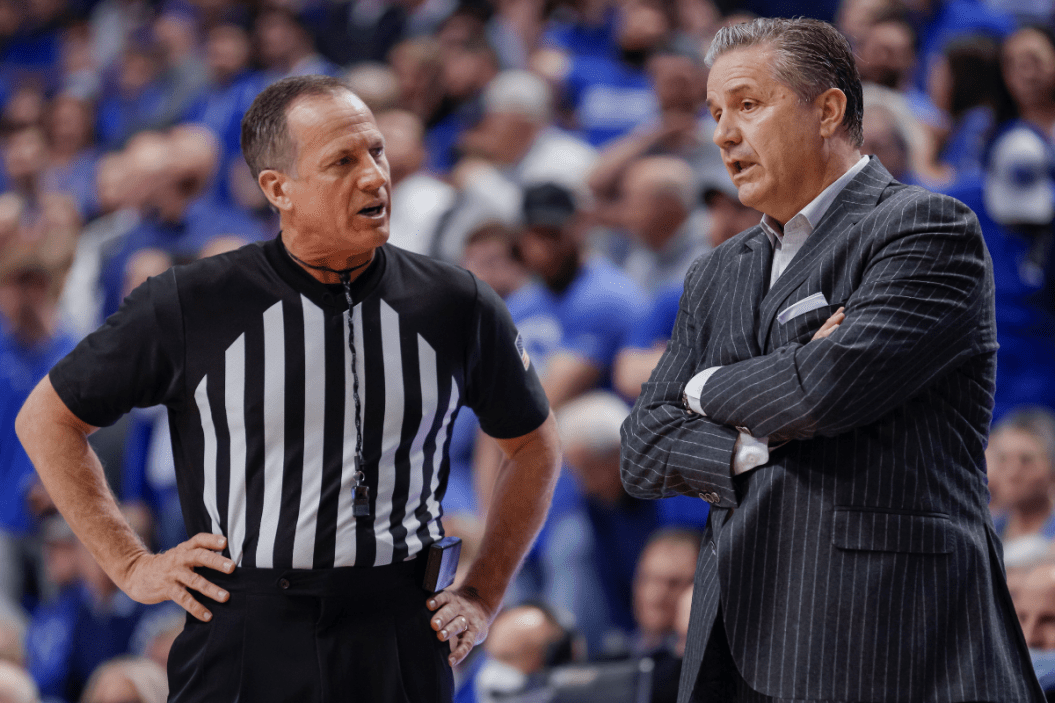
Image Source: fanbuzz.com
How Much Does NCAA Basketball Referee Make? Salary & Compensation
The exact salary of an NCAA basketball referee can vary significantly, but generally, officials can expect to earn anywhere from $600 to $3,000 per game. This range depends on factors such as the level of competition, experience, conference affiliation, and travel reimbursement.
Many aspiring sports enthusiasts dream of being on the court, calling the shots, and being an integral part of the high-stakes world of college basketball. But beyond the whistle and the iconic striped shirt lies a profession that requires dedication, expertise, and a deep understanding of the game. One of the most common questions for those interested in this field is about the financial aspect: how much do NCAA refs get paid? This detailed exploration delves into the NCAA basketball referee salary, college basketball official pay, and the various components of NCAA basketball referee compensation.
The Financial Landscape of College Basketball Officiating
The life of an NCAA basketball referee is far from a guaranteed, year-round paycheck like a traditional full-time job. Instead, it’s a profession built around the collegiate basketball season, with pay structured on a per-game basis. This means income fluctuates significantly depending on the number of games officiated and the stage of the season.
NCAA Basketball Referee Salary: A Game-by-Game Breakdown
When we talk about an NCAA basketball referee salary, it’s essential to understand that it’s not a fixed annual figure. Referees are compensated for each game they officiate. This per-game rate is influenced by several factors:
- Experience Level: Newer officials will typically earn less per game than seasoned veterans who have worked many seasons at the collegiate level.
- Conference: Different NCAA conferences have varying budgets and pay scales for their officials. Major conferences, with higher viewership and revenue, often offer more competitive rates.
- Level of Competition: Officiating games in the NCAA Division I Men’s Basketball Tournament will likely command a higher per-game fee than a regular-season game in a lower division.
- Travel and Per Diem: Beyond the game fee, officials receive reimbursement for travel expenses, including flights, hotels, and meals. This per diem allowance contributes to their overall earnings and helps cover the costs associated with being on the road.
College Basketball Official Pay: What Each Game Yields
The college basketball official pay structure is designed to reflect the importance and demands of the role. While the exact figures are often proprietary information held by individual conferences and officiating assigners, industry reports and insider knowledge provide a general understanding.
- Regular Season Games: For a typical regular-season NCAA Division I game, an official might earn between $600 and $1,500. This rate is for the primary game official, with assistants or crew members often earning slightly less.
- Conference Tournament Games: As the season progresses into conference tournaments, the stakes rise, and so does the compensation. Referees working these high-profile games can see their per-game earnings increase, potentially reaching upwards of $2,000 to $2,500.
- NCAA Championship Tournament: The pinnacle of college basketball, the NCAA Men’s and Women’s Basketball Tournaments (March Madness), offers the highest compensation. Officials selected for these prestigious events can earn $2,500 to $3,000 or even more per game, reflecting the national attention and pressure of these contests.
Deciphering the NCAA Basketball Referee Compensation
NCAA basketball referee compensation is more than just the per-game fee. It’s a package that includes reimbursement for the extensive travel and time commitment required.
Components of Compensation:
- Game Fees: The base payment for officiating a single contest.
- Travel Reimbursement: Covering the cost of flights, train tickets, or mileage for driving to games.
- Lodging: Hotel expenses are typically covered, ensuring officials have a place to stay during their assignments.
- Meal Allowances (Per Diem): A daily allowance to cover food expenses while traveling.
- Assignment Fees: In some cases, there might be minor fees associated with accepting game assignments or attending mandatory training sessions.
The Annual Income of an NCAA Referee:
Given the per-game structure, an average NCAA referee earnings can be estimated by multiplying the average per-game fee by the number of games officiated annually. A referee working a full schedule, which might include 25-30 regular-season games, conference tournament games, and potentially NCAA tournament games, could see their annual income range from $20,000 to $50,000 or more. However, this is highly variable and depends heavily on the factors mentioned earlier.
NCAA Men’s Basketball Referee Salary vs. NCAA Women’s Basketball Referee Salary
While the fundamental principles of compensation are similar across genders, there can be slight differences in the NCAA men’s basketball referee salary and the NCAA women’s basketball referee salary.
Historically, men’s basketball, particularly at the Division I level, has commanded higher revenues and viewership, which can sometimes translate into slightly higher per-game rates for officials. However, as women’s basketball continues to grow in popularity and financial standing, the pay scales are becoming increasingly competitive and aligned.
- Division I: In NCAA Division I, the pay for both men’s and women’s basketball officials is generally comparable, especially for those working in major conferences.
- Lower Divisions (II and III): The financial disparities might be more pronounced in Division II and Division III, where conference budgets are typically smaller.
It’s important to note that experienced and highly regarded officials in either men’s or women’s basketball can command top rates based on their performance and reputation, regardless of the specific gendered division.
The College Basketball Official Pay Scale: A Hierarchy of Experience
The college basketball official pay scale is not a universally published document but rather a system that evolves based on conference agreements and individual referee performance. Generally, it can be conceptualized as follows:
- Rookie/New Officials: These individuals, often transitioning from lower levels of basketball, might start with the lowest per-game rates. They are typically assigned to less prominent games as they gain experience.
- Mid-Level Officials: With a few years of experience and a proven track record, officials move up the pay scale. They are entrusted with more important regular-season games and may be considered for early rounds of conference tournaments.
- Veteran/Top Officials: The most experienced and respected referees, who have demonstrated consistent excellence and a strong understanding of the rules and game management, are at the top of the pay scale. They are assigned to high-stakes conference matchups, championship games, and the NCAA tournament.
Factors Influencing Position on the Pay Scale:
- Performance Reviews: Regular evaluations by supervisors and conference coordinators.
- Consistency: The ability to consistently make correct calls and manage the game effectively.
- Physical Fitness: Maintaining the physical stamina required for the demanding nature of officiating.
- Rules Knowledge: Staying up-to-date with rule changes and interpretations.
- Professionalism: Maintaining a high level of conduct and communication.
NCAA Basketball Referee Hourly Wage: A Misleading Metric
Trying to calculate an NCAA basketball referee hourly wage is quite challenging and often misleading. The nature of the work isn’t conducive to a standard hourly pay structure.
- Time Commitment: While a game itself might be two hours long, the total time commitment for a referee includes travel to the venue, pre-game preparation, post-game debriefing, and the travel back home. This can easily add up to 8-12 hours or more for a single game assignment.
- Off-Season Work: Many referees also engage in other officiating opportunities during the off-season to supplement their income, such as high school games, AAU tournaments, or scouting.
- Unpaid Preparation: Significant time is invested in studying rules, watching film of teams and players, and staying in shape, which is not directly compensated.
If one were to attempt a rough calculation, considering the total time spent on an assignment, the effective hourly rate would likely be significantly higher than what a simple per-game fee might suggest, but it’s not how the compensation is structured.
Exploring NCAA Basketball Officiating Jobs Salary
When looking for NCAA basketball officiating jobs salary, it’s crucial to understand that direct salary figures are rarely advertised. Instead, individuals seeking these positions typically work through:
- Conference Assigners: Each NCAA conference has an official assigner who is responsible for hiring and scheduling referees for their games.
- Officiating Organizations: Some referees may be part of regional or national officiating organizations that contract with conferences.
The application process for becoming an NCAA basketball referee is rigorous and often involves:
- Experience at Lower Levels: Demonstrating proficiency in officiating high school or lower collegiate divisions.
- Training and Clinics: Attending NCAA-sanctioned officiating clinics and training programs.
- Examinations: Passing written and practical exams on basketball rules and mechanics.
- Scouting and Evaluation: Being observed and evaluated by experienced evaluators during games.
The “salary” or earning potential for these jobs is directly tied to the per-game rates and the number of games secured, as discussed throughout this article.
The Demands and Rewards of Officiating
Beyond the financial aspect, being an NCAA basketball referee is a demanding yet rewarding profession.
Challenges:
- Travel: Constant travel can be tiring and disruptive to personal life.
- Public Scrutiny: Referees are under immense pressure and are often the target of criticism from players, coaches, and fans.
- Physical Demands: Maintaining the physical conditioning to keep up with the pace of the game.
- Mental Fortitude: The ability to make split-second decisions under pressure and withstand criticism.
- Inconsistency in Work: Income can vary significantly from month to month and year to year.
Rewards:
- Passion for the Game: The opportunity to remain involved in basketball at a high level.
- Travel Opportunities: Experiencing different cities and venues across the country.
- Respect from Peers: Earning the respect of coaches, players, and fellow officials.
- Sense of Contribution: Playing a vital role in ensuring fair play and the integrity of the game.
- Potential for High Earnings: For top-tier officials, the earning potential can be substantial.
Frequently Asked Questions (FAQ)
Q1: How much does a new NCAA basketball referee make per game?
A new referee typically starts at the lower end of the per-game pay scale, possibly earning $600-$800 per game, plus travel expenses.
Q2: What is the highest salary an NCAA basketball referee can earn?
While there isn’t a fixed annual salary, top-tier NCAA Division I referees working NCAA Tournament games can earn upwards of $3,000 per game, leading to potentially significant annual earnings.
Q3: Do NCAA referees get paid for the entire year?
No, NCAA referees are primarily paid per game. Their income is concentrated during the basketball season, with potential for work in other leagues or tournaments during the off-season.
Q4: Is being an NCAA basketball referee a full-time job?
For most, it is not a full-time job in the traditional sense due to the seasonal nature and per-game payment. Many referees have other jobs or officiating opportunities to supplement their income.
Q5: How does experience affect an NCAA basketball referee’s pay?
Experience is a primary driver of increased pay. Seasoned officials with a proven track record are typically assigned more high-profile games and command higher per-game rates.
Q6: Does the pay differ between NCAA Men’s and Women’s basketball?
While historically there might have been slight differences, the pay for officials in NCAA Men’s and Women’s basketball, especially at the Division I level, is becoming increasingly aligned due to the growth and popularity of women’s sports.
Q7: How are NCAA basketball referees assigned to games?
Referees are assigned games by conference assigners who consider their experience, performance reviews, and availability.
In conclusion, the financial compensation for an NCAA basketball referee is a complex interplay of game fees, experience, conference affiliation, and the level of competition officiated. While the exact figures remain somewhat private, it’s clear that officiating at the collegiate level requires a dedicated professional who can earn a respectable income, particularly those who reach the pinnacle of NCAA tournaments.