
A basketball’s weight varies depending on its intended use and the league or governing body dictating the rules. For a standard men’s basketball, the official weight is typically between 20 and 22 ounces.
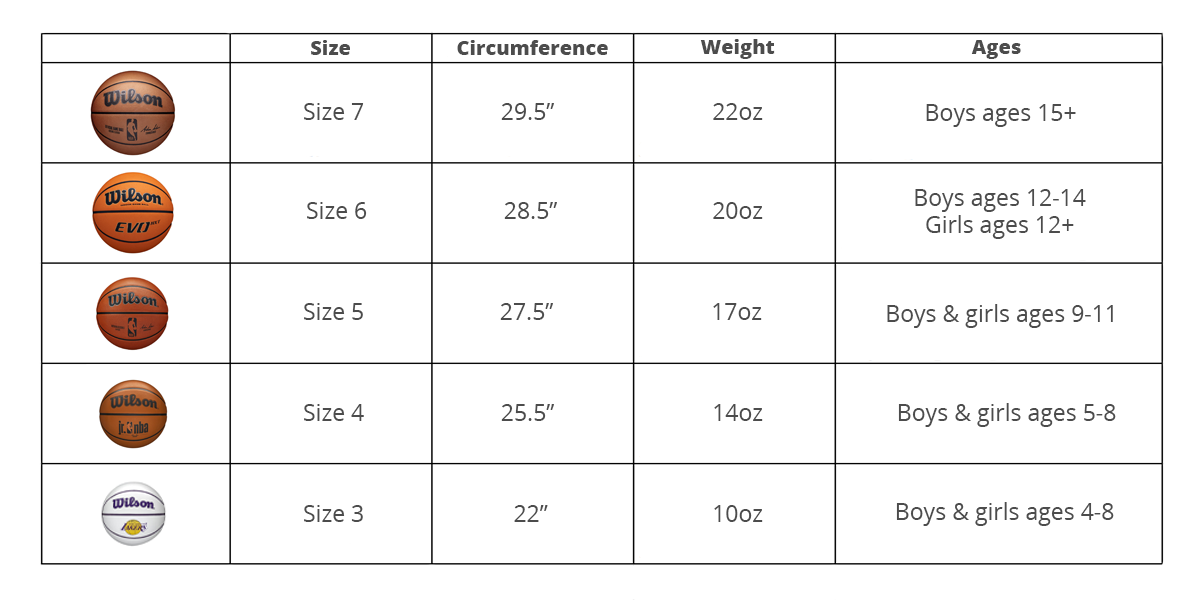
Image Source: sportsedtv.com
Deciphering Basketball Weight Standards
The weight of a basketball might seem like a minor detail, but it plays a crucial role in how the ball bounces, travels through the air, and feels in a player’s hands. Different age groups, genders, and even professional leagues have specific regulations to ensure fair play and optimal performance. This guide will dive deep into the world of basketball weights, from the youngest players to the elite professionals.
The Science Behind the Bounce: Why Weight Matters
The weight of a basketball isn’t just about how heavy it feels. It directly influences several key aspects of the game:
- Trajectory and Airtime: A heavier ball will generally travel a flatter trajectory and may have less airtime than a lighter ball of the same size, assuming equal force is applied. Conversely, a lighter ball can be more susceptible to wind or lofted with more arc.
- Handling and Control: The weight of the ball affects dribbling. A heavier ball can feel more solid and responsive under the dribble, while a lighter ball might feel “floaty” or harder to control, especially for younger players. The grip and feel are also impacted by the ball’s density, which is related to its weight.
- Shooting Mechanics: Players develop muscle memory and shooting techniques based on the weight and feel of the ball they regularly use. A significant change in weight can disrupt a player’s shot.
- Pass Velocity and Accuracy: A ball’s weight affects how much force is needed for a pass. A heavier ball requires more power to throw with speed and accuracy, while a lighter ball might be easier to whip but could be less predictable.
- Durability: While not directly tied to weight regulation, the materials used to achieve a certain weight can also influence the ball’s durability and how it performs over time.
Official Basketball Weight Regulation: The Guiding Principles
The concept of official basketball weight regulation is vital for maintaining consistency and fairness in competitive play. Governing bodies establish these rules to ensure that all players within a specific league or competition are using equipment that meets a defined standard. This prevents any undue advantage or disadvantage based on the equipment itself.
NBA Basketball Weight: The Professional Standard
In the National Basketball Association (NBA), the NBA basketball weight is strictly regulated. The ball used in NBA games must conform to specific dimensions and weight requirements.
- Circumference: The circumference of an NBA basketball is between 29.5 and 30 inches.
- Weight: The NBA basketball weight must be between 20 and 22 ounces (approximately 567 to 624 grams).
This weight is carefully chosen to provide the best combination of handling, shooting, and durability for professional athletes. The materials and construction of NBA balls are also top-tier, contributing to their performance and feel.
FIBA Basketball Weight: The International Benchmarks
For international competitions, the Fédération Internationale de Basketball (FIBA) sets the standards. The FIBA basketball weight also falls within a specific range, ensuring global consistency.
- Circumference: FIBA regulations state the circumference should be between 74.9 cm and 78 cm (which converts to roughly 29.5 to 30.7 inches).
- Weight: The FIBA basketball weight is specified as being between 567 grams and 650 grams (approximately 20 to 22.9 ounces).
As you can see, the FIBA and NBA weight ranges are very similar, with FIBA having a slightly broader upper limit. This slight difference is usually negligible in practice for most players.
Official Basketball Size and Weight: A Comprehensive Look
The official basketball size and weight are often discussed together, as they are intrinsically linked. While weight is crucial, the size of the ball (its circumference and diameter) is equally important for handling and play. Different sizes are designed for different age groups and skill levels.
Men’s Basketball Weight: The Standard for Adult Males
The men’s basketball weight typically refers to the regulation size 7 basketball. This is the ball used in most men’s professional and collegiate leagues worldwide.
- Size: Size 7 basketballs have a circumference of 29.5 inches.
- Weight: As mentioned earlier, the men’s basketball weight is between 20 and 22 ounces (567-624 grams).
This size and weight combination is considered the gold standard for adult male basketball players, offering a substantial feel and requiring a certain level of strength and skill to handle effectively.
Women’s Basketball Weight: Tailored for the Game
Women’s basketball utilizes a slightly smaller and lighter ball than men’s basketball, often referred to as a size 6 ball. This adjustment is made to accommodate the average hand size and strength of female players.
- Size: Size 6 basketballs have a circumference of 28.5 inches.
- Weight: The women’s basketball weight is typically between 18 and 20 ounces (approximately 510 to 567 grams).
While the circumference is an inch less than a size 7 ball, the weight difference is also noticeable. This allows for similar handling and shooting mechanics for female athletes.
Youth Basketball Weight: Growing with the Player
For younger players, the weight and size of the basketball are progressively reduced to aid in development and enjoyment of the game. Using a ball that is too heavy or too large can lead to poor technique and frustration.
Youth basketball weight and size are typically categorized as follows:
-
Size 5 (Ages 9-11):
- Circumference: 27.5 inches
- Weight: 16 to 17 ounces (approximately 454 to 482 grams)
This size is a significant step down, allowing younger players to develop dribbling skills and shooting form without being overpowered by the ball.
-
Size 4 (Ages 8 and Under):
- Circumference: 25.5 inches
- Weight: 14 to 15 ounces (approximately 397 to 425 grams)
These balls are even smaller and lighter, making them very manageable for toddlers and very young children. They help introduce the fundamental concepts of basketball in a fun and accessible way.
Basketball Weight Chart: A Quick Reference
To help visualize the different weights and sizes, here is a basketball weight chart:
| Basketball Size | Circumference (inches) | Circumference (cm) | Weight (ounces) | Weight (grams) | Typical Age Group |
|---|---|---|---|---|---|
| Size 7 (Men’s) | 29.5 | 74.9 – 78 | 20 – 22 | 567 – 624 | 15+ & Adults |
| Size 6 (Women’s) | 28.5 | 72.4 – 73.7 | 18 – 20 | 510 – 567 | 12+ & Women |
| Size 5 (Youth) | 27.5 | 69.8 – 71.1 | 16 – 17 | 454 – 482 | 9 – 11 Years |
| Size 4 (Youth) | 25.5 | 64.8 – 66.0 | 14 – 15 | 397 – 425 | 8 Years & Under |
| Size 3 (Mini) | 22 | 55.9 – 58.4 | 10 – 12 | 284 – 340 | 5 – 7 Years |
Note: Specific weight and circumference ranges can have slight variations depending on the governing body and manufacturer, but these are the generally accepted standards.
The Standard Basketball Weight: A Closer Look
The term “standard basketball weight” most commonly refers to the regulation size 7 ball used in men’s professional and collegiate play, which is between 20 and 22 ounces. This is the weight most people envision when they think of a “regular” basketball.
Basketball Weight in Pounds: Converting for Clarity
Sometimes, you might hear about basketball weight in pounds. To convert ounces to pounds, you divide by 16 (since there are 16 ounces in a pound).
- A basketball weighing 20 ounces is equal to 1.25 pounds (20 / 16 = 1.25).
- A basketball weighing 22 ounces is equal to 1.375 pounds (22 / 16 = 1.375).
So, the basketball weight in pounds for a standard men’s ball is typically between 1.25 and 1.375 pounds.
Factors Influencing Perceived Weight
Beyond the official regulations, several other factors can influence how a basketball feels in terms of its weight and handling:
- Material and Construction: The outer material (leather, composite, rubber) and the internal bladder construction can affect the ball’s density and feel, even if it adheres to the official weight. High-quality composite or leather balls often feel more substantial and offer better grip.
- Inflation Level: An under-inflated ball will feel softer and potentially heavier to dribble, while an over-inflated ball can feel harder and might bounce erratically. Proper inflation is crucial for consistent play.
- Surface Condition: A wet or dirty basketball can feel heavier and harder to grip than a clean, dry one. Wear and tear on the ball’s surface can also alter its feel over time.
- Player Strength and Size: What feels like a standard weight to a strong adult might feel heavy to a young child or someone with less physical strength. This is why appropriate sizing is so important.
Choosing the Right Basketball: Weight and Your Game
When selecting a basketball for personal use, consider your age, size, strength, and the type of play you intend to engage in.
- For young children: Opt for a size 3 or 4 ball. These are lighter and smaller, making them easier to handle and control.
- For pre-teens and young teenagers: A size 5 or 6 ball is generally appropriate. The transition to a size 6 can begin around ages 10-12, depending on the child’s development.
- For adult men: A size 7 ball is the standard.
- For adult women and older teenagers: A size 6 ball is typically recommended.
If you’re playing in a league, always use the officially sanctioned ball for that league to acclimate yourself to its specific weight and feel.
The Evolution of Basketball Weights
While the core principles of basketball weight have remained consistent, the materials and manufacturing processes have evolved significantly. Early basketballs were often made of leather and had a more primitive construction. Modern basketballs utilize advanced synthetic materials, specialized cushioning systems, and precise manufacturing techniques to ensure consistent weight, shape, and performance. This evolution has contributed to the higher level of play seen today, with players having more control and confidence in their equipment.
Frequently Asked Questions (FAQ)
Q1: What is the standard weight of a basketball?
A1: The standard weight for a men’s regulation basketball (Size 7) is between 20 and 22 ounces.
Q2: Can I use a men’s basketball for women’s games?
A2: While technically possible, it is not recommended for official women’s games as the women’s basketball weight and size are smaller. Using a men’s ball might be too heavy and difficult for women to handle effectively.
Q3: Who determines the official basketball weight?
A3: Governing bodies such as the NBA (National Basketball Association) and FIBA (Fédération Internationale de Basketball) determine the official basketball weight regulation for their respective competitions.
Q4: Does the weight of a basketball affect its bounce?
A4: Yes, the weight, along with inflation and material, influences the bounce characteristics of a basketball. A properly inflated ball of regulation weight will have a predictable bounce.
Q5: Is there a difference in weight between indoor and outdoor basketballs?
A5: While there isn’t a strict regulation differentiating indoor and outdoor balls by weight, outdoor balls are often made with more durable rubber or composite materials that can sometimes feel slightly different in weight and texture compared to premium indoor leather balls, even if they adhere to the same size and weight category.
Q6: How do I check if my basketball is properly inflated?
A6: A common test is to drop the ball from waist height. If it bounces back to about chest height, it’s generally considered properly inflated. Refer to the manufacturer’s recommended inflation pressure for the most accurate guidance.
By understanding the specific weights and sizes of basketballs, players at all levels can select the right equipment to enhance their game and enjoy the sport more fully.