
So, how many timeouts are in basketball? The number of timeouts available in a basketball game varies depending on the league and specific rules in play. Generally, teams are allotted a set number of timeouts per half or per quarter, and these can be called by either the coach or players.
Basketball, at its core, is a game of momentum. Teams aim to control the flow, strategize, and often, catch their breath. Timeouts are the primary tool for achieving these objectives. But how many of these vital breaks are granted, and how do they work across different levels of play? This in-depth guide will explore the world of basketball timeouts, from the NBA to international courts, shedding light on the strategies, rules, and history behind these crucial game stoppages. We’ll delve into the different types of timeouts, who can call them, and how they impact the game’s dynamics.
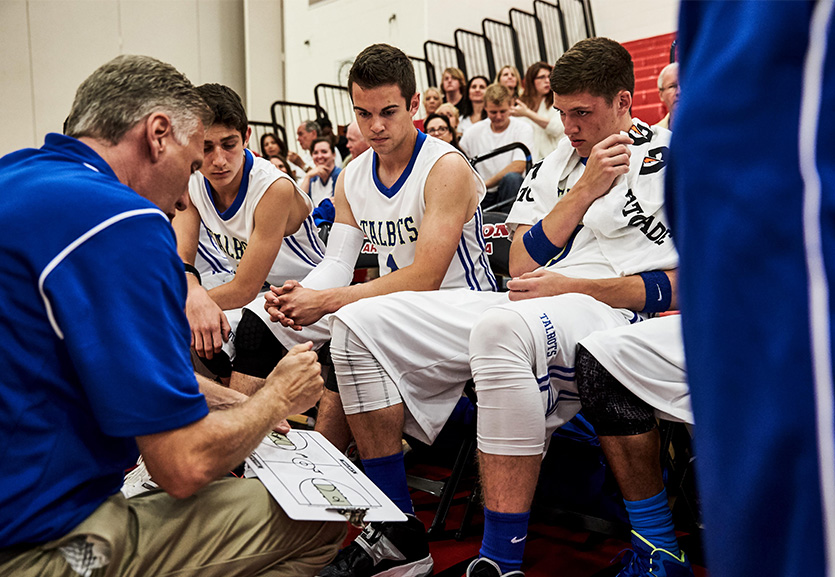
Image Source: www.dickssportinggoods.com
The Purpose of a Timeout
A timeout in basketball serves several critical functions. It’s not merely a pause; it’s a strategic intervention.
- Strategic Adjustments: Coaches use timeouts to discuss plays, make tactical changes, and counter the opponent’s strategies. This is especially important when a team is struggling or the opposing team is on a scoring run.
- Player Rest and Recovery: Basketball is physically demanding. Timeouts allow players to catch their breath, rehydrate, and receive brief medical attention if needed, preventing fatigue and potential injuries.
- Momentum Swings: A well-timed timeout can halt an opponent’s momentum, allowing a struggling team to regroup and re-energize. Conversely, a team on a roll might call a timeout to further press their advantage or to scout an opponent’s adjustment.
- Inbounding the Ball: In certain situations, especially when a team needs to advance the ball to half-court after a made basket or a dead ball, a coach might call a timeout to draw up a specific play and avoid a hurried inbound pass.
- Late-Game Situations: In close games, timeouts become incredibly valuable for managing the clock, setting up plays for final possessions, and preventing turnovers.
Basketball Timeout Rules: A General Overview
While the exact number of timeouts can differ, the fundamental principles of basketball timeout rules remain consistent across most leagues.
- Limited Supply: Teams are given a finite number of timeouts per game. Once a team uses all its allotted timeouts, they cannot call any more.
- Who Can Call: Typically, only a head coach can call a timeout, or in some leagues, a player who is actively playing on the court can signal for a timeout when their team has possession of the ball or during a dead ball situation. This is often referred to as a player timeout.
- Possession: Generally, a team must have possession of the ball or the ball must be dead for a timeout to be granted. A team cannot call a timeout while the opponent has possession and the ball is in play.
- Stoppage of Play: A timeout officially stops the game clock stoppages. The clock only restarts once the ball is inbounded and touched by a player on the court.
- Timeout Duration: The length of a timeout is also regulated and can vary by league.
NBA Timeouts: Precision and Strategy
The National Basketball Association (NBA) has specific rules governing the number and type of timeouts available to each team. These rules have evolved over the years, with recent changes aimed at improving game flow and reducing the frequency of late-game disruptions.
Current NBA Timeout Rules
In the NBA, the number of timeouts is divided between the first half and the second half.
Number of Timeouts:
- Each team is allowed seven (7) timeouts per game.
- These seven timeouts are divided as follows:
- Three (3) timeouts in the first half.
- Four (4) timeouts in the second half.
- One (1) of the second-half timeouts must be used in the final four minutes of the fourth quarter. If a team uses all three of its first-half timeouts, they still retain their four second-half timeouts. If a team has fewer than three first-half timeouts remaining, they cannot carry over additional timeouts to the second half.
Important Considerations for NBA Timeouts:
- Player Timeouts: Players can call timeouts when their team has possession of the ball or during a dead ball situation. This is a player timeout.
- Coach Timeouts: Coaches can also call timeouts under the same conditions.
- No Carryover: Timeouts do not carry over from one half to the next in the sense of a bonus. The allotment resets for the second half, though you can’t have more than 7 total.
- Last Timeout Rule: If a team calls a timeout in the final two minutes of the fourth quarter or overtime, the opposing team is also granted one timeout. This is a recent addition to the rules.
- Timeout Duration:
- Full Timeout: 75 seconds.
- 20-Second Timeout: 20 seconds. These are often referred to as “quick timeouts” or “strategic timeouts” and are primarily used for short breaks or to set up specific plays without consuming much time. Teams are limited to two (2) 20-second timeouts per half.
NBA Timeout Distribution Strategy
The strategic allocation of NBA timeouts is a critical aspect of coaching.
- Conserving for the Fourth Quarter: Coaches often try to conserve at least one or two timeouts for the crucial final minutes of the game, where they can be used to stop the clock, draw up a game-winning play, or disrupt an opponent’s rhythm.
- When to Use a 20-Second Timeout: These are ideal for:
- Stopping an opponent’s scoring run.
- Getting a quick substitution or instruction to a player.
- Setting up a quick offensive play without disrupting the game’s flow too much.
- When to Use a Full Timeout:
- To make significant tactical adjustments.
- To give players extended rest.
- To manage fouls or clock situations in the late game.
College Basketball Timeouts: NCAA Regulations
College basketball, governed by the NCAA, has its own distinct set of timeout rules, which differ slightly from the NBA. These rules are designed to maintain a balance between strategic opportunities and game pacing in the collegiate game.
NCAA Timeout Rules
The NCAA rules are generally straightforward, with a clear allocation of timeouts per half.
Number of Timeouts:
- Each team is allowed five (5) timeouts per game.
- These five timeouts are divided as follows:
- Two (2) timeouts in the first half.
- Three (3) timeouts in the second half.
- There is no rule about a specific number of timeouts that must be reserved for the end of the game. However, the strategic imperative to conserve timeouts for close finishes remains.
Important Considerations for NCAA Timeouts:
- Player Timeouts: In NCAA Men’s Division I basketball, only the head coach can call a timeout. Players cannot call timeouts. This is a significant difference from some professional leagues.
- Coach Timeouts: All timeouts must be requested by the head coach.
- No Carryover: Similar to the NBA, there’s no carryover in the sense of earning more timeouts by not using them. The allotment is fixed per half.
- Timeout Duration:
- Full Timeout: 75 seconds.
- 60-Second Timeout: 60 seconds.
- 30-Second Timeout: 30 seconds.
- Media Timeouts: In NCAA games, specific timeouts are designated as media timeouts. These are typically called at predetermined intervals (e.g., the first media timeout in each half occurs when the first whistle blows after the 14:00 mark). These are in addition to the team’s allotted timeouts, and they also stop the game clock stoppages.
NCAA Timeout Strategy
Coaches in college basketball employ similar strategic thinking for timeouts, though the slightly fewer number of timeouts requires even more careful consideration.
- Crucial Fourth Quarter/Overtime: With only three timeouts in the second half, conserving one or two for the final minutes is paramount.
- Stopping Runs: A key function of timeouts is to stop an opponent’s scoring spree.
- Setting Up Plays: Inbounds plays, late-game offensive sets, and defensive adjustments are all common reasons for calling a timeout.
- Player Rest: While shorter than NBA timeouts, they still offer a brief respite for players.
FIBA Timeouts: International Basketball Regulations
FIBA (International Basketball Federation) governs international basketball, including events like the Olympic Games and the FIBA World Cup. FIBA basketball timeout rules have their own unique structure, often prioritizing a faster pace.
FIBA Timeout Rules
FIBA timeouts are generally simpler and offer fewer opportunities than their NBA or NCAA counterparts.
Number of Timeouts:
- Each team is allowed two (2) timeouts per half.
- There are no additional timeouts for overtime periods; teams that have used both their timeouts in the second half of regulation cannot call any more in overtime.
- In FIBA rules, there’s a distinction between coach timeouts and player timeouts.
Important Considerations for FIBA Timeouts:
- Player Timeouts: A player can call a timeout only when their team is in possession of the ball. This is a player timeout.
- Coach Timeouts: A coach can call a timeout when their team is in possession of the ball or during a dead ball situation.
- Timeout Duration:
- 60 seconds. This is the standard timeout duration for all FIBA timeouts.
- No Media Timeouts: FIBA games typically do not have designated media timeouts that are added to a team’s allotment. The game flow is generally more consistent without these built-in breaks.
- Overtime: If a game goes into overtime, teams do not receive any additional timeouts. They must use any remaining timeouts from regulation.
FIBA Timeout Strategy
The limited number of FIBA timeouts necessitates a highly disciplined approach to their use.
- Infrequent Use: Due to the scarcity, FIBA timeouts are usually reserved for critical moments, such as stopping an opponent’s run, setting up a last-second shot, or during crucial inbound plays.
- Strategic Planning: Coaches must be exceptionally adept at planning their timeouts to maximize their impact without depleting their limited resources.
- Player Initiative: The ability for players to call a timeout can be a significant advantage, allowing for immediate strategic adjustments on the fly when possession is secured.
Other Leagues and Variations
Beyond the NBA, NCAA, and FIBA, various other professional and amateur leagues around the world have their own specific basketball timeout rules. These can include differences in the number of timeouts, their duration, and who can call them.
- WNBA: The Women’s National Basketball Association (WNBA) has rules that are very similar to the NBA, including the number of timeouts and their durations.
- High School Basketball: Rules in high school basketball can vary significantly by state or athletic association, but generally, teams have fewer timeouts than in college or the pros. The specific number is often around 3-5 per game, divided between halves.
- Youth Leagues: For younger players, timeouts are often more frequent and longer to allow for more instruction and rest.
Analyzing Timeout Tactics: When to Call
The decision of when to use a timeout is as important as having them available. Different scenarios call for different strategic approaches.
Stopping Opponent’s Momentum
This is perhaps the most common reason for a timeout. When an opponent goes on a 10-0 run, the defensive intensity drops, and the offensive rhythm is disrupted, a timeout can be a lifesaver. It allows the coach to:
- Calm the team down.
- Remind players of defensive assignments.
- Draw up a specific defensive strategy to slow down the opponent.
- Use it as an offensive opportunity to score and regain momentum.
Setting Up a Crucial Play
In close games, especially at the end of quarters or the game itself, timeouts are invaluable for setting up specific plays.
- Inbounding Plays: A timeout allows a coach to draw up a play for an inbound pass, aiming to get an open shot or create a scoring opportunity. This is particularly important when the ball needs to be inbounded under the basket or from the sideline.
- Last-Second Shots: With seconds left on the clock, a timeout is essential for drawing up a play designed to get the ball to a star player for a game-winning shot.
- Defensive Stands: In the final minutes, timeouts can be used to set up defensive strategies to prevent the opponent from scoring, such as fouling intentionally or setting up a specific defensive alignment.
Managing Fouls and the Clock
In the closing minutes of a close game, managing fouls and the clock becomes paramount.
- Preventing a Turnover: If a team is trapped or about to turn the ball over, a timeout can save possession.
- Strategic Fouling: A team that is trailing might use timeouts to stop the clock after the opponent scores, forcing them to inbound the ball and giving the trailing team a chance to advance the ball and set up their offense.
- Resting Key Players: While not the primary purpose, a timeout can offer a brief rest for players who are fatigued and critical to the team’s success.
The Impact of Media Timeouts
As mentioned in the NCAA section, media timeouts are a significant factor in modern basketball. These are separate from team-called timeouts and are built into the game’s structure to allow television networks to air commercials.
- Automatic Stoppages: Media timeouts occur at predetermined points in each quarter or half, regardless of whether a team wants a timeout.
- Extended Breaks: These breaks are typically longer than standard team timeouts (often 90-120 seconds) and allow for more extensive advertising and analysis.
- Strategic Use: While not directly controlled by teams, coaches can strategically use the time leading up to or immediately following a media timeout to their advantage. For example, if a team is struggling, they might wait for the upcoming media timeout to regroup rather than using one of their own limited team timeouts.
Frequently Asked Questions (FAQ)
Q1: How many timeouts does a team get in a standard basketball game?
A: The number of timeouts varies by league. In the NBA, teams get seven per game. In NCAA men’s basketball, teams get five per game. FIBA rules allow for two per half.
Q2: Can a player call a timeout in any basketball league?
A: No, this depends on the league’s rules. In the NBA and FIBA, players can call timeouts under specific conditions (usually when their team has possession). In NCAA men’s basketball, only the coach can call a timeout.
Q3: What happens if a team runs out of timeouts?
A: If a team uses all of its allotted timeouts, it cannot call any more for the remainder of the game. This can be a significant disadvantage, especially in close games.
Q4: How long is a timeout in basketball?
A: The timeout duration also varies. NBA full timeouts are 75 seconds, while 20-second timeouts are available. NCAA timeouts can be 60 or 30 seconds. FIBA timeouts are 60 seconds.
Q5: Are media timeouts included in a team’s timeout count?
A: No, media timeouts are separate and are not charged against a team’s allotted timeouts. They are scheduled breaks for broadcasting purposes.
Q6: Can a team call a timeout when the other team has the ball?
A: Generally, no. A timeout can typically only be called by the team in possession of the ball or during a dead ball situation.
Q7: What is a coach timeout vs. a player timeout?
A: A coach timeout is called by the head coach. A player timeout is called by a player on the court, usually when their team has possession. The ability for players to call timeouts varies by league.
Q8: Do timeouts carry over from the first half to the second half in the NBA or NCAA?
A: While the number of timeouts allotted resets for the second half, there isn’t a direct “carryover” in the sense of earning extra timeouts. The distribution is fixed per half.
Q9: Why are there so many timeouts in late-game NBA situations?
A: In the final minutes of an NBA game, the clock stops frequently due to fouls, out-of-bounds plays, and team timeouts. This allows both teams to strategize, make substitutions, and manage the clock, leading to a more deliberate and often exciting finish, though it can also slow the game down considerably.
Q10: What is the purpose of a 20-second timeout in the NBA?
A: A 20-second timeout, or “quick timeout,” is used for short strategic adjustments, to halt an opponent’s momentum for a brief period, or to allow players a quick breather without significantly disrupting the game’s flow or using up a valuable full timeout.