
In basketball, the number of timeouts a team receives varies by league and competition. Generally, NBA teams get a set number of timeouts per half and per overtime period, while college and FIBA rules have different structures for basketball timeout rules.
Basketball is a game of strategy, momentum, and critical decision-making. At the heart of many strategic shifts lies the humble timeout. Whether it’s to stop an opponent’s run, draw up a crucial play, or give players a much-needed breather, timeouts are an indispensable tool. But just how many of these strategic pauses are available to a team? This guide will delve into the intricacies of how many time outs do you get in basketball, covering major leagues and exploring the tactical implications of managing timeouts.
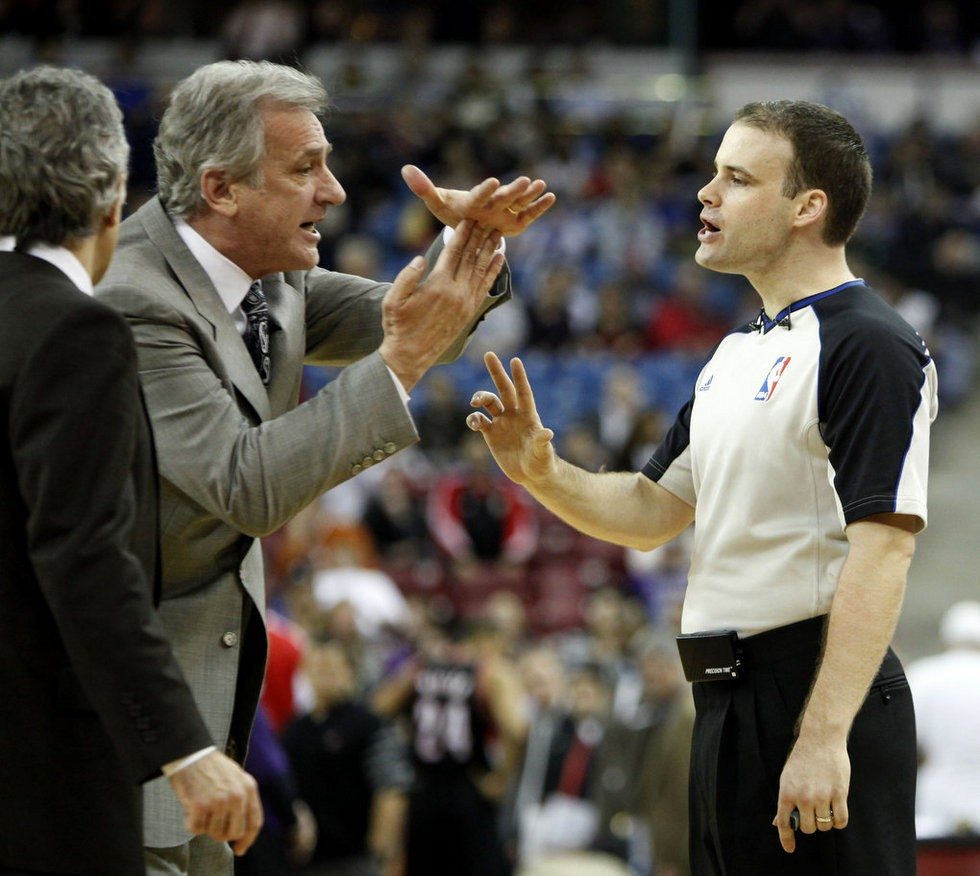
Image Source: www.hoopcoach.org
The Strategic Value of a Timeout
Before we dive into the numbers, it’s important to appreciate why timeouts are so vital. They are not just breaks; they are opportunities.
- Stopping Momentum: When an opponent goes on a scoring spree, a timeout can disrupt their rhythm and allow a team to regroup defensively.
- Drawing Up Plays: Coaches use timeouts to design specific offensive or defensive plays, especially for critical situations like the end of a close game.
- Player Rest and Rehydration: Even short breaks allow players to catch their breath, rehydrate, and receive quick instructions from the bench.
- Making Adjustments: A timeout can be used to address a tactical issue, such as poor defensive assignments or inefficient offensive execution.
- Substitutions and Injury Assessment: A coach can use a timeout to make strategic substitutions or have medical staff assess an injured player.
These strategic advantages make understanding basketball game strategy and the judicious use of timeouts paramount for success.
NBA Timeout Limits: A Detailed Look
The National Basketball Association (NBA) has specific NBA timeout limits that have evolved over the years. Understanding these rules is crucial for fans and aspiring players alike.
Regular Season and Playoffs
In a standard NBA game, each team is allotted seven timeouts per regulation game. These are typically divided:
- Three for the first half.
- Four for the second half.
There are also specific rules about when these timeouts can be called:
- No more than two timeouts can be taken in the final two minutes of the second half.
- In the last minute of the second half, a team can only call one timeout in the final 60 seconds.
Overtime Periods
If a game goes into overtime, each team receives three additional timeouts per overtime period. There are no specific limits on how many can be called in the final two minutes of overtime periods, beyond the total available.
The “Coach’s Timeout” vs. “Player Timeout”
In the NBA, the distinction between a coach’s timeout and a player timeout is important for how they are charged.
- Coach’s Timeout: These are the standard timeouts called by the head coach or any player on the court.
- Player Timeout: A player on the court can also call a timeout, but this is usually when the ball is dead or when their team has possession. If a player calls a timeout when the ball is live and their team does not have possession, it results in a technical foul.
Timeout Duration Basketball
The standard timeout duration basketball in the NBA is 75 seconds. However, there are also 30-second timeouts available. Coaches need to be strategic about which type of timeout they request.
- Full Timeout (75 seconds): Often used for more in-depth strategic discussions, substitutions, and rest.
- 20-Second Timeout: These are shorter timeouts, typically used to stop momentum or make quick adjustments. A team can request up to two 20-second timeouts per half.
Key NBA Timeout Rules Summary:
| Type of Timeout | Number Available Per Team | Duration | Notes |
|---|---|---|---|
| Regular Season/Playoff | 7 | 75 seconds | 3 in first half, 4 in second half. Max 2 in last 2 mins of 2nd half. |
| 20-Second Timeout | Up to 2 per half | 20 seconds | Can be called by coach or player. |
| Overtime | 3 per OT period | 75 seconds | No specific limit in final 2 mins of OT beyond total available. |
Navigating NBA Timeout Strategy:
A crucial aspect of managing timeouts in the NBA is understanding when to use them. A coach might use an early timeout to settle their team after a poor start, or save their timeouts for the critical final minutes of a close game. The ability of players to call timeouts also adds another layer, allowing them to stop play if they see a strategic advantage or if they need to prevent a turnover.
College Basketball Timeouts: NCAA Rules
College basketball, governed by the NCAA, has its own set of college basketball timeouts rules, which differ from the NBA.
Standard Game Structure
In NCAA Division I men’s and women’s basketball, teams are allotted:
- Six timeouts per regulation game.
These are typically divided into two types:
- Four 30-second timeouts.
- Two 60-second timeouts (often referred to as “full timeouts”).
Timeout Restrictions
- No more than three timeouts can be taken in the last five minutes of the second half.
- A team cannot call a timeout if they do not have possession of the ball and the ball is not dead. This is a common point of confusion and can lead to technical fouls.
Overtime Periods
In overtime, each team receives one additional 60-second timeout per overtime period.
Key NCAA Timeout Rules Summary:
| Type of Timeout | Number Available Per Team | Duration | Notes |
|---|---|---|---|
| Regulation Game | 6 | 30 or 60 sec. | 4 of 30-sec, 2 of 60-sec. Max 3 in last 5 mins of 2nd half. |
| Overtime Period | 1 (60-sec) per OT | 60 seconds | No additional 30-sec timeouts in OT. |
College Timeout Strategy:
With fewer overall timeouts, managing timeouts in college basketball becomes even more critical. Coaches often save their 60-second timeouts for crucial moments, such as late-game situations or to make significant strategic adjustments. The limited number means every timeout needs to count. The restriction on calling a timeout without possession also emphasizes the importance of player awareness and communication.
FIBA Timeout Rules: International Play
For international basketball fans and players, understanding FIBA timeout rules is essential. The Fédération Internationale de Basketball (FIBA) governs international play, including the Olympics and the FIBA Basketball World Cup.
Game Structure
FIBA rules are generally simpler than NBA or NCAA rules regarding the number of timeouts.
- Each team is allotted five timeouts per game.
These timeouts are not divided by halves but are available throughout the game.
Timeout Restrictions
- A team can call a timeout when the ball is dead or when they have possession of the ball.
- The coach must signal for the timeout to the scorer.
- If a player on the court requests a timeout, they must be in control of a live ball.
Timeout Duration Basketball
The standard timeout duration basketball under FIBA rules is 60 seconds. This provides ample time for coaches to communicate with their players and make necessary adjustments.
Key FIBA Timeout Rules Summary:
| Type of Timeout | Number Available Per Team | Duration | Notes |
|---|---|---|---|
| Regulation Game | 5 | 60 seconds | Can be called by coach or player with possession (live ball). |
International Timeout Tactics:
The consistent 60-second duration and the simpler structure mean that the primary focus in FIBA play is on efficient communication and strategic execution during the break. The fewer number of timeouts compared to the NBA means coaches must be very judicious in their calls. When to call a timeout is a constant strategic calculation, as wasting a timeout early can leave a team vulnerable in critical late-game situations.
Comparing Timeout Rules Across Leagues
It’s insightful to see how the basketball timeout rules stack up across different major organizations:
| Feature | NBA | NCAA | FIBA |
|---|---|---|---|
| Total Timeouts | 7 per regulation game (plus OT) | 6 per regulation game (plus OT) | 5 per game |
| Timeout Durations | 75-sec full, 30-sec optional | 30-sec and 60-sec full | 60-sec |
| Restrictions | Max 2 in last 2 mins of 2nd half; Max 1 in last min of 2nd half | Max 3 in last 5 mins of 2nd half | Can call when ball is dead or possession |
| Player Timeout | Yes (if ball dead or team has possession) | Yes (if ball dead or team has possession) | Yes (if player has live ball possession) |
This comparison highlights how different leagues emphasize certain aspects of strategy and game management. The NBA’s higher number of timeouts and shorter optional timeouts suggest a greater emphasis on continuous strategic intervention and flow. The NCAA’s balance and restrictions point towards careful preservation of timeouts for critical junctures. FIBA’s streamlined approach emphasizes quick, impactful coaching during breaks.
When to Call a Timeout: The Art of Managing Timeouts
The decision of when to call a timeout is one of the most critical tactical choices a coach makes. It’s not just about having them available, but about using them effectively.
Situations Favoring a Timeout:
- Opponent’s Scoring Run: If the opposing team scores several baskets in a row, a timeout can halt their momentum and allow your team to regroup defensively. This is often a coach’s timeout.
- Bad Offensive or Defensive Sequences: If your team is struggling to execute, turning the ball over, or giving up easy baskets, a timeout can stop the bleeding and allow for corrections.
- Late-Game Situations: In the final minutes of a close game, timeouts are essential for drawing up the winning play, setting up defensive stops, or icing a free-throw shooter.
- Injuries: If a player is injured, a timeout is typically called to allow medical personnel to attend to them.
- Slowing Down Play: If your team is on a fast break or has a significant advantage, a timeout can be used to slow the game down and ensure a good possession.
- Momentum Swings: Even if not on a run, if the energy of the game shifts significantly, a timeout can help regain control.
- Preventing a Turnover: If a player is trapped or about to commit a turnover, they might try to call a player timeout to save possession.
Situations to Reconsider Calling a Timeout:
- When You Have the Lead: If your team is playing well and has a comfortable lead, calling an unnecessary timeout might give the opponent a chance to strategize and close the gap.
- When Your Team is Gaining Momentum: If your team has just made a good defensive stop or hit a big shot, a timeout might disrupt their own positive flow.
- When Your Timeouts are Low: In the late stages of a game, having timeouts remaining can be a significant advantage. Wasting them early can be detrimental.
- When the Ball is About to Go Out of Bounds: If the ball is already out of bounds or about to go out, and your team will retain possession, it’s often better to let play continue unless there’s an immediate need to strategize.
The Impact of Timeout Duration Basketball
The length of timeouts also plays a role in basketball game strategy.
- 75-Second (NBA) / 60-Second (NCAA Full/FIBA) Timeouts: These longer breaks allow for more comprehensive instruction, multiple substitutions, and potentially deeper discussions about strategy. Coaches can use this time to make significant tactical adjustments, such as changing defensive schemes or drawing up a specific set play for an inbound. They also provide a longer rest period for players.
- 30-Second Timeouts (NBA/NCAA): These shorter timeouts are more about immediate adjustments and stopping momentum. They are ideal for quick tactical changes, a brief huddle to reinforce a defensive assignment, or to prevent a turnover. While they offer less rest, their speed makes them valuable for game flow.
Player Timeouts vs. Coach’s Timeouts
While the coach is the primary strategist, player timeouts can be a critical tactical tool.
- Player Initiative: In leagues like the NBA and NCAA, players on the court can call timeouts if they have possession of the ball or if the ball is dead. This empowers players to take agency in managing the game.
- Preventing Mistakes: A quick-thinking player can call a timeout to avoid a turnover, a shot clock violation, or to prevent a costly defensive breakdown.
- Strategic Advantage: A player might call a timeout if they see an opportunity to set up a particular play or exploit a mismatch that the coach hasn’t yet identified.
- Caution: Players must be careful. Calling a timeout without possession or when the ball is live and not in their control can result in a technical foul, which is a significant penalty.
Frequently Asked Questions (FAQ)
Q1: Can a player call a timeout in basketball?
Yes, in leagues like the NBA and NCAA, players on the court can call timeouts provided they have possession of the ball, or the ball is dead. However, calling a timeout when your team does not have possession and the ball is live will result in a technical foul.
Q2: How long is a timeout in basketball?
This varies by league. In the NBA, full timeouts are 75 seconds, with optional 20-second timeouts. In NCAA, timeouts can be 30 or 60 seconds. FIBA timeouts are typically 60 seconds.
Q3: Can you call a timeout anytime you want?
No, you can only call a timeout when your team has possession of the ball or when the ball is dead. Attempting to call a timeout in other situations can result in a technical foul.
Q4: What happens if a team runs out of timeouts?
If a team runs out of timeouts, they simply cannot call any more for the remainder of the game or half, depending on the league’s rules. This can be a significant disadvantage in close games, as they lose a crucial tool for strategy and momentum management.
Q5: Do FIBA, NBA, and NCAA timeout rules differ significantly?
Yes, they do. The NBA generally offers the most timeouts, with a more complex structure. NCAA has fewer timeouts and stricter limitations, especially in the latter stages of the game. FIBA has the fewest timeouts and a simpler, more consistent rule set across the entire game.
Q6: What is the primary purpose of a coach’s timeout?
The primary purposes of a coach’s timeout are to stop an opponent’s momentum, make strategic adjustments, draw up plays, and give players a brief rest and instruction.
Q7: Can a team call consecutive timeouts?
Generally, yes, if they have timeouts remaining and the situation warrants it. However, it’s rare and usually only occurs in very specific circumstances, such as trying to advance the ball after a timeout in the final seconds of a game.
Q8: How does managing timeouts impact basketball game strategy?
Effective managing timeouts is crucial for success. It allows coaches to dictate the pace of the game, react to their opponent’s strategies, conserve energy for critical moments, and execute specific plays designed for winning or defending leads.
By thoroughly grasping the basketball timeout rules for each league, coaches and players can better execute their basketball game strategy, ensuring that these vital pauses in play are used to their maximum advantage.