
A standard basketball game is divided into four quarters. This is the fundamental standard basketball game structure across most professional and amateur leagues.
Navigating the world of basketball often brings up questions about the number of periods in basketball. While the answer seems simple – four – the specifics of duration of basketball quarters and how they function can vary slightly depending on the league. This comprehensive guide will dive deep into the basketball game periods, exploring the NBA quarter length, FIBA quarter length, college basketball quarters, and even youth basketball quarters. We’ll also discuss how these divisions impact basketball game timing and the overall flow of a contest.
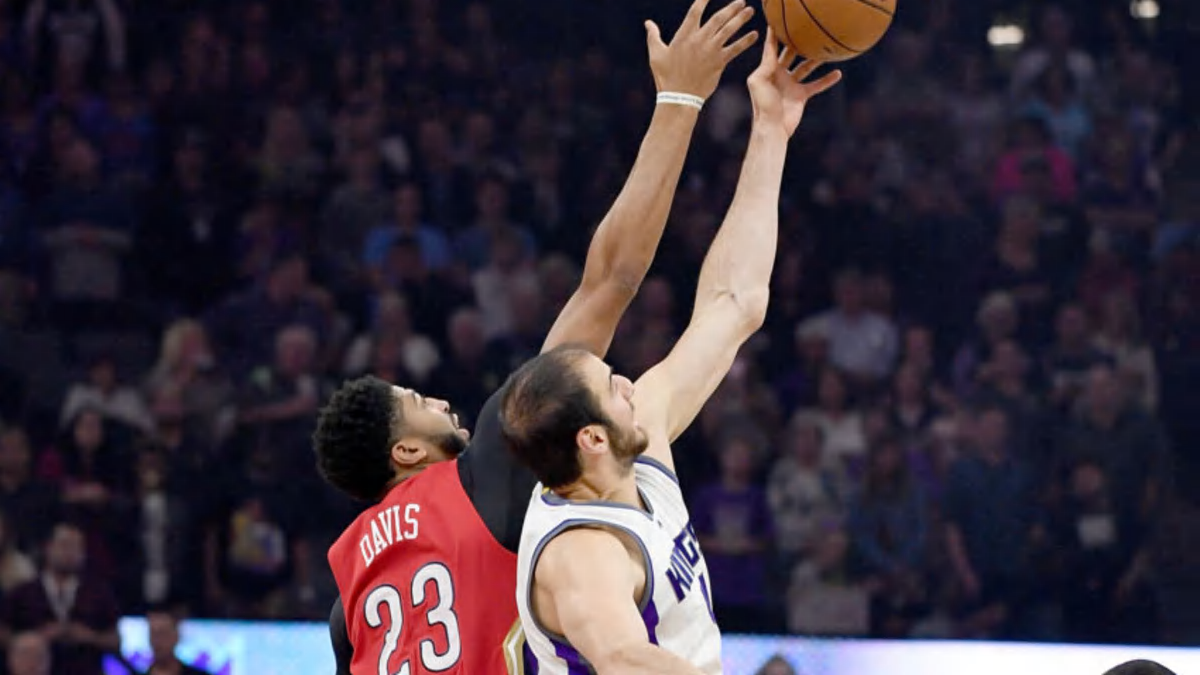
Image Source: images2.minutemediacdn.com
The Foundation: Four Quarters of Play
The concept of dividing a game into distinct periods is not unique to basketball. Many sports utilize periods or halves to structure play, manage time, and allow for strategic adjustments. In basketball, these periods are known as quarters. Each quarter represents a segment of the game where teams compete to score points and defend their basket. The accumulation of points over these four quarters ultimately determines the winner.
What Defines a Quarter?
A quarter is a timed segment within a basketball game. The clock starts at the beginning of the quarter and stops for specific events, such as fouls, out-of-bounds plays, and timeouts. This intermittent clock management is crucial to the sport’s dynamic. Unlike sports with continuous clock operation, basketball’s clock stoppage allows for more strategic planning and breaks in action.
Examining Different League Standards
While the number of quarters remains constant at four, the how long is a quarter in basketball can differ, primarily influenced by the governing body or league. These variations impact the total game time and the pace at which the game unfolds.
NBA Quarter Length
The National Basketball Association (NBA) is the premier professional basketball league in the United States and Canada. The NBA quarter length is set at 12 minutes of actual playing time. This means that for each of the four quarters, the game clock is intended to run for 12 minutes.
- Total Playing Time: 12 minutes/quarter * 4 quarters = 48 minutes.
- Clock Stoppages: It’s important to remember that the 12 minutes refer to playing time. Due to the frequent stoppages in basketball, a typical NBA game will last significantly longer than 48 minutes from start to finish. Factors like timeouts, fouls, out-of-bounds plays, and halftime all contribute to the overall duration.
FIBA Quarter Length
The Fédération Internationale de Basketball (FIBA) governs international basketball competitions, including the Olympic Games and the FIBA World Cup. The FIBA quarter length is slightly shorter than the NBA’s, standing at 10 minutes of actual playing time.
- Total Playing Time: 10 minutes/quarter * 4 quarters = 40 minutes.
- International Play: This 10-minute quarter length is standard in most international professional leagues and tournaments outside of North America. The shorter quarters can sometimes lead to a faster-paced game, with teams needing to be more efficient with their possessions.
College Basketball Quarters
In recent years, college basketball in the United States has seen a shift in its structure. Previously, college basketball games followed an “8-minute halves” format. However, for NCAA Division I men’s and women’s basketball, the rules have been updated to align more closely with professional standards. College basketball quarters now consist of 10-minute periods.
- Transition to Quarters: This change was implemented to provide more strategic opportunities for coaches and to make the game flow more similar to professional basketball.
- Total Playing Time: 10 minutes/quarter * 4 quarters = 40 minutes.
- Halftime: Similar to the NBA, college games also have a halftime break between the second and third quarters.
Youth Basketball Quarters
The youth basketball quarters length can vary significantly depending on the age group, the league, and the specific rules set by the organizing body. The primary goal in youth basketball is often player development and ensuring a positive experience rather than strict adherence to professional time limits.
- Common Durations: You might see quarters ranging from 6 to 8 minutes in length for younger age groups.
- Developmental Focus: The emphasis is on teaching fundamental skills, sportsmanship, and encouraging participation. Shorter quarters can also help keep younger players engaged and prevent fatigue.
- Variations: Some youth leagues might even opt for timed halves instead of quarters, especially for the very youngest players. It’s always best to check the specific rules of the league your child is participating in.
The Role of Halftime and Breaks
Between quarters, there are typically short breaks. The most significant break in the standard basketball game structure is the halftime.
Short Breaks Between Quarters
After the first and third quarters, there are usually brief breaks, often around 2 minutes long. These breaks allow players to catch their breath, receive quick instructions from coaches, and for teams to make substitutions.
The Halftime Break
Halftime occurs after the second quarter and is a more extended break, typically lasting 15 minutes in the NBA and FIBA. This is a period for players to rest, hydrate, and for coaches to make significant strategic adjustments. It’s also the time when halftime entertainment and promotions often take place.
Basketball Game Timing: More Than Just the Clock
Basketball game timing is a complex interplay of the actual playing time within quarters, clock stoppages, timeouts, and breaks.
Clock Stoppage: The Dynamic Element
The most significant factor that extends the duration of basketball quarters beyond their stated length is clock stoppage. The clock stops for:
- Fouls: When a foul is called, the clock stops until the ball is put back into play.
- Out-of-Bounds: If the ball goes out of bounds, the clock stops until possession is awarded and the ball is inbounded.
- Timeouts: Coaches can call timeouts to stop the clock and discuss strategy.
- Substitutions: In some instances, the clock may stop for substitutions.
- Jump Balls: Situations requiring a jump ball to determine possession will also stop the clock.
- Violations: Certain violations, like a traveling call or a double dribble, stop the clock until play resumes.
Timeouts: Strategic Pauses
Timeouts are a crucial element of basketball game timing. They are strategically used by coaches to:
- Stop the opponent’s momentum.
- Draw up new plays.
- Rest players.
- Make substitutions.
- Discuss strategy and make adjustments.
The number and length of timeouts can vary between leagues, but they are always a critical component of how a game unfolds.
Overtime
If a basketball game is tied at the end of the fourth quarter, it goes into overtime. Overtime periods are also timed segments, typically 5 minutes in length, to determine a winner. If the game remains tied after the first overtime period, subsequent overtime periods are played until one team has a lead at the end of an overtime period.
The Impact of Quarter Length on Strategy and Play
The differing NBA quarter length and FIBA quarter length, as well as the adoption of 10-minute quarters in college basketball, have subtle but noticeable impacts on how teams play.
NBA (12-Minute Quarters): Endurance and Depth
The longer 12-minute quarters in the NBA place a premium on player endurance and the depth of a team’s roster.
- Fatigue Management: Players need to maintain a high level of intensity for longer periods within each quarter. This often means substitutions are more critical to keep players fresh.
- Sustained Pressure: Teams can sustain defensive pressure or offensive execution for longer stretches without a break.
- Star Player Impact: Star players often play significant minutes, and their ability to perform consistently over these extended periods is key.
FIBA/College (10-Minute Quarters): Pace and Efficiency
The shorter 10-minute quarters, common in FIBA and now college basketball, can encourage a different style of play.
- Faster Pace: Teams might be more inclined to play at a faster pace to maximize possessions within the shorter timeframe.
- Efficiency Focus: Every possession becomes arguably more critical, as there are fewer opportunities to recover from mistakes.
- Strategic Opportunities: While shorter, the four-quarter format still provides ample opportunities for coaches to implement strategies and make adjustments at quarter breaks.
Frequently Asked Questions (FAQ)
How many periods are in a standard basketball game?
A standard basketball game is divided into four periods, known as quarters.
How long is a quarter in the NBA?
An NBA quarter is 12 minutes of playing time.
How long is a quarter in international basketball (FIBA)?
A FIBA quarter is 10 minutes of playing time.
Do college basketball games have quarters?
Yes, NCAA Division I college basketball games are played in four 10-minute quarters.
What happens if a basketball game is tied at the end of regulation?
If a game is tied, it goes into overtime periods, typically 5 minutes each, until a winner is determined.
Does the clock stop in basketball?
Yes, the clock stops frequently in basketball for fouls, out-of-bounds plays, timeouts, and other specific situations.
Why do basketball games last longer than the total playing time?
The game’s clock management, which involves frequent stoppages, makes the actual duration of a game much longer than the sum of the playing time in its quarters.
By grasping the structure of basketball game periods, the variations in duration of basketball quarters, and the nuances of basketball game timing, you can gain a deeper appreciation for the strategic and physical demands of this exciting sport. Whether it’s the intense 12-minute quarters of the NBA or the strategic 10-minute periods in international play, the fundamental division into four quarters forms the backbone of the standard basketball game structure.