
A standard basketball game is divided into four quarters. This structure is consistent across most professional and collegiate leagues, though the exact length of each quarter can vary.
Basketball, a sport that captivates millions worldwide, is fundamentally organized into distinct segments of play. The question of “how many quarters are in basketball” is a foundational one for anyone looking to grasp the basketball game structure. While the answer is a straightforward four, delving deeper into the specifics of basketball quarters reveals variations and nuances that are crucial for a complete appreciation of the game’s basketball game duration. This guide aims to illuminate the intricacies of basketball game structure, helping you understand the length of basketball game from different perspectives, including the prominent rulesets of the NBA and college basketball.
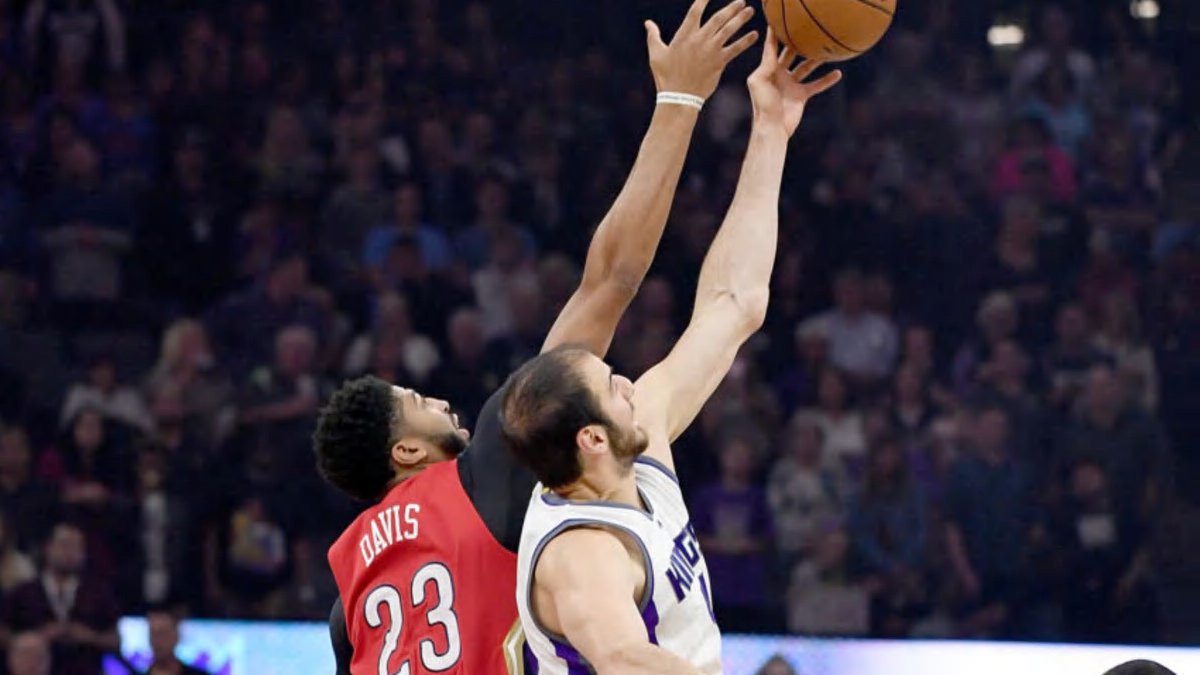
Image Source: images2.minutemediacdn.com
The Fundamental Four: A Universal Truth
At its core, basketball games are played in four distinct periods. This is the most common and widely recognized format. These four basketball periods are designed to provide a structured flow to the competition, allowing for strategic adjustments and managing player fatigue. Each quarter represents a significant chunk of the overall basketball game duration, and the score at the end of the fourth quarter typically determines the winner. If the scores are tied at the end of regulation play, overtime periods are added until a winner emerges. This four-quarter format ensures a balanced and engaging contest.
NBA Quarters: Professional Prowess
In the National Basketball Association (NBA), the pinnacle of professional basketball, each quarter is 12 minutes long. This means that a regulation NBA game, without any stoppages or overtime, consists of 48 minutes of playing time. The NBA’s emphasis on a longer game duration allows for more dramatic shifts in momentum, intricate play-calling, and ample opportunity for star players to showcase their talents. The extended length of basketball game in the NBA also contributes to the overall spectacle and entertainment value for fans.
- Total Playing Time (Regulation): 48 minutes
- Length of Each Quarter: 12 minutes
- Halftime Break: Typically 15 minutes, occurring between the second and third quarters.
- Intermission Between Quarters: Generally 130 seconds (2 minutes and 10 seconds).
The strategic implications of these longer NBA quarters are substantial. Coaches have more time to make adjustments, substitute players, and draw up plays during timeouts. This can lead to more complex game management and a greater emphasis on stamina and endurance for the athletes. The faster pace and extended playing time contribute to the demanding nature of professional basketball.
College Basketball Quarters: The NCAA Difference
College basketball, particularly in the United States under the NCAA (National Collegiate Athletic Association) rules, presents a slightly different structure. While it still adheres to the four-quarter format, the length of basketball game is modified. NCAA men’s and women’s basketball games feature four 10-minute quarters. This results in a regulation playing time of 40 minutes.
- Total Playing Time (Regulation): 40 minutes
- Length of Each Quarter: 10 minutes
- Halftime Break: Typically 15 minutes, occurring between the second and third quarters.
- Intermission Between Quarters: Generally 75 seconds (1 minute and 15 seconds).
The shorter college basketball quarters can sometimes lead to faster-paced games with less opportunity for prolonged strategic lulls. The concentration required for a shorter period can also be a different challenge for players. For fans, this means that the overall basketball game duration is slightly less, but the intensity can remain incredibly high. The NCAA’s approach to basketball quarters influences the tactical decisions made by coaches and the physical demands placed on student-athletes.
FIBA Quarters: Global Standards
The Fédération Internationale de Basketball (FIBA) governs international basketball, including events like the Olympics and the FIBA World Cup. FIBA rules align with the NCAA in terms of quarter length. FIBA quarters are also 10 minutes long, making for a 40-minute regulation game. This standardization is crucial for international competitions, ensuring a consistent playing field and familiar basketball game structure for athletes and fans from different countries.
- Total Playing Time (Regulation): 40 minutes
- Length of Each Quarter: 10 minutes
- Halftime Break: Typically 15 minutes.
- Intermission Between Quarters: Similar to NCAA, usually 75 seconds.
The consistent length of basketball game under FIBA rules facilitates a more predictable flow and allows teams to adapt their strategies across various international tournaments. This global alignment on basketball quarters is essential for the sport’s development and accessibility worldwide.
Youth Basketball Quarters: Developing the Game
For youth basketball quarters, the structure can vary significantly depending on the age group, league, and governing body. However, it is common for youth leagues to adopt shorter quarter lengths than professional or collegiate levels to accommodate younger players’ attention spans and physical capabilities. Quarters might range from 6 to 8 minutes, and some leagues may even play in halves rather than quarters.
- Common Quarter Lengths: 6-8 minutes
- Variations: Some leagues use halves instead of quarters.
- Focus: Player development, skill acquisition, and fostering enjoyment of the game.
The aim in youth basketball is to teach the fundamentals and encourage a love for the sport. Shorter basketball quarters and fewer game stoppages can contribute to a more engaging experience for young athletes, helping them learn the rhythm of the game without becoming overly fatigued or losing focus. The basketball game structure at this level prioritizes learning and participation.
Beyond the Clock: Understanding Game Stoppages
It’s important to note that the stated length of basketball game (e.g., 12 minutes per quarter) refers to the actual playing time. The total duration of a basketball game, from tip-off to the final buzzer, is considerably longer due to various stoppages in play. These stoppages are integral to the basketball game structure and significantly impact the overall basketball game duration.
Types of Stoppages:
- Timeouts: Teams are allotted a certain number of timeouts per game, which they can use to strategize, rest players, or stop the opponent’s momentum. NBA teams have six 75-second timeouts per game, and college teams have five 75-second timeouts.
- Fouls and Free Throws: When a foul is committed, play stops. If the foul results in free throws, the clock remains stopped until the free throws are completed.
- Out of Bounds: If the ball goes out of bounds, play is stopped until the ball is inbounded.
- Substitutions: Players can be substituted into and out of the game during stoppages.
- Violations: Certain violations, such as traveling or double dribbling, result in an immediate stoppage of play and a change of possession.
- Halftime: The break between the second and third quarters is a significant stoppage.
- Quarter Intermissions: Shorter breaks between the first and second, and third and fourth quarters.
- Instant Replay Reviews: In professional and some collegiate games, referees may review certain plays, leading to extended stoppages.
These frequent interruptions mean that a 48-minute NBA game, for example, can easily last 2.5 to 3 hours from start to finish. Similarly, a 40-minute college or FIBA game will typically run for 2 to 2.5 hours. This makes basketball game duration a variable that depends heavily on the number of fouls, timeouts, and other game stoppages.
The Significance of Quarters in Basketball
The division of a basketball game into quarters serves several critical functions:
- Pacing and Strategy: Quarters allow for natural breaks in the action, enabling coaches to reassess strategies, make adjustments, and motivate their players. This is especially important in longer games.
- Player Management: Shorter periods of play help manage player fatigue. Athletes can be substituted during quarter breaks or timeouts, ensuring they can perform at a high level throughout the game.
- Fairness and Structure: The timed quarters provide a clear and fair framework for the game. Each team has an equal opportunity to play within these defined periods.
- Viewer Experience: The structured breaks enhance the viewing experience, allowing for replays, analysis, and commercial breaks without completely disrupting the flow of the game. This contributes to the overall basketball game duration that fans are accustomed to.
How Long is a Quarter in Basketball? A Quick Recap
To reiterate the core question:
- NBA: 12 minutes per quarter
- NCAA (College) & FIBA: 10 minutes per quarter
- Youth Basketball: Varies, but typically shorter (e.g., 6-8 minutes)
This clear delineation into basketball quarters is a cornerstone of the sport’s organization, ensuring that the length of basketball game is managed effectively across different levels of play.
Deciphering the Clock: How Time is Really Measured
In basketball, the clock is crucial. However, it’s not always a continuous countdown. The clock stops for many reasons, as detailed earlier. This is known as stoppage time.
- Running Clock: The clock typically runs continuously when the ball is in play and there are no unusual circumstances.
- Stopped Clock: The clock stops for fouls, out-of-bounds plays, timeouts, violations, and at the end of each quarter (unless the quarter ends on a foul or violation that requires the clock to be extended).
The management of the clock is a critical aspect of game strategy, especially in the final minutes of close games. Teams will often intentionally foul to stop the clock and regain possession, a tactic that highlights the importance of every second within those basketball quarters.
Comparing Game Structures: NBA vs. College vs. FIBA
The slight differences in basketball game structure between the NBA and international/college basketball are noteworthy:
| Feature | NBA | NCAA / FIBA |
|---|---|---|
| Quarters | 4 | 4 |
| Quarter Length | 12 minutes | 10 minutes |
| Regulation Time | 48 minutes | 40 minutes |
| Halftime Break | 15 minutes | 15 minutes |
| Quarter Break | 2 minutes 10 seconds | 1 minute 15 seconds |
| Timeouts | More, different structures | Fewer, different structures |
| Fouls to Foul Out | 6 personal fouls | 5 personal fouls |
| Shot Clock | 24 seconds | 24 seconds |
These differences, while seemingly minor, influence the pace, strategy, and overall basketball game duration. The NBA’s longer quarters and more fouls allowed before disqualification can lead to a more physical and marathon-like contest. Conversely, the shorter quarters in college and FIBA can sometimes result in a more frantic and high-scoring pace, as teams aim to capitalize on every minute of play.
The Spectacle of Overtime
What happens when the score is tied at the end of the fourth quarter? This leads to overtime. In most leagues, including the NBA, NCAA, and FIBA, overtime periods are played to break the tie.
- NBA Overtime: Typically a 5-minute period. If still tied, additional 5-minute periods are played until a winner is determined.
- NCAA & FIBA Overtime: Typically a 5-minute period. If still tied, additional 5-minute periods are played.
Overtime periods are crucial extensions of the basketball game duration, adding an element of sudden-death excitement to the competition. The shorter length of basketball game in college and FIBA means that overtime can have a more significant impact on the overall outcome.
Frequently Asked Questions (FAQ)
Q1: Are there different numbers of quarters in basketball depending on the league?
A1: No, the standard is always four quarters. The difference lies in the length of each quarter and the overall basketball game duration.
Q2: How long is a quarter in the NBA?
A2: An NBA quarter is 12 minutes long.
Q3: How long is a quarter in college basketball?
A3: A quarter in NCAA college basketball is 10 minutes long.
Q4: Does FIBA basketball have the same quarter length as college basketball?
A4: Yes, FIBA quarters are also 10 minutes long.
Q5: What is the total playing time for a regulation NBA game?
A5: A regulation NBA game has 48 minutes of playing time (4 quarters x 12 minutes).
Q6: What is the total playing time for a regulation college or FIBA game?
A6: A regulation college or FIBA game has 40 minutes of playing time (4 quarters x 10 minutes).
Q7: How does the number of quarters affect the overall length of a basketball game?
A7: While the game is divided into four quarters, the actual time from start to finish is much longer due to stoppages like timeouts, fouls, and out-of-bounds plays. The length of basketball game is significantly impacted by these breaks.
Q8: Are youth basketball games played in quarters?
A8: Often, yes, but the length of youth basketball quarters is usually shorter than professional or college games, with some leagues opting for halves instead.
Q9: What happens if the score is tied after four quarters?
A9: If the score is tied, overtime periods are played until one team leads. The length of these overtime periods is also standardized within each league.
Q10: What are basketball periods?
A10: Basketball periods are essentially the quarters of the game – the distinct segments of play that make up the entire contest. The term “periods” is often used interchangeably with “quarters.”
Conclusion
The structure of basketball, particularly its division into four quarters, is a fundamental element that dictates the flow, strategy, and excitement of the sport. Whether you are following the fast-paced action of the NBA with its 12-minute NBA quarters, or the dynamic contests of college and international play with their 10-minute college basketball quarters and FIBA quarters, the core concept remains the same: four periods of play define the regulation basketball game duration. For youth basketball quarters, the emphasis shifts to development with adjusted timings. Fathoming the intricacies of basketball game structure, including the impact of various stoppages on the overall length of basketball game, provides a deeper appreciation for the sport and the athleticism involved. So, the next time you watch a game, you’ll know exactly how many quarters are in basketball, and more importantly, why this division matters.