
The definitive answer to how many inches is a basketball rim is 120 inches. This measurement is universally recognized across professional and amateur basketball leagues worldwide, setting the standard for the game.
The game of basketball, beloved by millions, has a very specific set of rules and dimensions that ensure fair play and a consistent experience for athletes and spectators alike. One of the most fundamental aspects of this is the height of the basketball rim. Knowing how high is a basketball rim is crucial for players of all levels, from casual park games to elite professional competitions. This post will delve into the precise measurement of a basketball rim, explore its historical context, and discuss variations in different leagues and settings. We will cover everything from the standard basketball rim height to the specific NBA rim height and FIBA rim height.
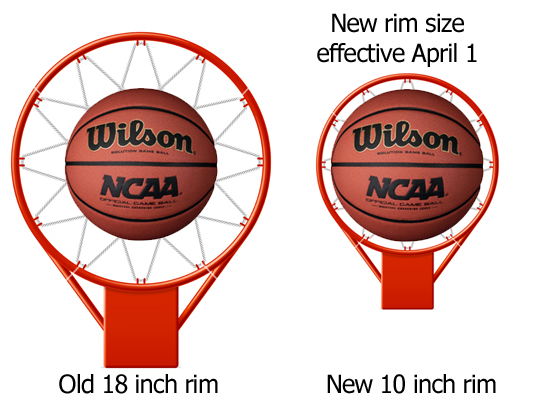
Image Source: blogger.googleusercontent.com
The Standard Basketball Rim Height: A Universal Measure
The basketball hoop height, whether you call it a basketball goal height or a regulation basketball hoop, is set at an unyielding 10 feet from the playing surface to the top edge of the rim. This height translates to 120 inches. This isn’t an arbitrary number; it’s a carefully chosen dimension that dictates much of the game’s strategy, skill, and athleticism.
Think about it: the 10-foot mark is precisely what separates a player’s reach from the thrill of scoring. It influences shooting form, dribbling techniques, rebounding battles, and defensive strategies. Players must develop the strength and agility to jump and reach this height consistently.
Why 10 Feet? Historical Roots of the Basketball Rim Height
The question of why this particular height was chosen is rooted in the very invention of basketball. Dr. James Naismith, the Canadian-American physical education instructor who invented the sport in December 1891, initially used peach baskets as goals. These baskets were nailed to the gymnasium balcony railing at a height of 10 feet.
It’s fascinating to consider that this initial, somewhat improvised measurement has endured for over a century. Naismith’s goal was to create a new indoor sport that was less rough than football and would keep students active during the harsh New England winters. He wanted a game that required skill rather than brute force. The 10-foot height of the basket presented a challenge that required finesse in shooting.
The early games were quite different from what we see today. Players would literally have to retrieve the ball from the basket after each score, as the peach baskets had no bottoms. Eventually, the bottoms were removed to allow the ball to pass through, and the concept of a net emerged. However, the fundamental height of the rim remained steadfast.
Decoding the Basketball Rim Measurement: Inches and Feet
When discussing the basketball rim measurement, it’s essential to be precise.
- In Inches: As established, the official basketball rim is 120 inches above the ground.
- In Feet: This is equivalent to 10 feet.
This consistent measurement applies to almost all organized basketball played globally.
The Anatomy of the Hoop: Rim and Backboard Dimensions
While the height of the rim is paramount, the other components of the basketball goal also have standardized dimensions:
The Rim
- Inner Diameter: The inner diameter of a regulation basketball rim is 18 inches. This means a standard basketball, which has a circumference of about 29.5 inches (for men’s and women’s professional play), fits snugly within the hoop.
- Rim Thickness: The rim itself is typically made of solid steel and is about 5/8 inches to 3/4 inches thick.
The Backboard
The backboard’s dimensions and placement also contribute to the game:
- Standard Backboard Size: Regulation backboards are typically 6 feet wide by 3.5 feet tall (72 inches by 42 inches).
- Backboard Material: Backboards can be made of tempered glass (most common in professional and collegiate play for durability and rebound consistency), acrylic, or wood.
- Positioning: The backboard is mounted so that the front face is 6 inches in from the front of the rim. This 6-inch offset is critical for players attempting bank shots.
NBA Rim Height: The Pinnacle of the Sport
The NBA rim height adheres strictly to the 10-foot standard. The National Basketball Association, being the premier professional basketball league in the world, maintains the regulation basketball hoop height at 120 inches. This consistency ensures that the skills developed by players throughout their careers are applicable on the professional stage.
The intensity and athleticism seen in the NBA are a direct result of mastering the game at this specific height. Dunking, alley-oops, jump shots, and layups all require a precise understanding of how to manipulate the ball at the 10-foot mark.
FIBA Rim Height: Global Consistency
The FIBA rim height is also precisely 10 feet (3.05 meters). The International Basketball Federation (FIBA) governs international basketball competitions, including the Olympics and the FIBA World Cup. Their rules are aligned with the standard 10-foot measurement, ensuring global consistency in the game.
This international standard is vital for promoting basketball worldwide and allowing players to transition between different leagues and competitions without adjusting to a different rim height.
Other Leagues and Variations: Where Differences May Exist
While 10 feet is the standard, there are minor variations to consider, particularly in youth leagues or recreational settings.
Youth Basketball
For younger players, the basketball hoop height is often lowered to make the game more accessible and enjoyable. This allows them to develop proper shooting form and experience success more readily. Common adjusted heights include:
- 8 feet: Often used for very young children (ages 6-8).
- 9 feet: Typically for slightly older children (ages 8-10).
As children grow and develop their skills, they gradually move up to the 10-foot standard. This graduated approach is crucial for fostering a love of the game and preventing frustration.
Recreational and Backyard Hoops
Many residential basketball systems are adjustable. This allows families to set the basketball goal height according to the age and skill level of the players using it. While the flexibility is great for practice and fun, it’s important for serious players to practice on a 10-foot hoop to prepare for official games.
Wheelchair Basketball
In wheelchair basketball, the regulation basketball hoop remains at the standard 10-foot height. However, the game is played from a seated position, which introduces different strategic considerations and requires specialized skills to reach and shoot at the rim.
The Impact of Rim Height on Gameplay
The 10-foot rim height isn’t just a number; it profoundly shapes the entire game of basketball.
Shooting Mechanics
The height of the rim dictates the trajectory and arc of a shot. Players must generate enough force and loft to get the ball to the basket from various distances. This influences shooting techniques, such as the elbow-tucked follow-through and the wrist snap, which create backspin for a softer touch on the ball. Practicing at the official basketball rim helps players refine these mechanics.
Jumping and Athleticism
The ability to jump and reach the 10-foot mark is a significant aspect of a player’s athleticism. Dunking, blocking shots, and grabbing rebounds all require vertical leap. The consistent NBA rim height pushes athletes to develop incredible jumping power and hang time.
Rebounding
Rebounding battles are heavily influenced by the rim height. Players positioned under the basket must anticipate where the ball will bounce off the rim and backboard to secure possession. The 10-foot measurement creates a specific angle and force for rebounds.
Defensive Strategies
Defensive players use the rim height to their advantage by positioning themselves to block shots or deter drives to the basket. The 10-foot barrier is a constant challenge for offensive players trying to score.
The Psychology of the Game
The 10-foot rim also has a psychological impact. It represents a tangible goal, a challenge to be overcome. The visual cue of the hoop at that height is what every player strives to reach and score on.
Visualizing the 10-Foot Mark
To truly grasp the how high is a basketball rim, let’s put it into perspective:
- A standard doorway is typically around 80 inches (6 feet 8 inches).
- A typical single-story house ceiling height is around 96 inches (8 feet).
- The NBA rim height is a full 4 feet higher than a standard doorway and 2 feet higher than a typical ceiling.
This comparison helps illustrate just how significant the 10-foot height is in the context of everyday measurements.
Adjusting to Different Court Dimensions
While the rim height is constant, other basketball court dimensions can vary slightly, especially between indoor and outdoor courts, or between different levels of play. However, the 10-foot rim height is always the constant.
The court itself has specific markings, including the free-throw line, three-point line, and center circle, all designed to complement the action around the 10-foot-high basket.
Maintaining and Measuring a Basketball Hoop
For those who own their basketball systems or are responsible for public courts, ensuring the hoop is at the correct height is vital.
How to Measure Accurately
To measure if your basketball goal height is correct:
- Use a reliable tape measure.
- Start at the ground (the playing surface).
- Measure directly up to the top edge of the rim.
- Confirm the measurement is 120 inches (10 feet).
Many portable basketball hoops have an adjustment mechanism. It’s important to ensure this mechanism is securely locked after adjustment. For in-ground hoops, the installation height is permanent, so accuracy during setup is critical.
Common Issues and Solutions
- Sagging Rim: Over time, especially with heavy use, a rim might sag slightly. If the rim is visibly lower than 10 feet, it needs to be replaced or adjusted if the system allows.
- Uneven Ground: If the playing surface is not level, measuring from different points on the ground could lead to inaccurate readings. Ensure you are measuring from a flat, even part of the court.
The Future of Basketball and Rim Height
While the 10-foot rim height is deeply entrenched in basketball tradition, there are occasional discussions about potential changes, particularly in youth development. However, any significant alteration to the regulation basketball hoop height for professional leagues is highly unlikely due to the sport’s established history and the global standardization of the game. The focus remains on refining skills and strategies within the existing framework.
The consistent basketball rim measurement of 120 inches is a cornerstone of the sport, influencing everything from player development to game strategy. It’s a height that has challenged and delighted athletes for generations, and it will continue to be the defining mark of the game for the foreseeable future. Whether you’re watching the NBA rim height or playing on a local court, that familiar 10-foot barrier is the constant that makes basketball, basketball.
Frequently Asked Questions (FAQ)
Q1: What is the standard basketball hoop height in feet?
A1: The standard basketball hoop height is 10 feet.
Q2: How many inches is a basketball rim from the ground?
A2: A basketball rim is 120 inches from the ground.
Q3: Is the NBA rim height different from FIBA rim height?
A3: No, both the NBA rim height and the FIBA rim height are the same: 10 feet or 120 inches.
Q4: Why is the basketball rim set at 10 feet?
A4: The 10-foot height was established by the sport’s inventor, Dr. James Naismith, when he used peach baskets, and it has remained the standard ever since.
Q5: Can the basketball hoop height be adjusted?
A5: Yes, many residential and portable basketball hoop systems have adjustable heights. Youth leagues often use lower heights for younger players.
Q6: What is the inner diameter of a regulation basketball rim?
A6: The inner diameter of a regulation basketball rim is 18 inches.
Q7: Does the rim height affect how players shoot the ball?
A7: Yes, the 10-foot rim height dictates the necessary arc, force, and trajectory for successful shots, influencing shooting mechanics.
Q8: Are there any basketball variations with different rim heights?
A8: While the standard is 10 feet, youth leagues commonly use lower heights for younger participants. Wheelchair basketball maintains the 10-foot height.
Q9: What are the dimensions of a standard basketball backboard?
A9: A standard backboard is typically 6 feet wide by 3.5 feet tall.
Q10: How far is the backboard from the rim?
A10: The front face of the backboard is positioned 6 inches in from the front of the rim.