
The immediate answer to “How many dots are on a basketball?” is that basketballs don’t actually have “dots” in the way we often imagine. What many people refer to as dots are actually part of the intentional basketball texture designed to improve basketball grip. These are small, raised circular patterns, often called dimples, that are strategically placed across the basketball surface.
This article delves deep into the intricate world of basketball manufacturing, exploring the design, purpose, and variations of these surface features. We’ll examine why they are there, how they affect play, and the science behind their creation, ultimately providing a comprehensive look at the seemingly simple question of “how many dots.”
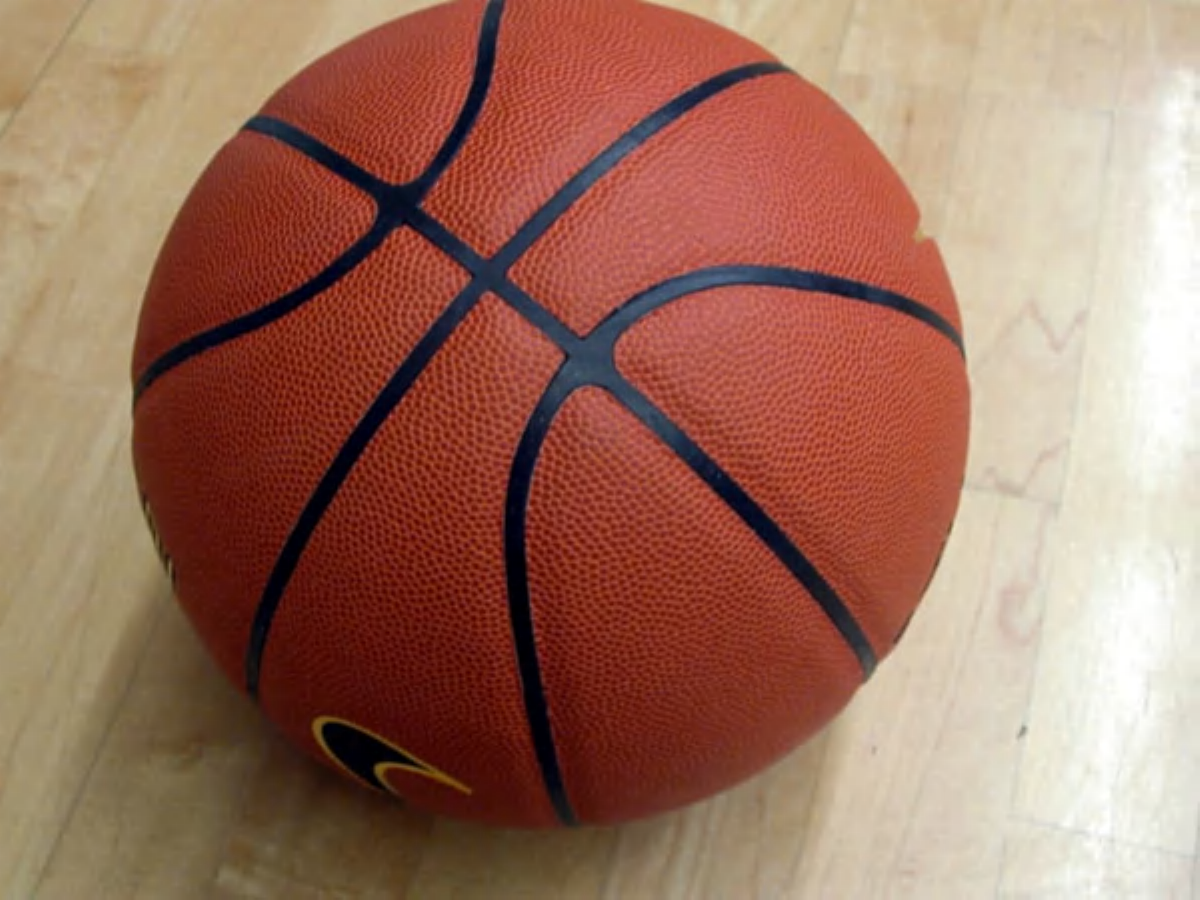
Image Source: images2.minutemediacdn.com
The Illusion of Dots: Deconstructing the Basketball Surface
When we look at a basketball, we see a distinct pattern of raised bumps or dimples across its orange exterior. These are not randomly placed; they are a crucial element of the basketball construction and play a significant role in how the ball feels and performs.
The Purpose Behind the Pitting: Enhancing Basketball Grip
The primary reason for the presence of these textured patterns is to enhance the player’s ability to grip the ball. In sports, especially one as dynamic as basketball, a secure grip is paramount. It allows players to:
- Control the ball: Dribbling, passing, and shooting all require precise control, which is significantly aided by a good grip.
- Generate spin: Spin is essential for accurate shooting and passing. The texture helps players impart that spin effectively.
- Prevent slippage: In humid conditions or when a player’s hands are sweaty, the textured surface helps prevent the ball from slipping out of their grasp.
These small indentations or raised areas create more points of contact between the player’s hand and the ball, increasing friction and providing a more secure hold.
Beyond Grip: The Aesthetics of the Basketball Surface
While grip is the functional driver, the pattern also contributes to the ball’s visual appeal and recognition. The consistent, repeating pattern is iconic and instantly identifiable as a basketball.
Examining the Construction: From Panels to Pores
The journey of a basketball from raw materials to a game-ready sphere involves sophisticated basketball manufacturing processes. The distinctive basketball texture is a key outcome of this process.
The Foundation: Basketball Panels
Traditional basketballs are constructed from multiple pieces of material, known as basketball panels, that are stitched or bonded together. The most common configuration for a regulation basketball is eight panels, forming a spherical shape.
- Leather: High-quality indoor basketballs often use genuine leather. This material is durable and develops a better feel over time, but it requires more careful basketball manufacturing to achieve the desired texture.
- Composite Leather: This is a popular choice for both indoor and outdoor play. Composite leather offers a good balance of durability, feel, and cost. The texture is often molded into the material during the manufacturing process.
- Rubber: Outdoor basketballs typically use rubber for maximum durability and resistance to abrasion on rough surfaces. The dimple pattern is usually molded directly into the rubber during its creation.
The Inner Workings: The Bladder and Winding
Inside the basketball cover, which is the outer layer of panels, lies the bladder. This is an inflatable rubber sac that gives the ball its bounce. The bladder is typically wound with nylon or polyester yarn to maintain its shape and provide structural integrity. This winding process is a critical part of basketball construction.
The Surface Treatment: Creating the Texture
Once the panels are prepared and the ball is assembled, the surface treatment comes into play. This is where the “dots” or dimples are created.
- Molding: For rubber and some composite basketballs, the dimple pattern is molded directly into the material during the manufacturing process. This involves pressing the material into a mold with the desired texture.
- Stamping/Embossing: For leather and some composite balls, a stamping or embossing process might be used to create the raised texture on the panels before assembly.
- Applied Materials: In some cases, a textured coating might be applied to the surface.
Quantifying the “Dots”: A Statistical Approach to Texture
The question of “how many dots” on a basketball is not as straightforward as counting discrete points. The texture is more of a continuous pattern of small, raised bumps. However, we can attempt to quantify this by looking at the typical density and size of these dimples.
Estimating the Number of Dimples
To provide a rough estimate, let’s consider the surface area of a regulation basketball and the approximate size and spacing of these dimples.
- Regulation Size: A regulation NBA basketball has a circumference of approximately 29.5 inches. This translates to a diameter of roughly 9.4 inches and a surface area of approximately 274 square inches.
- Dimple Size and Spacing: The dimples are typically very small, often less than 1 millimeter in diameter, and are spaced relatively closely together. If we were to estimate, there could be several hundred or even a few thousand of these small raised areas across the entire basketball surface.
However, it’s crucial to reiterate that these are not individual “dots” in the way we might think of dots on a page. They form a continuous, textured pattern. Therefore, a precise count is difficult and, frankly, not a practical consideration in basketball manufacturing or play.
The Role of Dimple Size in Basketball Grip
The specific size, depth, and spacing of these dimples are carefully calibrated by manufacturers to optimize basketball grip. Different types of basketballs, designed for different playing surfaces or skill levels, might have slightly different textures.
- Outdoor Basketballs: Often have deeper, more pronounced dimples to provide better grip on rougher surfaces and in varying weather conditions.
- Indoor Basketballs: May have a finer, more uniform texture for a consistent feel and optimal control on clean court surfaces.
Beyond the Dots: Other Factors Affecting Basketball Play
While the texture is a significant element of the basketball surface, several other factors contribute to its performance.
Inflation Pressure
The correct inflation pressure is critical for a basketball’s bounce and feel. Over-inflated balls are hard and difficult to control, while under-inflated balls lack responsiveness. Basketball regulation standards often specify an inflation pressure range.
Material Quality
The quality of the basketball cover material directly impacts its durability, feel, and how well it retains its texture over time. High-quality materials will maintain their grip and structural integrity longer.
Panel Construction
The way the basketball panels are joined together also influences the ball’s feel and aerodynamics. Some balls use traditional stitching, while others use advanced bonding techniques.
Ensuring Quality: Standards in Basketball Manufacturing
Basketball manufacturing is a precise process governed by various standards to ensure consistency and quality.
Basketball Regulation Standards
Organizations like the NBA, FIBA, and NCAA set specific basketball regulation standards for ball size, weight, circumference, and inflation. These standards ensure that all games are played with equipment that meets a consistent benchmark. While there aren’t specific regulations dictating the exact number of “dots,” the overall basketball texture is indirectly influenced by the materials and molding processes used to meet performance criteria.
The Importance of Consistency
In basketball manufacturing, consistency is key. Every ball produced should offer a similar feel and performance characteristics. This requires meticulous quality control throughout the production process, from selecting raw materials to the final inspection of the basketball surface.
Frequently Asked Questions About Basketball Texture
Q1: Are the “dots” on a basketball the same on all balls?
A1: No, the size, depth, and spacing of the textured dimples can vary between different types of basketballs. Indoor, outdoor, and specialty basketballs may have variations in their basketball texture to suit their intended use.
Q2: What material is the basketball cover usually made from?
A2: The basketball cover can be made from genuine leather (often for high-end indoor balls), composite leather (a popular all-around option), or rubber (primarily for durable outdoor balls).
Q3: How does the texture affect how I dribble?
A3: The textured surface, often referred to as dimples, significantly enhances basketball grip. This improved grip allows for better control during dribbling, making it easier to keep the ball close and react quickly to changes in direction.
Q4: Is there a specific name for these “dots” on a basketball?
A4: While often called “dots” or “dimples” informally, the technical term for these surface features is part of the overall basketball texture. They are intentionally designed raised areas that contribute to the ball’s tactile feel and grip.
Q5: Does the manufacturing process impact the number of “dots”?
A5: Yes, the basketball manufacturing process, particularly the molding or stamping techniques used to create the basketball surface, directly determines the pattern and density of the textured areas.
Conclusion: The Nuance of Basketball’s Tactile Design
The seemingly simple question of “how many dots are on a basketball?” leads us into a fascinating exploration of basketball construction, basketball manufacturing, and the science of sports equipment design. While we can’t provide an exact numerical answer for the “dots,” we’ve learned that these features are crucial elements of the basketball texture, vital for enhancing basketball grip and improving player control. The careful calibration of these surface characteristics, along with the quality of materials and adherence to basketball regulation standards, all contribute to the performance of the ball we know and love. The next time you hold a basketball, take a moment to appreciate the intricate design that makes this iconic piece of sporting equipment so effective.