
Determining the correct amount of sand for your basketball base is crucial for stability and safety. Generally, you’ll need between 50 to 100 bags of sand, with each bag weighing around 50 pounds, depending on the size and type of your basketball hoop.
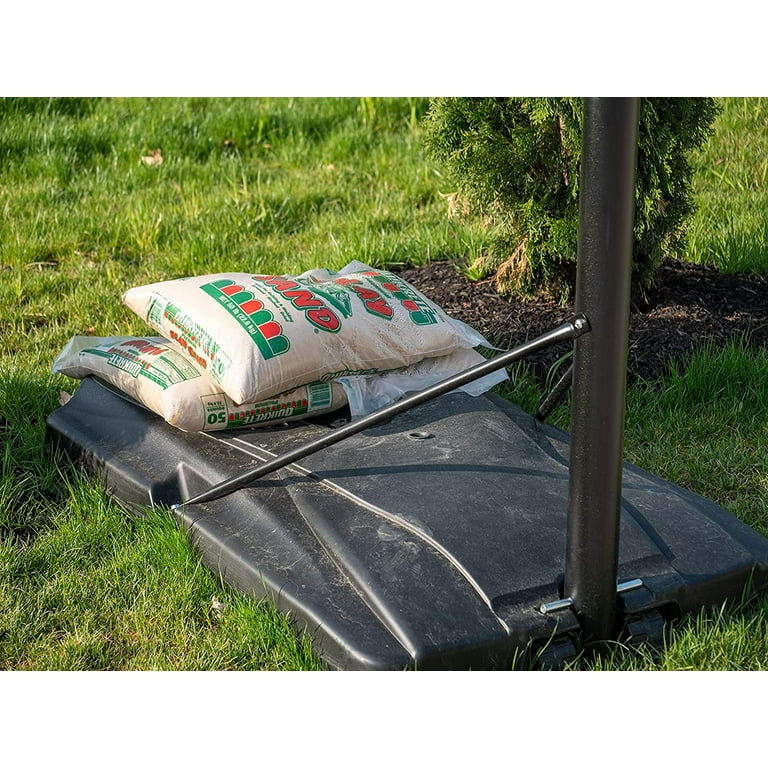
Image Source: i5.walmartimages.com
Why Sand is the Go-To for Hoop Stability
When you’re setting up a portable basketball hoop, stability is key. A wobbly hoop is not only annoying but also dangerous. That’s where sand comes in. It’s the most common and effective way to add weight and keep your hoop grounded, even during intense games or windy conditions. This guide will help you figure out exactly how much sand you need.
The Science Behind Hoop Stability
A basketball hoop’s base acts like an anchor. The heavier the base, the more resistance it offers to tipping or moving. Wind, player interaction, and even the force of the ball hitting the backboard can create forces that try to move the hoop. Sand, being dense and granular, conforms to the shape of the base and fills it thoroughly, creating a solid, heavy mass. This mass counteracts the forces trying to destabilize the hoop.
What Makes Sand the Best Fill for Basketball Base?
- Density: Sand is a dense material. This means a small volume of sand holds a lot of weight.
- Cost-Effectiveness: Compared to other materials, sand is relatively inexpensive and readily available.
- Ease of Use: While heavy, bags of sand are manageable for most people to transport and pour.
- Drainage: Sand allows water to drain through, which prevents freezing and potential damage to the base in colder climates. Water left in a base can freeze, expand, and crack the plastic.
- Conformity: Sand fills every nook and cranny of the base, creating a uniform weight distribution.
Alternatives and Why Sand Often Wins
While sand is popular, other options exist:
- Water: Easy to fill and empty, but can freeze in cold weather, expand, and crack the base. It’s also less dense than sand, meaning you need a much larger volume for the same weight. This often leads to the question, “how much water for basketball hoop base?” and the answer is usually “as much as it can hold,” but the instability remains a concern.
- Gravel or Small Rocks: Similar to sand, but can be rougher on the base and may not fill as uniformly.
- Concrete: Permanent and very stable, but makes the hoop impossible to move. You also have to mix and pour it, which is more labor-intensive.
For portable hoops, sand offers the best balance of stability, portability (you can empty it if you need to move the hoop long-term), and cost.
Calculating Your Sand Needs: A Step-by-Step Approach
So, how many bags of sand for basketball base? It’s not a one-size-fits-all answer. Several factors influence the basketball hoop sand weight you’ll need.
Step 1: Identify Your Hoop’s Base Type and Size
Most portable basketball hoops have a hollow base that you fill. The shape and volume of this base are the primary determinants of how much sand you need.
- Common Base Shapes: Many bases are rectangular or have a U-shape. Some are round.
- Base Volume: Larger bases naturally require more fill. Look for the manufacturer’s specifications for your hoop. They often provide an estimated fill capacity, usually in gallons or cubic feet.
Step 2: Determine the Weight Needed for Stability
The goal is to make the base heavy enough to resist tipping. Manufacturers often recommend a minimum weight.
- Manufacturer Recommendations: Always check your hoop’s manual first. They usually suggest a minimum weight, often around 200-300 pounds for standard home hoops, but can be higher for larger, more professional models. This is often stated as sand needed for basketball base.
- Environmental Factors: If you live in a windy area or expect frequent, vigorous play, you might want to add more weight than the minimum recommendation.
- Player Weight and Age: If children will be playing, they might lean on the pole or hang on the rim. For adult or competitive play, more weight is essential.
Step 3: Convert Volume to Weight (and Bags!)
This is where the math comes in. You need to estimate the volume of your base and then calculate the weight of sand that will fill it.
- Sand Density: Dry sand typically weighs about 100 pounds per cubic foot. However, when packed into bags and then into a base, the effective density can be slightly lower. For practical purposes, assume about 90-100 lbs per cubic foot.
- Bag Weight: Standard bags of play sand are often sold in 50-pound increments. You’ll see “50 lb bags of sand” frequently.
- The Calculation:
- Find Base Volume: If your manual gives it in gallons, convert to cubic feet (1 gallon ≈ 0.133681 cubic feet). If it’s in cubic feet, use that number.
- Calculate Total Weight: Base Volume (in cubic feet) × 90-100 lbs/cubic foot = Total Weight Needed.
- Calculate Number of Bags: Total Weight Needed / Weight per Bag (e.g., 50 lbs) = Number of Bags.
Example Calculation:
Let’s say your basketball hoop base has a capacity of 20 gallons.
- Convert gallons to cubic feet: 20 gallons × 0.133681 cubic feet/gallon ≈ 2.67 cubic feet.
- Calculate total weight: 2.67 cubic feet × 95 lbs/cubic foot (mid-range density) ≈ 254 lbs.
- Calculate number of bags: 254 lbs / 50 lbs/bag ≈ 5.08 bags.
So, for this example, you would need roughly 5 to 6 bags of 50 lb sand. It’s always better to have a little extra.
Step 4: Consider the Type of Sand
The phrase sand filling for basketball goal can refer to different types of sand.
- Play Sand: This is the most common type. It’s washed and screened to remove impurities, making it safe and easy to handle. It’s a good choice for sand needed for basketball base.
- Construction Sand (Mason Sand): This is finer and can be dirtier. It might compact better but could also hold more moisture.
- Coarse Sand (Builder’s Sand): Coarser grains might offer better drainage but could also lead to more settling over time.
For most home basketball hoops, play sand is the best fill for basketball base. It offers a good balance of weight, ease of use, and safety.
Step 5: Packing and Settling
When you first fill the base, the sand might seem loose. As you add more sand and as the base settles naturally, the weight of sand for basketball base will become more concentrated.
- Tap the Base: Gently tapping or shaking the base as you fill it can help the sand settle and reduce air pockets.
- Allow Settling: After filling, let the hoop sit for a day or two. The sand will settle further, and you might need to top it off to reach your desired weight. This is important for achieving optimal basketball hoop sand weight.
Practical Considerations: How Much Sand for Portable Basketball Hoop?
Beyond the calculations, real-world factors influence your basketball hoop base sand quantity.
Hoop Size and Player Level
- Youth Hoops: Smaller hoops designed for younger players might require less weight. A basic hoop for a 5-year-old might be stable with just 2-3 bags of sand.
- Home/Recreational Hoops: These are the most common. Aim for the 50-100 bags range (2500-5000 lbs) depending on the base size and your desire for extra stability. This quantity ensures good sand volume for basketball net base.
- In-Ground or Professional Hoops: While this guide focuses on portable bases, it’s worth noting that in-ground hoops have different anchoring requirements. For high-end portable hoops used for serious play or by adults, you might be looking at the higher end of the sand quantity spectrum, or even considering supplementing sand with water, though sand alone is often preferred.
Environmental Factors
- Windy Locations: If your court is exposed to significant wind, you’ll want to lean towards the higher end of the sand recommendations. Strong winds can exert considerable force on the backboard and rim. Using sandbags for basketball hoop stability can be a good supplement if you’re worried about wind.
- Slope of the Ground: If your hoop is on a slightly uneven surface, the base might be more prone to shifting. Ensuring a solid, well-weighted base is crucial.
The Importance of Even Filling
When filling your base, aim for an even distribution of sand. Don’t just pour it all in one corner. This ensures the weight is centered and provides the best stability. The sand needed for basketball base should fill the entire volume uniformly.
Step-by-Step Filling Process
Here’s a practical guide to filling your basketball hoop base:
-
Gather Your Supplies:
- Bags of play sand (50 lb bags are standard).
- A shovel or scoop.
- A funnel (optional, but helpful for some base openings).
- A level (to ensure the hoop is vertical).
- Gloves (sand can be abrasive).
- Water (optional, to help the sand settle faster, but use sparingly and ensure drainage).
-
Prepare the Hoop Base:
- Place the hoop in its desired location.
- Ensure the base is clean and free of debris.
- If you’re replacing old fill (like water), drain it completely.
-
Start Filling:
- Open a bag of sand.
- Use your shovel or scoop to pour the sand into the base opening.
- If the opening is small, a funnel can be very useful.
- Fill the base gradually, distributing the sand as evenly as possible.
-
Tap and Settle:
- As you add sand, gently tap the sides of the base with your foot or hand. This helps compact the sand and remove air pockets.
- Periodically check that the pole remains vertical. If it starts to lean, add sand to the opposite side to correct it.
-
Check the Level:
- Use a level on the pole to ensure it is perfectly vertical. Adjust as needed by adding sand strategically.
-
Continue Filling:
- Keep adding sand and tapping until the base is full or you reach your desired weight. Remember, the basketball pole sand calculation is a guideline; you might fill it to the brim for maximum stability.
-
Top Off (Optional):
- After the initial fill, let the hoop sit for a day. The sand will settle. You may need to add another bag or two to reach the optimal sand needed for basketball base.
-
Consider Water Assist (Use with Caution):
- Some people add a small amount of water to help the sand settle more quickly and compact. Pour water in slowly, allowing it to drain through the sand. Do not over-saturate, as this can lead to problems if water gets trapped. This is a technique for achieving maximum sand volume for basketball net base.
How Many Bags of Sand for Basketball Base – General Estimates
To give you a clearer picture, here are some rough estimates based on common hoop sizes and typical base capacities:
| Hoop Size (Backboard Diagonal) | Typical Base Volume (Gallons) | Estimated Weight Needed (lbs) | Estimated 50 lb Bags Needed | Notes |
|---|---|---|---|---|
| 32-44 inches | 15-20 | 150-250 | 3-5 | Suitable for younger players or light recreational use. |
| 48-54 inches | 20-30 | 200-350 | 4-7 | Standard home recreational hoops. Good stability for most conditions. |
| 54-60 inches | 30-45 | 300-500 | 6-10 | Larger recreational to mid-range performance hoops. More stability needed. |
| 60+ inches | 45+ | 400-600+ | 8-12+ | High-end portable hoops for serious players. May require specialized filling. |
Important: These are estimates. Always refer to your hoop’s manual for specific recommendations. The basketball hoop sand weight can vary significantly based on the base’s design.
Troubleshooting Common Base Filling Issues
-
Hoop Still Wobbly:
- Did you fill the base completely?
- Is the sand settled? Add more if needed.
- Are you using enough weight? Consider adding more bags.
- Is the ground level? Adjust the hoop’s position if necessary.
- Are you using wind as a factor? Consider sandbags for basketball hoop stability as an addition.
-
Sand Leaking:
- Ensure the base is intact and has no cracks.
- If you added water, ensure the base has proper drainage holes.
-
Difficulty Pouring Sand:
- Use a larger opening or a funnel.
- Pour smaller amounts at a time.
- Consider using a sandbox shovel or a purpose-built sand scoop.
Maintaining Your Sand-Filled Base
Once filled, your sand base should require minimal maintenance.
- Check for Leaks: Periodically inspect the base for any cracks or damage that could cause sand to leak out.
- Top Off if Necessary: Over time, sand can settle. If you notice the hoop becoming less stable, check the fill level and add more sand if required. This is part of maintaining the correct basketball hoop base sand quantity.
- Consider Weather: In freezing climates, ensure the sand is not oversaturated with water, as ice expansion can damage the base. Dry sand is generally safe.
Frequently Asked Questions About Basketball Hoop Sand
Q: Can I use something other than sand to fill my basketball hoop base?
A: Yes, you can use water, but sand is generally preferred for its density, stability, and resistance to freezing. Other materials like gravel are also options, but sand offers the best overall performance for portable hoops.
Q: How much does a bag of sand for a basketball hoop typically weigh?
A: Standard bags of play sand are commonly sold in 50-pound increments.
Q: How do I calculate the exact amount of sand needed?
A: First, find the volume of your hoop’s base (usually in gallons or cubic feet) from the manufacturer’s manual. Then, convert this volume to cubic feet if necessary. Multiply the cubic feet by the density of sand (about 90-100 lbs per cubic foot) to get the total weight needed. Divide this weight by the weight of each bag (e.g., 50 lbs) to find the number of bags.
Q: What is the typical weight of sand for a basketball base?
A: For most recreational portable hoops, a total weight of 200-400 pounds of sand is recommended for good stability. Larger hoops or those used in windy conditions may require 500 pounds or more. This is a key aspect of the basketball hoop sand weight discussion.
Q: How much sand for a 50-gallon basketball hoop base?
A: A 50-gallon base is quite large. First, convert gallons to cubic feet: 50 gallons * 0.133681 cubic feet/gallon ≈ 6.68 cubic feet. Then, calculate the weight: 6.68 cubic feet * 95 lbs/cubic foot ≈ 635 lbs. So, you’d need about 12-13 bags of 50 lb sand. This ensures adequate sand volume for basketball net base.
Q: Is it better to use sand or water for filling a portable basketball hoop base?
A: Sand is generally better because it’s denser than water, providing more stability for its volume, and it doesn’t freeze and expand, which can crack plastic bases. While water is easier to fill and empty, sand offers superior long-term stability.
Q: Can I use sandbags for basketball hoop stability instead of filling the base?
A: Yes, you can place sandbags directly on top of or around the base for added weight and stability. This can be a good temporary solution or a supplement if you don’t want to fill the entire base. However, filling the base directly usually provides more even and secure stability.
By following this comprehensive guide, you’ll be well-equipped to determine the correct basketball hoop base sand quantity and ensure your hoop stands strong for countless games to come.