
Deciphering Plus Minus in Basketball: A Comprehensive Guide
What is plus minus in basketball? Plus minus is a statistic that measures a player’s impact on the game by tracking the point differential for their team when that player is on the court. Essentially, it tells you how many more points your team scored or allowed when a particular player was playing.
Basketball analytics have revolutionized how we evaluate players and teams. Beyond traditional stats like points, rebounds, and assists, advanced metrics offer deeper insights into player performance and contribution. Among these, the plus minus stat stands out as a powerful, albeit sometimes misunderstood, indicator of a player’s overall impact. This article will delve into the intricacies of the plus minus calculation, exploring its various forms, how it’s derived, and what it truly signifies in the context of basketball efficiency.
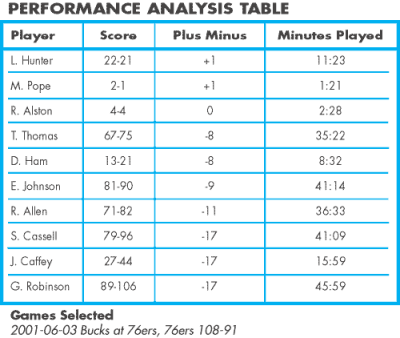
Image Source: coachad.com
The Foundation: What is Plus Minus?
At its core, plus minus is a simple concept:
- Plus (+): A team scores more points than the opponent when a player is on the court.
- Minus (-): A team scores fewer points than the opponent when a player is on the court.
The raw plus minus value is the difference between the points scored by the player’s team and the points scored by the opponent while that player is on the floor.
Example:
If a player is on the court for a period and their team outscores the opponent by 5 points during that time, their raw plus minus for that period is +5. If their team is outscored by 3 points, their raw plus minus is -3.
This basic understanding forms the bedrock of all player plus minus calculations. However, the real value lies in how this raw data is processed and contextualized.
How is Plus Minus Calculated: The Basic Formula
The most fundamental plus minus formula is straightforward:
Plus Minus = (Team Points Scored) – (Opponent Points Scored)
This calculation is performed for every second a player is on the court. Summing these differentials over an entire game, season, or career gives the player’s overall plus minus.
Table 1: Basic Plus Minus Calculation
| Player | Team Points While On Court | Opponent Points While On Court | Player Plus Minus |
|---|---|---|---|
| LeBron | 120 | 110 | +10 |
| AD | 115 | 118 | -3 |
This table shows that when LeBron James was on the court, his team scored 10 more points than the opposition. Conversely, when Anthony Davis was on the court, his team was outscored by 3 points.
Nuances and Variations of Plus Minus
While the basic formula is easy to grasp, the true power of plus minus emerges when we consider its variations and the statistical adjustments made to account for context. This is where the concept of net rating basketball becomes crucial.
1. Raw Plus Minus
This is the most basic form, as described above. It’s simply the point differential a team experiences when a player is on the court. It’s a good starting point but doesn’t account for who else is on the court with the player.
2. Adjusted Plus Minus (APM)
Raw plus minus can be misleading because it doesn’t isolate a player’s individual contribution from the performance of their teammates. A star player might have a high plus minus simply because they are playing with other talented players. Conversely, a role player might have a low plus minus despite playing well if they are sharing the court with less skilled teammates.
Adjusted Plus Minus (APM) attempts to address this by using statistical regression models. APM tries to determine the marginal impact of each player on the team’s point differential, controlling for the effects of their teammates and opponents.
- How APM Works (Simplified):
- It looks at every game and every lineup combination.
- It uses statistical techniques to “unbundle” the contribution of each player from the collective performance of the lineup.
- This involves complex calculations that assign a value to each player based on how their presence or absence affects the team’s scoring relative to the opponent, considering all other players on the court.
APM is a more sophisticated measure of player impact but requires significant data and computational power. It aims to provide a cleaner estimate of a player’s individual contribution to the team’s success.
3. Real Plus Minus (RPM)
Real Plus Minus (RPM) is a more advanced evolution of APM, developed by ESPN. It builds upon APM by incorporating additional data, such as box score statistics, to further refine the player’s estimated impact.
- Key Features of RPM:
- Starts with APM: It uses a regression model similar to APM.
- Incorporates Box Score Data: It integrates traditional stats (points, rebounds, assists, turnovers, etc.) into the model. The idea is that box score stats can provide clues about a player’s performance even when they aren’t directly reflected in the point differential.
- Contextual Adjustments: RPM also tries to account for the quality of teammates and opponents, similar to APM.
RPM is considered one of the most robust advanced metrics for measuring player impact. It attempts to capture a player’s contribution across various aspects of the game, translating them into an estimated point differential impact.
4. On/Off Court Stats
This is a more accessible version of plus minus that highlights the difference in team performance when a specific player is on the court versus when they are off the court.
- On-Court Differential: The point differential for the team when the player is playing.
- Off-Court Differential: The point differential for the team when the player is NOT playing.
- On/Off Difference: On-Court Differential – Off-Court Differential.
This difference indicates how much better or worse the team performs with that player on the floor.
Example:
* Player A is on the court, and their team scores 110 points and allows 100 points (a +10 differential).
* When Player A is off the court, their team scores 90 points and allows 95 points (a -5 differential).
* Player A’s On/Off Difference = (+10) – (-5) = +15.
This suggests that the team is 15 points per 100 possessions better when Player A is playing compared to when they are not.
This stat is often presented as a “per 100 possessions” statistic to normalize for pace of play.
Calculating Team Plus Minus
The concept of plus minus isn’t limited to individual players; it can also be applied to teams. Team plus minus simply refers to the overall point differential of a team over a given period.
Team Plus Minus = Total Team Points Scored – Total Opponent Points Scored
This is a straightforward measure of a team’s dominance or struggles. A positive team plus minus indicates a team that outscores its opponents, while a negative one signifies a team that is outscored.
Net Rating is a related concept, often used interchangeably with team plus minus when measured per 100 possessions.
Net Rating = (Offensive Rating – Defensive Rating)
- Offensive Rating: Points scored per 100 possessions.
- Defensive Rating: Points allowed per 100 possessions.
A positive Net Rating signifies a team that scores more points per 100 possessions than it allows, indicating efficiency and likely success.
What Plus Minus Tells Us About Basketball Efficiency
Plus minus, in its various forms, is a critical metric for assessing basketball efficiency. It goes beyond simply scoring to capture how effectively a player contributes to winning basketball games through their presence on the court.
- Offensive Efficiency: A player with a high offensive plus minus might be a strong scorer, a good passer, or someone who creates opportunities for teammates. Their presence helps the team score more points.
- Defensive Efficiency: A player with a high defensive plus minus likely contributes significantly to preventing the opponent from scoring. This could be through good individual defense, strong help defense, forcing turnovers, or securing rebounds.
- Overall Impact: The overall plus minus or adjusted metrics aim to synthesize these offensive and defensive contributions into a single, comprehensive measure of a player’s impact on the team’s on-court differential.
A player who consistently generates a positive plus minus across different lineups and situations is likely a highly efficient player who positively impacts their team’s ability to outscore opponents.
Factors Influencing Plus Minus
It’s crucial to understand that plus minus is not a perfect stat and can be influenced by several factors:
- Quality of Teammates: As mentioned, playing with other stars can inflate a player’s plus minus. Conversely, playing with less skilled players can depress it.
- Quality of Opponents: Playing against weaker opponents will naturally lead to higher differentials.
- Coaching Schemes and Lineups: A player’s plus minus can be affected by the specific strategies employed by the coach and the lineups they are part of. Some lineups are designed for offense, while others focus on defense.
- Pace of Play: A faster pace means more possessions, which can lead to larger raw plus minus numbers, both positive and negative. This is why per-possession adjustments are important.
- Luck and Variance: Basketball involves an element of luck. A player might have a great plus minus in a game where their teammates shot exceptionally well, or a poor one where the opponent hit improbable shots.
Using Plus Minus in Basketball Analytics
Basketball analytics heavily relies on metrics like plus minus to gain a deeper understanding of player performance and team dynamics.
- Player Evaluation: Beyond traditional stats, plus minus helps identify players who contribute to winning in ways that aren’t always obvious from the box score. It can highlight players who excel at facilitating, defending, or simply making the team better when they are on the floor.
- Lineup Optimization: Coaches and analysts use plus minus data to evaluate the effectiveness of different lineup combinations. Identifying lineups with strong positive plus minus can lead to more playing time for those groups.
- Recruitment and Scouting: When evaluating potential draft picks or free agents, plus minus can provide an additional layer of insight into their true impact beyond their scoring averages.
- Game Analysis: Understanding a player’s plus minus in specific games can offer clues about their effectiveness in crucial moments or against particular opponents.
Limitations of Plus Minus
Despite its utility, plus minus has limitations:
- Correlation vs. Causation: A high plus minus correlates with winning, but it doesn’t always mean the player is the sole cause of that success.
- “Garbage Time” Distortion: In games that are already decided, players on the winning team might accumulate positive plus minus, and players on the losing team might accumulate negative, even if their performance in those minutes wasn’t particularly impactful.
- Small Sample Sizes: Plus minus can be volatile over short periods. A player’s plus minus can fluctuate significantly from game to game due to the factors mentioned earlier. It’s more reliable over larger sample sizes (e.g., a full season).
- Difficulty in Isolating Individual Skill: While APM and RPM try to address this, it remains challenging to perfectly isolate a player’s individual skill from the collective performance of their team.
Plus Minus vs. Other Advanced Metrics
How does plus minus compare to other advanced stats?
- PER (Player Efficiency Rating): PER attempts to combine all per-minute production into one number, adjusting for pace. While useful, PER is primarily box-score dependent and doesn’t directly measure the on-court impact in terms of point differential.
- True Shooting Percentage (TS%): TS% measures shooting efficiency by accounting for 2-point field goals, 3-point field goals, and free throws. It’s a crucial efficiency metric but only focuses on scoring.
- Win Shares: Win Shares is another metric that tries to attribute a portion of a team’s wins to individual players. It’s a valuable stat but approaches player contribution from a different angle than plus minus.
Plus minus complements these metrics by providing a unique perspective on a player’s overall contribution to the team’s scoring performance.
Interpreting Player Plus Minus
When looking at a player’s plus minus:
- Context is Key: Always consider the team they are on, their role, and the quality of their teammates and opponents.
- Look for Trends: A consistently positive plus minus over multiple seasons is more meaningful than a single great or poor season.
- Compare to Teammates: A player’s plus minus is often more informative when compared to their teammates on the same team. This helps understand their relative impact within that specific context.
- Use it with Other Metrics: Don’t rely on plus minus alone. Combine it with other advanced metrics and traditional stats for a well-rounded view of a player’s performance.
A player with a high plus minus is generally contributing positively to their team’s ability to outscore opponents. This could be through scoring, defense, playmaking, or simply making the right decisions on the court that lead to better team outcomes.
Frequently Asked Questions (FAQ)
Q1: Is a higher plus minus always better?
While a higher, positive plus minus generally indicates a player’s positive impact, it’s not always the sole determinant of a player’s value. Context is crucial. A player might have a lower plus minus due to playing on a struggling team or with less talented teammates. Conversely, a star player on a dominant team might have an inflated plus minus due to the overall strength of the team.
Q2: Can plus minus be negative?
Yes, a negative plus minus indicates that the team was outscored by their opponents when that player was on the court. This suggests the player, or the team when they are on the floor, had a net negative impact on the score.
Q3: How does pace affect plus minus?
Pace (the number of possessions per game) can significantly affect raw plus minus. A team that plays at a faster pace will have more possessions in a game, leading to potentially larger positive or negative raw plus minus numbers. This is why analysts often prefer to look at plus minus adjusted for pace or expressed as a per-possession metric.
Q4: What is a “good” plus minus?
A “good” plus minus is relative to the league average and the context of the team and player. In the NBA, a league-average plus minus might be around 0 or slightly positive per 100 possessions. Players who consistently post plus minus values significantly above the average (e.g., +3 or higher per 100 possessions) are generally considered highly impactful.
Q5: How is plus minus different from net rating?
Net rating usually refers to the difference between a team’s offensive and defensive rating (points per 100 possessions). Player plus minus is the point differential for a team when a specific player is on the court. While related, net rating is a team-level stat, and player plus minus is an individual stat that contributes to the team’s overall net rating.
Q6: Are there online resources to track player plus minus?
Yes, many sports statistics websites provide detailed plus minus data for players and teams, including raw plus minus, adjusted plus minus (APM), and real plus minus (RPM). Websites like Basketball-Reference.com, ESPN, and Cleaning the Glass are excellent resources.
Q7: How does plus minus relate to basketball efficiency?
Plus minus is a key indicator of basketball efficiency because it measures how effectively a player contributes to the team’s ability to outscore opponents. A player with a consistently high plus minus is generally efficient, as their presence on the court leads to a better point differential for their team.
By examining the various forms of plus minus and considering the factors that influence it, basketball fans and analysts can gain a much deeper appreciation for the multifaceted ways players contribute to a team’s success. It’s a vital tool in the ever-evolving landscape of basketball analytics, helping us to truly measure player impact and basketball efficiency.