
The height of a basketball rim in the NBA is 10 feet from the surface of the court to the top of the rim. This measurement is standardized across all professional, collegiate, and most amateur basketball leagues.
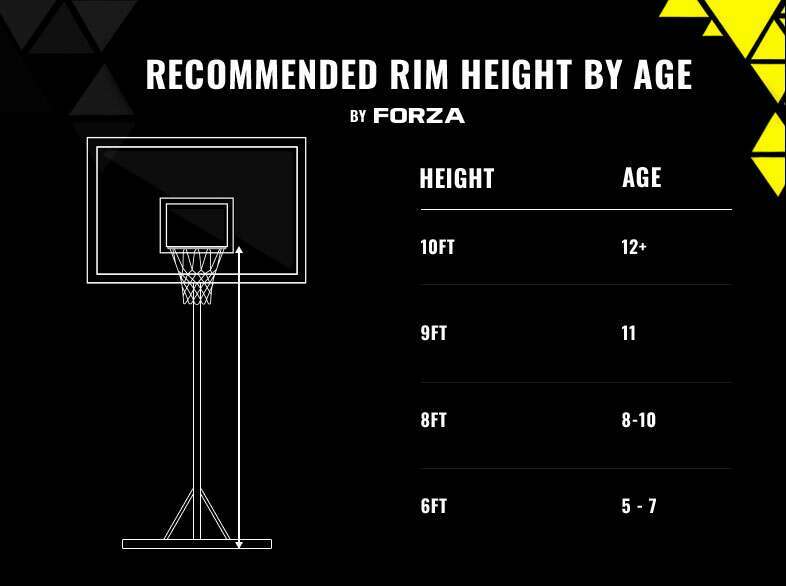
Image Source: nwscdn.com
Deciphering The NBA Hoop Measurement
The iconic image of a basketball player soaring through the air to slam-dunk a ball is indelibly linked to the game. But what exactly is the measurement behind this athletic feat? The NBA rim height is a fundamental aspect of basketball, dictating the challenges and strategies of the sport. The official basketball hoop height in the National Basketball Association, and indeed in virtually all organized basketball, stands at a precise 10 feet. This isn’t an arbitrary number; it’s a carefully considered dimension that impacts everything from offensive plays to defensive strategies, and even the physics of shooting and dunking.
The Significance of the 10-Foot Standard
This seemingly simple measurement of 10 feet is crucial to the game of basketball. It dictates the trajectory of shots, the explosiveness required for dunks, and the strategic positioning of players on the court. A slightly higher or lower rim would fundamentally alter the dynamics of play. The 10-foot standard is a cornerstone of the regulation basketball hoop, ensuring consistency and fairness across all games.
Historical Roots of the Basketball Rim Height
The standard basketball rim height wasn’t always 10 feet. When Dr. James Naismith invented basketball in 1891, he used peach baskets as goals. These were nailed to the gymnasium balcony, which happened to be 10 feet off the ground. The original intent was to have players throw the ball into the basket, and the 10-foot height was largely coincidental with the existing architecture. However, as the sport evolved, the peach baskets were replaced with iron hoops and nets, and the 10-foot height became an established rule. This tradition has persisted through the decades, becoming an integral part of the sport’s identity.
What Constitutes an NBA Regulation Basketball Hoop?
An NBA regulation basketball hoop is more than just the 10-foot height. It includes several key components that ensure fair play and consistent performance:
- Rim: A sturdy steel ring, 18 inches in inside diameter. It’s typically orange or red, though older or non-standard rims might vary in color.
- Net: The net hangs from the rim and is typically 15 to 18 inches long. Its purpose is to slow the ball down as it passes through the hoop, making it easier to see if a shot is successful. The height of NBA basketball net refers to the top of the rim it is attached to.
- Backboard: A rectangular or fan-shaped board, usually made of tempered glass or acrylic. The NBA uses rectangular backboards measuring 6 feet wide by 3.5 feet tall.
- Support Structure: A system that securely holds the hoop and backboard in place, ensuring stability during intense play. This structure must also be designed to keep the rim at the correct height and position relative to the court.
Key Dimensions of the Hoop Assembly
Beyond the NBA rim height, several other measurements define a regulation hoop:
| Component | Dimension |
|---|---|
| Rim Diameter | 18 inches (inner diameter) |
| Rim Thickness | 5/8 inches (or 3/4 inches for breakaway rims) |
| Net Length | 15 to 18 inches |
| Backboard Width | 6 feet |
| Backboard Height | 3.5 feet |
| Rim to Front of Backboard | 4 feet |
| Rim to Back of Backboard | 5 feet |
These precise measurements ensure that the game is played under the same conditions regardless of venue.
The Impact of Hoop Height on Player Performance
The 10-foot rim height is a significant factor in how players develop their skills and athleticism.
Vertical Reach and Dunking
The vertical reach basketball players possess is critical for success, especially for dunking. A player’s vertical reach is their standing reach (how high they can reach while standing flat-footed) plus their vertical jump. For a player to dunk, their vertical reach needs to exceed 10 feet. The average NBA player stands around 6’7″ and has a standing reach of about 8’6″. With a decent vertical leap of around 30-35 inches, many players can comfortably dunk. However, exceptional dunkers often have significantly higher vertical reaches, allowing for more spectacular aerial maneuvers. The NBA slam dunk height is directly related to the player’s ability to get their hands and the ball above the 10-foot rim.
Shooting Mechanics and Trajectory
The height of the rim also profoundly influences shooting mechanics. Players must learn to arc the ball appropriately to clear defenders and drop it into the hoop. A higher arc generally requires more force and precision. Coaches spend countless hours teaching proper shooting form, emphasizing release point, follow-through, and arc, all of which are calibrated to the 10-foot target. The angle at which the ball hits the rim and backboard is also crucial, and this angle is a direct consequence of the rim’s height and the shooter’s release.
Defensive Strategies
The 10-foot rim height impacts defensive strategies as well. Players must position themselves to block shots and alter passes. The height of the rim means that players need to jump high to contest shots effectively. This emphasizes the importance of athleticism and jumping ability in defensive play. Blocked shots often occur at the apex of a player’s jump, just as the offensive player attempts to get the ball over the rim.
Basketball Court Dimensions and Hoop Placement
The placement of the hoop is just as important as its height. The basketball court dimensions are also standardized to ensure fair play. An NBA court is 94 feet long and 50 feet wide. The hoops are positioned at the center of each baseline.
Baseline to Hoop Distance
Each hoop is centered 4 feet in from the baseline. This means the front of the backboard is 4 feet from the baseline, and the rim itself extends another 1.5 feet beyond the backboard’s face. This further 1.5-foot extension means the rim is 5.5 feet from the baseline. This placement is significant for out-of-bounds plays and inbounding the ball.
Sideline to Hoop Distance
The width of the court and the centering of the hoop ensure equal playing space from the sidelines. The hoop is centered across the 50-foot width, placing it 25 feet from each sideline.
Variations in Hoop Height Across Different Leagues
While the 10-foot height is standard for professional and collegiate play, it’s important to note that there are variations in basketball hoop height for younger players. This is done to accommodate their developing skills and physical capabilities.
Youth Basketball Hoop Heights
- Mini-Basketball (Ages 3-5): Often use adjustable hoops that can be set as low as 3 to 4 feet.
- Junior Basketball (Ages 6-8): Typically play with hoops set at 6 feet.
- Intermediate Basketball (Ages 9-12): Commonly use hoops set at 8 feet.
- High School and beyond: The regulation basketball hoop height is 10 feet.
These adjusted heights allow younger players to develop fundamental skills like shooting, dribbling, and passing without the frustration of a rim that is too high for them. As they grow and mature, they transition to the standard 10-foot height, mirroring the progression of the NBA.
The Physics of Shooting at 10 Feet
The 10-foot rim presents a specific challenge from a physics perspective. The optimal shooting angle, known as the “sweet spot,” is crucial for consistent accuracy.
- Arc: A higher arc generally means a softer shot that is more likely to go in if it hits the rim. However, too high an arc can be difficult to control and may lead to airballs.
- Backspin: Backspin on the ball helps it to bounce gently off the rim and backboard, increasing the chances of a favorable bounce.
- Force: The correct amount of force is needed to propel the ball the distance from the shooter to the hoop, considering the arc.
The 10-foot height means that players must master these elements to achieve a high shooting percentage.
Frequently Asked Questions (FAQ)
Q1: Is the basketball rim height the same in all professional leagues?
A1: Yes, the NBA rim height of 10 feet is also the standard for most professional basketball leagues worldwide, including FIBA (International Basketball Federation) competitions.
Q2: Can I adjust my home basketball hoop to 10 feet?
A2: Most residential basketball hoops are adjustable. If you want to replicate the NBA rim height in your driveway or backyard, you can adjust your hoop to 10 feet. Ensure your hoop system is sturdy enough to support this height, especially if it’s a portable unit.
Q3: What is the height difference between a youth basketball hoop and an NBA hoop?
A3: The difference can vary significantly. Youth leagues often use hoop heights ranging from 6 feet to 8 feet for younger age groups, with a gradual increase as players get older, eventually reaching the 10-foot standard basketball rim height.
Q4: Who decided on the 10-foot basketball rim height?
A4: While Dr. James Naismith’s original peach baskets were coincidentally 10 feet high, the official basketball hoop height of 10 feet became formalized as the sport evolved and standardized its rules.
Q5: Does the height of the net affect the hoop height?
A5: The height of the NBA basketball net is measured from the top of the rim. The net itself hangs down and does not alter the fundamental 10-foot height of the rim.
Q6: How does the rim height affect the game of basketball?
A6: The 10-foot rim height dictates shooting arcs, the necessity for vertical leap for dunks and blocks, and influences defensive positioning and offensive strategies. It’s a fundamental element that shapes the athleticism and skill required to play the game at a high level.
Q7: What is a player’s vertical reach in basketball?
A7: Vertical reach basketball refers to the maximum height a player can reach with their hand. It’s calculated by adding their standing reach to their vertical jump height. This metric is crucial for dunking and shot-blocking.
Q8: What are the dimensions of an NBA basketball court?
A8: An NBA court is 94 feet long and 50 feet wide. The basketball court dimensions are crucial for understanding spacing and the geometry of play.
By comprehending the precise hoop measurement NBA players contend with, we gain a deeper appreciation for the skill, athleticism, and dedication required to excel in this beloved sport. The 10-foot rim is more than just a measurement; it’s a challenge that defines the very essence of basketball.