
The regulation basketball hoop height is 10 feet (3.05 meters) from the playing surface to the top edge of the rim. This applies to most levels of competitive basketball, including professional leagues like the NBA and FIBA, as well as standard adult play.
For many players, especially beginners and youth, the sheer height of a regulation basketball hoop can seem daunting. This seemingly simple measurement is actually a cornerstone of the game, dictating strategy, skill development, and the very flow of play. But what exactly goes into this standard? Why 10 feet? And are there any variations? This guide delves deep into the world of basketball hoop heights, from the professional courts to your driveway, providing a comprehensive look at official basketball hoop dimensions and what makes them important.
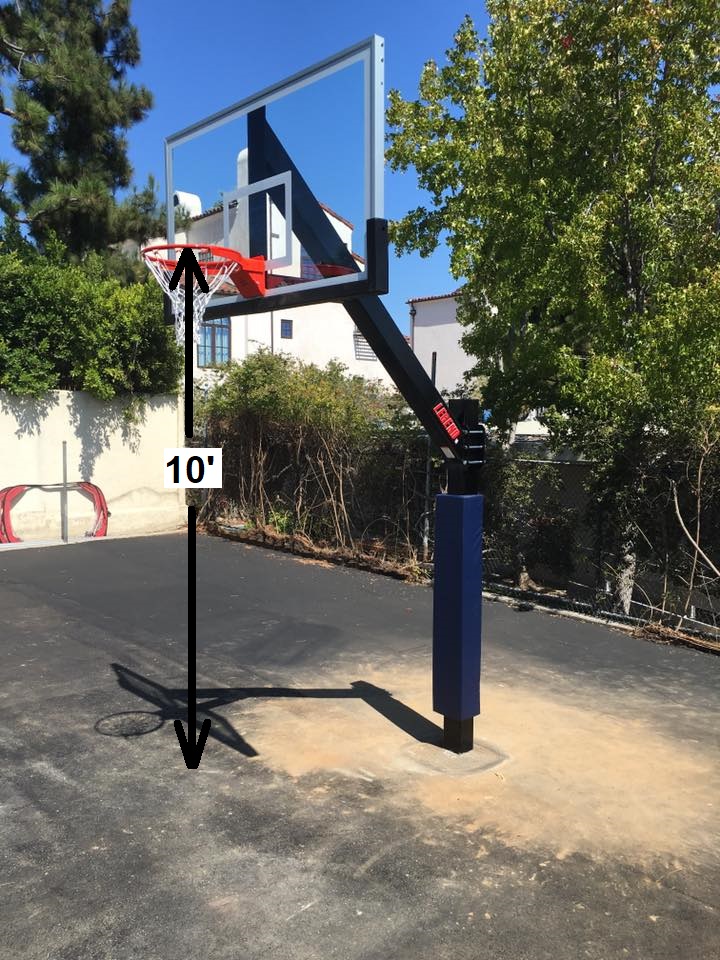
Image Source: www.firstteaminc.com
The Imposing Standard: Fathoming the 10-Foot Hoop
The regulation basketball hoop height of 10 feet is a universally recognized standard across many basketball organizations. This height isn’t arbitrary; it’s a carefully considered element that has evolved with the sport.
The Genesis of the Standard
When James Naismith invented basketball in 1891, the first hoops were actually peach baskets, nailed to the gymnasium balcony railing at Springfield College. The height of these baskets was determined by the railing, which was roughly 10 feet off the ground. So, from its very inception, the 10-foot mark has been intrinsically linked to the game.
- Early Days: Peach baskets were used, and they had bottoms, meaning the ball had to be manually retrieved after each score.
- Evolution of Equipment: Over time, the peach baskets were replaced with iron rims and backboards. The height, however, remained a consistent feature.
- Strategic Implications: The 10-foot height forces players to develop specific skills: shooting technique, jumping ability, dribbling to create space, and strategic positioning. It creates a challenge that requires athleticism and coordination.
NBA Hoop Height vs. FIBA Hoop Height
For the most part, the NBA hoop height and the FIBA hoop height are identical. Both major international and professional basketball bodies adhere to the 10-foot standard. This consistency ensures that players transitioning between leagues or international competitions face the same fundamental challenge at the rim.
| Feature | NBA (National Basketball Association) | FIBA (International Basketball Federation) |
|---|---|---|
| Hoop Height | 10 feet (3.05 meters) | 10 feet (3.05 meters) |
| Rim Diameter | 18 inches (45.7 cm) | 18 inches (45.7 cm) |
| Backboard Size | Varies, typically 72″ x 42″ | Varies, typically 72″ x 42″ |
| Backboard Material | Tempered Glass | Tempered Glass or Acrylic |
This uniformity in official basketball hoop dimensions allows for a global standard of play, making the game accessible and consistent for fans and players worldwide.
Beyond the Pros: Youth Basketball Hoop Height
While the 10-foot hoop is the gold standard for adult and professional play, the youth basketball hoop height is where we see significant variations. This is crucial for player development and safety.
Why Adjust for Youth?
Children, especially younger ones, simply do not have the physical strength, coordination, or height to effectively shoot on a 10-foot hoop. Lowering the rim allows them to:
- Develop Proper Shooting Form: Without the struggle of reaching the hoop, young players can focus on the mechanics of their shot – elbow position, follow-through, and arc.
- Build Confidence: Making shots regularly is essential for enjoyment and motivation. A lower hoop allows for more successful attempts, boosting a child’s confidence and encouraging continued participation.
- Improve Ball Handling and Passing: With more successful shooting, players are more engaged and willing to practice other fundamental skills.
- Prevent Bad Habits: Forcing young players to shoot from far away or use an unnatural shooting motion to compensate for height can lead to ingrained bad habits that are hard to break later on.
Recommended Youth Hoop Heights
The exact height for youth basketball varies by age group and developmental stage. Here are some generally accepted guidelines:
- Ages 6-8: 6 feet (1.83 meters) to 7 feet (2.13 meters)
- Ages 9-10: 8 feet (2.44 meters)
- Ages 11-12: 9 feet (2.74 meters)
- Ages 13+: Transition to 10 feet (3.05 meters)
It’s important to note that these are guidelines. A coach or parent should assess a child’s individual ability and comfort level. Some 11-year-olds might be ready for 10 feet, while some 12-year-olds might benefit from a few more months at 9 feet.
Table: Youth Basketball Hoop Height Recommendations
| Age Group | Recommended Hoop Height (Feet) | Recommended Hoop Height (Meters) |
|---|---|---|
| 6-8 years | 6 – 7 | 1.83 – 2.13 |
| 9-10 years | 8 | 2.44 |
| 11-12 years | 9 | 2.74 |
| 13+ years | 10 | 3.05 |
The Role of Adjustable Basketball Hoops
This is where adjustable basketball hoop height systems become invaluable. For families with children of varying ages or for training facilities that cater to different age groups, an adjustable hoop offers the flexibility to modify the rim height as players grow and improve.
- Versatility: An adjustable hoop can grow with a child, ensuring they always have a hoop that matches their skill level.
- Cost-Effective: Instead of buying multiple hoops for different age groups, one adjustable hoop can serve for many years.
- Durability: Many quality adjustable hoops are built to withstand outdoor elements, making them suitable for both indoor basketball hoop height adjustments and outdoor use.
Deciphering the Standard Basketball Hoop Size
While the height is crucial, other standard basketball hoop size measurements contribute to the overall playing experience and challenge.
Rim Diameter and Thickness
The regulation basketball hoop height is complemented by the rim’s dimensions.
- Diameter: The inside diameter of the rim is 18 inches (45.7 cm). This means the ball, which has a circumference of about 29.5 inches for a men’s official size ball, must pass through a relatively tight opening. This precision encourages accurate shooting.
- Thickness: The rim is typically made of solid steel, about 5/8 inch or 3/4 inch thick. This provides durability and a solid surface for the ball to hit.
Backboard Dimensions and Material
The backboard, while not directly affecting the hoop height, plays a significant role in rebounds and bank shots.
- Size: The official basketball hoop dimensions for the backboard vary, but a common size for professional and college play is 72 inches wide by 42 inches high. Smaller recreational backboards are also common.
- Material: The most common material for high-level play is tempered glass, which offers excellent rebound characteristics. Acrylic and polycarbonate are also used, especially in residential settings, offering good durability and a more affordable price point.
Hoop Mounting and Clearance
The height of the hoop is measured from the playing surface to the top of the rim. This means the support pole or structure holding the hoop must be positioned correctly.
- Clearance: There needs to be adequate space around the hoop for players to maneuver. Regulations often specify minimum clearance distances from the baseline and sidelines.
- Mounting Options: Hoops can be mounted on poles (in-ground or portable), on walls (for indoor or outdoor use), or even on roofs. The mounting method doesn’t change the correct basketball hoop height, but it affects the stability and accessibility of the hoop.
Indoor vs. Outdoor Basketball Hoop Height
Does playing indoors or outdoors change the regulation basketball hoop height? In most sanctioned games, no. The 10-foot standard remains the same. However, the type of hoop and its installation might differ, which can indirectly affect the perception or practicality of the height.
Indoor Courts
- Permanent Fixtures: Indoor basketball hoops are often permanently installed, either attached to a wall or suspended from the ceiling.
- Precision: The court surface is typically a smooth, consistent hardwood, providing a predictable bounce for the ball. The height is accurately set and rarely adjusted.
- Environmental Control: The absence of weather elements means the hoop’s condition is generally more stable.
Outdoor Courts
- Variability: Outdoor hoops can range from permanent in-ground installations to portable units.
- Surface: Playing surfaces can vary from asphalt and concrete to specialized outdoor courts. This can affect the bounce of the ball and the feel of the game.
- Adjustable Hoops: Many residential outdoor basketball systems are adjustable basketball hoop height models, allowing families to tailor the height to different users. While set to 10 feet for adult play, they can be lowered for children.
- Durability: Outdoor hoops are built to withstand sun, rain, and wind, which can sometimes lead to minor wear and tear that might subtly affect the rim’s integrity over long periods.
Regardless of the location, the goal is to maintain the correct basketball hoop height for the intended level of play.
The Impact of Hoop Height on Play
The 10-foot rim height is not just a number; it’s a critical factor that shapes the entire game of basketball.
Shooting Mechanics
- Arc and Distance: Players must develop a proper shooting arc to get the ball over the rim and the defensive players. This requires significant leg and core strength, especially when shooting from further distances.
- Hand Strength and Control: A higher hoop demands better touch and control of the ball to ensure it drops through the net.
Athleticism and Jumping Ability
- Vertical Leap: The 10-foot height directly challenges players’ vertical leap. Dunks and layups require considerable elevation.
- Agility and Footwork: Players need quick feet and good balance to get into scoring positions and elevate effectively.
Rebounding
- Positioning: The height of the hoop influences where rebounds will go. Players must anticipate the bounce off the rim and backboard.
- Boxing Out: Physicality and strength are emphasized in rebounding battles as players vie for position under the basket.
Strategy and Tactics
- Defensive Positioning: The rim height influences how players position themselves defensively, especially around the basket.
- Offensive Spacing: Teams need to spread out to create driving lanes and shooting opportunities, acknowledging the difficulty of scoring close to the rim without proper technique or athleticism.
Achieving the Correct Basketball Hoop Height
For anyone setting up a basketball hoop, whether for a professional facility or a backyard court, ensuring the correct basketball hoop height is paramount.
For Fixed Hoops
- Measurement: Use a reliable tape measure. Measure from the playing surface (court floor, driveway surface) directly up to the highest point of the rim.
- Accuracy: Double-check the measurement. Even a slight deviation can impact the feel of the game. For a permanent installation, ensuring the pole is set precisely at the correct height is critical.
For Adjustable Hoops
- System Mechanism: Familiarize yourself with the specific adjustment mechanism of your hoop. This could involve a crank, a pin system, or a hydraulic lift.
- Regular Checks: Even on adjustable hoops, it’s wise to periodically verify the height with a tape measure to ensure it hasn’t slipped or been incorrectly adjusted.
- Safe Adjustments: Always follow the manufacturer’s instructions for adjusting the hoop, especially for portable units, to ensure stability and safety.
Frequently Asked Questions (FAQ)
Q1: Is the NBA hoop height different from the FIBA hoop height?
No, both the NBA and FIBA use a regulation basketball hoop height of 10 feet (3.05 meters).
Q2: What is the standard basketball hoop size for youth players?
The standard basketball hoop size for youth players varies by age. Generally, it ranges from 6 feet for younger children (6-8 years) up to 9 feet for pre-teens (11-12 years), before transitioning to the 10-foot regulation height.
Q3: Can I adjust the height of my basketball hoop?
Yes, many residential basketball hoops are adjustable basketball hoop height systems designed to allow users to change the rim height. This is very common for outdoor and portable hoops.
Q4: What are the official basketball hoop dimensions besides height?
Besides the regulation basketball hoop height of 10 feet, the rim diameter is 18 inches (45.7 cm). Backboard sizes can vary, but common dimensions are 72 inches wide by 42 inches high.
Q5: Why is the youth basketball hoop height lower than the adult height?
The youth basketball hoop height is lower to help children develop proper shooting form, build confidence, and enjoy the game more. It matches their physical capabilities and developmental stage.
Q6: Does the indoor basketball hoop height differ from the outdoor basketball hoop height?
In official games, no. The regulation basketball hoop height remains 10 feet whether played indoors or outdoors. However, the type of installation and the presence of adjustable systems might be more common in outdoor residential settings.
Q7: What is the correct basketball hoop height for a beginner adult player?
The correct basketball hoop height for any adult player, beginner or experienced, is the regulation 10 feet. However, if a beginner is struggling significantly, they might practice on a lower, adjustable hoop to build fundamental skills before moving to the standard height.
The standard basketball hoop size and its 10-foot height are more than just specifications; they are the foundation upon which the dynamic and exciting sport of basketball is built. From the professional courts of the NBA to the driveway courts of homes, this consistent measurement ensures a challenging and rewarding experience for players of all levels, while age-appropriate adjustments cater to the developmental needs of young athletes.