
Image Source: nwscdn.com
Pro Basketball Hoop Height: How High Is Pro Basketball Hoop?
The pro basketball hoop height is a standard 10 feet from the playing surface to the rim. This is consistent across major professional leagues, including the NBA and FIBA, and represents the official basketball height that players aim for.
For anyone who has ever watched a basketball game, whether it’s a nail-biting NBA showdown or a casual pickup game at the local park, the image of the hoop is instantly recognizable. But have you ever stopped to wonder just how high that hoop actually is? The basketball rim height is a fundamental aspect of the game, dictating the challenge and skill required to score. This post will delve into the specifics of pro basketball hoop height, exploring its history, its impact on the game, and how it compares across different organizations. We’ll also touch upon variations and what makes the standard basketball hoop so universally accepted.
The Unwavering Standard: 10 Feet
The 10-foot rule for the regulation basketball hoop isn’t just an arbitrary number; it’s a carefully established dimension that has shaped the sport for over a century. This height has remained remarkably consistent since the early days of basketball, providing a stable benchmark for player development and competitive play. Whether you’re looking at an NBA hoop height or a FIBA hoop height, that 10-foot mark is the common ground.
A Look Back: The Origins of the Hoop Height
The story of the 10-foot hoop begins with Dr. James Naismith, the inventor of basketball, in 1891. Naismith, tasked with creating a new indoor sport that was less rough than football, initially used peach baskets. These baskets were nailed to the gymnasium balcony railing, which happened to be 10 feet above the floor. This accidental, yet foundational, decision set the precedent for the game we know and love today. The official basketball height was born out of necessity and practicality, and it has endured through the evolution of the sport.
Why 10 Feet? The Science and Strategy Behind the Height
So, what makes 10 feet the perfect height? Several factors contribute to this enduring standard:
- Balance of Skill and Accessibility: The 10-foot height strikes a crucial balance. It’s high enough to require significant athleticism, skill, and strategy to score, preventing easy points. Yet, it’s not so high that it becomes impossibly out of reach for most players, allowing for a wide range of talent to participate and excel.
- Dunking as a Spectacle: The 10-foot rim height makes dunking a highlight-reel play, a display of raw power and athleticism. If the hoop were lower, dunks would be commonplace, diminishing their impact. If it were higher, only a select few exceptionally tall athletes could even attempt them.
- Shooting Arc and Trajectory: The 10-foot height influences the optimal shooting arc. Players must develop a consistent touch and trajectory to get the ball over the rim and into the basket. This encourages finesse and skill over brute force.
- Defensive Challenges: A 10-foot hoop also presents defensive challenges. Players must jump to block shots, protect the rim, and rebound. This height contributes to the dynamic nature of defensive strategies.
Hoop Dimensions: More Than Just Height
While height is paramount, other hoop dimensions are also critical to the game. These include:
- Rim Diameter: The inner diameter of the basketball rim is 18 inches. This allows for a 9.4-inch diameter basketball to pass through comfortably, but still requires accuracy.
- Backboard Size: Backboards vary in size depending on the league and setting. NBA backboards are typically 6 feet wide by 3.5 feet high. College and international courts may have slightly different backboard dimensions.
- Backboard Offset: The distance from the front of the backboard to the center of the rim is 4 feet. This offset is crucial for allowing players to shoot from behind the backboard or to position themselves for rebounds.
These dimensions, combined with the standard basketball hoop height, create the precise playing field that professional athletes master.
The NBA Hoop Height: A Paragon of the Standard
The NBA hoop height is, as we’ve established, the definitive 10 feet. The National Basketball Association has adhered to this standard since its inception, recognizing its role in the game’s aesthetic and competitive integrity. The athleticism on display in the NBA, from gravity-defying dunks to precise jump shots, is a direct product of this established height.
FIBA Hoop Height: A Global Standard
Across the globe, the Fédération Internationale de Basketball (FIBA) also mandates the FIBA hoop height at 10 feet. This global standardization ensures that international competitions, including the Olympics and the FIBA World Cup, are played under the same fundamental rules and conditions as the NBA. This uniformity is vital for the growth and consistency of professional basketball worldwide.
Regulation Basketball Hoop: What Defines It?
A regulation basketball hoop is one that conforms to the official specifications set by governing bodies like the NBA and FIBA. This includes the 10-foot height, the 18-inch rim diameter, and the specific backboard dimensions and offset. Playing on regulation hoops is essential for training and competition, as it prepares athletes for the exact conditions they will face in professional games.
Basketball Net Height: The Visible Indicator
The basketball net height is, in essence, the visible indicator of the 10-foot rim height. The net hangs from the rim and its primary function is to provide visual confirmation of a successful shot and to slow the ball down as it passes through. While the net itself doesn’t affect the physics of scoring, its presence at the 10-foot mark is a constant reminder of the challenge involved.
The Court Dimensions and Their Relationship to the Hoop
It’s also worth noting how the court dimensions interact with the hoop height. Standard NBA and FIBA courts are 94 feet long by 50 feet wide. This expansive playing surface, coupled with the 10-foot hoop, creates the strategic spacing and movement that characterize professional basketball. The distance from the baseline to the basket, the width of the lane, and the placement of the three-point line are all designed with the 10-foot hoop in mind, influencing offensive and defensive strategies.
Youth Basketball Hoop Height: A Gradual Progression
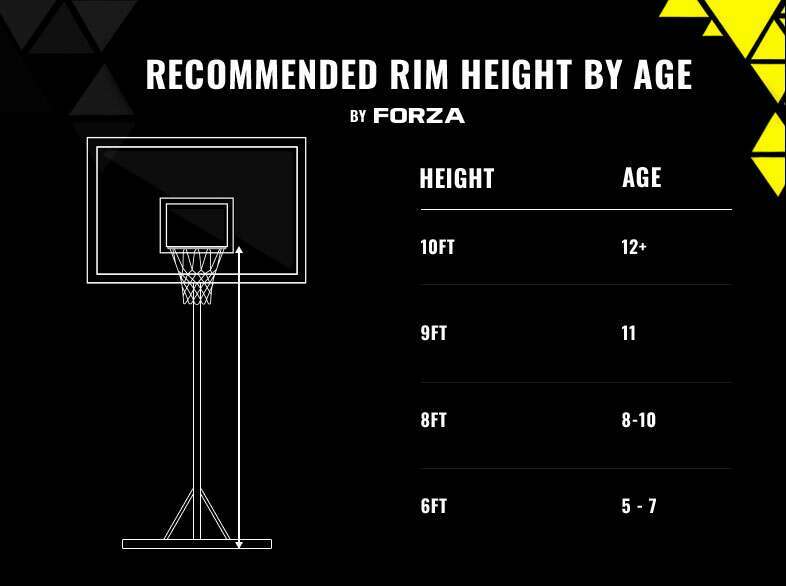
While 10 feet is the professional standard, youth basketball hoop height is often adjusted to accommodate younger players. This is a crucial element in developing fundamental skills and fostering a love for the game.
- Under 6: Hoops are often set at 4 feet.
- Ages 6-8: A common height is 6 feet.
- Ages 8-10: 7.5 feet is often used.
- Ages 10-12: 8 feet becomes more common.
- Ages 12 and Up: Players typically transition to the 9-foot or full 10-foot regulation height as their strength and coordination develop.
This progressive approach ensures that children can experience success and build confidence as they grow, gradually adapting to the challenges of the full regulation basketball hoop height.
The Impact of Hoop Height on Player Development
The consistent 10-foot basketball rim height has a profound impact on how players develop their skills:
- Shooting Mechanics: Players learn to develop a proper shooting arc, wrist flick, and follow-through to get the ball to drop into the basket. This focus on shooting mechanics is fundamental.
- Jumping Ability: To score near the rim, especially through dunks or layups, players must develop vertical leap and explosive power.
- Ball Handling and Footwork: Navigating around defenders and getting into position to shoot or drive requires sophisticated ball-handling and footwork, all aimed at conquering that 10-foot barrier.
- Rebounding: The height of the hoop also makes rebounding a critical skill. Players learn to anticipate the bounce of the ball off the rim and backboard to secure possessions.
Innovations and Variations: Are There Any?
While the 10-foot standard is widely adopted, there are occasional discussions or minor variations in specific contexts. For instance, some recreational leagues or training facilities might experiment with slightly different heights to emphasize specific skills or to cater to a broader age range. However, in any context striving for professional play or standardization, the 10-foot mark remains the undisputed king.
It’s important to distinguish between temporary or developmental adjustments and the established official basketball height for competitive play. The latter is firmly set at 10 feet.
Equipment Considerations for Home Courts
If you’re setting up a basketball hoop at home, choosing the right height is important. For a family with children of varying ages, an adjustable basketball hoop is an excellent investment. This allows you to set the youth basketball hoop height appropriately for younger players and then raise it to the full 10 feet as they grow or when adults want to play. This flexibility ensures the hoop can be enjoyed by everyone and facilitates proper skill development.
When considering home hoops, look for products that can reliably reach and maintain the NBA hoop height for those aspiring to play at a higher level. The stability and build quality of the hoop system, along with the hoop dimensions, are also key factors in ensuring a realistic playing experience.
Frequently Asked Questions (FAQ)
Q1: Is the basketball hoop height different in different professional leagues?
No, the pro basketball hoop height is consistently 10 feet across major professional leagues like the NBA and FIBA. This is the regulation basketball hoop height.
Q2: What is the history behind the 10-foot hoop height?
The 10-foot height originated with Dr. James Naismith, the inventor of basketball, who used peach baskets nailed to a balcony railing 10 feet above the floor in 1891. This became the official basketball height.
Q3: Why is the hoop height 10 feet and not lower or higher?
The 10-foot height balances skill and accessibility, makes dunking a spectacular play, influences shooting trajectories, and presents defensive challenges. It’s a height that promotes a dynamic and engaging game.
Q4: Does the basketball net height affect the game?
The basketball net height is essentially the visual representation of the rim’s height. While it slows the ball down and confirms a score, it doesn’t alter the physics of scoring dictated by the rim’s height.
Q5: Are there different hoop heights for youth players?
Yes, youth basketball hoop height is typically adjusted to lower levels to accommodate the developmental stages of children, gradually increasing as they get older and stronger. This ranges from 4 feet for very young children to 8 or 9 feet for older youths before reaching the full 10 feet.
Q6: What are the standard hoop dimensions besides height?
Besides the 10-foot height, the standard hoop dimensions include an 18-inch inner rim diameter and a backboard typically 6 feet wide by 3.5 feet high with a 4-foot offset from the backboard to the rim.
Q7: Can I get a basketball hoop for my home that reaches 10 feet?
Yes, many residential basketball hoop systems are adjustable and can be set to the full 10-foot NBA hoop height. It’s important to choose a sturdy and well-made system for safe and enjoyable play.
Conclusion
The 10-foot pro basketball hoop height is more than just a measurement; it’s a cornerstone of the sport. From its humble beginnings with peach baskets to the electrifying dunks and precision shooting seen in today’s professional games, this unwavering standard has shaped player development, strategic play, and the very spectacle of basketball. Whether you’re a seasoned professional, a budding youth player, or a casual fan, the 10-foot hoop remains the iconic target that defines the challenge and excitement of this beloved game. It is the enduring symbol of hoops, representing aspiration, skill, and the universal pursuit of sinking that perfect shot.