
A professional basketball hoop is 10 feet (3.05 meters) high from the court surface to the top edge of the rim. This is the universally accepted standard for professional leagues and competitive play worldwide.
The question of “how tall is a basketball hoop” might seem straightforward, but delving into the specifics of professional basketball hoop height reveals a fascinating uniformity that underpins the entire sport. Whether you’re watching the NBA, FIBA tournaments, or even aspiring to play at a collegiate level, the regulation basketball hoop height remains a constant. This consistency is crucial for fair competition, skill development, and the very essence of the game as we know it.
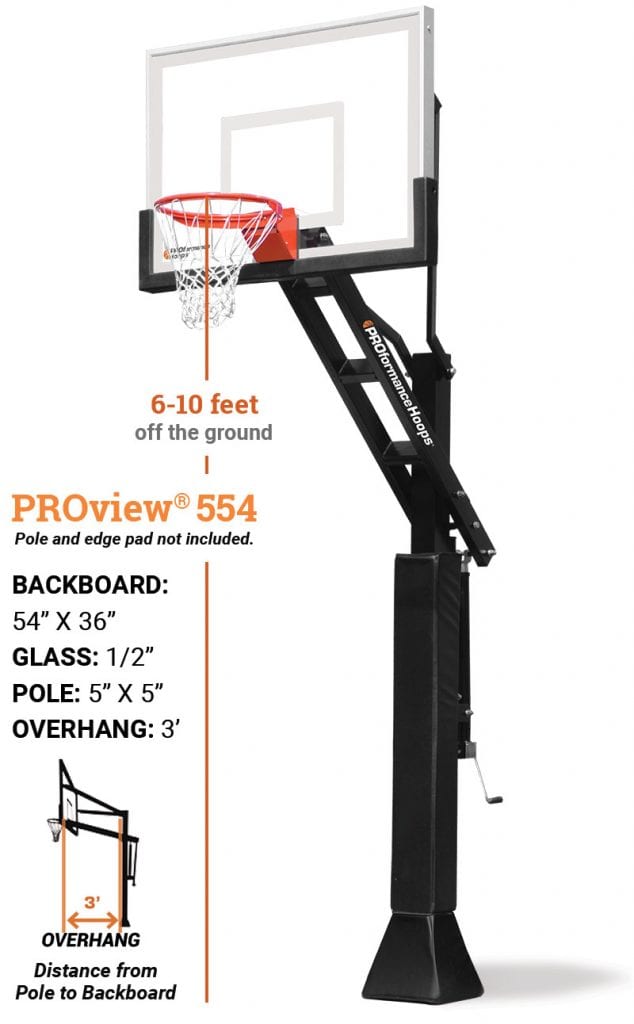
Image Source: superiorplay.com
The Unwavering Standard: 10 Feet
The standard basketball rim height of 10 feet isn’t an arbitrary number. It’s a figure that has been meticulously established and maintained for decades, shaping everything from the athleticism required to dunk to the arc of a jump shot. This height dictates the challenge, the strategy, and the visual spectacle of professional basketball.
NBA Hoop Height: A Cornerstone of the Game
The NBA hoop height is, unequivocally, 10 feet. This has been the case since the early days of organized basketball. The league’s commitment to this specific height ensures that records are comparable across different eras and that players consistently train to overcome this precise obstacle.
- Historical Consistency: The 10-foot rim height has been a foundational element of NBA play, contributing to the evolution of skills like the jump shot, layups, and of course, the coveted dunk.
- Player Development: From youth leagues to the pros, the 10-foot rim serves as the ultimate benchmark. Players spend years honing their ability to reach and score at this height.
- Strategic Implications: Coaches and players devise strategies that account for this specific vertical challenge, influencing offensive and defensive schemes.
FIBA Hoop Height: Global Uniformity
The FIBA hoop height is also set at 10 feet (3.05 meters). This global standard ensures that international competitions, from the Olympics to the FIBA World Cup, are played under the same conditions as professional leagues in North America. This uniformity is vital for the growth and standardization of basketball worldwide.
- International Competitions: FIBA’s adoption of the 10-foot standard means that players transitioning between different international leagues or playing in global tournaments face the same rim height.
- Accessibility of Play: While professional leagues adhere to this height, variations might exist in recreational or youth settings, but the 10-foot mark is the aspiration.
Deciphering the Components of a Regulation Hoop
Beyond just the height, several other factors contribute to what makes a regulation basketball hoop official and functional. Understanding these components helps appreciate the engineering and standardization that goes into the sport.
The Rim: More Than Just a Ring
The rim itself has specific dimensions and requirements to ensure fair play and consistent ball behavior.
- Inner Diameter: The official inner diameter of a basketball rim is 18 inches (45.7 cm). This dimension is crucial for the ball to pass through cleanly. A regulation basketball has a circumference of approximately 29.5 inches (75 cm), meaning its diameter is roughly 9.4 inches (23.8 cm). This leaves about 4.3 inches of clearance on either side of the ball.
- Material and Strength: Rims are typically made of steel and must be strong enough to withstand the force of players hanging on them during dunks, though intentionally hanging is usually a violation.
- Attachment: The rim must be securely attached to the backboard.
The Backboard: A Crucial Surface
The backboard, while not directly involved in scoring, plays a significant role in the game.
- Dimensions: Regulation backboards typically measure 6 feet wide by 3.5 feet high (1.83 meters by 1.07 meters).
- Material: They are often made of tempered glass for optimal visibility and rebound characteristics, though solid materials like acrylic or composite boards are also used, especially in outdoor or less formal settings.
- Offset: The backboard is typically offset from the front of the rim. This offset ensures that the ball rebounds predictably and that players do not interfere with the rim when shooting from certain angles. For a regulation hoop, this offset is usually 4 feet (1.22 meters).
The Net: A Visual Cue
The basketball net height is, of course, determined by the rim height. The net hangs from the rim and serves as a visual indicator of a successful shot.
- Length: Regulation basketball nets are typically 15 to 18 inches (38 to 45 cm) long.
- Material: They are made of nylon or chain and are designed to slow the ball down slightly as it passes through, providing a satisfying swish and making it easier to tell if a shot was good.
- Attachment: The net attaches to 12 evenly spaced hooks on the underside of the rim.
Beyond the Professional: Variations in Hoop Height
While 10 feet is the gold standard for professionals, it’s important to acknowledge that basketball hoop height can vary significantly, especially for younger players or in recreational settings. This allows the game to be accessible and enjoyable for all ages and skill levels.
Youth Leagues and Age-Appropriate Heights
To facilitate skill development and prevent frustration, youth basketball often uses lower hoop heights.
- Ages 6-7: Typically use a 6-foot (1.83 meter) rim.
- Ages 8-9: Often play on 8-foot (2.44 meter) rims.
- Ages 10-11: May use 9-foot (2.74 meter) rims.
- Ages 12 and Up: Generally transition to the official basketball hoop height of 10 feet.
These adjustments are crucial. A 6-year-old attempting to shoot on a 10-foot rim would find it nearly impossible, hindering their enjoyment and ability to learn the fundamentals of shooting.
Portable Basketball Hoop Height: Flexibility and Adjustability
Portable basketball hoop height offers a significant advantage: adjustability. This makes them incredibly versatile for families with children of different ages or for those who want to practice at various heights.
- Range of Adjustments: Most portable hoops allow for height adjustments that can range from as low as 5 feet (1.52 meters) to the full 10 feet.
- Home Courts: These are popular for driveways and backyards, providing a convenient way to play basketball.
- Durability and Stability: While convenient, the stability of portable hoops can sometimes be less than in-ground systems, especially at higher settings or during intense play. The base is usually filled with water or sand to provide weight.
Indoor Basketball Hoop Height: Consistency in Controlled Environments
Indoor basketball hoop height generally adheres strictly to the 10-foot regulation for organized play in gyms and sports facilities.
- Gymnasium Standards: High school, college, and professional indoor courts all feature 10-foot hoops.
- Adjustable Systems: Even within indoor facilities, some gyms might have adjustable hoop systems that can be lowered for specific training drills or younger age groups.
Factors Influencing Hoop Height Decisions
When setting up a basketball hoop, several factors come into play, especially for home use.
Age and Skill Level of Players
As discussed, this is the primary driver for adjusting hoop height. Starting with a lower hoop allows beginners to develop proper shooting form and build confidence. Gradually increasing the height as players improve ensures they are prepared for regulation play.
Available Space and Location
The physical space where the hoop will be located can also influence decisions, particularly with portable hoops. Ensuring there’s adequate clearance around the court and that the hoop is securely positioned is paramount.
Personal Goals and Practice Needs
Some players might choose to practice on a 10-foot hoop even if they are younger, to build strength and get accustomed to the regulation height. Others might intentionally lower it to focus on specific shooting mechanics or to increase the volume of shots they can make in a practice session.
Measuring Your Basketball Hoop: A Practical Guide
If you’re setting up a new hoop or checking an existing one, knowing how to measure accurately is essential.
The Importance of Precise Measurement
A slight deviation in basketball rim height can make a noticeable difference in gameplay. Ensuring the hoop is precisely 10 feet from the playing surface is key for serious players.
How to Measure Accurately
- Use a Measuring Tape: A standard tape measure is your best tool.
- Measure from the Playing Surface: Place one end of the tape measure firmly on the court surface directly beneath the center of the rim.
- Extend to the Top of the Rim: Carefully extend the tape measure straight up to the top edge of the rim. Do not measure to the bottom of the rim or the net.
- Verify the Height: The measurement should be exactly 10 feet (120 inches or 305 cm).
- Check Multiple Points: If possible, check the height at a few different points around the rim to ensure it’s level.
Table: Hoop Height by Age Group (Typical Recommendations)
| Age Group | Recommended Hoop Height | Notes |
|---|---|---|
| 4-5 Years | 4 feet (1.22 m) | Focus on fun and basic ball handling. |
| 6-7 Years | 6 feet (1.83 m) | Introduction to shooting and basic game concepts. |
| 8-9 Years | 8 feet (2.44 m) | Developing shooting form and more complex plays. |
| 10-11 Years | 9 feet (2.74 m) | Approaching regulation height, refining skills. |
| 12 Years & Up | 10 feet (3.05 m) | Official height for most organized youth, high school, and adult play. |
| Professional | 10 feet (3.05 m) | NBA, WNBA, FIBA, NCAA Men’s & Women’s. |
Frequently Asked Questions (FAQ)
Q1: What is the standard height for a basketball hoop?
A1: The standard height for a basketball hoop, especially in professional and competitive play, is 10 feet (3.05 meters) from the playing surface to the top of the rim.
Q2: Is the NBA hoop height different from FIBA?
A2: No, both the NBA and FIBA adhere to the same official basketball hoop height of 10 feet. This ensures consistency in international and professional play.
Q3: Can I adjust the height of my portable basketball hoop?
A3: Yes, most portable basketball hoop height models are adjustable, allowing you to lower or raise the rim to accommodate different players or practice needs, typically ranging from 5 feet up to the regulation 10 feet.
Q4: How do I know if my basketball net height is correct?
A4: The basketball net height is determined by the rim it hangs from. If your rim is at the correct 10-foot regulation height, and the net is properly attached to the 12 points on the rim, its length (15-18 inches) will ensure it hangs correctly.
Q5: Why is the regulation basketball hoop height 10 feet?
A5: The 10-foot height was established early in the sport’s history and has remained consistent. It presents a significant athletic challenge that influences player development, strategy, and the overall dynamics of the game, rewarding skill, athleticism, and teamwork.
Q6: Are there different hoop heights for indoor vs. outdoor basketball?
A6: For regulation basketball hoop play, the height is the same regardless of whether it’s indoors or outdoors. However, indoor basketball hoop systems in schools or rec centers might be adjustable for various user groups, while outdoor hoops, especially fixed ones, are typically permanently set at 10 feet.
Q7: How tall is a basketball hoop in youth leagues?
A7: Hoop heights in youth leagues are typically lowered to suit the age and skill level of the players. This can range from 4 feet for very young children to 9 feet for pre-teens, before they transition to the 10-foot standard basketball rim height.
Q8: What is the diameter of a regulation basketball rim?
A8: The inner diameter of a regulation basketball hoop rim is 18 inches (45.7 cm).
Q9: Does the backboard size affect the game at a professional level?
A9: While not directly part of the scoring, the size and material of the backboard (typically 6 feet by 3.5 feet for professional play) influence rebounds and bank shots, adding strategic depth to the game.
Q10: Is it important for a home basketball hoop to be set at exactly 10 feet?
A10: If you are aiming for serious practice and preparation for competitive play, setting your home hoop to the NBA hoop height of 10 feet is ideal. However, for casual play or younger children, adjustable heights can be more practical and enjoyable.
By maintaining this consistent 10-foot height, basketball continues to be a sport that demands a unique blend of athleticism, skill, and strategic thinking, enjoyed by millions around the globe.