
The standard basketball net height is 10 feet (3.05 meters) from the playing surface to the rim. This height is consistent across professional leagues, collegiate play, and most organized amateur competitions.
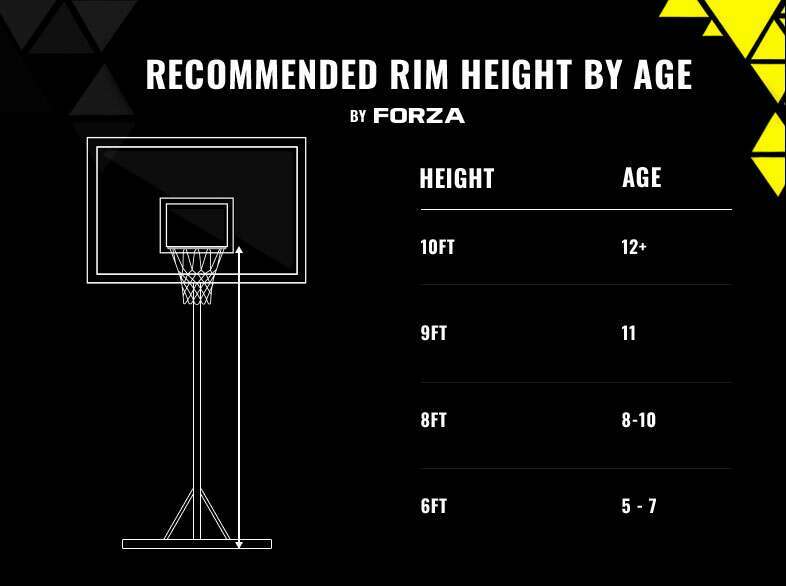
Image Source: nwscdn.com
Deciphering the Basketball Hoop Height
The exact placement of the basketball hoop, specifically the height of the rim, is a fundamental element of the game. It dictates the challenges of shooting, rebounding, and the overall strategy of basketball. This standard 10-foot height is not arbitrary; it’s the result of evolution and refinement, aiming to create a balanced and exciting athletic contest. For anyone stepping onto a basketball court, whether for a casual game or a serious match, knowing this dimension is crucial.
The NBA Hoop Height: A Benchmark of Excellence
The National Basketball Association (NBA) adheres strictly to the 10-foot rim height. This height is a critical factor in the athleticism and skill displayed by NBA players. The ability to shoot, dunk, and rebound over such a high rim requires immense vertical leap, strength, and precision. The NBA hoop height has remained a constant, contributing to the sport’s predictable yet exhilarating dynamics. It’s the pinnacle of the professional game, and every player strives to master the art of playing within this established framework.
Regulation Basketball Net Height: The Official Standard
Across various governing bodies, including FIBA (International Basketball Federation) and NCAA (National Collegiate Athletic Association), the regulation basketball net height is universally set at 10 feet. This uniformity ensures fair competition and allows for standardized training and development for players worldwide. When you see a professional game or even a serious amateur match, you can be sure the hoops are set at this precise height. This consistency is vital for the integrity of the sport.
The Indoor Basketball Net Height: Consistency Indoors and Out
Whether you’re playing in a state-of-the-art indoor arena or a dusty community gym, the indoor basketball net height remains the same: 10 feet. The environment might change, but the fundamental dimensions of the court, including the hoop height, do not. This consistency allows players to train and compete without needing to adjust their shooting mechanics or strategic approach based on the venue. The familiar 10-foot mark is a constant in the indoor basketball experience.
Outdoor Basketball Net Height: Battling the Elements, Not the Rim
Similarly, outdoor basketball courts, from public parks to driveways, typically feature hoops set at the standard 10-foot height. While weather conditions can add challenges, the outdoor basketball net height is designed to mirror the indoor experience. This allows for seamless transitions between different playing environments and ensures that skill and strategy, rather than external factors like hoop height, are the primary determinants of success.
Portable Basketball Hoop Height: Flexibility with a Standard
Portable basketball hoops offer a great deal of flexibility, often allowing for adjustable basketball hoop height. However, when set to their standard or regulation height, they also aim for the 10-foot mark. This means even if you have a portable system for your backyard, you can set it up to mimic the conditions of a professional game. This adjustability is fantastic for families with children of different ages or for anyone who wants to practice at various levels.
Adjustable Basketball Hoop Height: Tailoring the Game
The beauty of an adjustable basketball hoop height lies in its versatility. While the 10-foot standard is the ultimate goal for many, adjustable hoops allow users to lower the rim for younger or less experienced players. This feature is invaluable for developing fundamental skills without the frustration of a rim that is too high. As players grow and improve, the hoop can be raised, gradually preparing them for the regulation height. This makes them perfect for home use and for training programs.
Adjusting for Youth Basketball Net Height
A key application of adjustable basketball hoop height is in setting the youth basketball net height. Children need to learn the game with appropriate challenges. A rim that is too high can lead to bad shooting habits, like pushing the ball rather than shooting with a proper arc.
Here’s a general guide for youth basketball net height:
- Ages 6-8: Often play with the rim lowered to 8 feet.
- Ages 9-10: May use a 9-foot rim.
- Ages 11 and up: Typically transition to the regulation 10-foot height.
This progressive adjustment helps build confidence and proper technique as young players develop. It’s about making the game accessible and fun while fostering skill development.
Mini Basketball Hoop Height: Fun for the Youngest Athletes
Mini basketball hoops are designed for very young children, often toddlers and preschoolers. These are significantly lower than the standard height, prioritizing play and motor skill development over adherence to regulation. The mini basketball hoop height can vary widely, but they are typically set at around 2 to 4 feet. The focus here is on simply getting the ball into the hoop, encouraging hand-eye coordination and the joy of playing.
The History and Rationale Behind the 10-Foot Rim
The 10-foot basketball hoop height wasn’t established overnight. It evolved alongside the game itself.
Early Days and the Peach Basket
When James Naismith invented basketball in 1891, the “hoops” were actually peach baskets nailed to the gymnasium balcony at the YMCA in Springfield, Massachusetts. The height of these balconies was approximately 10 feet. This was purely incidental, as Naismith was simply using what was available. However, this accidental height became the de facto standard.
Evolution from Basket to Net
The early peach baskets had bottoms, meaning the ball had to be manually retrieved after each made basket. This was cumbersome. Over time, the bottoms were removed, and eventually, the peach baskets were replaced with iron rims and nets, very similar to what we see today. The 10-foot height, however, remained.
Why 10 Feet?
Several factors likely contributed to the persistence of the 10-foot height:
- Challenge and Skill: It provides a significant challenge that requires athleticism and skill to overcome. It separates the truly skilled shooters and jumpers from the average.
- Rebounding Dynamics: The height influences the arc of shots and the way the ball rebounds, creating exciting opportunities for put-backs and tip-ins.
- Dunking Spectacle: While dunking was not prevalent in the early days, the 10-foot rim now allows for spectacular dunks, adding an element of showmanship and excitement to the game.
- Player Development: It offers a developmental pathway. Players start with lower rims (for youth) and work their way up to the standard height, mastering skills along the way.
- Uniformity: Once established, a standard height provides consistency, allowing for fair competition and comparison of performances across different teams and eras.
Measuring the Basketball Hoop Height Accurately
Ensuring your basketball hoop is at the correct height is crucial, especially if you’re setting up a new court or a home hoop.
Tools for Measurement
- Measuring Tape: A standard tape measure is essential.
- Level: A spirit level can help ensure accuracy when measuring from the playing surface.
- Ladder or Stable Platform: For safely reaching the rim to measure.
The Measuring Process
- Identify the Playing Surface: This is typically the finished court floor (wood, asphalt, concrete).
- Measure from the Surface to the Bottom of the Rim: Place the end of your measuring tape on the playing surface directly beneath the center of the rim.
- Ensure the Tape is Vertical: Hold the tape measure straight up.
- Read the Measurement: The measurement to the bottom of the rim should be exactly 10 feet (120 inches or 305 cm).
Table: Standard Rim Height and Key Measurements
| Feature | Measurement |
|---|---|
| Rim Height | 10 feet (3.05 m) |
| Rim Diameter | 18 inches (45.7 cm) |
| Net Length | 15-18 inches (38-46 cm) |
| Backboard Size | Varies, but rim is always centered horizontally and 4 feet from the baseline. |
Variations and Considerations for Different Scenarios
While 10 feet is the standard, there are situations where variations are common or necessary.
Youth Basketball Net Height: A Progressive Approach
As mentioned earlier, the youth basketball net height is a significant area of variation. The goal is to make the game enjoyable and developmentally appropriate.
- Early Development: For the youngest players, the focus is on participation and basic skills. Lowering the rim drastically reduces the difficulty of making a shot.
- Skill Progression: As players get older and stronger, raising the rim gradually helps them develop the necessary power, technique, and coordination for the regulation height.
Table: Recommended Youth Hoop Heights
| Age Group | Recommended Hoop Height |
|---|---|
| 6-8 Years | 8 feet |
| 9-10 Years | 9 feet |
| 11+ Years | 10 feet (Regulation) |
These are general guidelines, and individual player development can influence when to make adjustments.
Recreational and Backyard Play
In recreational settings, such as backyard courts, a portable basketball hoop height might be adjustable. This allows families to set the hoop at a height suitable for everyone who wants to play. While many will eventually set it to 10 feet for practice, the ability to lower it makes it accessible for younger siblings or friends who are just starting. This feature significantly increases the usability and enjoyment of a home basketball system.
Competitive vs. Casual Play
The intensity and purpose of play can influence the perceived importance of exact height.
- Competitive Play: In organized leagues, tournaments, and professional games, the 10-foot height is non-negotiable. Precision is paramount.
- Casual Play: In a casual pickup game, if a hoop is slightly off the 10-foot mark (especially on older outdoor courts), players might tolerate it. However, most players still aim for or expect the standard height for a proper game experience.
The Impact of Hoop Height on Gameplay
The 10-foot rim height has profound effects on how basketball is played at all levels.
Shooting Mechanics
The height of the rim dictates the trajectory of a shot. A shot aimed at a 10-foot hoop requires a specific arc and force to be successful. Players need to develop the strength to get the ball up there and the touch to make it drop through the net. Lower rims can encourage players to shoot with less arc or push the ball, which are habits that need to be corrected when they move to a regulation height.
Jumping and Vertical Leap
The 10-foot hoop is a significant obstacle for dunking and rebounding. Players need a strong vertical leap to get the ball above the rim, whether for a forceful dunk or to snatch a rebound away from an opponent. This athletic requirement is a hallmark of high-level basketball.
Rebounding Strategy
The height of the rim influences where the ball will bounce off. Players learn to anticipate these rebounds, positioning themselves to gain an advantage. The 10-foot rim creates specific rebound patterns that are crucial to master.
Defensive Strategies
Defensive players use the rim height to their advantage. Shot blockers aim to meet shots at their apex, using their reach and jump to prevent scoring. The height makes it harder for offensive players to drive to the basket and finish, often forcing them into contested layups or jump shots.
Maintaining Your Basketball Hoop System
Regardless of whether you have an in-ground or portable system, proper maintenance ensures your hoop remains at the correct basketball hoop height and is safe to use.
Regular Inspections
- Stability: Check that the pole and anchor (for in-ground systems) are stable and not leaning.
- Hardware: Ensure all bolts and screws are tight.
- Backboard and Rim: Look for cracks or damage.
- Net: Check for tears or wear.
Adjusting a Portable Hoop
If you have an adjustable basketball hoop height system, periodically check that the mechanism is functioning correctly and that the hoop is securely locked at the desired height. Over time, mechanisms can loosen, potentially leading to the hoop dropping.
Professional Installation and Maintenance
For in-ground systems, professional installation is recommended to ensure the pole is properly set in concrete and plumb. If you suspect your hoop has shifted or is no longer at the correct basketball hoop height, it may be worth having it professionally inspected.
Frequently Asked Questions (FAQ)
Q1: Is the basketball net height the same for men’s and women’s basketball?
A1: Yes, the regulation basketball net height of 10 feet is the same for both men’s and women’s basketball at professional, collegiate, and most amateur levels.
Q2: Can I play basketball with a hoop that isn’t exactly 10 feet high?
A2: You can certainly play with a hoop at a different height, especially for casual backyard play or with younger children. However, if you want to practice for organized games or develop proper skills for competitive basketball, it’s best to use a hoop set at the standard 10-foot regulation height.
Q3: What is the standard basketball hoop height for driveway courts?
A3: Most driveway courts aim for the standard 10-foot basketball hoop height. Many portable basketball hoops are used for driveway setups, and these are typically adjustable to reach 10 feet.
Q4: Does the type of net (e.g., nylon, chain) affect the basketball net height?
A4: No, the type of net does not change the actual height of the rim. The net hangs from the rim and its length is generally consistent, but the measurement is always to the rim itself.
Q5: Who decided on the 10-foot basketball hoop height?
A5: The 10-foot height originated from the original gymnasium where James Naismith invented the game, which happened to have its balconies set at that height. It was then adopted as the standard and has remained so ever since.
Q6: How do I know if my basketball hoop is at the correct height?
A6: You can measure from the playing surface directly beneath the rim up to the bottom of the rim using a tape measure. The correct height is 10 feet (120 inches or 305 cm).
Q7: Are there any sports similar to basketball that use different hoop heights?
A7: While basketball has its standard, other sports that involve throwing or shooting at a target may have different dimensions. For example, netball hoops are lower. However, for basketball variations like 3×3 basketball, the rim height remains the same 10-foot standard.
Q8: My son is 9 years old. Should I get him a 10-foot hoop?
A8: For a 9-year-old, it’s often recommended to use a lower hoop height, such as 9 feet. This allows them to develop proper shooting form without struggling against a rim that is too high. You can transition to a 10-foot hoop as they get older and their skills develop further.
Q9: What is the difference between NBA hoop height and other leagues?
A9: In essence, there is no significant difference. The NBA hoop height adheres to the universally accepted 10-foot standard that is also used by FIBA, NCAA, and most other major basketball organizations. This uniformity is critical for the sport’s global consistency.
Q10: I have a portable basketball hoop. How do I ensure it stays at the standard basketball net height?
A10: Most portable basketball hoops have a mechanism to adjust and lock the height. Follow the manufacturer’s instructions carefully to set the desired height, and periodically check the locking mechanism to ensure it remains secure. For the standard height, ensure it is set to 10 feet.