
Yes, basketball spread betting works by leveling the playing field between two teams. Instead of simply betting on which team will win outright, you bet on whether a team will win by more points than the specified margin (the spread) or lose by fewer points than the margin. This is a crucial aspect of NBA spread betting and ATS betting basketball.
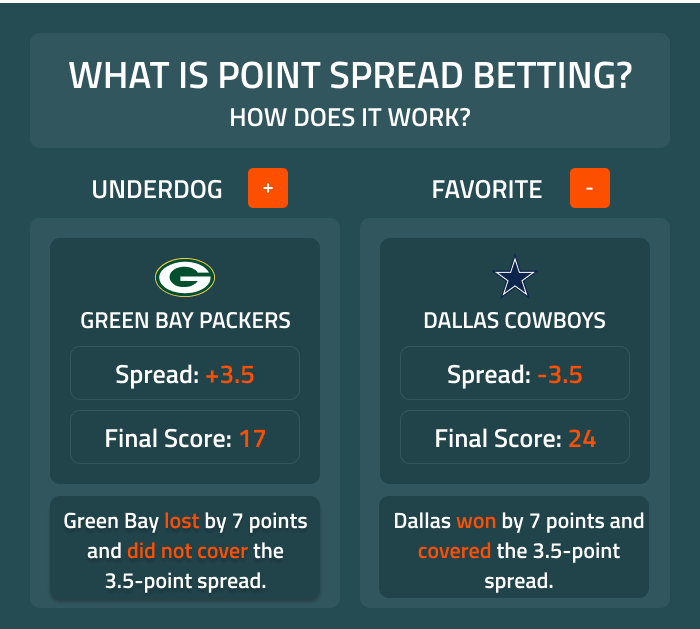
Image Source: images.covers.com
Deciphering Basketball Point Spreads
In the world of sports spread betting, understanding the basketball point spread is fundamental. It’s a handicapping system designed by oddsmakers to encourage action on both sides of a game. Think of it as a virtual head start or a points deficit given to one team before the game even begins. This system makes even lopsided matchups interesting for bettors.
How to Read Basketball Spreads
Learning how to read basketball spreads is straightforward once you grasp the core concept. You’ll typically see a game listed with two teams, one designated as the favorite and the other as the underdog.
- The Favorite: The team expected to win is indicated with a minus sign (-) followed by a number. This number represents the points they must win by to cover the spread. For example, if Team A is -7.5, they are the favorite and must win by 8 points or more.
- The Underdog: The team expected to lose is shown with a plus sign (+) followed by a number. This number represents the points they can lose by and still win the bet. If Team B is +7.5, they are the underdog and can lose by 7 points or fewer (or win the game outright).
- The Total (Over/Under): Alongside the spread, you’ll also see a total number. This refers to the combined score of both teams. You can bet on whether the actual combined score will be higher (Over) or lower (Under) than this number.
Let’s look at an example:
| Team | Spread | Moneyline | Total |
|---|---|---|---|
| Los Angeles Lakers | -5.5 | -220 | 225.5 |
| Golden State Warriors | +5.5 | +180 |
In this scenario:
- The Lakers are the favorite at -5.5. If you bet on the Lakers, they need to win by 6 or more points for your bet to win.
- The Warriors are the underdog at +5.5. If you bet on the Warriors, they can lose by 5 points or fewer, or win the game, for your bet to win.
- The total is 225.5. You could bet on the combined score of both teams being over or under 225.5 points.
The Role of Vig (Juice)
When you place a bet, you’ll notice that the odds for either side of the spread are not even money (1:1). This is due to the “vig” or “juice,” which is the commission the sportsbook takes for facilitating the bet. Typically, you’ll see odds like -110 for both sides. This means you need to bet $110 to win $100. The vig ensures the sportsbook makes a profit regardless of the outcome.
Fathoming the Purpose of the Spread
The primary goal of handicapping basketball games through spreads is to balance the betting action. Without a spread, most bettors would simply wager on the heavy favorites, leading to significant losses for sportsbooks on those popular bets. By giving the underdog a points advantage, the spread creates a more appealing betting proposition for both sides of the matchup. It encourages people to consider betting against the spread (ATS) for both favorites and underdogs.
Why Bet the Spread?
- Increased Betting Opportunities: Spreads open up betting possibilities for games that might otherwise seem too predictable.
- Competitive Edge: For those who enjoy analyzing games and predicting outcomes, mastering spread betting can offer a way to gain a consistent edge.
- Excitement: A spread bet adds an extra layer of excitement to watching a game, as every point scored or conceded can impact your wager.
Core Concepts in Spread Betting
To excel in spread betting strategy, you need to understand several key concepts related to understanding point spreads.
Favoritism and Underdog Status
This is the bedrock of spreads. The team with the lower probability of winning is given a positive point value (+), while the team with the higher probability is assigned a negative point value (-).
Pushing the Spread
A “push” occurs when the outcome of the game exactly matches the point spread. For instance, if the Lakers are -5.5 and win by exactly 5 points, or the Warriors are +5.5 and lose by exactly 5 points, that bet is a push. In most cases, a push results in your original bet being returned, essentially nullifying the wager. Sportsbooks use half-points (e.g., -5.5, +7.5) to eliminate the possibility of pushes and ensure every bet either wins or loses.
Closing Line Value (CLV)
A more advanced concept, CLV refers to the difference between the line you got on your bet and the “closing line” – the final spread offered by the sportsbook right before the game starts. Getting good CLV means you secured a more favorable spread than what was ultimately offered. It’s a sign of sharp betting and often indicates you’ve made a smart wager.
Practical Application: How to Bet the Spread
Placing a spread bet is typically done through an online sportsbook or a physical betting location.
- Choose Your Game: Select a basketball game you want to bet on.
- Identify the Spread: Look for the basketball betting lines and find the point spread for the game.
- Select Your Team: Decide whether you want to bet on the favorite to “cover” the spread or the underdog to “beat” it (or win outright).
- Place Your Wager: Specify the amount of money you wish to bet.
- Confirm Your Bet: Review your bet slip to ensure all details are correct before submitting.
Example Scenario: Betting ATS Basketball
Let’s say you’re looking at an NBA game between the Boston Celtics and the Miami Heat.
The Lines:
- Boston Celtics: -3.5 (-110)
- Miami Heat: +3.5 (-110)
Your Analysis: You’ve researched both teams, their recent form, injury reports, and head-to-head matchups. You believe the Celtics, despite being on the road, have a strong offensive advantage and can consistently score against the Heat’s defense. You also note that the Heat have been struggling offensively in their last few games.
Your Bet: You decide to bet $100 on the Boston Celtics to cover the -3.5 spread. This means you are betting that the Celtics will win by 4 or more points.
Possible Outcomes:
- Celtics win by 5 points (e.g., 110-105): You win your bet. Your $100 bet returns your $100 stake plus $90.91 in winnings (based on -110 odds), for a total of $190.91.
- Celtics win by 3 points (e.g., 103-100): You lose your bet. The Celtics did not win by 4 or more points.
- Heat win the game (e.g., 105-100): You lose your bet. The Celtics lost, let alone covered the spread.
- Celtics win by exactly 3.5 points: This is impossible with a half-point spread. If the spread were -3, and the Celtics won by exactly 3, it would be a push.
Developing a Winning Spread Betting Strategy
A solid spread betting strategy requires more than just picking the team you think will win. It involves careful analysis and discipline.
Key Components of a Spread Betting Strategy:
1. Thorough Research and Handicapping
This is the most crucial element. You need to go beyond surface-level information.
- Team Statistics: Analyze offensive and defensive efficiency ratings, pace of play, shooting percentages (field goal, 3-point), turnover rates, and rebounding statistics.
- Player Performance: Track key player stats, looking for any significant deviations from their averages.
- Injury Reports: The absence or presence of star players can dramatically alter a team’s performance and, consequently, the spread.
- Matchups: Identify how specific player matchups might play out. Does a team’s star guard struggle against a particular defender? Does a team have a significant size advantage in the paint?
- Home/Away Splits: Some teams perform much better at home than on the road, and vice versa.
- Rest and Scheduling: Consider how much rest each team has had. Back-to-back games or long road trips can lead to fatigue.
- Motivation and Situational Factors: Is a team playing for playoff seeding? Are they in a must-win situation? Are they coming off a disappointing loss?
2. Understanding Value
Value betting is about finding odds that you believe are mispriced by the sportsbook. This means identifying situations where you think the sportsbook’s spread is incorrect, and your own analysis suggests a higher probability for your chosen outcome than the odds imply.
3. Bankroll Management
Never bet more than you can afford to lose. A common strategy is to bet a small percentage of your total bankroll on each wager (e.g., 1-3%). This helps you weather losing streaks and remain in the game for the long term.
4. Fade the Public (Sometimes)
Often, public perception and betting trends can skew lines. If a vast majority of bettors are on one side, especially a popular team or favorite, the sportsbook might adjust the spread to balance action. In such cases, betting against the public (fading them) can sometimes be a profitable strategy, assuming your analysis supports it.
5. Line Shopping
If you have access to multiple sportsbooks, compare their basketball betting lines. Even a half-point difference can be significant over time. Finding the best spread or moneyline for your bet is a key part of maximizing potential profits.
6. Considering Different Bet Types
While spread betting is popular, also consider moneyline bets (simply betting on who wins) and totals bets (over/under). Sometimes, a team might be favored to win but not by enough to cover the spread, making a moneyline bet more attractive if you believe they’ll win outright but potentially struggle to cover.
Advanced Tactics in Spread Betting
For those looking to refine their approach to ATS betting basketball, a few advanced tactics can be beneficial.
Key Advanced Tactics:
- Tracking Sharp Money: “Sharp” bettors are professional gamblers who have a proven track record of success. Sportsbooks often adjust lines based on the betting patterns of these sharp players. Following or opposing their moves can be a useful indicator.
- Using Predictive Models: Developing or utilizing statistical models can provide an objective, data-driven approach to handicapping games. These models can help identify discrepancies between your projected outcomes and the sportsbook’s lines.
- Live Betting: Betting on games as they happen can offer opportunities to capitalize on momentum shifts, unexpected runs, or changes in game flow that the initial spread didn’t fully account for. However, this requires quick decision-making and a strong grasp of the game’s dynamics.
- Parlays and Teasers: While these can offer larger payouts, they also increase the risk and complexity. A parlay requires all selections to win, while a teaser allows you to adjust the point spread in your favor across multiple games in exchange for a lower payout.
Common Pitfalls to Avoid
Even with a solid strategy, it’s easy to fall into common traps when handicapping basketball games and betting the spread.
Frequently Encountered Mistakes:
- Chasing Losses: Betting more money to try and recoup previous losses is a dangerous path that can quickly deplete your bankroll.
- Emotional Betting: Letting personal biases or emotions influence your picks (e.g., betting on your favorite team regardless of the spread) is a recipe for disaster.
- Ignoring the Vig: Overlooking the impact of the juice can erode your profits over the long run. Always factor it into your calculations for value.
- Betting Too Many Games: Spreading yourself too thin across too many games can lead to less thorough research on each individual wager. Focus on quality over quantity.
- Not Adapting: The NBA and college basketball landscape changes. Teams evolve, coaches adjust strategies, and player performance fluctuates. Your strategy must be adaptable to these changes.
The Psychology of Spread Betting
Spread betting is not just about numbers; it’s also about psychology.
Psychological Factors:
- Overconfidence: Believing you’ve found a “sure thing” can lead to reckless betting.
- Confirmation Bias: Seeking out information that confirms your pre-existing beliefs about a game, while ignoring contradictory evidence.
- Fear of Missing Out (FOMO): Jumping on a line you perceive as good without proper analysis because you’re afraid others will get to it first.
- Discipline: The ability to stick to your strategy, manage your bankroll, and avoid impulsive decisions is paramount to long-term success.
Frequently Asked Questions (FAQ)
Q1: What is the best way to handicap basketball games for spread betting?
A1: The best way involves comprehensive research, including team/player statistics, injury reports, situational factors, and head-to-head matchups. Developing predictive models and understanding line movements can also provide an edge.
Q2: Can I bet on college basketball games using spreads?
A2: Yes, most sportsbooks offer basketball betting lines for college basketball games, including point spreads. The principles of spread betting strategy apply similarly to both college and professional basketball.
Q3: How do I know if a spread is “good”?
A3: A “good” spread is one where you believe the sportsbook has mispriced the probability of a team covering or beating it. This involves comparing the implied probability of the odds with your own assessment of the game’s likelihoods.
Q4: What is ATS betting basketball?
A4: ATS betting basketball refers to “against the spread” betting. It’s a wager on whether a team will win or lose by more or fewer points than the designated point spread.
Q5: How does NBA spread betting differ from other sports?
A5: While the core concept is the same, NBA spreads can be more volatile due to the higher scoring nature of the sport and the significant impact individual star players have on game outcomes. The pace and scoring frequency in basketball make spreads dynamic.
Q6: Is there a foolproof spread betting strategy?
A6: No, there is no guaranteed winning strategy in sports betting. Success comes from consistent research, disciplined bankroll management, and continuous learning and adaptation.
Q7: What does it mean when a spread has a half-point?
A7: The half-point (e.g., -5.5, +7.5) is used by sportsbooks to eliminate the possibility of a “push,” where the game’s outcome exactly matches the spread. With a half-point, every bet will either win or lose.
By delving into these aspects of sports spread betting, from the basic mechanics of how to read basketball spreads to more advanced strategic considerations, bettors can approach the challenge of handicapping basketball games with greater confidence and a clearer path toward making informed decisions. Remember that consistent effort and a disciplined approach are key to navigating the exciting world of NBA spread betting.