
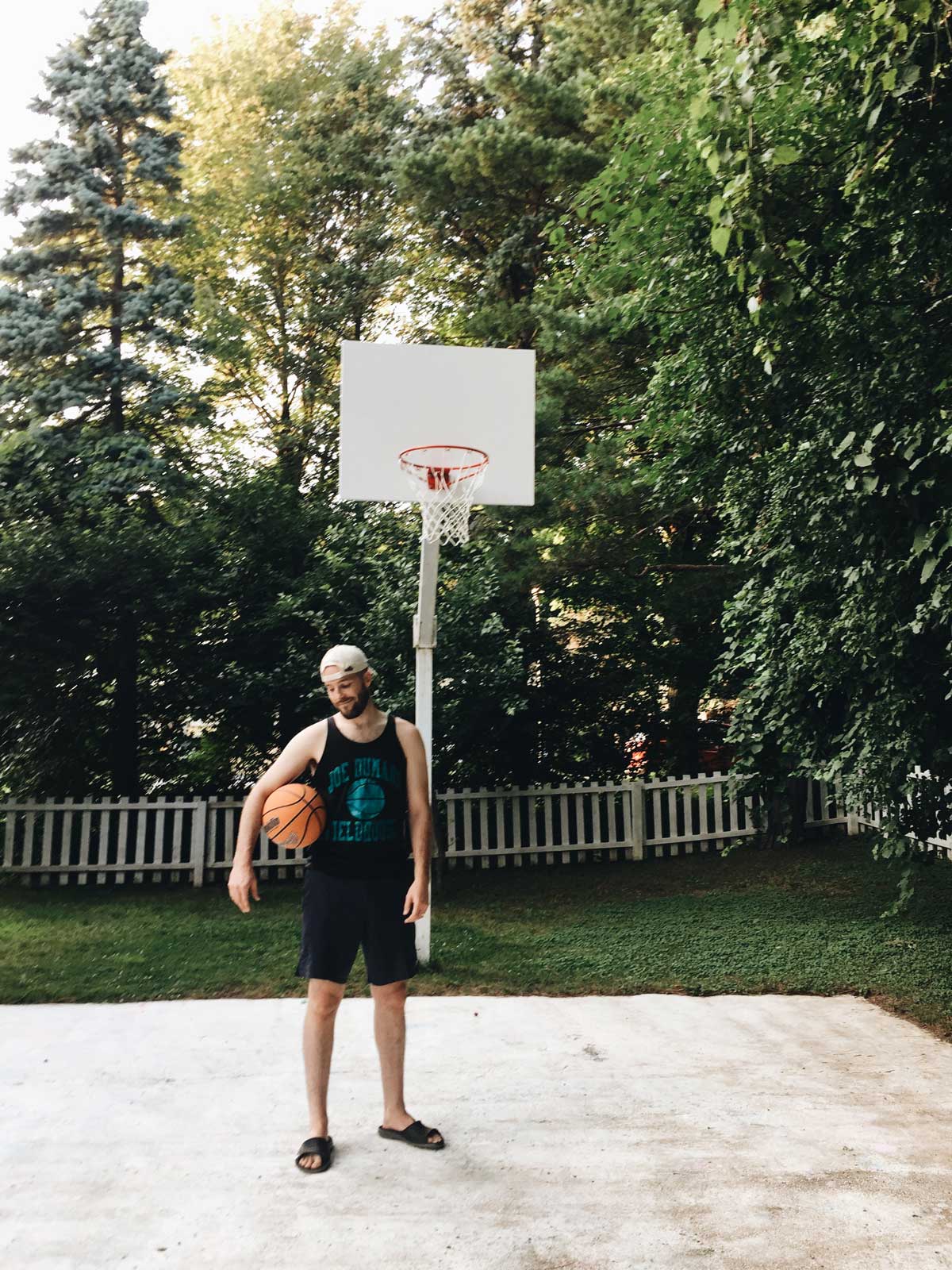
Image Source: rachelschultz.com
How To Build a Basketball Backboard: Easy DIY Guide
Can you build a basketball backboard yourself? Yes, absolutely! This guide will show you how to build a DIY basketball backboard with simple tools and materials, perfect for your backyard basketball hoop setup. You’ll find homemade backboard plans, tips on mounting, and advice on choosing the best materials for a durable, weather-resistant, and even reinforced backboard.
Getting Started: Your Backyard Hoops Project
Building your own basketball backboard is a rewarding project that can elevate your backyard basketball hoop setup. It’s more cost-effective than buying a pre-made one and allows for customization. Whether you’re a seasoned DIYer or a beginner, this guide breaks down the process into manageable steps. We’ll cover everything from selecting the best backboard material to ensuring your creation is a durable, weather-resistant addition to your outdoor space.
Deciding on Your Backboard Material
The choice of material significantly impacts the performance, durability, and cost of your basketball backboard. You want something that can withstand the impact of basketballs, resist weather, and provide a good rebound.
Popular Backboard Material Options
Here’s a look at some of the most common materials used for DIY basketball backboards:
- Plywood: This is often the go-to for DIY projects due to its affordability and ease of use.
- Pros: Inexpensive, easy to cut and drill, readily available.
- Cons: Less durable than other options, prone to warping and water damage if not properly sealed.
- Types: Exterior-grade plywood (like CDX) is recommended for better moisture resistance. Birch plywood offers a smoother surface for better rebound.
- Acrylic/Plexiglass: This offers a professional look and excellent rebound, similar to what you see in many indoor courts.
- Pros: Great rebound, clear visibility, relatively lightweight.
- Cons: More expensive than plywood, can scratch or crack under heavy impact, requires careful handling during cutting.
- Polycarbonate: A much stronger and more impact-resistant alternative to acrylic.
- Pros: Extremely durable, shatter-resistant, excellent rebound, UV resistant.
- Cons: The most expensive option, can be trickier to cut without specialized tools.
- Fiberglass: Often found in commercial backboards, fiberglass offers superior strength and weather resistance.
- Pros: Very durable, weather-proof, good rebound.
- Cons: Can be difficult to source in small quantities for DIY, more complex to cut and drill.
Choosing the Best Backboard Material for You
Consider these factors when making your choice:
- Budget: Plywood is the most budget-friendly. Acrylic and polycarbonate are mid-range to high-end.
- Durability: For a truly durable basketball backboard, polycarbonate or fiberglass are top choices. Plywood can be durable if well-maintained.
- Rebound Quality: Acrylic and polycarbonate offer the best rebound. Thicker plywood can also provide a decent rebound.
- Weather Resistance: Polycarbonate and fiberglass are naturally weather-resistant. Plywood needs thorough sealing and painting.
- Ease of Workability: Plywood is the easiest to cut and drill with basic tools. Acrylic and polycarbonate require specific blades and techniques to avoid cracking.
For a beginner-friendly, cost-effective option, exterior-grade plywood (3/4 inch thick) is an excellent choice for a durable basketball backboard. If you’re aiming for a more professional feel and have a slightly larger budget, consider polycarbonate.
Homemade Backboard Plans: Dimensions and Design
The standard basketball backboard dimensions are 72 inches wide by 42 inches high. However, for a DIY project or a backyard setup, you can adjust these. A common and practical size is 48 inches wide by 30 inches high.
Standard vs. Custom Backboard Sizes
- Standard: 72″ W x 42″ H (used in professional and college play)
- Regulation Size (but smaller): 60″ W x 36″ H
- Popular DIY Size: 48″ W x 30″ H (great for most backyard setups)
- Smaller/Portable: 36″ W x 24″ H (good for younger players or portable basketball backboard setups)
Why the hoop is positioned: The rim is typically centered horizontally and 15 inches in from the top edge. This is crucial for game play and authentic feel.
Designing Your Backboard
Basic Plywood Backboard Plan:
- Measure and Cut:
- Get a sheet of 3/4 inch exterior-grade plywood (e.g., 4′ x 8′).
- Cut it to your desired dimensions. For a 48″ x 30″ backboard, you’ll cut a piece from the plywood sheet.
- Mark the Hoop Position:
- Measure 15 inches down from the top edge, centered horizontally. This is where the center of your rim will be.
- Mark the locations for the rim mounting screws. Standard rims use a 5″ x 4.5″ mounting pattern.
- Drill Mounting Holes:
- Drill holes for the rim. Use a drill bit slightly larger than the diameter of your mounting bolts.
- Reinforcement (Optional but Recommended):
- To create a reinforced backboard, attach a border of 1×3 or 1×4 lumber around the edges of the plywood. This adds rigidity and prevents warping.
- Use wood screws and wood glue for a strong bond.
- Finishing:
- Sand all edges smooth to prevent splinters.
- Apply several coats of exterior-grade paint. White is standard for the backboard face, with a red or black border and the free-throw lane lines.
- Seal all edges with a good quality exterior sealant.
Acrylic/Polycarbonate Backboard Plan:
These materials are best cut with specialized tools. If you’re new to working with them, consider having them cut to size by a plastic supplier.
- Material: 1/4 inch or 3/8 inch thick acrylic or polycarbonate sheet.
- Dimensions: Cut to your desired size (e.g., 48″ x 30″).
- Marking: Use a fine-tip marker to mark the center and screw locations for the rim.
- Drilling:
- Use a drill bit specifically designed for plastic.
- Drill slowly and with minimal pressure to avoid cracking. A backing board can help support the material while drilling.
- Chamfer the edges of the holes slightly to prevent stress points.
- Reinforcement: A metal or thick wooden frame can be attached to the back for added strength and to distribute the impact.
- Finishing: Edges can be smoothed with fine-grit sandpaper or a polishing compound.
Materials Needed for Your Basketball Backboard
Gathering the right materials is key to a successful DIY basketball backboard project.
Essential Materials List
- Backboard Material:
- For Plywood: One sheet of 3/4 inch exterior-grade plywood (e.g., CDX or Birch)
- For Acrylic/Polycarbonate: Sheet of appropriate thickness (e.g., 1/4″ or 3/8″)
- Reinforcement (Optional):
- 1×3 or 1×4 lumber (for plywood edges)
- Angle brackets or metal strapping (for extra reinforcement)
- Fasteners:
- Wood screws (exterior grade)
- Bolts, nuts, and washers for mounting the rim to the backboard (ensure they are long enough to go through the backboard and any reinforcement).
- Finishing Supplies:
- Exterior-grade primer
- Exterior-grade paint (white for the backboard, red/black for lines and border)
- Clear exterior sealant or varnish
- Sandpaper (medium and fine grit)
- Adhesives:
- Exterior wood glue (if using wood reinforcement)
- Optional:
- Clear coat spray for acrylic/polycarbonate to prevent scratching.
Tools You’ll Need
- Measuring Tape: For accurate measurements.
- Pencil: For marking.
- Saw:
- Circular saw or jigsaw for cutting plywood.
- Specialized blades for acrylic/polycarbonate (if using).
- Drill: With various drill bits, including ones for wood and potentially for plastic.
- Screwdriver or Drill Bits: For driving screws.
- Clamps: To hold pieces together while gluing or screwing.
- Paint Brushes or Rollers: For applying paint and sealant.
- Safety Glasses: Essential for eye protection.
- Gloves: To protect your hands.
- Sandpaper Holder or Electric Sander: For efficient sanding.
Building Your DIY Basketball Backboard: Step-by-Step
Let’s get building! This guide focuses on a sturdy plywood backboard.
Step 1: Cutting Your Backboard
- Measure and Mark: Using your tape measure and pencil, mark the dimensions of your backboard on the plywood sheet. For example, 48 inches wide by 30 inches high.
- Cut the Plywood: Carefully cut along your marked lines using a circular saw or jigsaw. Ensure your cuts are straight and square.
- Smooth Edges: Lightly sand all cut edges to remove any rough spots or splinters.
Step 2: Reinforcing the Backboard (Optional but Recommended)
This step helps create a reinforced backboard that’s less prone to flexing and damage.
- Cut Reinforcement Strips: Cut pieces of 1×3 or 1×4 lumber to fit around the perimeter of your backboard. You’ll need two pieces for the width and two for the height.
- Apply Glue and Attach: Apply a generous amount of exterior wood glue to the back edges of the plywood where the reinforcement strips will sit.
- Position and Screw: Place the lumber strips onto the glued edges. Ensure they are flush with the backboard’s outer edges. Secure them with exterior-grade wood screws, pre-drilling pilot holes to prevent the wood from splitting. Use clamps to hold them firmly in place while screwing.
- Add Corner Braces (Optional): For even more strength, you can add small wooden or metal angle brackets at the corners of the reinforcement frame.
Step 3: Marking and Drilling for the Rim
- Locate the Center: Find the horizontal center of your backboard.
- Mark Rim Position: Measure 15 inches down from the top edge of the backboard. This point is the center for your rim.
- Mark Bolt Holes: Using your rim as a template, or by referring to the standard 5″ x 4.5″ pattern, mark the locations for the rim mounting bolts.
- Drill Holes: Drill holes at your marked locations. Use a drill bit that is slightly larger than the diameter of the bolts you will use. Make sure to drill straight through all layers (plywood and reinforcement).
Step 4: Preparing and Painting the Backboard
This is where you give your backboard its signature look and weather protection.
- Sand Again: Give the entire front surface and edges a good sanding with medium-grit sandpaper, followed by fine-grit sandpaper for a smooth finish.
- Prime: Apply at least two coats of exterior-grade primer to the entire backboard, ensuring good coverage, especially on the edges. Let each coat dry completely according to the manufacturer’s instructions.
- Paint the Backboard:
- Apply several thin, even coats of white exterior paint to the front of the backboard. Allow each coat to dry thoroughly.
- Mark the free-throw lane lines. The standard lane is 12 inches wide, extending 19 inches from the backboard surface. The semi-circle above the free-throw line has a radius of 36 inches.
- Paint the border around the backboard (typically red or black).
- Paint the free-throw lane lines using red or black paint. Stencils can help achieve clean lines.
- Seal: Once all paint is completely dry, apply at least two coats of a high-quality clear exterior sealant or varnish. This is crucial for a weather-resistant backboard. Pay extra attention to sealing the edges and any drilled holes.
Step 5: Mounting the Rim
- Position the Rim: Align your basketball rim with the pre-drilled holes on the backboard.
- Insert Bolts: Place the bolts through the rim’s mounting holes and then through the backboard.
- Secure with Washers and Nuts: Place a washer on the back of each bolt, followed by a nut. Tighten securely with a wrench or socket set. Make sure the rim is flush and stable.
Mounting Your Basketball Backboard
How you mount your backboard is critical for safety and playability. You need a strong and stable support structure.
Options for Mounting
- Pole Mount: This is the most common and versatile method for backyard basketball hoop setup.
- Types:
- In-Ground Pole: A pole sunk into concrete provides the most stability.
- Anchor-Bolt Pole: A pole that bolts onto a concrete base.
- Considerations: Ensure the pole is strong enough to handle the stress of dunks and rebounds. The height of the pole will determine the height of your backboard and rim (10 feet is regulation).
- Types:
- Wall Mount: If you have a sturdy wall (like a garage or shed), you can mount the backboard directly.
- Considerations: The wall must be structurally sound. Use heavy-duty lag bolts and possibly mounting brackets designed for basketball backboards.
- Portable Base: For a portable basketball backboard, the backboard is attached to a movable unit with a weighted base. This requires a different type of backboard design and mounting system, often with a built-in handle or wheels.
Safety First: Ensuring a Secure Mount
- Weight Capacity: Make sure your mounting system can support the weight of the backboard, rim, and the forces applied during play.
- Leveling: Use a level to ensure the backboard is mounted perfectly straight. An unlevel backboard can affect gameplay.
- Clearance: Ensure there is adequate clearance around the backboard and hoop for players to move safely without hitting obstacles.
- Professional Help: If you are unsure about the structural integrity of your mounting location or your ability to install it safely, consider hiring a professional.
Making a Weather-Resistant Backboard
To ensure your DIY basketball backboard lasts through the seasons, focusing on weather resistance is key.
Protecting Your Backboard from the Elements
- Material Choice: As discussed, polycarbonate and fiberglass are naturally weather-resistant.
- Sealing and Painting: For plywood, thorough sealing and painting are non-negotiable.
- Use exterior-grade paints and sealants specifically designed for outdoor use.
- Apply multiple thin coats for better coverage and protection.
- Seal all edges and drilled holes meticulously. These are vulnerable points for moisture ingress.
- Drainage: If mounting on a pole, consider how water might collect on the backboard. Tilting it slightly downward can help with drainage. Some people drill small drain holes in the bottom edge of plywood backboards, but ensure this doesn’t compromise structural integrity.
- UV Protection: Many exterior paints and sealants offer UV protection, which prevents fading and material degradation from sunlight.
- Regular Maintenance: Inspect your backboard periodically for any signs of wear, cracking, or peeling paint. Touch up as needed.
Creating a Durable and Reinforced Backboard
A durable basketball backboard can withstand repeated impacts without cracking or breaking. Reinforcement is crucial for this.
Reinforcement Techniques
- Perimeter Framing: Attaching lumber around the edges of a plywood backboard (as described in the building steps) significantly increases its rigidity and reduces the chance of warping or breaking.
- Metal Brackets: Using metal angle brackets or flat strapping on the back, especially at the corners and where the rim mounts, adds substantial strength.
- Thicker Materials: Using thicker plywood (e.g., 3/4 inch instead of 1/2 inch) or thicker acrylic/polycarbonate will naturally make it more durable.
- Backboard Spacing: When mounting to a pole or wall, ensuring there’s a small gap between the backboard and the support structure can help absorb some impact and prevent moisture buildup. Specialized mounting brackets often incorporate this feature.
Portable Basketball Backboard Considerations
If you’re looking for a portable basketball backboard, the design and mounting differ significantly.
Features of Portable Hoops
- Wheeled Base: The base typically has wheels for easy movement. It often needs to be filled with water or sand for stability.
- Adjustable Height: Many portable units allow for height adjustment, making them suitable for different age groups.
- Backboard Design: Portable backboards are often made of durable plastic (like polyethylene) or tempered glass, designed to be lighter and more impact-resistant than heavy plywood. They usually have integrated mounting points for the pole.
- Portability Focus: If you’re building a truly portable system, the backboard needs to be designed to be relatively lightweight and easily attachable/detachable from a portable stand. This often means smaller dimensions and lighter materials.
Frequently Asked Questions (FAQ)
Q1: What is the best material for a DIY basketball backboard?
A1: For a balance of cost, ease of use, and durability, 3/4 inch exterior-grade plywood is an excellent choice. For superior rebound and durability, polycarbonate is the best, albeit more expensive, option.
Q2: Can I use regular plywood for a basketball backboard?
A2: While you can use standard plywood, exterior-grade plywood (like CDX or marine-grade) is highly recommended because it’s treated to resist moisture and warping, making it a more durable basketball backboard.
Q3: How do I mount a basketball backboard to a wall?
A3: You’ll need heavy-duty lag bolts or anchors that can support significant weight and stress. Ensure the wall is structurally sound. Mounting brackets designed for backboards are also recommended for secure installation.
Q4: What size should my basketball backboard be?
A4: Standard professional backboards are 72″ W x 42″ H. A popular and practical DIY size for backyard basketball hoop setup is 48″ W x 30″ H.
Q5: How can I make my plywood backboard more weather-resistant?
A5: Thoroughly seal all edges and surfaces with exterior primer and multiple coats of high-quality exterior paint. Apply several coats of a clear exterior sealant or varnish for maximum protection.
Q6: Is it difficult to build a homemade backboard?
A6: Building a basic plywood backboard is a straightforward DIY project that most people can accomplish with basic tools and some patience. Working with acrylic or polycarbonate might require more specialized tools and techniques.
Q7: What is the best way to ensure a durable basketball backboard?
A7: Use thick, quality materials, reinforce the edges with lumber or brackets, and apply multiple protective coats of paint and sealant to create a durable and reinforced backboard.
Q8: Can I make a portable basketball backboard from scratch?
A8: While challenging, it’s possible. You’d need to design a lightweight backboard and a stable, movable base system, likely involving a sturdy frame and wheels. Often, purchasing a pre-made portable unit is more practical.
Building your own basketball backboard is a fantastic project that can bring hours of fun to your home. By following these homemade backboard plans and tips, you’ll create a durable, weather-resistant addition to your backyard basketball hoop setup that will last for years to come. Enjoy the game!