
Can I learn to draw basketball shoes easily? Yes, absolutely! With a little practice and by following these simple steps, anyone can start sketching basketball sneakers and create their own realistic basketball shoe art. This guide will walk you through the process of drawing basketball footwear, from basic shapes to adding details and shading, making it a perfect step-by-step basketball shoe tutorial for beginners. We’ll even touch on creating basketball shoe designs and how to add those crucial finishing touches that bring your illustrations of basketball kicks to life.
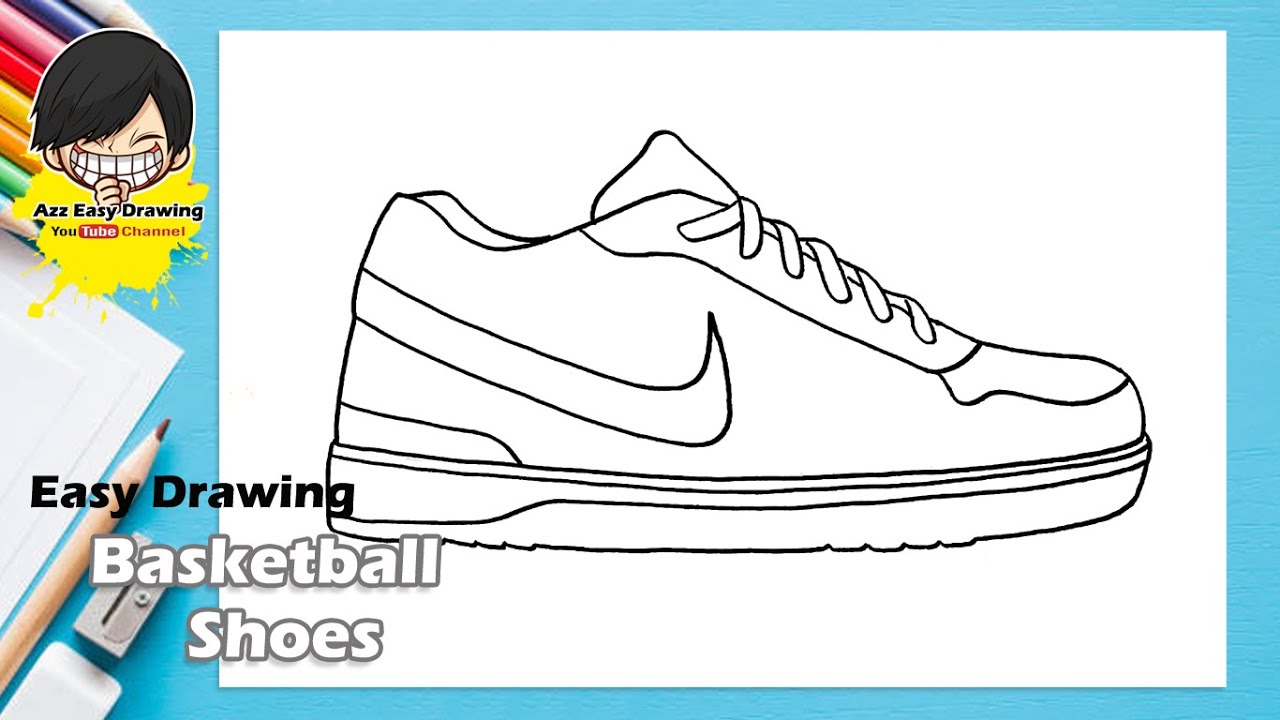
Image Source: i.ytimg.com
Getting Started: Essential Tools for Drawing Basketball Shoes
Before we dive into the actual drawing, let’s make sure you have the right supplies. Having good tools can make a big difference in your learning process.
Materials You’ll Need:
- Pencils: A set of graphite pencils with varying hardness (e.g., HB for sketching, 2B or 4B for darker lines and shading).
- Paper: Smooth drawing paper or sketch paper is ideal.
- Eraser: A kneaded eraser is great for lifting graphite without damaging the paper, and a regular eraser for cleaner lines.
- Sharpener: Keep your pencils sharp for clean details.
- Reference Images: Find photos of basketball shoes you like. Look at different angles, brands, and styles.
The Foundation: Basic Shapes and Proportions
Every basketball shoe, no matter how complex, can be broken down into simpler geometric shapes. Fathoming these basic forms is key to getting the proportions right.
Step 1: Observing Your Reference
Take a good look at the basketball shoe you want to draw. Notice its overall silhouette. Is it high-top, mid-top, or low-top? Where does the sole curve? Where are the laces?
Step 2: Blocking in the Main Shapes
Start by sketching lightly with your HB pencil.
* The Sole: Draw a curved line for the bottom of the sole. Then, add another curved line above it to create the thickness of the sole. Think of a rounded rectangle or a flattened oval for the main body of the sole.
* The Upper: For the main body of the shoe, draw a larger, slightly curved shape that sits on top of the sole. This shape will vary greatly depending on the shoe’s style. For high-tops, extend this shape upwards.
Proportions to Consider:
- Length vs. Width: How long is the shoe compared to how wide it is?
- Height: For high-tops, how high does the ankle collar go?
- Sole Thickness: Is the sole chunky or slim?
Visualizing the Structure:
Think of the shoe as a combination of:
* A rounded wedge shape for the toe box.
* A more rectangular or curved shape for the midfoot.
* A cylindrical or slightly tapered shape for the ankle area in high-tops.
Step 3: Connecting the Shapes
Smoothly connect the main shapes you’ve drawn. Erase any overlapping lines that are no longer needed. At this stage, you’re aiming for a general outline of the shoe. This is a crucial part of outlining basketball shoes accurately.
Adding the Details: Features of Basketball Footwear
Once you have the basic form, it’s time to add the specific features that make basketball shoes unique. This is where your sketching basketball sneakers begins to take on personality.
Step 4: The Lacing System
- Lace Holes: Draw small oval or rectangular shapes where the laces will go.
- Laces: Sketch the laces weaving through the holes. Think about how they drape and tie at the top. Laces aren’t perfectly straight; they have curves and slack.
Step 5: The Tongue and Ankle Collar
- Tongue: Draw the tongue peeking out from the top of the lacing area. It usually has a rounded or slightly pointed tip.
- Ankle Collar: Refine the shape of the ankle collar. It often has padding, so give it a bit of a rounded edge.
Step 6: The Midsole and Outsole Details
- Midsole: This is the thicker part of the sole, often made of foam. You might see decorative lines, air-pocket designs, or branding here.
- Outsole: This is the part that grips the court. Look for tread patterns and any unique shapes or cutouts. These details are vital for realistic basketball shoe art.
Step 7: Branding and Logos
Most basketball shoes have logos. Look closely at your reference and carefully draw the brand’s symbol or name. These can be on the side, tongue, or sole.
Refining Your Drawing: Shading and Texture
Adding shading is what brings your drawing to life, giving it depth and volume. This is a key element of shading basketball sneakers.
Step 8: Establishing Light Source
Decide where the light is coming from. This will determine where your highlights (brightest spots) and shadows (darkest spots) will be.
Step 9: Laying Down Base Tones
Lightly shade the areas that will be in shadow. Start with a light, even tone. Use your HB or 2B pencil.
Step 10: Building Up Shadows
Gradually add darker layers of shading. Use your 4B or 6B pencil for the deepest shadows. Pay attention to the form of the shoe. Shadows will be darker in the creases, under the laces, and where parts of the shoe overlap.
Shading Techniques:
- Hatching: Drawing parallel lines.
- Cross-hatching: Drawing lines over each other at different angles.
- Stippling: Using dots to create tone.
- Smudging: Gently blending graphite with your finger or a blending tool for smooth transitions.
Step 11: Adding Highlights
Use your kneaded eraser to lift graphite from areas that should be bright. This creates highlights. You can also leave these areas blank white paper. Highlights often appear on the rounded surfaces where light hits directly.
Step 12: Textures and Materiality
Think about the different materials the shoe is made of.
* Leather/Synthetic: Smooth shading, maybe a few subtle lines to indicate seams.
* Mesh: You might need to draw a pattern of small dots or holes.
* Rubber (Sole): Often has a slightly rougher texture. Use stippling or short, choppy lines to suggest this.
Table: Shading Areas and Pencil Grades
| Shoe Part | Light Areas | Mid-tones | Dark Shadows |
|---|---|---|---|
| Toe Box | White paper/eraser | HB, 2B | 4B |
| Laces | White paper/eraser | HB | 2B |
| Midsole (Foam) | White paper/eraser | HB, 2B | 4B |
| Upper (Leather) | White paper/eraser | HB, 2B | 4B |
| Outsole (Rubber) | White paper/eraser | HB, 2B | 4B, 6B |
| Creases/Wrinkles | White paper/eraser | HB, 2B | 4B, 6B |
Mastering Different Styles: Anime Basketball Shoes and Creative Designs
Once you’re comfortable with the basics of sketching basketball sneakers, you can explore different artistic styles.
Drawing Anime Basketball Shoes
Anime style often exaggerates features and uses bold outlines.
1. Exaggerated Features: Make the shoes look sleeker, perhaps with more dramatic curves or larger soles.
2. Bold Outlines: Use a darker pencil or a fine-liner pen for strong outlines.
3. Dynamic Shading: Anime shading is often cell-shaded, meaning there are sharp transitions between light and dark areas, rather than smooth gradients.
4. Energetic Lines: Add motion lines or speed lines to suggest movement.
Creating Basketball Shoe Designs
This is where you can let your imagination run wild!
1. Inspiration: Look at existing shoes, nature, architecture, or even abstract art for ideas.
2. Sketching Ideas: Start with rough thumbnail sketches of different concepts. Don’t worry about perfection at this stage.
3. Focus on Unique Elements: What makes your design stand out? Is it the lacing system, the sole pattern, a new material, or a specific colorway?
4. Refining the Design: Once you have a concept you like, start creating a more detailed drawing. This is where you practice drawing basketball footwear with your own twist.
5. Color: If you’re working in color, consider how colors interact and what story they tell.
Tips for Creating Your Own Designs:
- Combine Features: Mix and match elements from different shoes you like.
- Think about the Player: What kind of player is this shoe for? Speed? Power? Agility?
- Experiment with Materials: Imagine shoes made of unconventional materials.
- Storytelling: Does your design have a theme or a story behind it?
Advanced Techniques for Illustrating Basketball Kicks
As you get more experienced, you can try more advanced techniques to make your illustrations even more impressive.
Step 13: Adding Color (Optional)
If you want to add color, consider using:
* Colored Pencils: For blending and subtle color transitions.
* Markers: For bold, vibrant colors and clean lines.
* Digital Art: Software like Procreate, Photoshop, or Illustrator offers endless possibilities.
When coloring, think about the actual colors of basketball shoes, but also don’t be afraid to create imaginative colorways.
Step 14: Adding Details with Fine Lines
Use a fine-tipped pen or a sharp pencil to add small details like stitching, texture patterns, or subtle reflections. This helps make your drawing of basketball shoes look more polished.
Step 15: Final Touches
- Review: Look at your drawing from a distance. Are there any areas that need more contrast or refinement?
- Clean Up: Erase any stray pencil marks.
- Signature: Sign your masterpiece!
Common Challenges and How to Overcome Them
Even with a step-by-step basketball shoe tutorial, beginners might face some hurdles.
Challenge 1: Getting the Curves Right
- Solution: Practice drawing basic curves and ovals repeatedly. Use light, gestural lines at first and then refine them. Don’t be afraid to erase and redraw.
Challenge 2: Making the Shoe Look 3D
- Solution: Focus on shading and how light falls on the object. Pay attention to how different parts of the shoe cast shadows on other parts. Think about foreshortening.
Challenge 3: Adding Detail Without Making it Messy
- Solution: Use a sharp pencil for fine details. Work from general shapes to specific details. Sometimes, less is more; not every tiny detail needs to be perfectly rendered.
Challenge 4: Consistency in the Design
- Solution: When drawing a pair of shoes, ensure the proportions, angles, and details are consistent between the left and right shoe.
Frequently Asked Questions (FAQ)
Q1: What is the best way to start drawing basketball shoes if I’m a complete beginner?
A1: Begin with simple shapes and focus on getting the basic outline and proportions correct. Use reference images and draw lightly at first.
Q2: Can I draw basketball shoes without using reference photos?
A2: While it’s possible to draw from imagination, using reference photos is highly recommended for beginners to accurately capture the form, details, and proportions of basketball footwear.
Q3: Who is this guide for?
A3: This guide is for anyone interested in drawing, from absolute beginners to intermediate artists looking to improve their skills in sketching basketball sneakers and creating realistic basketball shoe art.
Q4: What if my drawing doesn’t look exactly like the reference?
A4: That’s completely normal! Drawing is a skill that improves with practice. Focus on learning from each drawing and try to identify areas you can improve next time.
Q5: How do I make my drawn basketball shoes look more realistic?
A5: Realistic basketball shoe art comes from careful observation of light and shadow. Pay close attention to shading, highlights, and the textures of different materials.
Q6: Are there specific brands of basketball shoes that are easier to draw?
A6: Shoes with simpler designs and fewer complex panels might be easier to start with. However, the principles of drawing apply to all types of basketball footwear.
By following these steps, practicing regularly, and observing the world around you, you’ll soon be creating impressive illustrations of basketball kicks. Happy drawing!